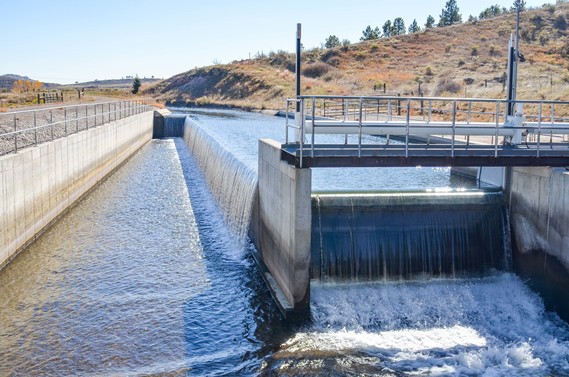
 The Northern Water Board of Directors has increased the Colorado-Big Thompson quota to 80 percent for 2020.
Northern Water’s Board of Directors has opted to increase the delivery quota for the Colorado-Big Thompson Project from 70 percent to 80 percent. The increase will make more water available to allotment contract holders throughout Northern Water.
The added allocation will be effective on July 1.
In a presentation to the Northern Water board, Water Resources Department Manager Luke Shawcross outlined the current status of storage in the C-BT Project, as well as the hot and dry conditions that have emerged this spring on the Eastern Plains.
“We need to be looking at the needs of the region,” said Northern Water Director John Rusch, noting the extended heat and wind throughout Northern Water’s boundaries. Rusch represents Morgan and Washington counties on the Board.
The allocation of a supplemental quota is not uncommon in Northern Water’s history. This year marks the sixth time since 2000 that the board has issued a supplemental quota after April.
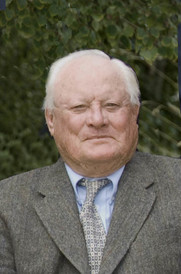
Longtime Northern Water and Municipal Subdistrict Board Member William "Bill" Condon, 92, passed away on Saturday, June 13.
Condon represented Logan County on the Northern Water Board for seven terms, beginning in 1982 when he was appointed to replace Herbert Vandemoer on the Board. He served for 28 years until his retirement from the Board in 2010.
As a farmer and rancher in Northeast Colorado, Condon recognized the value of return flows and aquifer recharge in the Lower South Platte. His observations helped to inform Northern Water and the State of Colorado in the creation of the Tamarack Water Supply Project, which temporarily captures South Platte water supplies found in lower Logan County and retimes those same supplies as a contribution to the Platte River Recovery Implementation Program.
In 2001, the Colorado Wildlife Federation named him runner-up as “Wildlife Landowner of the Year.” Additionally, Northern Water's very first weather station was placed on the Condon Ranch back in 1985.
A private service is planned. Memorials may be made to the Bill Condon Memorial Fund for the Logan County Humane Society; or a charity of your choice care of Tennant Funeral Home, PO Box 1547, Sterling, CO 80751.
|
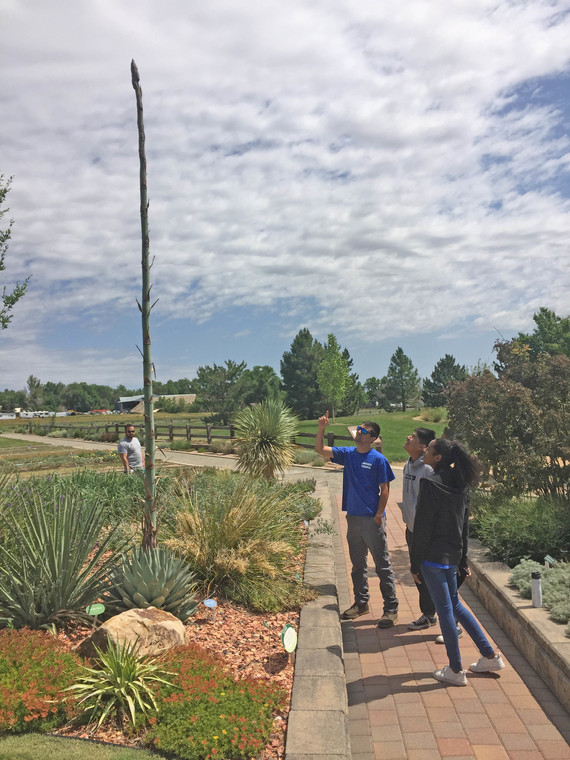 Participants in Youth Conservation Corps look at the Parry's Agave in the Conservation Gardens at Northern Water. The plant is preparing to bloom for the first time, after which it will die.
One of the original plants in the Conservation Gardens at Northern Water is giving a spectacular display as it nears the end of its life.
The Parry’s Agave, located in the yucca garden section of the Xeriscape Plaza, has grown a 15-foot-tall stalk from which it will produce flowers through this season. Those flowers will generate seeds for future agave plants.
In the act of creating the stalk and flowers, the agave will use all of its energy accumulated over its lifetime. Following the flowers and seeds, the plant will die.
The agave is named for botanist C.C. Parry, who came to the Rocky Mountains and the Southwest in the 1850s and identified for science many plants, including the Colorado blue spruce and Engelmann spruce. Parry Peak, on the Continental Divide between the Fraser River and Boulder Creek, carries his name.
The Conservation Gardens at Northern Water are open to the public from dawn to dusk. Visitors are asked to observe social distancing guidelines put in place by the Larimer County Department of Health and Environment.
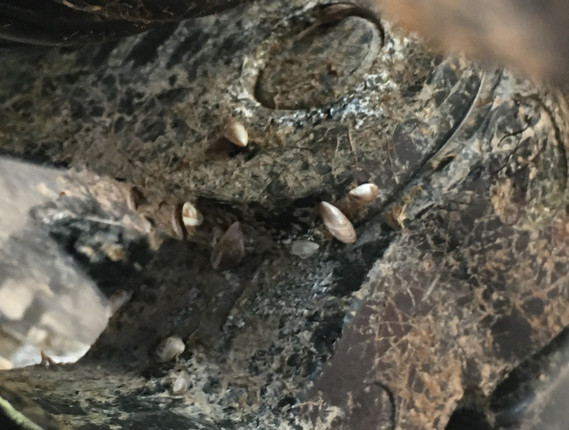 Mussels can attach themselves to boats and then infest lakes without predators, causing severe ecologic and infrastructure damage. An infested boat (not pictured) was intercepted before launching on Lake Granby.
A boat infested with invasive mussels was intercepted by inspectors at Lake Granby, according to officials with the Colorado Parks and Wildlife.
The owners of the boat had recently moved from Illinois to Colorado and were unaware of the mussels that had tagged along from the mussel-infested waters of the Midwest. The invasive quagga mussels and zebra mussels have no natural predators in North America, and if allowed to enter a waterway can cause significant ecological harm and damage to water infrastructure.
Northern Water partners with Colorado Parks and Wildlife and federal recreation managers on the West Slope to protect waters from aquatic nuisance species at Lake Granby, Shadow Mountain Reservoir, Willow Creek Reservoir and Grand Lake. We also partner with Larimer County to protect Horsetooth Reservoir, Carter Lake and Pinewood Reservoir on the East Slope.
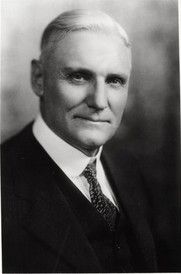
The University Archive at Colorado State University is working to transcribe four diaries written by the school’s longest-serving president, Charles Lory.
The effort follows the successful crowdsourcing to transcribe the letters of Northern Colorado water attorney Delph Carpenter, who is credited with being the architect of the 1922 Colorado River Compact.
Charles Lory played a key role in the history of Northern Water, serving on its Board of Directors from 1940 to 1954. He was named as a board member emeritus in 1954.
Lory’s flourished, cursive writing style can be difficult to read, creating a challenge for those transcribing the contents of his diaries.
Those interested in contributing are asked to contact the University Archive at https://libguides.colostate.edu/universityhistory.
|
|
Northern Water is hiring for the current open positions.
To learn more about Northern Water and for future openings, visit the Northern Water Careers page.
|
|
 |
Upcoming events:
- July 2: Northern Water Board Planning Session, 9 a.m., Berthoud.*
- July 9: Northern Water and Municipal Subdistrict board meetings, 9 a.m., Berthoud.*
* Note: In the event that the meetings are held via video conference, please find the details to access the meeting at www.northernwater.org.
|