|
COMPAS NEWSLETTER
April 2026
|
|
Moving Beyond the Tree-line with
New COMPAS Updates
 The payroll modernization implementation continues to chart new points on our project map and we have some fresh new updates for you moving into our summer months!
- Our first wave of instructor-led training has been delivered and we are going to be adjusting our study hall schedule. Study halls will now take place every other Friday at 11am, opposite of the biweekly office hours. Bring your questions about training, the project, or system features - we are here to support you!
- As we get closer to implementation and the future state CORE Payroll Help Desk structure, we will be directing communications to our new inbox! This is where end users will go to get help desk level support at go-live and beyond. Please reach out to us at corepayroll.help@state.co.us.
- Get ready to see our new branding out and about on our sites and resources! As you know, CORE and COMPAS will unite in one single entity. Payroll (COMPAS) is another function that will exist within the CORE system - they are not two separate entities and the new branding reflects this shift.
- When the project is live, the training content will live on the CORE site. For now, if you missed signing up for VILT practice sessions, you can watch the recorded versions by navigating to the "Additional Resources" section and click on Virtual Instructor-Led Training.
|
|
Okay, But How Is COMPAS Different?
One of the questions we hear most often about the COMPAS project is, “How is COMPAS different from CPPS?”
It’s a great question – and we are excited to share the answer with you! Our COMPAS website now includes a Key Changes section that highlights the most important updates across major areas of the project. This page provides insights into things that are new or different in COMPAS as compared to CPPS.
When you visit the Key Changes page, you’ll find expandable sections for General, Human Resources Functions, Pay Management, Reporting, Time and Leave, Labor Allocation, and Employee Self Service. Each section breaks down the specific improvements and changes you can expect in that area.
Want a little insight into some of the most popular key changes? Peruse the list below and then head over to our website to learn more.
- COMPAS uses multi-factor authentication (MFA) to validate user connections instead of virtual private networks (VPN). This keeps COMPAS secure, while also making it easier for users to access!
- COMPAS allows you to work in multiple windows and tabs simultaneously. Right-click the Home icon to open a new window or tab with the same business role. This can be useful if you need to create a transaction while simultaneously looking up information in another part of the application.
- No more green screen!
- Employees and positions are managed separately in COMPAS.
- Payroll professionals can future-date some pay transactions, like benefits implementation or pay increases, which can prevent back payments or pay adjustments from taking place.
Take a moment to explore the page – it’s one of the best ways to get familiar with how COMPAS will enhance our processes moving forward. What key change do you most look forward to? We would love to hear more about what you are excited about!
|
|
WordWise
The COMPAS implementation introduces a new set of terminology that may be unfamiliar at first. That’s why we’re launching WordWise, a monthly segment designed to help you become fluent in COMPAS—one word at a time.
This month’s featured word: Codes in CORE Payroll
As COMPAS launches, you’ll see payroll codes throughout the system. These codes are an important part of how payroll gets processed—helping keep things accurate, consistent, and running smoothly. These payroll codes are transaction-specific and drop-down menus in the application will help guide you to the right values.
Here are a few types of payroll codes you may see often:
-
Personnel Action Codes
Used for changes to an employee’s job or status, like hires, promotions, transfers, or separations.
-
Pay Event Codes
Used for earnings, such as regular pay, overtime, sick leave, or bonuses.
-
Deduction Codes
Used for amounts taken out of pay, including taxes, benefits, retirement contributions, and wage garnishments.
You asked… we answered! Many users have requested a list of available payroll codes that will be available to them in the future state environment. Good news—we’ve maintained many of the codes that are currently used in CPPS, so there’s less for you to learn. More good news—we created the CORE Payroll Codes Quick Reference Guide to help you with the rest. This resource brings everything together in one place for you. Each code comes with both a short and long description to help you quickly understand what it means. And while you don’t need to memorize them, using the right code matters—some are tied to specific employee groups, and transactions won’t process if the wrong one is used.
View the CORE Payroll Codes
Support and resources will be available every step of the way—we’re here to help make your transition to COMPAS as smooth as possible.
|
|
Click to edit this placeholder text. |
|
From the Office of Information Technology:
Introducing New Employee Self-Service (ESS) in CORE Payroll
New Employee Self Service:
State employees paid through CORE Payroll will now have access to ESS through the COMPAS implementation project. The new Employee Self Service will be web-based and easier for employees to access without a VPN connection.
Employees will be able to update a variety of personal information on their own including home address, emergency contacts, and name change. However, updates to certain fields, such as date of birth and social security number, require review and approval by Payroll or Human Resources staff before they become effective. Employee pay stubs and tax documents generated by the CORE Payroll system will be available to employees through the new ESS system.
Legacy ESS:
The legacy CPPS and Employee Self-Service systems, currently supported by OIT, will become read-only after CORE Payroll goes live. The legacy ESS will continue to be available to employees to provide access to pay stubs and tax documents through the end of calendar year 2027.
OIT Support:
Like the statewide financial system CORE, CORE Payroll is supported by DPA and vendor teams. Both systems provide service to all three branches of government, including agencies within and outside of OIT consolidation. DPA and OIT are working to establish the best support model for both the new CORE Payroll system and access to legacy systems.
DPA and OIT will communicate the finalized support model to agencies ahead of go-live; employees with immediate questions should contact their agency HR or Payroll representative.
|
|
 COMPAS is introducing an updated pay slip format! The redesigned layout has clearly defined sections for earnings, deductions, totals, and more. While the format is changing, the information you rely on is still there—it’s just organized differently.
Here’s a preview of the new look.
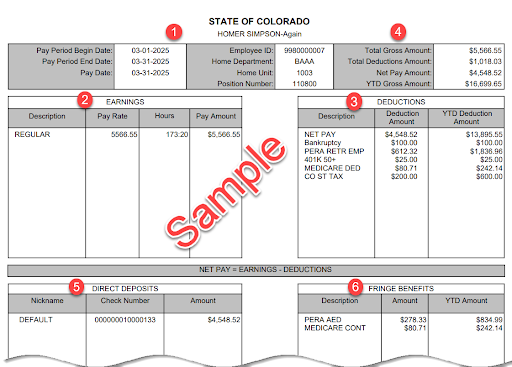
1. Pay Period & Employee Info
Dates, pay date, and your employee details |
4. Your Net Pay What you take home after deductions
|
2. Your EarningsRegular pay, overtime, and additional earnings.
|
5. Where Your Pay Goes
How your pay is distributed across accounts
|
3. Your Deductions
Taxes, benefits, and other withholdings
|
6. Employer-Paid (Fringe) Benefits
State-paid contributions like retirement and health insurance
|
A web page has been created to walk you through each section of the pay slip and explain what you’re seeing. Whether you’re reviewing your earnings, checking deductions, or confirming your net pay, you’ll have the resources you need to get comfortable with the new format.
View the Resource: How to Read Your Pay Slip
We’ll continue to share tools and guidance to help you navigate changes like this with confidence!
We'd Love to Hear From You
Have ideas for future newsletter topics or office hours? Is there something you'd like to hear more about? We are all ears. Your feedback helps shape content that matters to you. SoC_COMPAS@state.co.us
|
|
|
|
|