ADVENTURE OF THE MONTH
Bodie State Historic Park Preserves a Rich Past in 'Arrested Decay'
Story from: Andreas Agocs, Communications and Marketing Division
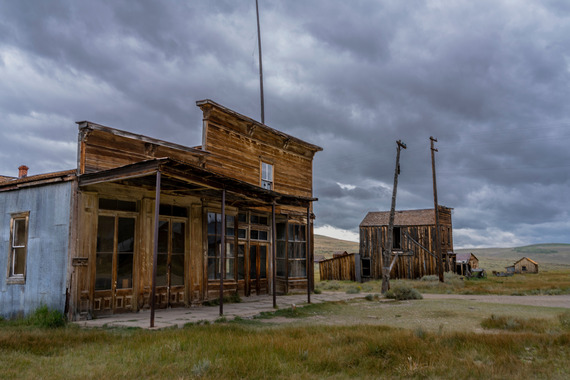 The Wheaton & Luhrs Store was built in the 1880s and became a hotel and boarding house. Like all structures at Bodie State Historic Park, it is preserved in a state of "arrested decay." All photos from Brian Baer, Communications and Marketing Division.
At an elevation of 8,400 feet, and at the end of a 3-mile-long unpaved road, Bodie State Historic Park (BSH) is one of the more remote California state parks. But during its boom period between 1877 and 1881, the Bodie mining district had a population of up to 8,000 inhabitants and more than 30 different mines and stamp mills. The air was filled with the around-the-clock noise of stamp mills, a railroad and lumber operations. Families frequented stores and churches, while resident and itinerant workers shouted in English, German, Spanish and dozens of other languages in saloons and gambling halls. A vibrant Chinatown added to a highly diverse population in what was once an industrial boomtown in the high desert.
The streets of Bodie are largely silent now, save for the occasional ringing of the old schoolhouse bell during guided tours. The end of the gold mining boom and a series of destructive fires left little of the hustle and bustle that characterized Bodie in its heyday at the end of the 19th century. But as Bodie SHP preserves the town’s buildings in a state of “arrested decay,” the park keeps its former residents’ stories alive, from the daily life of the mill workers to the role of the Native Kootzaduka’a people, who have inhabited this eastern Sierra Nevada landscape for centuries and who today cooperate with State Parks in interpretative programs and displays.
Visitors today can catch glimpses of the daily life of Bodie’s former inhabitants by gazing through the windows of the abandoned buildings and spot furnishings, tools and possessions that seem have been abandoned in the middle of their owners’ activities. Guided tours by State Parks staff offer a chance to step inside the buildings and make more discoveries. Inside the old schoolhouse, for example, the open exam- and textbooks from 1942 are still spread out on the classroom desks, as if waiting for the children to return from recess.
Read the full story on our State Parks blog.
Note: Bodie SHP is one of the first parks to be featured in our recently redesigned brochures. Visitors can pick one up at the park or read it online here.
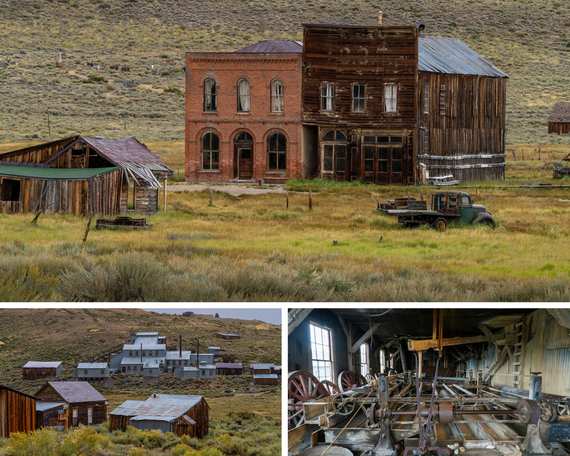 Top: Little is left of the once bustling buildings of Bodie's Main Street. Bottom row: The Standard Mill once dominated Bodie's gold mining boom.
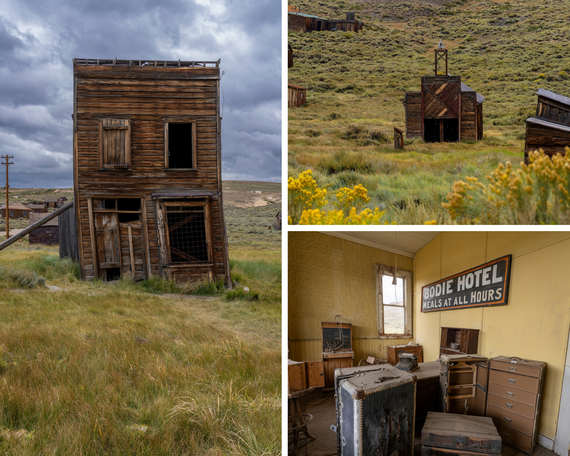 Clockwise from left: The Swasey (Swazey) Hotel; the old firehouse--fires were a frequent problem in Bodie, which burned down almost completely in 1892 and 1932; the reception and lobby with suitcases at the Bodie Hotel.

Pfeiffer Big Sur State Park Reopens Following Timber Fire
Story from: Angelica De Le Peña, Communications and Marketing Division
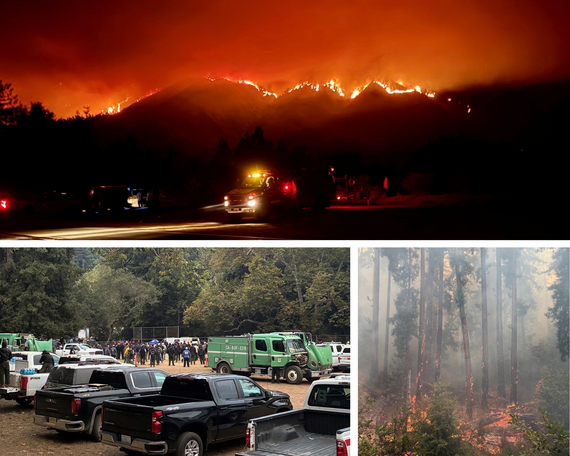 Clockwise from top: View of Mount Manuel burning during the Timber Fire at Pfeiffer Big Sur State Park. Redwood trees burning along Pfeiffer Falls Trail. The Pfeiffer Big Sur State Park’s softball field served as the incident command post throughout the fire response. Photos from California State Parks.
California State Parks will welcome visitors back to Pfeiffer Big Sur State Park on Oct. 16, following a temporary closure during the Timber Fire. The fire burned approximately 517 acres within the park, including numerous trails, and the park served as a base camp and incident command post for firefighters and emergency responders throughout the response. Visitors will once again have access to the campground, day-use areas, Big Sur Lodge, Redwood Grove Boardwalk and several trails and facilities. Some trails will remain closed as State Parks staff continue assessing fire damage and addressing hazards to ensure visitor safety.
For more information, read our latest press release here.
Parts of Crystal Cove State Park and San Onofre State Beach Temporarily Closed Due to Damage from High Surf and Coastal Erosion
Story and photos from: Orange Coast District
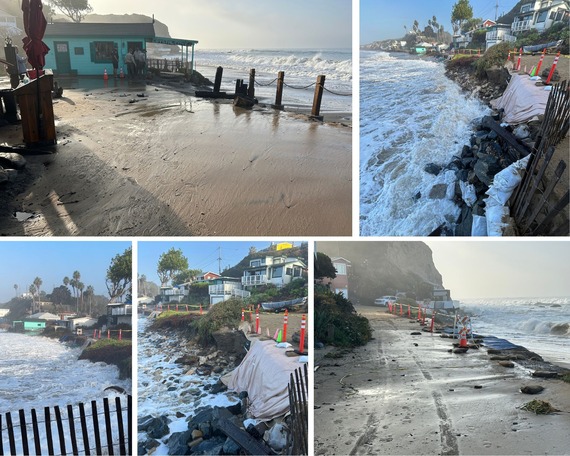 High surf and strong tides from Tropical Storm Rachel have caused coastal erosion and damage to roads at Crystal Cove State Park.
California State Parks has temporarily closed portions of Crystal Cove State Park (SP) and San Onofre State Beach (SB) following significant coastal erosion and infrastructure damage caused by recent high tides and large surf from Tropical Storm Rachel. These closures are necessary as the storm is expected to peak over the weekend and to protect public safety, prevent further damage to park facilities, and allow crews to conduct emergency repairs.
At Crystal Cove SP, portions of the Historic District beach are temporarily closed due to significant erosion and damage to coastal infrastructure. As a precautionary measure, occupants of 26 cottages in vulnerable areas of the Historic District are being evacuated. Reservations are canceled through at least Oct. 13 and could be extended depending on conditions. State Parks staff are continuing to assess damage to the historic facilities, beach access areas and utilities while evaluating temporary measures to protect these resources from additional wave impacts. State Parks is also installing temporary, sand-filled barriers in vulnerable areas to help absorb wave energy, reduce erosion and protect threatened facilities and historic resources.
At San Onofre SB’s Surf Beach, significant coastal erosion has damaged the shoreline, roadway, parking areas and utility infrastructure. A water main serving the beach restrooms was exposed and broken by the surf, leaving restroom facilities and water service unavailable. Portions of Surf Beach temporarily closed today, including the access road and parking areas while crews and heavy equipment conduct emergency work, including the removal of a threatened restroom building. Vehicle access will be significantly limited, and pedestrian and bicycle access will be restricted within active construction areas. Surf Beach will remain open to surfers, pedestrians, and bicyclists outside designated work zones, subject to changing conditions.
Visitors are encouraged to avoid closed areas, respect posted signage and staff directions, and consider visiting other state parks while emergency operations are underway.
State Parks will continue to provide updates as conditions change and as additional information becomes available. The timing for reopening affected areas will depend on ocean conditions, damage assessments, and the completion of necessary emergency work.
For the latest park conditions and closure information, visit the Crystal Cove SP and San Onofre SB webpages.
Read more in our press release here.
New Desert Lifeguards Attend Training at
Hungry Valley State Vehicular Recreation Area
Story and photos from: Kevin Overduin, Great Basin District
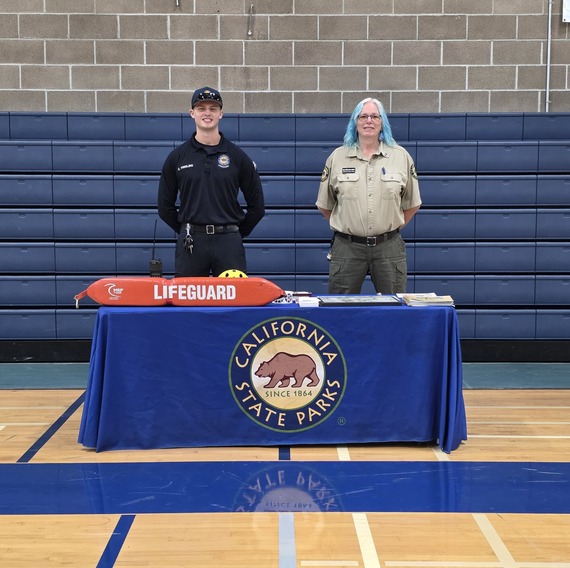
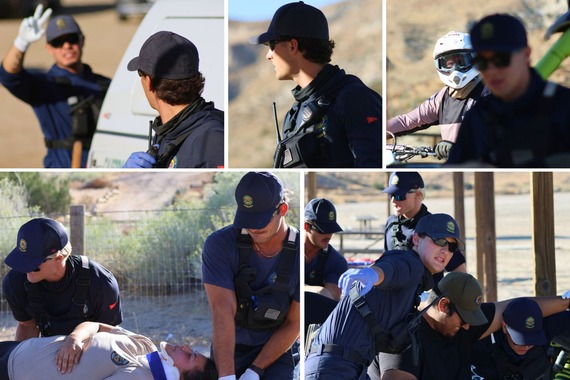 New California State Parks lifeguards practice rescuing and treating patients during complex training scenarios at Hungry Valley State Vehicular Recreation Area. Photos from California State Parks.
It’s early October, and the unseasonable heat in Hungry Valley is intense. It’s been a long three days, but six State Parks lifeguards undergoing training in the dust, noise and hot wind are giving 100% of their effort.
Every year, the Hungry Valley Desert Lifeguard program brings a handful of guards out of their familiar seaside views of crashing surf and into the dynamic world of off-highway vehicle (OHV) recreation. Among the rocky peaks, dry playas and remote winding trails of Hungry Valley State Vehicular Recreation Area (SVRA) and Eastern Kern County Onyx Ranch SVRA, these desert lifeguards can be found utilizing their exceptional emergency medical skills in chaotic, fast-paced settings.
They are placed in a unique position to protect the public they serve. As such, their training revolves around the powerful vehicles utilized in OHV recreation.
To equip them for their time in the field, lifeguards are put to the test to manage scenarios designed to be exceptionally challenging. This year, they rose to the occasion and successfully overcame every challenge. The staff and public of the Great Basin District welcome the six new desert lifeguards for the 2026-27 year and wish them a safe and enjoyable season in the desert.
Fort Ord Dunes State Park Celebrates First Collection of Works by ‘Paint Out’ Artists
Story from: Sam Winter, Monterey District
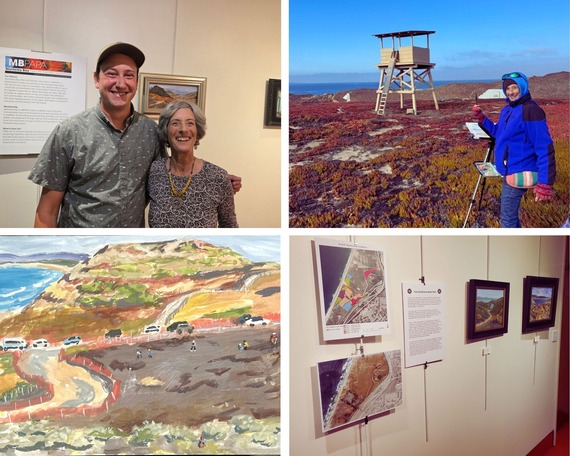 Clockwise from top left: State Parks Environmental Scientist Sam Winter and artist and exhibit curator Elaine Goldstone at the artists' reception at Seaside's Walter Lee Avery Gallery; Goldstone paints the lookout tower at Fort Ord Dunes State Park; paintings of the park hang side-by-side with restoration planning documents and campground blueprints. Artist Paola Berthoin captured volunteer planting efforts at the park. Photos Kyle Brasier, Monterey District volunteer (top left) and Sam Winter, Monterey District.
After more than two years of ‘paint outs’ by the Monterey Bay Plein Air Painters Association (MBPAPA) at Fort Ord Dunes State Park (SP), the first collection of paintings is now on exhibit at the Walter Lee Avery Gallery in Seaside's city hall. In addition to 73 paintings by 15 artists, maps, restoration documents and blueprints for the park’s new campground are also on display. Each painting was created on-site during monthly natural resources volunteer days. The exhibit documents the story of dune restoration, volunteer events, campground construction and more.
Last month, the City of Seaside hosted a reception in honor of the artists at the gallery, where artists from MBPAPA, State Parks staff, volunteers and members of the public gathered to celebrate. Exhibit curator Elaine Goldstone and I gave a presentation on the project, which arose from discussions during the Monterey District's natural resources volunteer days. Goldstone and I first came up with the idea while pulling invasive ice plant at Fort Ord Dunes SP during a volunteer event.
If we do our job right, in 100 years no one will remember that these dunes were once covered in ice plant. We hope these paintings will help tell the story of the restoration effort and the many volunteers involved with this work. The gallery is open to the public 8 a.m. to 5 p.m., Monday through Friday, until Nov. 5.
Candlestick Point State Recreation Area Celebrates Fourth Annual Kite by the Bay Event
Story and photos from: Amy Whitcomb, Bay Area District
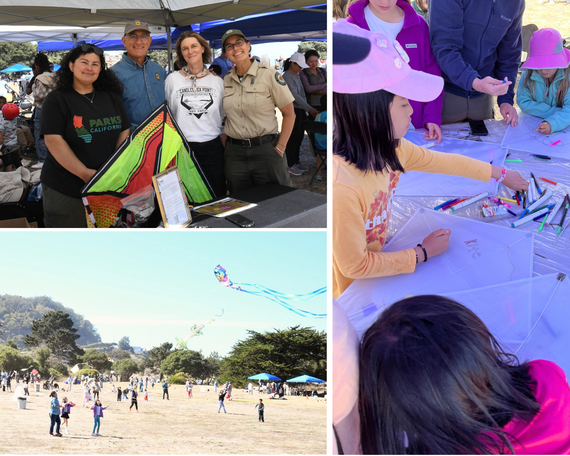 Clockwise from top left: (left to right) Veronica Silva-Miranda, community engagement coordinator for Parks California, State Parks Director Armando Quintero, President and CEO of Parks California Kindley Walsh Lawlor, and Lisa Whitmer, community engagement specialist for Bay Area District, at the Kite by the Bay event. Kids color their own kites before flying them during the Kite by the Bay event. Participants fly kites in a meadow at Candlestick Point State Recreation Area.
By early afternoon, a patch of sky over San Francisco Bay was alive with the rising and plunging of dozens of colorful kites. Beneath the airborne art, adults and children of all ages ran into the wind with kite strings or gazed upward to marvel at the swaying array before them.
The fourth annual Kite by the Bay event at Candlestick Point State Recreation Area (SRA) was held Sept. 12 and was made possible through the generous support and efforts of Parks California. More than 1,000 people visited the park to appreciate the outdoors and enjoy crafts, games, music and opportunities to connect with organizations from across the area.
More than 20 partners and vendors shared their programs and services, spanning marine conservation, city planning, habitat restoration, fishing, bicycling advocacy and more. Many expressed delight in the community participation and diversity that stood out this year. Throughout the afternoon, eventgoers could be seen walking the perimeter of a large meadow and exploring the various partners’ tables to decorate a kite, meet a bearded dragon, touch and smell native plants, have their faces painted, watch bees inside a honeycomb and find their next favorite adventure story in one of the nearly eight boxes of books that the San Francisco Public Library gave away at the event.
Before looking ahead to 2027, Bay Area District staff are reflecting on the year's successes. In 2026, FACES SF, a family support services provider, served as both a partner and a cohost. With coordination from the California State Parks Foundation, members of the civic group Gay 4 Good volunteered. A neighborhood family ran its own lemonade stand. State Parks employees from the Bay Area District and beyond led a kayaking clinic. Each year, the sponsorship and staff of Parks California help make this joyful day happen. Huge thanks to Parks California.
While there are many more special moments and important partners we would like to recognize, we’ll leave the last word to a community partner from the Randall Museum, whose summary of the event makes us grateful for this year and hopeful for next year: “The event was a blast, and the wind was perfect for kite flying.”
Bay Area Fishing Pier Gets Major Overhaul
Story and photos from: Christen Bechert, Bay Area District
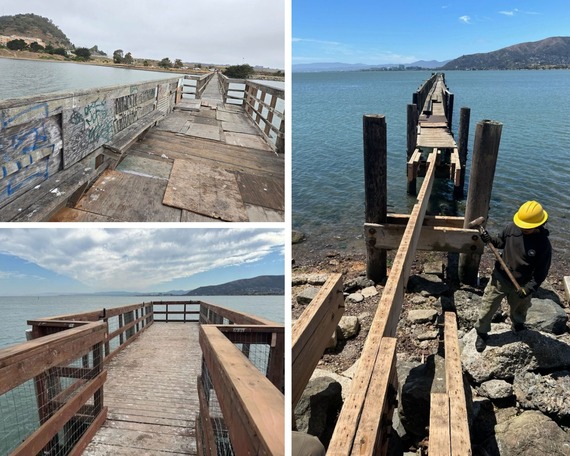 Clockwise from top left: The pier in a state of disrepair; Victor Brenes Rios hard at work; the finished pier.
A popular fishing spot in Candlestick State Recreation Area (SRA) is ready to welcome back visitors. Named Windsurfer Pier, this 400-foot-long, over 30-year-old pier had been previously damaged by fire and was in rough shape.
Thanks to a crew including skilled laborers Anthony Angel and Jose Luis Blaza as leads and senior maintenance aides Victor Brenes Rios, Dylon Wilson, Alexandra Hills and Conner Eaton, this recreation spot got a much-deserved makeover. Over three months, they rebuilt the deck and railing, and replaced the first 60 feet of stringers or beams that had severe fire damage.
The newly refreshed pier is now open again and ready to welcome fishing fans back to Candlestick SRA. A big thank you to Bay Area District trails crew!
 PARTNER NEWS
The Health of Our Parks Is the Health of Us
Story from: Debbie Song, Parks California
 ROSE South LA’s Artwalk project at Leimert Park, part of the Arts in California Parks grants program. Photo from ROSE South LA.
Ahead of World Mental Health Day on Saturday, Oct. 10, Parks California President and CEO Kindley Walsh Lawlor reflects on the connection between California’s public lands and our mental and physical well-being. From spending time outdoors with family or friends to gathering for arts and cultural experiences, parks can give us space to move, breathe, connect and recharge.
In her latest article, Kindley explores how programs supported by Parks California open more ways for people to experience California’s parks, helping everyone feel connected and a sense of belonging. From community arts programs that often welcome first-time visitors to our public lands to helping mitigate barriers to access, these programs help everyone find their place in California’s extraordinary outdoors.
She also reflects on why caring for healthy parks is part of caring for healthy communities, and how access, stewardship and a sense of belonging are deeply intertwined.
Read the full article here!
 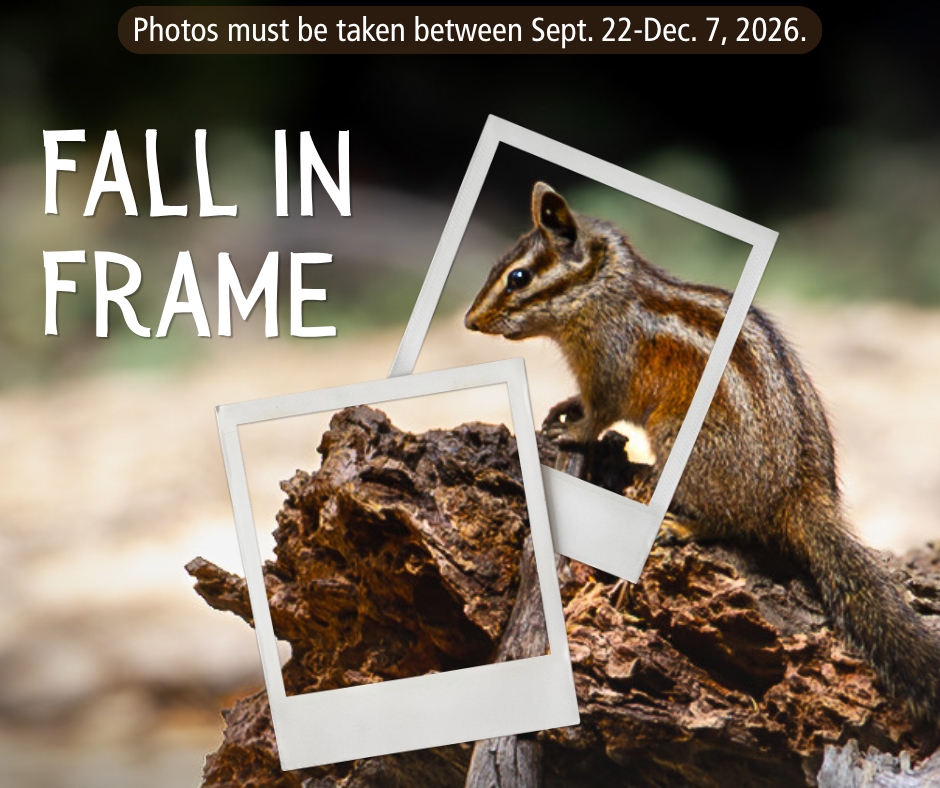 Submit your photos via this Weekly Digest Submission Form or send them to WeeklyDigest@parks.ca.gov with the subject line "Fall in Frame Photo Contest.”

|