|
 Sept. 11, 2026
|
|
PHOTO OF THE WEEK
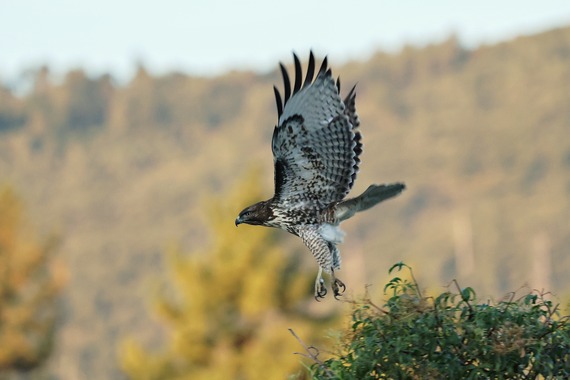 Cuyamaca Rancho State Park
A red-tailed hawk takes flight.
Photos from Michele Hernandez, Colorado Desert District
  WHAT'S NEW
Tribes, California and Local Governments Sign Historic Agreement to Restore Vital Clear Lake Watershed
Story from: California Natural Resources Agency
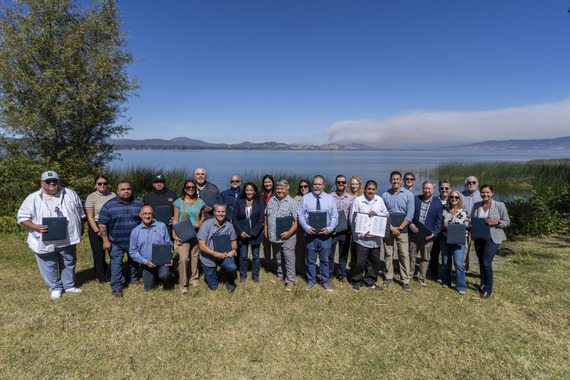 Representatives of tribal, state and local governments pose at the shore of Clear Lake. Photo from Brian Baer, Communications and Marketing Division.
Tribal, state, and local governments gathered at Big Valley Rancheria on Sept. 11 to announce a landmark partnership to restore the Clear Lake watershed through shared stewardship of its lands, waters and native species. Together, the partners will improve water quality, restore habitat, strengthen native fish populations and support healthier ecosystems for future generations. One of the biggest agreements of its kind, this is California's first watershed co-management agreement since the passage of AB 1284 (Ramos, 2024) and the state launched its Tribal Stewardship Policy in March.
“This partnership is unique - it brings together communities and purposes that have traditionally been disparate, if not oppositional, and finds common ground where it matters most: the lake itself,” said Governor Gavin Newsom. “There are different histories, different meanings, but it’s the same water. A healthier Clear Lake means stronger, healthier communities, no matter what role the lake plays in their lives, whether it's a cultural touchstone, an economic engine, a social anchor, or an ecological lifeline.”
Clear Lake sits at the heart of the ancestral homelands of Pomo and Lake Miwok peoples, where generations of leadership and Traditional Ecological Knowledge have stewarded the watershed since time immemorial.
“The Habematolel Pomo of Upper Lake's home is the Clear Lake watershed. Our tribal community has never stopped caring for these lands and waters, even through generations of hardship. This agreement honors that enduring connection and reaffirms our role as a sovereign partner in restoring the health of the watershed and the Clear Lake hitch”, said Habematolel Pomo of Upper Lake, Chairperson Executive Council, Daniel Cirell. “We remain committed to working alongside our tribal, state and local partners, and to being good neighbors to the entire Clear Lake community, as we carry this work forward for future generations.”
Since the disruption of this critical tribal stewardship, the Clear Lake watershed has experienced declining water quality, degraded wetlands, habitat loss and the decline of native species, including the threatened Chi (Ṣátti), also known as the Clear Lake hitch.
“Healthy people need healthy watersheds,” said California Natural Resources Secretary Wade Crowfoot. “Our rivers, lakes and landscapes provide our clean drinking water as well as the water our communities and economy need to prosper. These water systems are also vital to fish and wildlife, enabling well-loved recreation. California state government is proud to join tribes and local governments to establish this historic partnership to restore the vital Clear Lake watershed. This landmark agreement demonstrates how shared stewardship – guided by thousands of years of tribal expertise and leadership – strengthens both conservation and our communities.”
This partnership builds on years of hard work and collaboration to address historical wrongs and environmental harms, prevent the extinction of the Chi, and rehabilitate the natural resources, cultural, social, and economic conditions of Clear Lake. It reflects a commitment to deepen and further institutionalize mutual respect, shared responsibility, and long-term relationships, bringing together 23 government parties under a shared framework to steward one of California's oldest and most culturally significant freshwater ecosystems. And it puts tribal leadership back in the driver’s seat for Clear Lake – a landmark moment for the region as it works to restore the watershed.
“Joining critical tribal knowledge with state and local resources, this landmark co-management agreement represents a watershed moment to deliver meaningful, on-the-ground restoration across the Clear Lake watershed, said State Parks Director Armando Quintero. State Parks is proud to stand alongside our tribal and local partners to protect critical tributary corridors at Clear Lake State Park and Anderson Marsh State Historic Park, advance aquatic habitat recovery, and honor our shared commitment to the survival of the Chi.”
Read more about the agreement here.
Telling California's Full Story: Partnerships that Help Bring History to Life
Story from: Parks California and Communications and Marketing Division
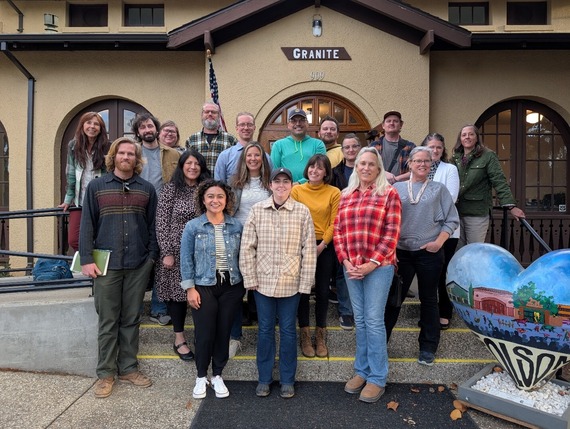 State Parks staff during their Inclusive History training at the Granite School Innovation Center in Historic Folsom.
California's state parks are more than places to hike, camp or explore. They hold layers of history — some well interpreted; some left out of the story for far too long.
Through its Reexamining Our Past initiative, California State Parks is working to make sure the histories within these lands are told accurately, including the histories of the California Native American tribes who have called this land home since time immemorial, long before the creation of state parks.
“This is thoughtful, careful work grounded in listening, collaboration, and respect. It is not about rewriting history — it is about telling more of it, fully and accurately,” said State Parks Director Armando Quintero.
As new research emerges and communities come forward to share their own histories, that responsibility needs action. State Parks alongside tribal partners, cultural communities, scholars, educators, interpretation experts and nonprofit partners like Parks California help these stories reach the public with the accuracy and depth they deserve.
Across California, State Parks interpretive staff, volunteers and partners spend their day guiding visitors to explore more than the natural habitat. Inclusive storytelling creates opportunities to bring more voices and perspectives into those experiences, helping visitors better understand the people, cultures and histories connected to the places they are visiting.
Read the full story and find out more about how partnerships help bring history to life on our latest State Parks blog.
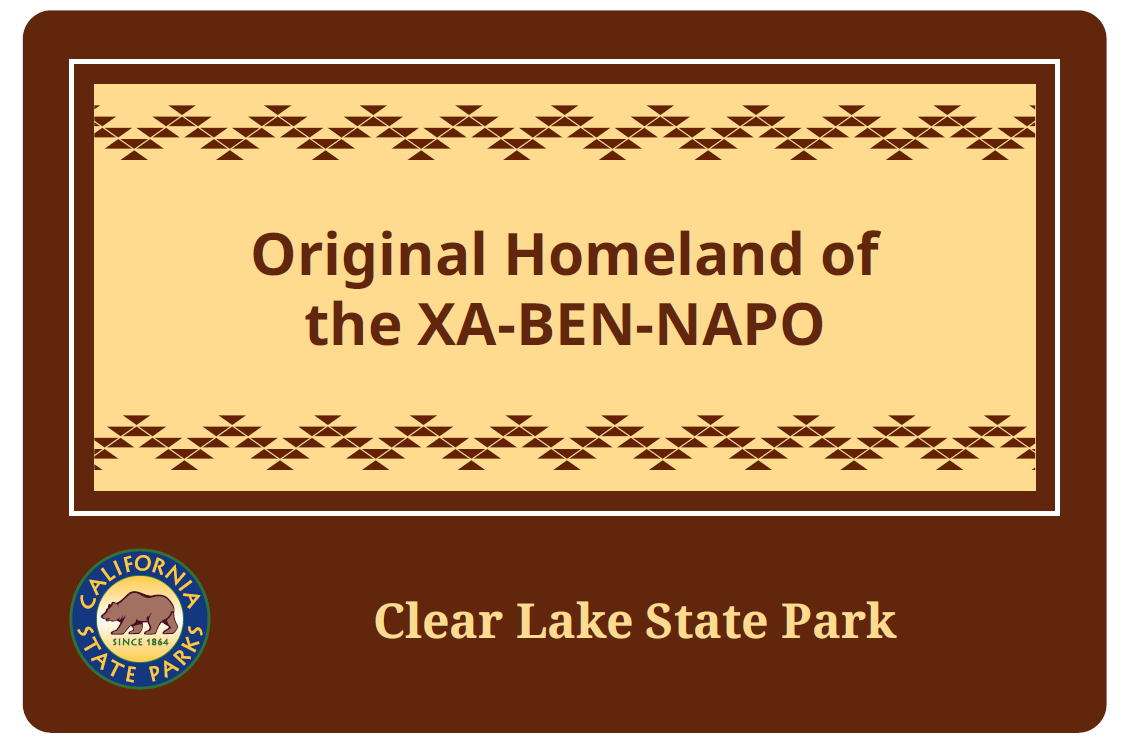 Draft signage created with tribal guidance for Clear Lake State Park in Lake County. The Tribal Land Acknowledgement project is an example of the partnerships that create a fuller history at California's state parks.

|
|
Orange Coast District Parks and Beaches Impacted by Hurricane Marie Over Labor Day Weekend
Story from: Orange Coast District
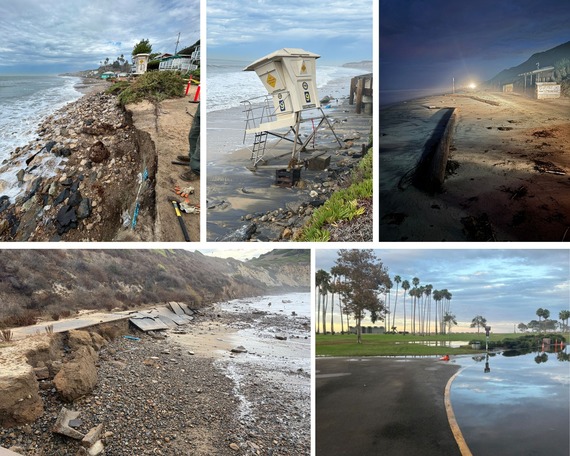 Large swells that pounded the coastline from Hurricane Marie over Labor Day weekend caused damage to Orange Coast District park units including Crystal Cove State Park, San Onofre and Doheny state beaches. Photos from Orange Coast District.
Days of intense waves fueled by Hurricane Marie over Labor Day weekend damaged homes, beaches and roads along the Southern California coastline. Several state beaches in the Orange Coast District were impacted by the massive swells that pounded the bluffs and washed away sand into the ocean.
Earlier this week, Orange Coast District staff were busy assessing the impacts following the large surf and elevated tides associated with the hurricane. Several state beaches experienced coastal erosion, flooding, debris accumulation and impacts to park infrastructure. Staff have conducted cleanup and repairs while taking proactive measures to protect facilities as elevated surf and tides continued during the week.
Below are the impacts from the storm swells to parks:
-
Crystal Cove State Park: The coastal erosion damaged portions of the roadway near the South Beach area of the Historic District and exposed a water main. Staff and contractors are working to reroute the water line farther inland to reduce its vulnerability to future high tides and erosion. The South Beach area of the Historic District and the sandy beach downcoast of Moro day-use area are temporarily closed while crews remove debris and assess conditions.
-
Doheny State Beach (SB): The beach experienced coastal flooding near Parking Lot 3 in the North day-use area, while cleanup is underway in other portions of the state beach. Additionally, the City of Dana Point has issued a Proclamation of the Existence of a Local Emergency due to the coastal flooding with some of the debris washing on the beaches and the intertidal zone.
-
San Onofre SB: There is limited parking in some areas due to debris and damage caused by the surf and high tides.
-
Bolsa Chica SB: Two lifeguard towers and fire rings were proactively moved farther inland ahead of additional elevated surf and tides. No additional damage has been reported.
Most park areas remain open, but visitors should expect temporary closures and reduced access in some locations while cleanup and repairs continue. State Parks urges visitors to follow posted closure signs and lifeguard instructions, stay clear of cleanup operations and use extreme caution around the ocean. State Parks will reopen affected areas as soon as conditions allow and it is safe to do so.
For updates on these parks, please visit the park unit webpage and their Instagram channels: @castateparksoc and @crystalcovestatepark
Maintaining History on the San Diego Coast
Story from: Anne Cooper, Interpretation and Education Division
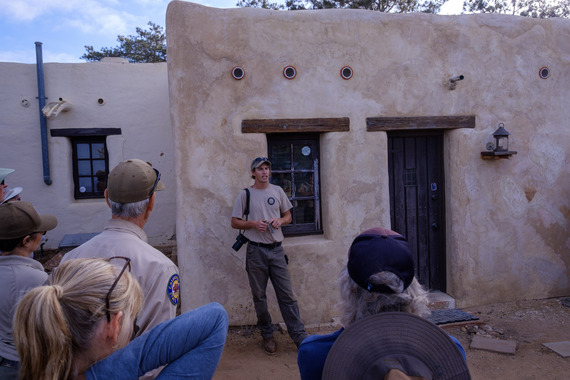 Corbin Schuppert, restoration work specialist for the San Diego Coast District, describes the benefits of lime plaster for use on adobe walls at Torrey Pines State Natural Reserve. All photos from Isaac Ullah, San Diego State University.
Working for California State Parks means that, occasionally, one day stands out from the rest. Sept. 2 brought a group of State Parks staff and volunteers to the Torrey Pines Lodge, a 1923 adobe building that once served as a restaurant for visitors and locals among the pines and coastal chaparral north of La Jolla. Today, it houses Torrey Pines State Natural Reserve’s (SNR) visitor center.
Corbin Schuppert, restoration work specialist for San Diego Coast District, had assembled the group to apply the finish coat of lime plaster to a portion of the building. This was the fourth such districtwide maintenance event held in two years. Maintenance and interpretive staff, district archaeologists, park docents, a San Diego State University professor and graduate student, Orange Coast and Colorado Desert district staff, and a local architect assembled to hear Schuppert’s explanation of the work plan.
Walking to the west side of the building, Schuppert indicated two walls that had already been treated with a lime-based plaster, pointing out the differences in appearance between those walls and the portions of the building yet to be restored. In the past, wall surfaces had received treatments that didn’t allow the adobe to shed moisture. They had been covered with Portland cement, a problematic material used in prior decades and chosen for its ease of use and low cost. The new lime plaster allows water vapor to both enter and exit the adobe and, unlike the problematic Portland cement, is much more flexible. Cracks in the plaster can expand and contract without damage to the wall beneath.
Schuppert explained that his research into the specifications for the lodge, designed by architects Richard Requa and Herbert L. Jackson, revealed directives in the original design that the exterior plaster should incorporate the colors of the cliffs so iconic to Torrey Pines. Geologist and docent Mukesh Mehta relayed the geologic history of the Torrey sandstone and its caprock, the Lindavista formation. Deposited as marine layers of sand, the cliffs contain cross bedding, a sign of preserved underwater currents, with colors of tan below and red above. The plaster itself would echo these. Could we do justice to Requa’s vision?
Returning to the front of the building, maintenance crew members mixed roughly 250 gallons of “mud.” Schuppert demonstrated the plasterer’s art and encouraged us to employ our artistic sensibilities and put shyness aside. We picked up terminology along with techniques: “trowels,” “floats” and “hawks.” The work went quickly and soon the redder plaster, representing the top of the cliffs, came into use. We needed to work at a measured pace. As the plaster began to dry, finishers with smaller trowels smoothed out the rough spots. Soon, we were invited to lunch, giving people a chance to chat and admire their work. As Schuppert noted, active restoration at the Lodge will continue as a new era of enthusiasts leave their mark on the ledger of history.
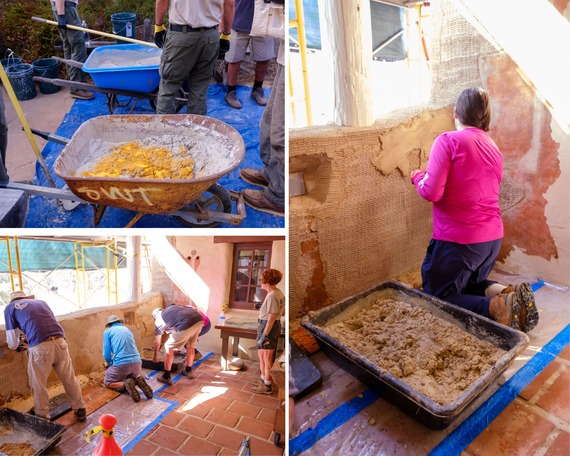 Clockwise from top left: Yellow dye added to lime plaster base for color effect; Michaela Langer, a graduate student in anthropology from San Diego State University, applies plaster to a wall; Park Maintenance Chief Jodi Whelchel (at right) observes the work of several volunteers (from left to right) Mukesh Mehta, Rick Vogel and Robert Thiele.
|
|
|
To view current job openings within California State Parks, please visit our jobs webpage at www.LiveTheParksLife.com.
State Parks Job Spotlights and Open Exams
Analyst I (Oroville) — Apply by Sept. 15: The Northern Buttes District is looking for an Analyst I to bring strong organizational, communication, policy interpretation, and analytical skills to a dynamic role supporting 14 beautiful park units across nine counties. From Lake Oroville and Burney Falls to Castle Crags and Sutter Buttes, this is an exciting opportunity to support special events, budgets, and district operations while being part of something truly meaningful. Click here to learn more.
Associate Park and Recreation Specialist (Sacramento) — Apply by Sept. 18: Join the Office of Grants and Local Services in Sacramento and help develop and administer grant programs that support parks and recreation projects throughout California, all while building relationships with communities and grant applicants. This role offers the chance to research, plan, lead workshops, support future grant programs, and help shape California’s 10-year Statewide Comprehensive Outdoor Recreation Plan. Click here to learn more.
Heavy Equipment Mechanic (Oceano) — Apply by Oct. 14: Ready to put your mechanical skills to work in a fast-paced park environment? Join the Oceano Dunes District as a Heavy Equipment Mechanic and help keep a fleet of approximately 135 vehicles and equipment running safely and smoothly at a park welcoming more than 2.2 million visitors each year. If you enjoy hands-on work, problem-solving, and collaborating with a team, this is a great opportunity to make a difference. Click here to learn more.
Automobile Mechanic (Sept. 15): Ready to take your automotive skills to the next level? The Automobile Mechanic exam is an opportunity for skilled mechanics to demonstrate their expertise in diagnosing, repairing, and maintaining automotive equipment while taking on leadership responsibilities and supporting a professional maintenance team. If you have hands on experience with engines, transmissions, brakes, electrical systems, and major vehicle repairs, this could be the next step in your career. Click here for more information.
Park Maintenance Assistant (Sept. 30): Looking for a hands-on job where you can work outdoors and support California’s natural spaces? As a Park Maintenance Assistant, you will help keep State Parks clean, safe, and beautiful by performing routine maintenance, cleaning facilities, maintaining trails, and supporting fire prevention. You may also lead seasonal crews, operate equipment, and assist with landscaping. Take the assessment today and start your path to a rewarding career in the great outdoors. Click here for more information
Discover exciting career opportunities with California State Parks at our upcoming virtual webinars! Learn everything you need to know about the application process, assessments, and state hiring, all while getting your questions answered by our expert recruiters. Don’t miss this chance to gain valuable insights and take the first step toward your dream job. Click here for dates and registration info.
If you have any questions regarding these opportunities, connect with us at Recruiting@parks.ca.gov. We’re happy to help!
Interested in more jobs and exams like this? Explore www.LiveTheParksLife.com to discover the possibilities.
Join the Parks Jobs mailing list here. We can send you updates on jobs and exams that interest you!
|
|
|
Style time! Here are this week's tips to help spread the word about our departmentwide style guidelines:
-
cleanup/clean up: One word, no hyphen, when used as a noun or adjective. (Examples: Participate in the cleanup. Participate in the cleanup event.) Two words when used as a verb. (Example: We went to the park event to help clean up the plastic and trash.)
-
mid-: No hyphen is necessary unless a capitalized word follows. Examples: midrange, midterm, mid-Atlantic.
-
ranger: Lowercase when not used before a proper name. Example: Example: Ranger Baker led the walk. The visitors followed the ranger on the trail.
Keeping a consistent writing style ensures the Weekly Digest looks and sounds its best. Each week, the Communications and Marketing Division reviews submitted articles for proper grammar and punctuation and style consistency –– from capitalization and hyphenation to proper acronyms and active/passive voice usage. We follow our . For all questions that aren't addressed in our style guide, we follow the Associated Press style and .
We always welcome your feedback on how to “Live the Parks Life” in (writing) style. Connect with us via email at weeklydigest@parks.ca.gov.
|
|
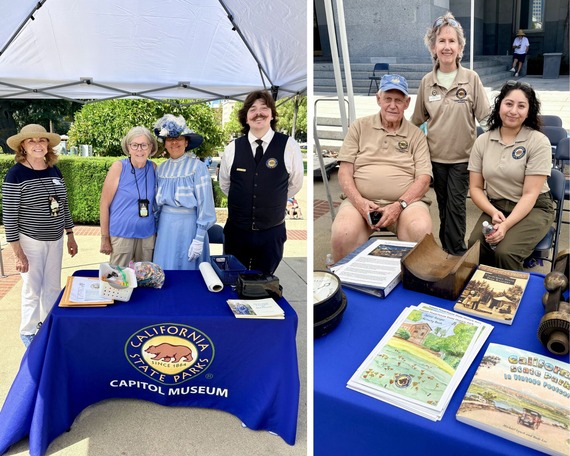 State Capitol
Staff from Capital and Gold Fields districts and volunteers from the California State Capitol Museum Volunteer Association (CSCMVA) and Friends of the Folsom Powerhouse Association (FFPA) shared stories and information during California Admission Day festivities on Sept. 9 on the west steps of the state capitol. Volunteers also shared slices of birthday cake celebrating the state's 176th birthday.
Left: CSCMVA volunteers Julie Lane, Marilyn Folker and Barbara Lee pose with Senior Park Aide Greyson Graham. Right: FFPA volunteer (and former state park peace officer) Dan Winkelman, volunteer Stephanie Dodge and Senior Park Aide Samantha Sisneros.
Photos from Kevin Murphy, Communications and Marketing Division
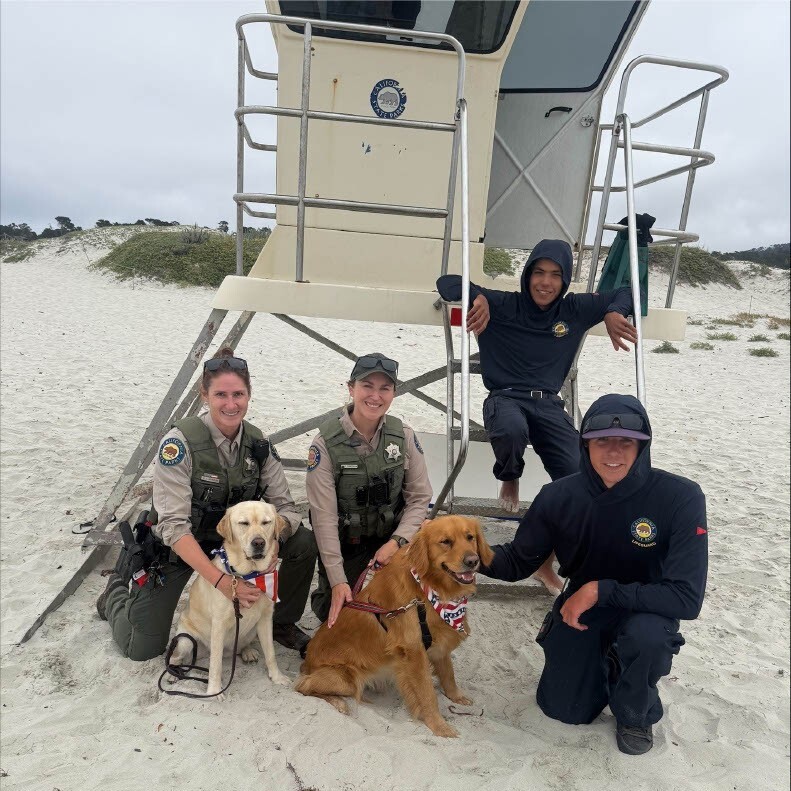 Asilomar State Beach and Conference Grounds
Two adorable therapy dogs, Joplin (left) and Mister Champ, recently visited with their handlers. They enjoy visiting hospitals, schools, Air Force bases and police departments to spread joy. They even showed off a few tricks. Staff pictured are (left to right) State Park Peace Officer (SPPO) Grace Johnson, SPPO Ashley Zimmerman and seasonal lifeguards Camillo Downey and Luca Bozzo.
Editor's note: While dogs on leash are permitted on the grounds of this park, other state beaches and parks have different rules. Learn more about taking your pets to state parks in our Visiting State Parks With Your Dog webpage.
Photo from Ashley Zimmerman, Monterey District
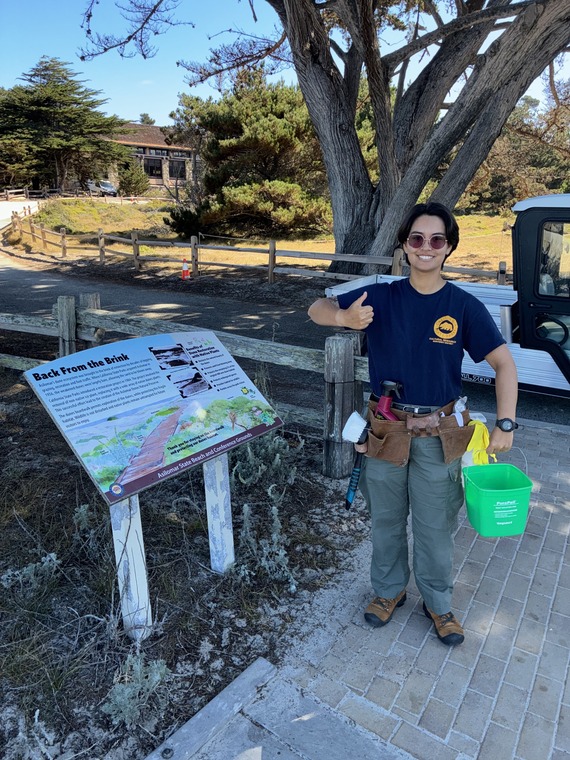 Asilomar State Beach and Conference Grounds
Senior Park Aide Sophia Rose did a great job cleaning every interpretive panel in the park this week. Thank you, Sophia!
Photo from Joseph Starr, Monterey District
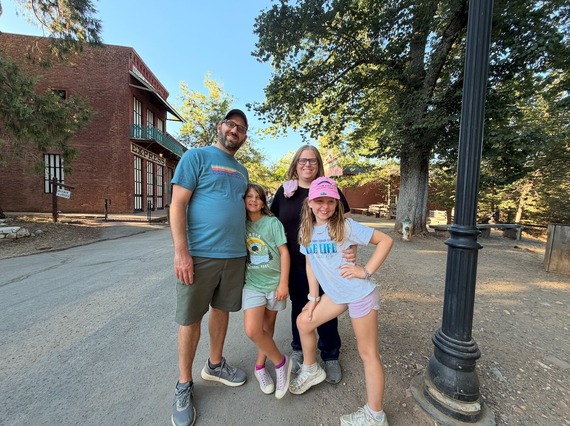 Columbia State Historic Park
My family spent the Saturday of Labor Day weekend at this park. We had a great time panning for gold, riding a stagecoach and exploring everything the park had to offer. I’m looking forward to going back in December for the Communications and Marketing Division’s holiday gathering!
Photo from Marty Greenstein, Communications and Marketing Division
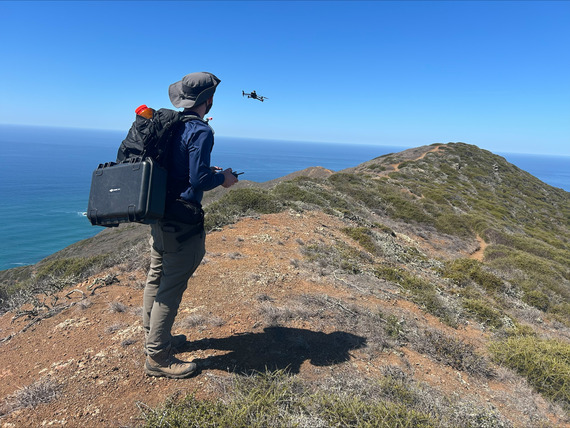 Point Sal State Beach
Channel Coast District Environmental Scientist Sean Lichter, who is an FAA-licensed unmanned aircraft system pilot, deploys his department-issued drone to conduct an environmental survey over the breathtaking and rugged terrain of the park.
Photo from Channel Coast District
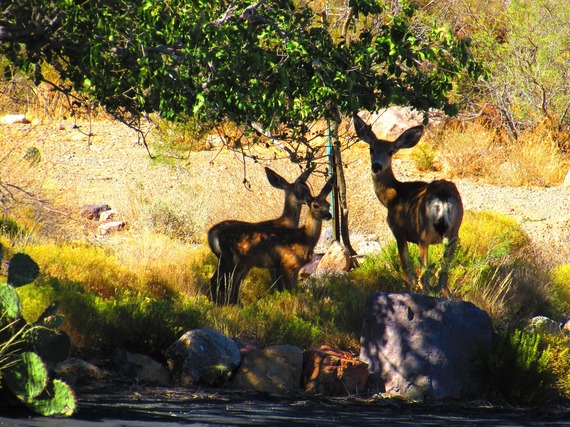 Providence Mountains State Recreation Area
On the first day of the season, three mule deer (a mother and her two fawns) were spotted at a pond near the parking lot.
Photo from Joseph William Dahlin, Inland Empire District
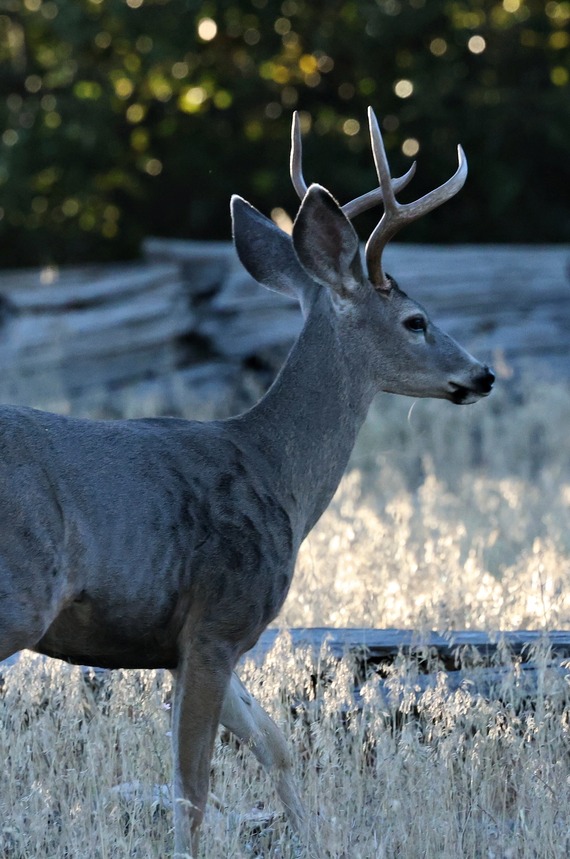 Cuyamaca Rancho State Park
A mule deer buck strikes a pose.
Photos from Michele Hernandez, Colorado Desert District
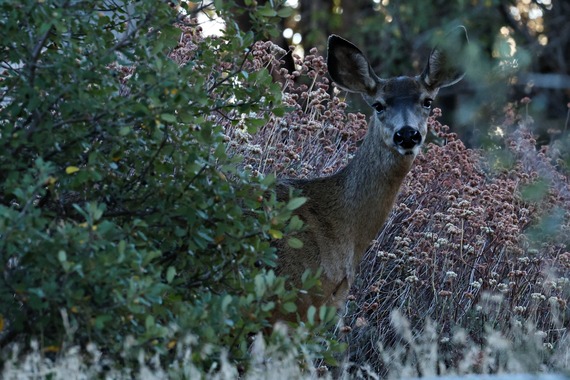 Cuyamaca Rancho State Park
A mule deer doe takes a peek from behind a bush just after sunrise.
Photos from Michele Hernandez, Colorado Desert District
 Mono Lake Tufa State Natural Reserve
A curious local (garter snake) greeting a visitor.
Photo from Matthew Richards, Sonoma-Mendocino Coast District
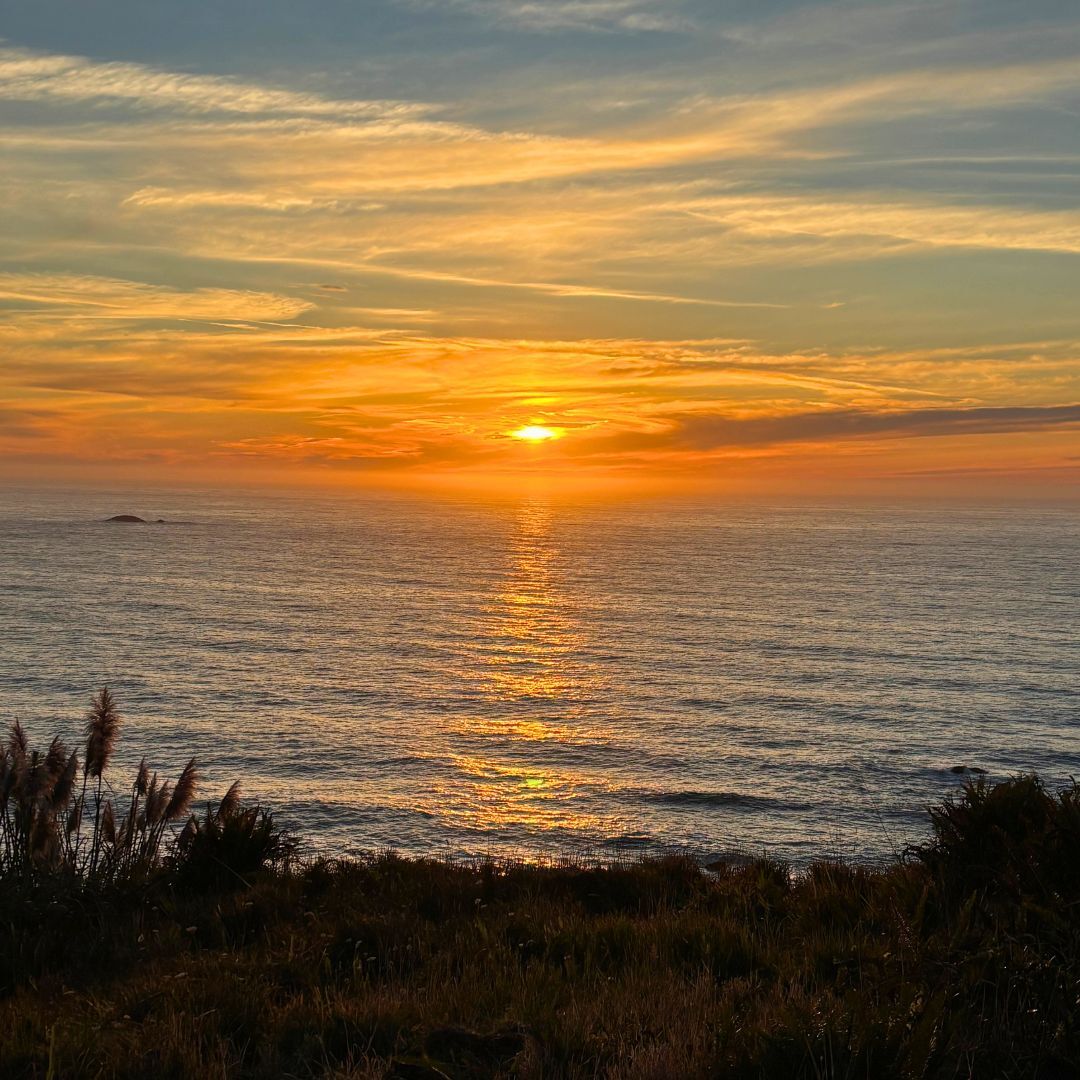 Sue-meg State Park
A beautiful sunset reflects over the ocean.
Photo from Pauline Manning, North Coast Redwoods District camp host
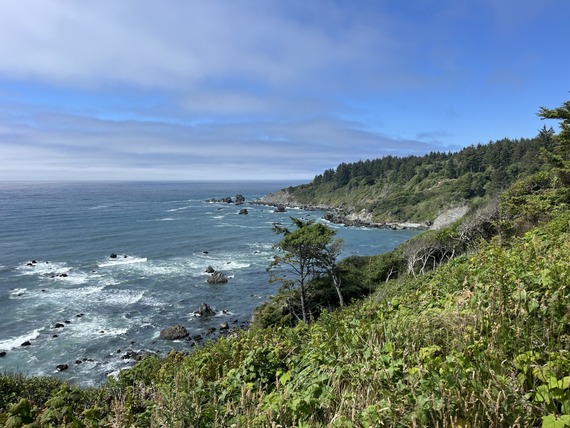 Sue-meg State Park
Stunning views from Palmer's Point.
Photo from Kevin Manning, North Coast Redwoods District camp host
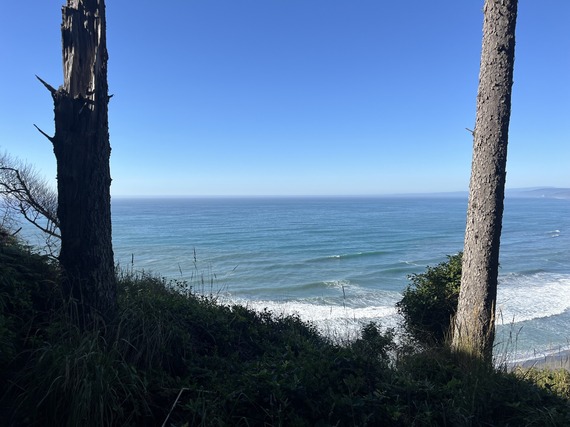 Sue-meg State Park
A view of Agate Beach.
Photo from Kevin Manning, North Coast Redwoods District camp host
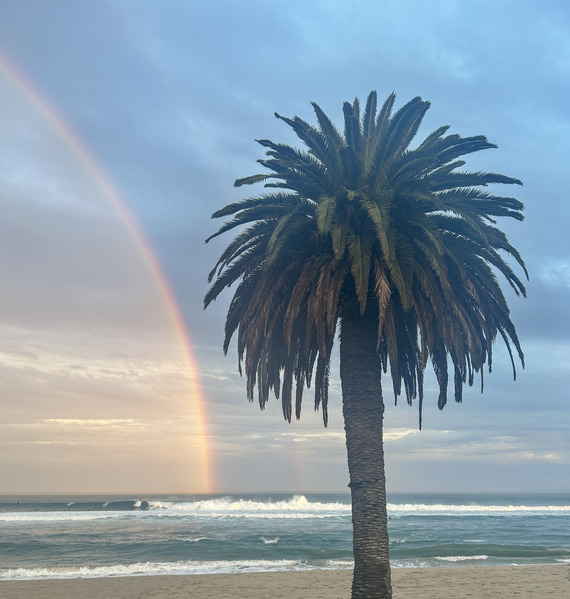 Malibu Lagoon State Beach
A rainbow over Malibu Lagoon as Hurricane Marie swells hit Southern California on Sept. 6.
Photo from Teodoro Vecchione, Angeles District
|
|
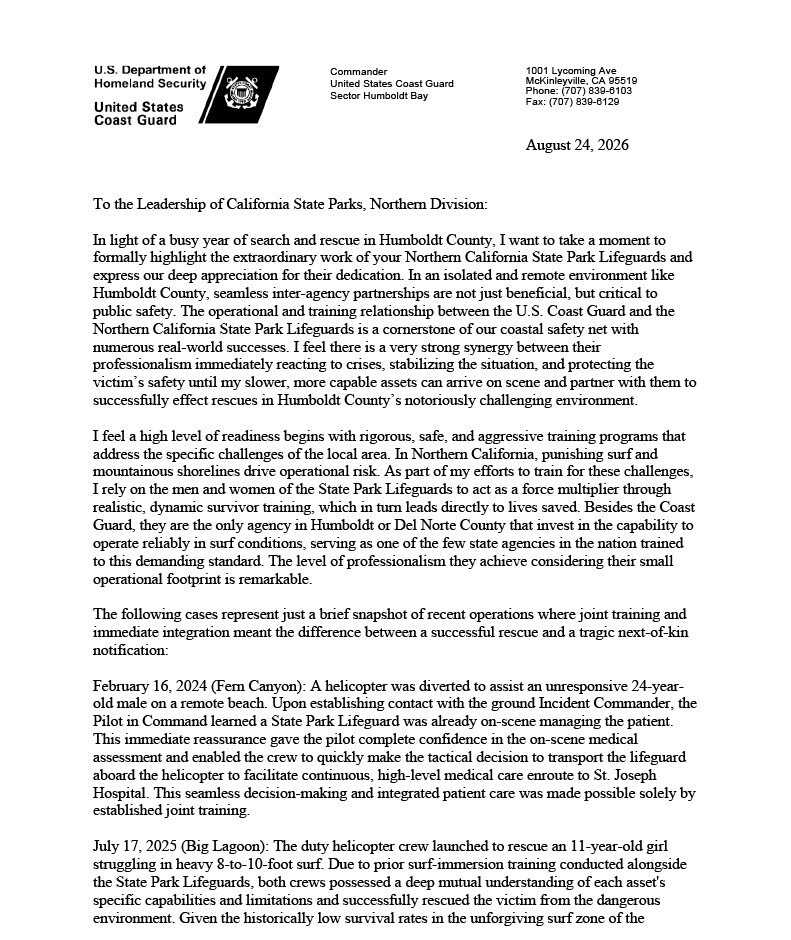
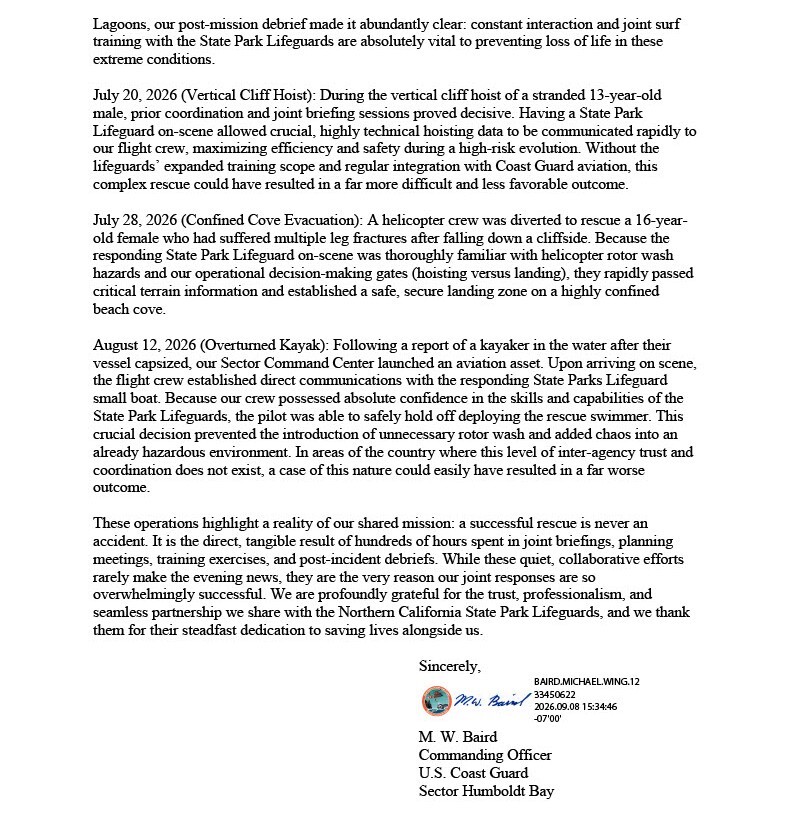
A Thank You from the U.S. Coast Guard to North Coast Redwoods District Lifeguards
Shared by: North Coast Redwoods District
Here are some upcoming State Parks events. For a list of more upcoming events, please visit www.parks.ca.gov/events.
-
Biodiversity Week Bird Walk with John Lovio — Cuyamaca Rancho State Park, Saturday, Sept. 12, 8–10 a.m. Event Fee: Park Day-Use Fee: Free. Expert birder and environmental scientist John Lovio will lead this bird walk through various habitats found in the Stonewall Mine area. From riparian areas through meadows and into the forest, John will point out birds through sight and sound. Come out and learn more about the birds that live and visit this area of Cuyamaca. This event is for all ages and all skill levels. Bring a snack and water and wear sturdy shoes. The pace of this walk is slow. Meet at the Trout Pond Parking Area between Paso Picacho and Cuyamaca Lake. Parking is free. For more information or if you have any questions, please contact: michele.hernandez@parks.ca.gov.
-
BioBlitz for Biodiversity — Pacheco State Park, Saturday, Sept. 12, 9–11 a.m.: Join our guided hike through Pacheco State Park and participate in our BioBlitz! We will be using iNaturalist to record observations of all living things that we can find in the park! On this hike, you will learn how to use iNaturalist and what wildlife call Pacheco home. Please make sure you have the iNaturalist app installed on your phone before arriving to the park, as there is little to no cellular service at Pacheco. Bring plenty of water and good shoes for hiking on uneven terrain. For more information or if you have any questions, please contact: hightchew@parks.ca.gov.
-
Fiestas Patrias — Old Town San Diego State Historic Park, Saturday, Sept. 12, 11 a.m.–4 p.m. Event Fee: Free. Park Day-Use Fee: See event details for information on fees. Atención y bienvenidos! Attention and Welcome! This September, celebrate the rich histories at Old Town San Diego State Historic Park as it comes alive with the vibrant sights, sounds and traditions of Fiestas Patrias! The park invites families, locals and visitors to join in a festive celebration honoring the start of Mexico's fight for Independence. Join Old Town San Diego State Historic Park for this family-friendly celebration of Mexican culture and history! This event is made possible through the Boosters of Old Town San Diego a non-profit organization committed to supporting history, culture, and historic preservation in Old Town San Diego State Historic Park. Learn more about the Boosters of Old Town at boostersofoldtown.com. For more information or if you have any questions please contact: 619-220-5422.
-
Latino Conservation Week/California Biodiversity Week: Journey Through the Wetlands — Border Field State Park, Sunday, Sept. 13, 9 a.m.–noon. Event Fee: Park Day-Use Fee: See event details for information on fees. Presented by San Diego Bird Alliance in collaboration with The Nat, U.S. Fish & Wildlife Service, the Hispanic Access Foundation and local conservation partners, Latino Conservation Week is an annual celebration highlighting the important role the Latinx community plays in enjoying, protecting and caring for our region’s natural resources. "Journey Through the Wetlands" will be hosted by the Tijuana River National Estuarine Research Reserve. It will kick off Latino Conservation Week, while also celebrating the end of California Biodiversity Week. Location: Tijuana Estuary Visitor Center and surrounding trails. What to bring: Comfortable shoes, sun protection, reusable water bottle. Participants can explore the wetlands through bilingual guided walks, birdwatching, nature talks, hands-on activities, arts and crafts, and interactive science experiences. From discovering the tiny creatures living in the water to learning about the plants and birds that depend on the estuary, there will be something for every age and interest. Registration for the event is encouraged, not required. For more information or if you have any questions please contact: Kornelas@sandiegobirdalliance.org.
-
On the Edge of Empire: Archeology of the Monterey Bay Author Talk — Monterey State Historic Park, Wednesday, Sept. 16, 6–7 p.m.: Event Fee: Free. Park Day-Use Fee: See event details for information on fees. To commemorate Mexican Independence Day and California Latino Heritage Month, Monterey State Historic Park presents a free talk by archeologist Dr. Ruben Mendoza titled “On the Edge of Empire: Archaeology of the Spanish Royal Presidio and Missions of the Monterey Bay, 1995-2025.” Join us in California’s First Theater to hear from this scholar who has been instrumental in uncovering Monterey County’s early history. For more information or if you have any questions please contact: aaron.gilmartin@parks.ca.gov.
|
|
|
Sept. 9, 2026
|
|
|
The Weekly Digest includes a collection of news articles related to the
California Department of Parks and Recreation. The views expressed and opinions do not always reflect that of the department.
To view this week's News Clips, please visit www.parks.ca.gov/NewsClips.
 Weekly Digest Article and Photo Submissions
If you have an article or photo you would like to submit for the Weekly Digest, please use this submission form or click the button above.
For an article submission, please include:
- Author’s name and division/district.
- All relevant information (e.g., headline, park name, dates, name of event, individuals’ full names and titles, etc.).
Articles should be no longer than 500 words. Articles may be edited for space.
For photos, please include:
- Photo credit info and captions.
- Photo release forms should be kept on file for non-employees or volunteers.
Unless otherwise noted, all photos included in the Weekly Digest are courtesy of the California Department of Parks and Recreation.
The deadline for Weekly Digest submissions is close of business Thursday. For more information, email WeeklyDigest@parks.ca.gov.
|
|
|
|
|