State Historical Resources Commission Engages the Public During California Preservation Conference
Story from: William Burg, Amy Crain and Megan Borthwick, Office of Historic Preservation
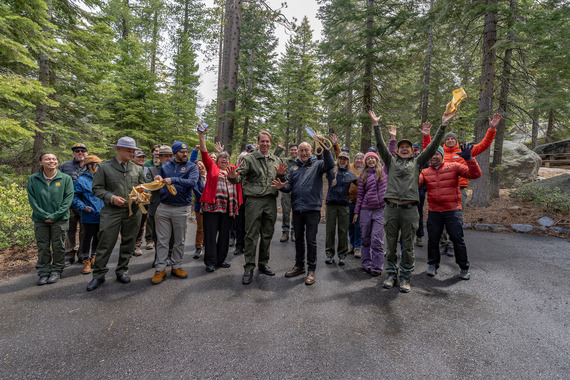
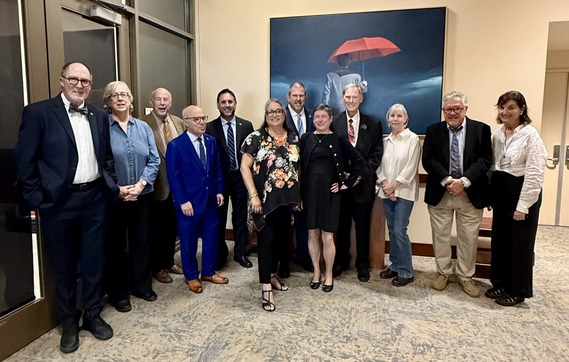 Current and former members of the State Historical Resources Commission and staff from the Office of Historic Preservation met in Riverside to honor the distinguished service of retiring Commission members Janet Hansen, Luis Hoyos and René Vellanoweth. Pictured (from left to right): Lee Adams, Jody Brown, Alan Hess, Neal Payton, Adam Sriro, Julianne Polanco, Bryan Brandes, Tara Lynch, Wayne Donaldson, Janet Hansen, Luis Hoyos and Lauren Bricker. Photo from Megan Borthwick, Office of Historic Preservation.
Members of the State Historical Resources Commission participated in the Office of Historic Preservation’s California Statewide Historic Preservation Plan listening session on May 6 in Riverside. Coinciding with the annual California Preservation Conference, members of the public and conference attendees were provided an opportunity to share insights and preservation priorities to inform the update to the California Statewide Historic Plan.
During the session, State Historic Preservation Officer and Commission Executive Secretary Julianne Polanco informed attendees the plan is a guiding document outlining the vision, goals and objectives for historic preservation efforts statewide. A robust and engaging set of comments was received from the more than 45 people in attendance. Some of the comments included the desire to ensure the stories and places of underrepresented communities are shared and preserved, and that the value of preservation is communicated to the public, especially the next generation.
While in Riverside, the Commission held its quarterly meeting on May 7. During the meeting, Polanco and members of the Commission honored individuals who have made an impact in the field of preservation through resolutions of commendation. California Preservation Foundation Executive Director Cindy Heitzman was honored on her retirement following the positive impact she made on preservation statewide. Three retiring Commission members were also recognized. Luis Hoyos was commended for his distinguished service as an architectural member of the Commission from 2017 to 2025 and for his overall contributions to preservation as a practitioner and professor. René Vellanoweth was honored for his role as an archaeology member of the Commission and for his contributions to preservation, particularly for his expertise in coastal and island archaeology. Janet Hansen was recognized for her time on the commission as a historian member as well as for her leadership in significant preservation efforts in Southern California.
The Commission considered five nominations for the National Register of Historic Places, including the Raymond Hotel Apartments, the Los Angeles General Hospital Acute Unit, the San Diego Bungalow Courts Multiple Property Documentation Form, the Elm Courts and the El Cantorral Court. Several members of the public spoke in support of the nominations and each was recommended as eligible for listing on the National Register of Historic Places by the Commission. They will be forwarded to the Keeper of the National Register at the National Park Service for consideration.
A recording of the meeting is available through CAL-SPAN. For information about past and future meetings, including properties nominated to the National Register of Historic Places, please visit the Office of Historic Preservation.
Angel Island State Park Helps Launch New Initiative for Gray Whale Conservation
Story and photos from: Allie Aardema, Bay Area District
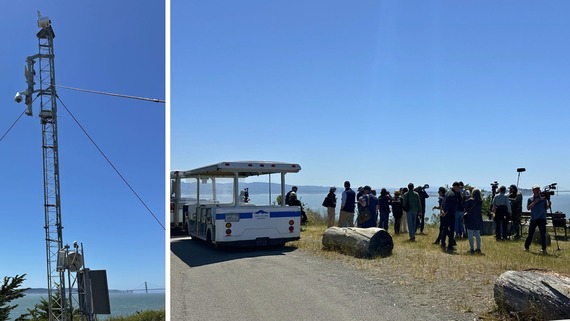 Left to right: The newly launched WhaleSpotter camera. Media crews capturing the whale necropsy site.
Angel Island State Park (SP) hosted a very special day centered around gray whale conservation in the San Francisco Bay on May 19. Researchers from the UC Santa Barbara Benioff Ocean Science Laboratory invited maritime partners, media outlets and State Parks representatives to Angel Island SP to celebrate the launch of a new WhaleSpotter camera recently installed at Point Blunt. The camera will help monitor gray whale activity in real time through AI-powered thermal detection, giving vessel operators a better chance to avoid whale strikes while also helping researchers collect important migration data. Within two hours of its instillation, the WhaleSpotter identified 180 blows, where whales were coming to the surface to breathe.
About 40 people attended the media day, including representatives from Vessel Traffic Services (VTS), the United States Coast Guard, San Francisco Bay Ferry, the Marine Mammal Center, the San Francisco Environment Department, the CEO of WhaleSpotter, and Bay Area District Superintendent Maria Mowrey and Deputy District Superintendent Cara O’Brien. Media crews from outlets including KQED, NBC, SFGATE and ABC7 News Bay Area spent the day documenting the project.
The group traveled around the island together, stopping at the visitor center, a lookout on Sandy Springs Beach, the site for whale necropsy, and Point Blunt for the ribbon-cutting ceremony. As everyone gathered near the new camera overlooking the bay, several whales began breaching offshore. It was an incredible moment to show how the initiative would work. As sightings came in, the camera uploaded the information to WhaleSafe, a free public database run by the Benioff Laboratory, while VTS Director of San Francisco Gary Reed radioed the locations to nearby vessels in real time.
UC Santa Barbara researchers are hoping the camera will help answer some of the big questions surrounding the increase in gray whale sightings inside the bay over recent years. Last year alone, 21 gray whales were found dead in the Bay Area, with nearly half believed to have been struck by vessels. Scientists think changing ocean conditions and climate impacts are playing a role in shifting whale behavior and migration patterns, making projects like this more important than ever.
As the first stationary camera of its kind in California, the WhaleSpotter at Point Blunt is just the beginning. The long-term goal is to create a network of whale monitoring cameras throughout the bay, with a second camera was installed aboard a San Francisco Bay Ferry service just this week.
Angel Island SP is incredibly excited to be part of this project and to support the partnerships, research and conservation efforts focused on protecting these magnificent animals and understanding the changing marine environment around us.
Advanced Training for Curators and Collection Managers Hosted at Asilomar State Beach
Story and photos from: Nancy Jenner, Cultural Resources Division
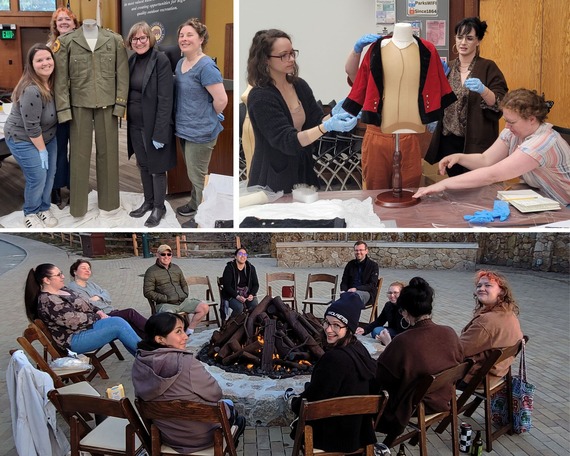 Clockwise, from top left: Katie McKendry-Grove, Alexandra Jonassen, Peggy Ronning and Stephanie Wolfe pose with their mannequin during the textile workshop; Bethann Watson, Hailee Singleton (hidden), Ursula Hebert and Elizabeth Fisher dress a mannequin during the textile workshop; the training group enjoys the firepit at Asilomar. Clockwise, from far left: Phaedra Nations, Wolfe, Damian Ruddy, Miranda Bello, Andrew Case, Tyler Gibson, Jonassen, Hebert, Watson and Maria Garcia.
Nineteen curatorial staff participated in the Museum Collection Management Advanced training at Asilomar State Beach (SB) and Conference Grounds during the week of April 20. This was the first in-person training for this group in seven years, and the chance to network face-to-face was incredibly welcomed!
The training included sessions about the Native American Graves Protection and Repatriation Act (NAGPRA) for curators, new features of The Museum System, preparing for the revision for Museum Collections Management, and a “collections clinic,” in which participants discussed issues they have at their parks and received advice from their colleagues.
We were able to visit the new collections storage facility in Monterey District and learn how its construction was made possible by incorporating it into successive maintenance training programs at Mott Training Center. This is an innovative model many of us could use to improve storage at our parks.
Our peers at the Pacific Grove Museum of Natural History (PGMNH) and the National Steinbeck Center in Salinas graciously gave us tours of their facilities. The staff at these museums shared insights into the challenges and successes they’ve had developing exhibits and caring for their collections. We particularly fell in love with the “Wonder” exhibit at the PGMNH and recommend it to everyone!
The highlight of the training was a full-day session on the care of textiles, presented by Beth Szuhay, head of the textile conservation department at the Fine Arts Museums of San Francisco (FAMSF). Participants learned how to handle, evaluate and do condition reports on historic textiles. Then Szuhay showed us how to customize mannequins for specific costume pieces and properly dress the mannequin for display. Finally, she gave us tips on the proper storage of costumes.
We give huge thanks to Szuhay from FAMSF, Lisa Josephs from the National Steinbeck Center and the staff of the PGMNH for sharing their knowledge and experiences with us. Instructors from State Parks who gave their time included Historian II Joseph Starr from Asilomar SB, NAGPRA Program Lead Anne Amati from the Cultural Resources Division, Curator Sara Gray from Monterey District and TMA Administrator Phaedra Nations, also from the Cultural Resources Division. The training was a great experience and we were delighted to be back at Asilomar.
A State Park Peace Officer Attends Career Fair
Story and photo from: Gaby Campos, Channel Coast District
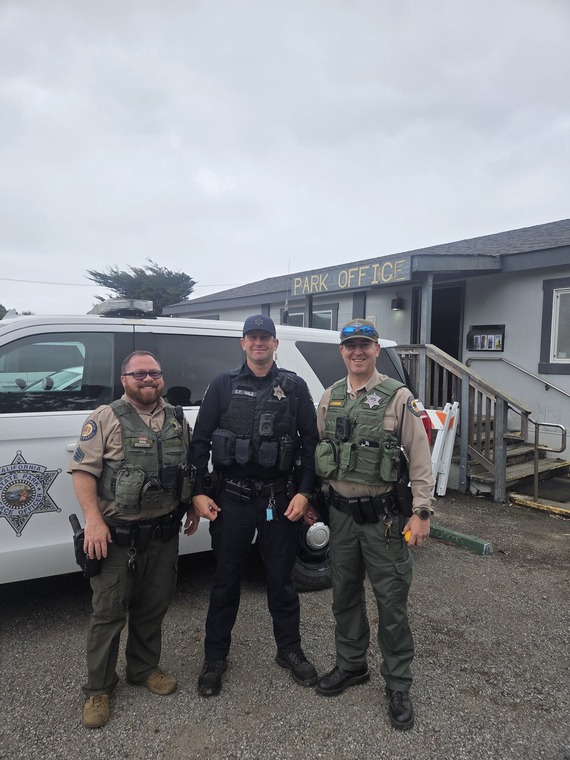
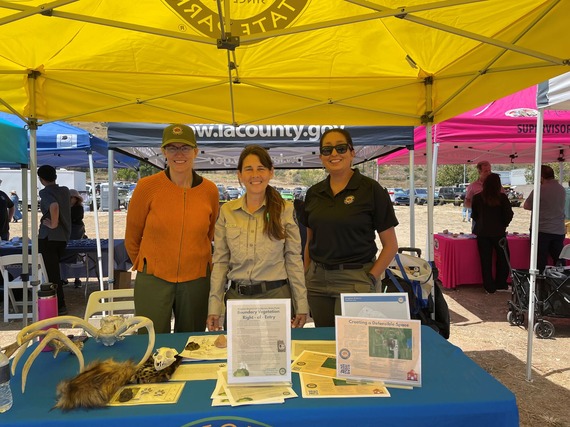
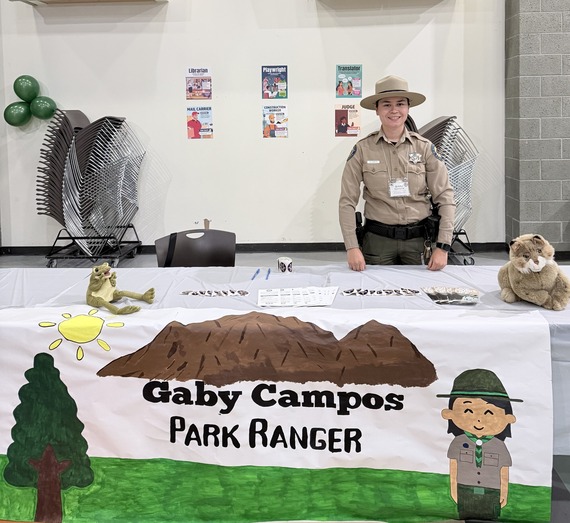 State Park Peace Officer Gaby Campos at the booth with a custom poster made by Link Crew students.
I recently attended the International Studies Learning Center (ISLC) Link Crew Career Fair at Legacy High School in South Gate, representing the Channel Coast District. The event provided students with an opportunity to explore a variety of career paths, interact with professionals from different fields and learn more about future educational and professional opportunities.
The career fair was organized by the ISLC Link Crew program, where senior students serve as mentors and support incoming freshmen as they transition into high school. As part of its mission to guide and encourage students, Link Crew hosted the event to help students begin thinking about their futures and expose them to careers they may not have previously considered.
During the event, I spoke with students about my role as a state park peace officer (SPPO) and shared information about the multiple careers within California State Parks. Students asked questions about law enforcement, public safety, park resource protection and the responsibilities involved in serving visitors and protecting California’s natural and cultural resources.
I also discussed the 8-month-long academy training required to become a SPPO, including the importance of teamwork, professionalism, communication skills and community engagement when serving the public. A few students were especially interested in hearing about patrol duties and emergency response, while others were surprised to learn that park rangers do much more than “just hike all day and see animals.”
Throughout the event, over 400 students visited booths hosted by professionals from a variety of industries. The fair allowed students to make connections, ask questions, and gain a better understanding of potential career pathways after high school.
It was rewarding to engage with students who were eager to learn about careers in public service and environmental stewardship. Events such as the ISLC Link Crew Career Fair play an important role in helping students broaden their perspectives and build confidence in their future goals. Hopefully, a few students left the event considering a career in state parks.
Sonoma Developmental Center Open Space Invites the Public to Clean Up Parklands
Story and photos from: Carmen Vanni, Bay Area District
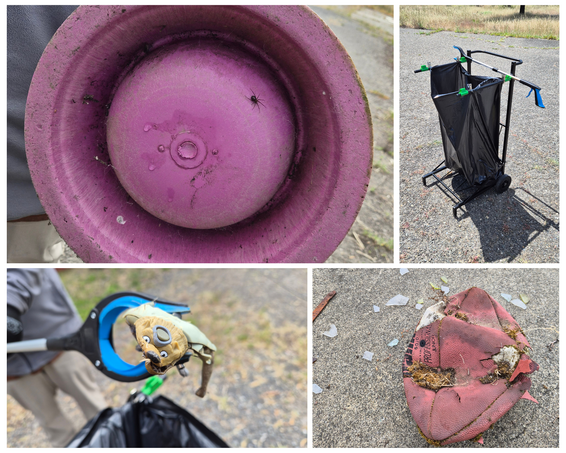 Clockwise from top left: The underside of a rubber dog water dish is held up to the camera showing off a spider. The spider was safely placed back into the wild before the dish was properly disposed. A trash bag held on a portable frame with a plastic trash grabber resting on the handle. A collection of glass shards and a deflated football. A plastic werewolf toy is being held up to the camera by plastic trash grabbers.
Visitors were invited to help clean up trash at the recently acquired Sonoma Developmental Center Open Space in Eldridge on May 23. A small but mighty crew walked the paved fire road on the eastern side of the park and picked up several pounds of trash. Some highlights included a deflated football, glass bottles, spray paint cans and a plastic werewolf toy. We are thrilled to see these items removed from the delicate Sonoma Creek Watershed!
On Jan. 1, 2024, the transfer of approximately 750 acres of open space to California State Parks was finalized, marking the largest land acquisition in the Sonoma Valley since 2010. This new addition to State Parks ensures protection under their mission, with management plans already underway to safeguard and enhance the property.
 PARTNER NEWS
Parks California Highlights Stories of Heritage, Preservation and Community Stewardship in State Parks
Story from: Parks California
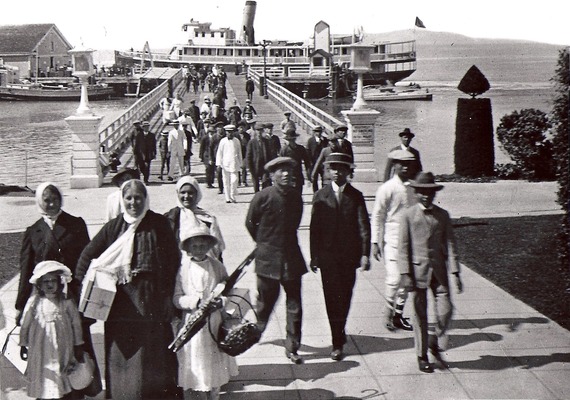 Immigrants arriving at Angel Island State Park. Photo from California State Parks.
This May, Parks California highlighted a few of the people, places and stories that shape California’s public lands through storytelling features focused on Asian American and Pacific Islander Heritage Month and National Preservation Month.
Parks California partnered with Angel Island State Park to spotlight Asian American and Pacific Islander history through the reflections of park interpreter Cynthia Pu. The feature highlights Angel Island’s role as the largest immigration station on the West Coast, the experiences of immigrants detained there, and how these stories continue to shape conversations around identity, belonging and community today.
In collaboration with Los Angeles State Historic Park, Parks California also shared how preservation extends beyond protecting historic places — it also means preserving community connections, cultural heritage and access to green space in the heart of a global metropolis. The story explores the park’s layered history, from Indigenous stewardship and rail infrastructure to the community advocacy that helped transform the former industrial site into public parkland.
Together, these stories reflect Parks California’s broader “Caring for California, Together” engagement campaign, which highlights the shared stewardship, community care and cultural connections that shape California’s public lands.
Read the stories:
  
|