Celebrating 50 Years of the Iconic Antelope Valley California Poppy Reserve
Story from: Lori Wear, Great Basin District, and Jo Biswas, Communications and Marketing Division
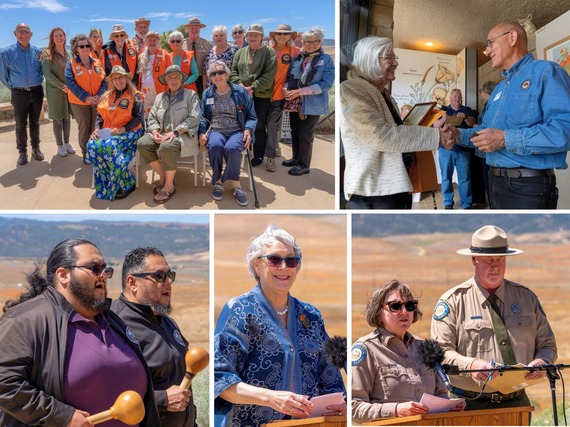 Top left: Poppy Reserve Mojave Desert Interpretive Association board members and Poppy Reserve volunteers with California State Parks Director Armando Quintero, Chief Deputy Director Liz McGuirk and Great Basin District Superintendent Russ Dingman. Top right: Director Quintero greets Mary Wilson of the Wildflower Preservation Foundation inside the Jane S. Pinheiro Interpretive Center. Bottom row: Speakers and performers at the April 24 ceremony celebrating the 50th anniversary of the park's dedication. All photos from Brian Baer, Communications and Marketing Division.
Antelope Valley California Poppy Reserve State Natural Reserve (SNR) marked the 50th anniversary of its dedication on April 24, celebrating five decades of protecting and preserving California’s native wildflowers – including the state’s official flower, the California poppy. In collaboration with the Poppy Reserve Mojave Desert Interpretive Association (PRMDIA) and the California State Parks Foundation, State Parks proudly commemorated the milestone with a special ceremony honoring the people, partnerships and community efforts that helped establish and sustain the 1,800-acre reserve in the Antelope Buttes, west of Lancaster.
The Celebration:
The celebration took place in the courtyard of the Jane S. Pinheiro Interpretive Center, overlooking the reserve’s rolling hills. The event brought together tribal leaders and members, along with local and elected officials, community partners and descendants of families whose land helped form the reserve. Attendees gathered to explore exhibits, walked nearby trails to take in wildflower displays and reflected on the park’s legacy.
The program featured a ceremonial opening that included a traditional blessing led by Fernandeño Tataviam Band of Mission Indians President Rudy Ortega, Jr., a presentation of the colors, and a musical performance by the Quartz Hill High School Brass Ensemble. Speakers reflected on the Poppy Reserve’s legacy of protecting and ensuring access to vital natural resources and on the decades-long partnerships and community efforts that have contributed to its creation and preservation.
How It Started:
The Poppy Reserve was born from a grassroots effort to protect California’s wildflower heritage. In the 1940s, local resident Jane S. Pinheiro, a self-taught artist, recognized the threat posed by rapid development to local wildflower fields. Determined to protect the California poppy, the state's official flower, she dreamed of creating a "poppy park." Jane collaborated with the Wildflower Preservation Committee, along with the Lancaster Women's Club and the California State Parks Foundation, to raise funds to purchase land for a park. Schoolchildren across California contributed by collecting "Pennies for Poppies." Their combined efforts led to the successful establishment of the Antelope Valley California Poppy Reserve SNR, which officially opened in 1976.
How It's Going:
Over the past five decades, the Poppy Reserve has expanded in size and undergone many improvements, including accessible trails and new exhibits and features that ensure more people of all abilities can enjoy the park in more ways. Today, it welcomes tens of thousands of visitors each year – sometimes exceeding 200,000 during peak bloom seasons – drawn by its colorful displays of wildflowers, including California poppies.
Milestones:
-
1976: Officially designated as Antelope Valley California Poppy Reserve SNR
-
1977–1981: Expanded by 339 acres through state land acquisitions.
-
1982: Jane S. Pinheiro Interpretive Center completed.
-
1995: Interpretive center renovated with new exhibits and features.
-
2016: A 0.7-mile accessible walking trail is added.
Learn more about the Poppy Reserve in our recent State Parks blog post.
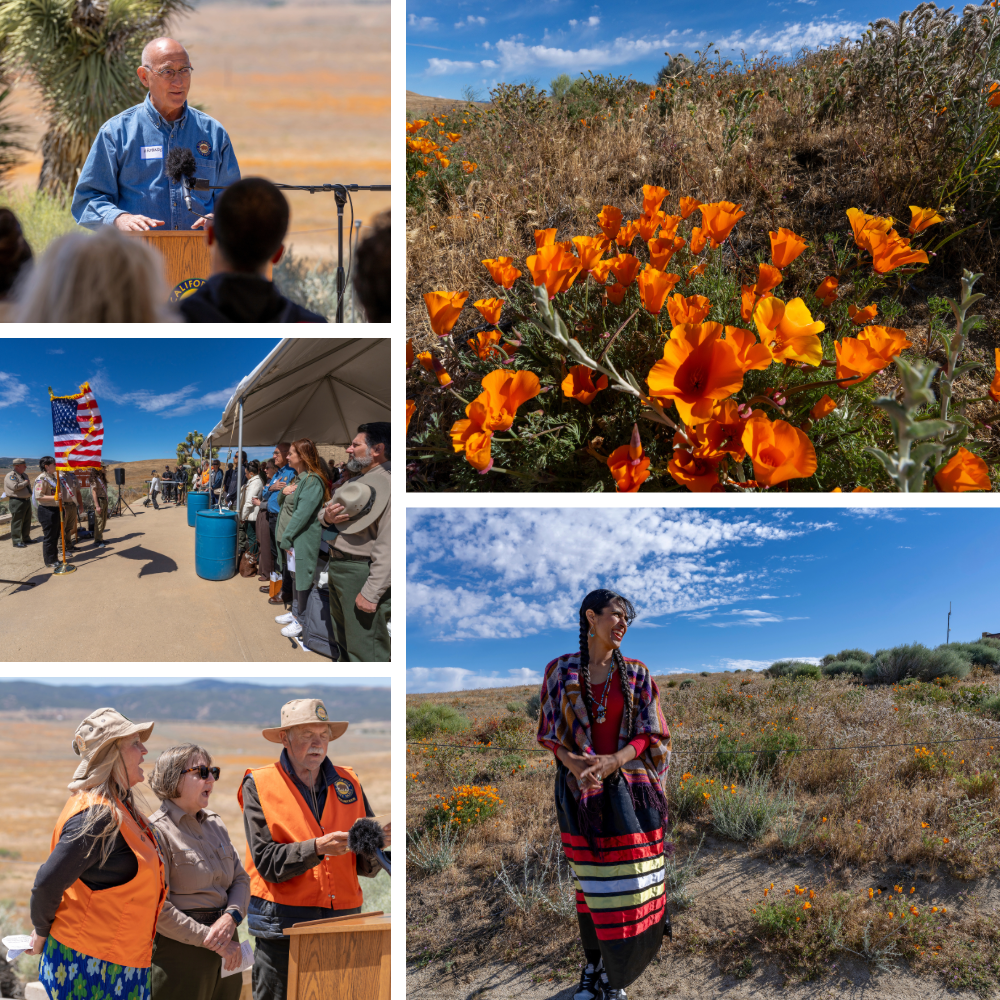 Moments from the April 24 ceremony celebrating the 50th anniversary.
May is National Preservation Month
Story from: Office of Historic Preservation
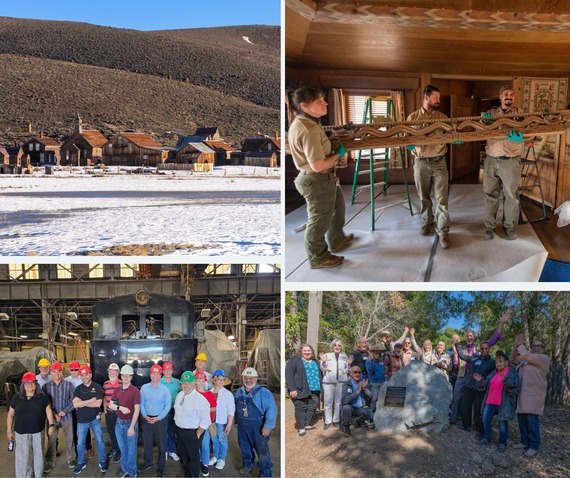 Clockwise from top left: Preserved buildings at Bodie State Historic Park; staff taking care of Vikingsholm at Emerald Bay State Park; celebrating the placement of a historic marker at Pond Farm Pottery inside Austin Creek State Recreation Area; members of the State Historical Resources Commission and staff from the Office of Historic Preservation and Capital District check out the future of the Sacramento Railyards Shops. Photos from California State Parks.
With origins as a week-long celebration of historic places and preservation in 1973, Preservation Month commenced full force in 2005. Every May, preservation groups, civic organizations, communities and businesses celebrate their rich and diverse history with tours and other events. Preservation Month serves as an opportunity to celebrate and commemorate historic places and stories of our shared past and living cultures.
For the Office of Historic Preservation (OHP), this is an opportunity to highlight the year-round work that ensures historic resources throughout the state are recognized and preserved for generations to come. The OHP works with federal and state agencies, local and Tribal governments and the public to identify, evaluate and protect California’s vast and significant resources. Explore the OHP website to learn more.
As part of its statutory responsibilities, OHP reviews nominations submitted to the State Historical Resources Commission for listing on the National Register of Historic Places, the California Register of Historical Resources, State Historical Landmarks and Points of Interest. OHP also reviews and recommends for approval Federal Historic Tax Incentive and State Historic Rehabilitation Tax Credit projects. These projects include the rehabilitation and adaptive reuse of former military warehouses, office buildings and medical facilities. These projects have provided jobs, saved historic buildings from demolition and created or rehabilitated hundreds of housing units.
Additionally, OHP receives annually thousands of federal and state projects for review to ensure proposed work complies with the National Historic Preservation Act and the California Public Resources Code; and these projects meaningfully consider and address historical and tribal heritage resources. OHP works with cities, counties and other entities to provide technical assistance and grant opportunities that lead to improved historic preservation outcomes at a local level.
OHP is currently engaged in creating the 2028-2032 Statewide Historic Preservation Plan. The plan is required as part of the federal Historic Preservation Fund grant administered by the National Park Service. The plan is valuable to understanding the state’s vision and values to steward and celebrate our diverse and extensive cultural and historical resources. To craft the plan, OHP is actively engaging the public through listening sessions, surveys and other opportunities for input over the next several months. The values and opinions shared by all stakeholders are important to ensure the plan truly reflects public views. Listening sessions will continue through 2026. For more information about how to join in the conversation, please visit Statewide Historic Preservation Plan.
As the country celebrates the 250th anniversary of the Declaration of Independence and California celebrates its 175th year as a state, OHP encourages everyone to celebrate Preservation Month. Whether it is taking a walk through an historic part of your city or town or visiting one of over 1,100 state landmarks, California is not short on history to explore and celebrate.
State Parks Launches Pilot Program for Day-Use Reservations at McArthur-Burney Falls Memorial State Park
Story from: Northern Buttes District and Communications and Marketing Division
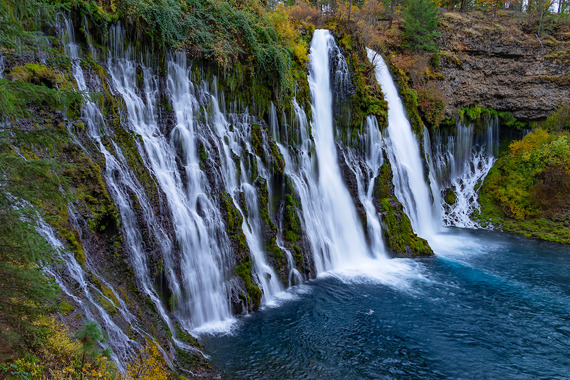 View of the iconic falls at McArthur-Burney Falls Memorial State Park. Photo from Brian Baer, Communications and Marketing Division.
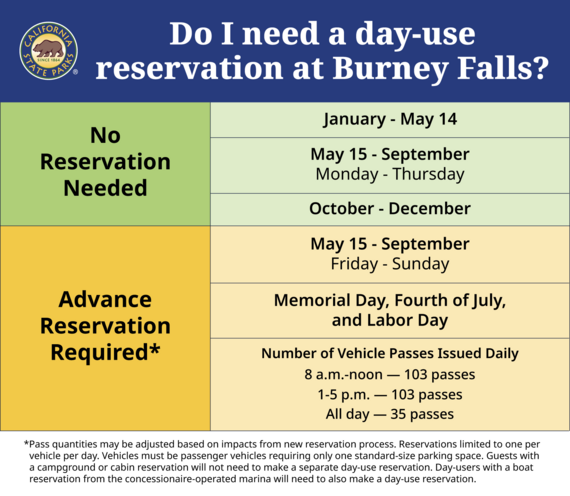
To reduce the impacts of overcrowding and to create a significantly improved visitor experience, State Parks will begin a pilot program requiring reservations to visit McArthur-Burney Falls Memorial State Park from Friday-Sunday and on holidays during peak visitation season, starting Friday, May 15, through Sunday, Sept. 27.
The goals of this new day-use reservation system, which will not be required Monday-Thursday, are to alleviate the strain on the park’s resources and infrastructure, and to improve visitor safety during the busiest summer days, when large crowds often overwhelm the park and the surrounding area. The public can make reservations starting Friday, May 1.
How will the pilot program for reservations work?
Under the pilot program, reservations purchased in advance via the Burney Falls webpage will be required for day-use entry. The park will offer 103 parking passes valid between 8 a.m. and noon, an additional 103 passes valid between 1 and 5 p.m., and 35 passes valid for the entire day. The cost will be $10 per vehicle plus a 55-cent processing fee. Discounts for seniors and persons with disabilities apply if eligible, as well as entry for annual pass holders, though reservations are still required. Same-day reservations will not be accepted.
Reservations will be limited to one per vehicle per day. Vehicles must be passenger vehicles requiring only one standard-size parking space. Passenger vehicles trailering a boat for day-use must also make an advanced reservation, pay their boat launch fees upon arrival at the park, and will be required to park in the marina day-use lot, which has limited pull-through parking capacity. Oversized vehicles, vehicles pulling other types of trailers, buses and recreational vehicles are not allowed in the park during the day-use reservation period. Tour buses and commercial tour groups are not allowed in the park without a pre-approved permit.
Guests with a campground or cabin reservation, including those with boats and trailers, will not need to make a separate day-use reservation; it will be automatically included with the overnight reservation. Check-in time for camping reservations is after 2 p.m. and will continue to be strictly enforced. It is anticipated that the new day-use reservation system will help alleviate the wait times required for campers to enter and re-enter the park. Day-users with a boat reservation from the concessionaire-operated marina will need to also make a day-use reservation.
For more information about the pilot program, view our press release.
 Don’t Forget to Submit a Golden Bear Award Nomination — New Deadline is May 31
Story from: Sonya Jones, Strategic Planning and Recreation Services Division
 The California State Park and Recreation Commission (SPRC) is still accepting nominations for the 2025 Golden Bear Awards until Sunday, May 31. Do you know someone who has helped create a healthier California through their work in public outdoor spaces? We want to hear about them!
This SPRC-led program recognizes and celebrates individuals and organizations that have, through their work for, with or in support of State Parks, demonstrated leadership and contributed significantly toward a healthier California, by helping to preserve the state's extraordinary biological diversity, protecting its most valued natural and cultural resources, and creating opportunities for high-quality outdoor recreation.
Six awards, one statewide, one per geographical division (Central, Coastal, Desert and Northern) and one honorary partner, will be presented to awardees by the SPRC during a public commission meeting. Recipients of the awards will receive a framed certificate commemorating their contributions.
To learn more about the history, qualifications, past award recipients and how to nominate candidates for a Golden Bear Award, please visit parks.ca.gov/GoldenBearAward or this link to go directly to the submission form: Golden Bear Award Nomination Form.
California Trails and Greenways 2026 Was a Success
Story from: Sammy Reyes and Noelle Breitenbach, Strategic Planning and Recreation Services Division
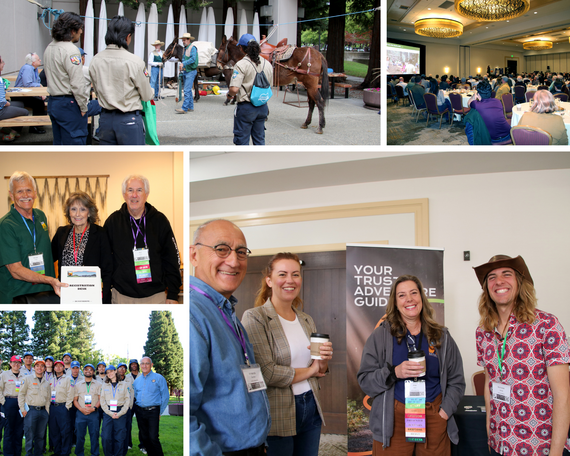 Top left: Doug Dollarhide and Michael Murphy from Backcountry Horsemen leading a mule packing demonstration for California Trails & Greenways attendees. Top right: Dr. Nooshin Razani gives the keynote speech during Tuesday's welcome dinner. Middle left: Ron Kruper, Maryanne Vancio and Kurt Loheit, board members for the California Trails Conference Foundation. Bottom left: State Parks Director Armando Quintero and members of the California Conservation Corps. Photos from Victoria Stehl, California Trails Conference Foundation. Bottom right: Director Quintero, Chief Deputy Director Liz McGuirk, Deputy Director of Strategic Planning and Recreation Services Division Alex Stehl and Nick Harvey, founder of Bay Area Redwood. Photo from Sammy Reyes, Strategic Planning and Recreation Services Division.
The 41st annual California Trails & Greenways training event brought more than 300 trail professionals, advocates and volunteers to San Ramon on April 13–17 for a dynamic week focused on the future of California’s outdoor trail and greenway systems. Hosted by the Strategic Planning and Recreation Services Division in partnership with the California Trails Conference Foundation, the event continues to serve as a key gathering space for those working across urban, rural and backcountry landscapes.
A highlight of this year’s program was the keynote address from Dr. Nooshin Razani, a pediatrician at UC San Francisco Benioff Children’s Hospital Oakland, whose work at the intersection of nature and public health underscored how access to green spaces plays a vital role in community well-being.
Throughout the week, participants took part in engaging educational sessions and discussions, and hands-on field experiences covering the latest approaches in trail design, construction, technology, maintenance, accessibility, management and inclusion. This event fostered meaningful collaboration and knowledge-sharing, equipping attendees with new ideas and practical tools to strengthen and sustain California’s trails and greenways.
As the field continues to evolve, gatherings like California Trails & Greenways remain essential in bringing people together to build connections, exchange expertise and advance a shared vision for accessible, resilient and well-managed trail systems across the state. Just as importantly, the event provides an opportunity to reenergize trail professionals in their work, strengthening their dedication to the stewardship of California’s trails and the communities they serve.
Multi-Agency Training Hosted at Henry Cowell Redwoods State Park
Story from: Andrew Dobbs, Santa Cruz District
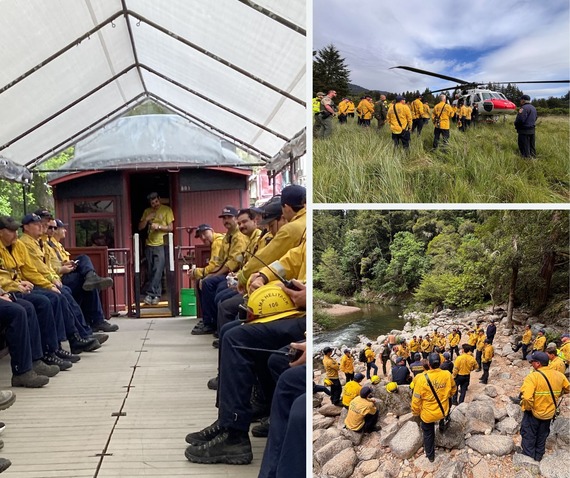 Clockwise from left: Responders ride the Roaring Camp Railroad along the river towards the training location; Helicopter 614 from Alma Helitak lands at Henry Cowell Redwoods State Park. Responders discuss rescue procedures and communication protocols along the San Lorenzo River. Photos from Macenzie McLernon, Santa Cruz District.
California State Parks and CAL FIRE hosted a multi-agency training and orientation exercise at the Garden of Eden, a popular swimming area along the San Lorenzo River, within Henry Cowell Redwoods State Park. The exercise brought together rangers and lifeguards from the Santa Cruz Mountains Sector, along with regional fire and rescue partners, to strengthen emergency preparedness at one of the park's most challenging response areas. The site sees 20 to 30 calls for service each year, where steep terrain, limited access and a complex river environment routinely demand a full rescue response.
Responders explored access routes, patient transport options and coordination procedures before the next real emergency. The training included a live demonstration by the Alma Helitack crew and their Sikorsky S-70i Firehawk helicopter. The crew walked the ground with responders and described the capabilities and limitations of aerial hoist operations in the river canyon. Roaring Camp Railroad joined the exercise to explain how rail access continues to support the park’s emergency response as the train is frequently called upon to transport responder and patients out of the canyon.
Thanks to all the participating agencies and staff from State Parks, CAL FIRE Santa Cruz/San Mateo Unit, Alma Helitack/Copter 614, CAL FIRE Santa Clara Unit, Roaring Camp Railroad, Felton Fire Protection District, Zayante Fire Protection District and Scotts Valley Fire Department.
Los Angeles State Historic Park Fellows Complete Certified Interpretive Guiding Training
Story and photos from: Angeles District
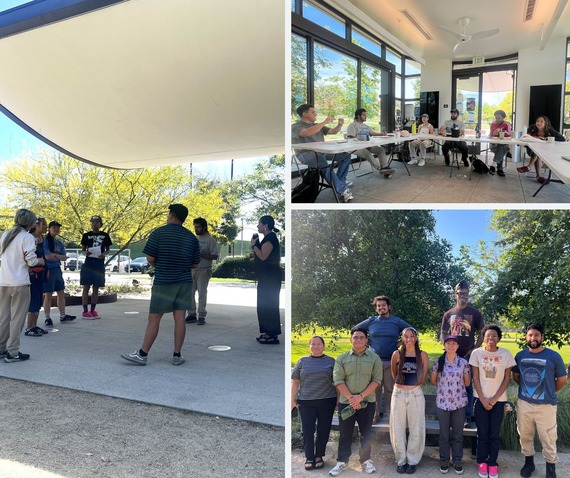 In the field and in the classroom - members of Los Angeles State Historic Park Community Engagement Fellowship Cohort #3.
Members of Cohort #3 of the Los Angeles State Historic Park Community Engagement Fellowship have recently completed one of their professional development activities. Working with the National Association of Interpretation, the fellows participated in certified interpretive guiding (CIG) training, a four-day seminar centered around interpretation and program development. CIG training is a transferable experience that offers participants a series of workshops and training sessions on how to create structured and informative interpretive projects and programs.
Teaching the fellows how to construct interpretive programming by offering hands-on experience in interpretation, each course offers guidance and resources on how to structure and create projects and community-based programs. Over the course of their training, each fellow was tasked with developing a project that addressed one community need or current issue. Six out of this year's nine fellows attended the training and developed projects based on food scarcity, community organizing and the history of professional language.
On June 13, in celebration of California State Parks Week, the fellows will start their next task: hosting their culminating end-of-the-year project called "Schools of Resilience," a community-based learning festival that will bring together a series of programs, skill-based workshops and community-led activities centered around self-sufficiency and community care.
State Historical Resources Commission to Conduct Listening Session, Consider Properties for Historic Designation During California Preservation Conference
Story from: Kevin Murphy, Communications and Marketing Division
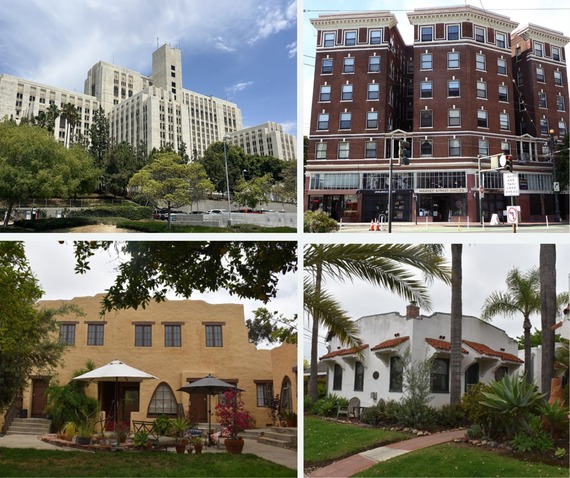 Properties being considered for nomination to the National Register of Historic Places include (clockwise from top left) Los Angeles County General Hospital (photo from Robert Chattal); Raymond Hotel Apartments in San Francisco (photo from Page and Turnbull); Elm Courts and El Cantorral Court in San Diego (photos from Marlena Krcelich).
Six historic sites, including former Los Angeles General Hospital’s Acute Unit, an Art Deco building once recognized as the largest hospital in the world, are on a list of properties being considered for nomination to the National Register of Historic Places at the State Historical Resources Commission meeting. On Thursday, May 7, the Commission will review the nominations, beginning at 1 p.m., during the California Preservation Conference in Riverside.
The Commission will also host a listening session the day prior, Wednesday, May 6, also at 1 p.m., for the California Statewide Historic Preservation Plan Update. The update concerns the planning cycle, summary assessment of historic and cultural resources, and a vision for historic preservation, goals and objectives. Input is invited from tribes, the preservation community, stakeholders, government agencies, non-governmental organizations and the general public.
One of the nominations, Los Angeles General Hospital, Acute Unit, is a district of 19.5 acres, forming part of the Los Angeles General Medical Center. Designed by Allied Architects Association of Los Angeles and built between 1927 and 1933, the Acute Unit is dominated by a 19-story, roughly H-shaped steel-framed building encased in board-formed concrete but also includes surrounding entry gates and related features. The property is eligible for historic listing under Criterion A, in the areas of Health/Medicine and Social History for its association with the large-scale expansion of Los Angeles County medical services, and advocacy against sterilization practices that affected Chicana women at the hospital. The property is also eligible under Criterion C, in the area of architecture as a prominent Art Deco building.
Nominations for the National Register of Historic Places approved by the Commission will be forwarded to the National Park Service for final consideration. Full details of all properties nominated may be found on the pending nominations webpage. Visit the National Register of Historic Places website or the California Historical Resources website for properties currently listed.
Participants in the California Preservation Conference and members of the public may attend the listening session or Commission meeting in person. The Commission meeting is also available virtually. Visit State Parks’ Public Notices for listening session and meeting details, including how to register in advance.
California State Parks supports equal access. If you are in need of a reasonable modification or special accommodation at the meeting or in accessing the agendas or submitting comments, please contact the Office of Historic Preservation at 916-445-7000 or email calshpo.shrc@parks.ca.gov.
California Boating and Waterways Commission to Host Tour of Donner Lake and Hold Next Meeting in Truckee
Story from: Kevin Murphy, Communications and Marketing Division
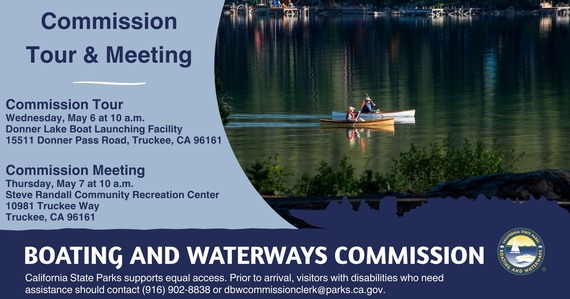 The California Boating and Waterways Commission will host a tour of the Donner Lake Boat Launch Facility and will hold its quarterly meeting next week in Truckee. The tour begins at 10 a.m. on Wednesday, May 6, and is open to the public. The Commission meeting will follow on Thursday, May 7, also at 10 a.m.
The meeting agenda includes reports from the Division of Boating and Waterways, with staff to share program updates and recent accomplishments with the Commission. California Boating and Waterways Commission Chairperson Tom Pier will update the public on Commission-related activities.
Agendas and additional information for both the workshop and meeting are available at parks.ca.gov/PublicNotices. Registration links to join the Commission meeting virtually are also available on the website. For more information about the Commission, visit their webpage. California State Parks supports equal access. Prior to arrival, visitors with disabilities who need assistance should contact dbwcommissionclerk@parks.ca.gov or call (916) 902-8838.
Longtime Cuyamaca Rancho State Park Volunteer Retires After 30-Plus Years of Service
Story and photos from: Michele Hernandez, Colorado Desert District
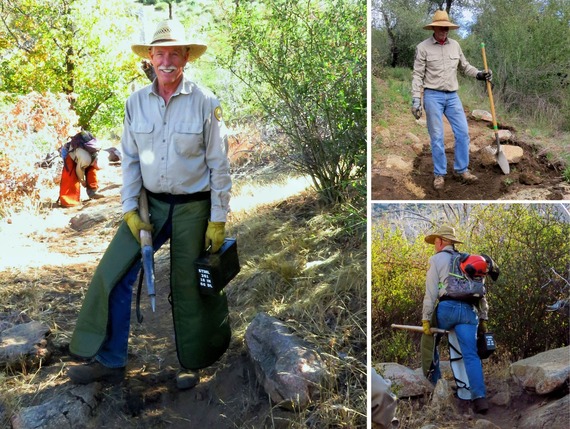 After more than three decades of dedicated service, Michael “Mike” Curtis, founding member of the Trails Maintenance Volunteer Unit at Cuyamaca Rancho State Park (SP), is setting down his tools. Mike began volunteering at Cuyamaca Ranch SP in the 1990s. Following a well-attended Earth Day event in 1995, then-superintendent Greg Picard asked him to establish a volunteer trails maintenance unit.
By 1996, the unit was up and running and trails maintenance became Mike's passion. From laying out trails, to working with outside groups and becoming a board member for the Cuyamaca Rancho State Park Interpretive Association, Mike was always ready to say “yes” when asked to help.
Over 30 years and nearly 13,000 volunteer hours, Mike’s impact on Cuyamaca Rancho SP has been profound. His presence here will be missed.
  
|