|
 April 10, 2026
|
|
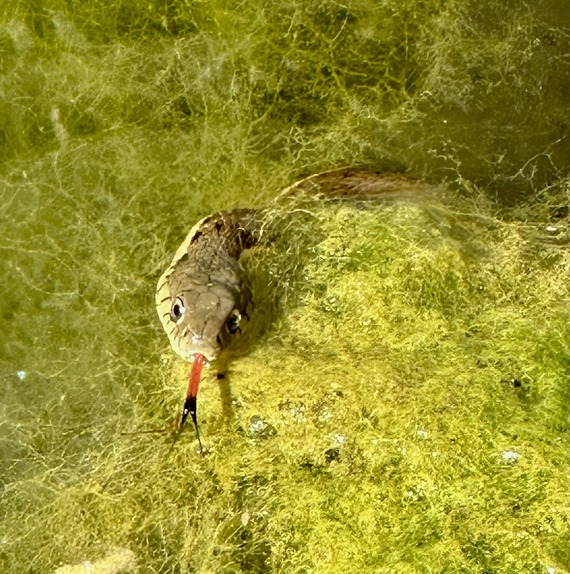 Torrey Pines State Natural Reserve
At the reserve, not all snakes are land lovers. The two-striped garter snake (Thamnophis hammondii) is endemic to western North America and is a highly aquatic species that prefers habitat adjacent to permanent or semi-permanent bodies of water.
Photo from Rosalind Morehead, San Diego Coast District

California State Parks Celebrates Service and Courage
at 23rd Annual Director’s Recognition Awards
Story from: Jo Biswas and Jorge Moreno, Communications and Marketing Division
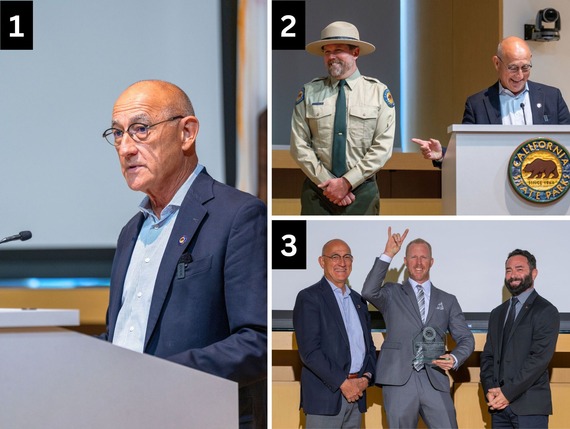 Moments from the ceremony. Photo 1: State Parks Director Armando Quintero delivers opening remarks. Photo 2: Cultural Resources Program Manager and North Coast Redwoods District Tribal Liaison Greg Collins being surprised with the Tribal Partnership Award. Photo 3: Park Maintenance Supervisor Jeremy Harkless brings a bit of rock-and-roll spirit to the stage while posing with Director Quintero and Assistant Deputy Director of Park Operations Adrien Contreras (right). Photos from Brian Baer, Communications and Marketing Division.
More than 200 State Parks staff, partners and family members attended the department’s 23rd Annual Director’s Recognition Awards in person on Thursday, March 26, at the California Natural Resources Agency (CNRA) Headquarters building in Sacramento, honoring and celebrating the incredible accomplishments of colleagues across the department.
From responding to wildfires and safeguarding cultural resources to expanding outdoor access and building climate resilience, this year’s awardees demonstrated how much can be accomplished through collaboration, innovation and a shared commitment to public service.
In his opening remarks, State Parks Director Armando Quintero emphasized that the awards represent not just the achievements of a few exemplary individuals but the collective strength and shared mission of the entire department. From peace officers and lifeguards to educators, interpreters, cultural and natural resource staff and scientists, the department’s roughly 6,000 employees, volunteers and partners support one another and play a vital role in making State Parks what it is.
CNRA Secretary Wade Crowfoot also addressed attendees, expressing pride in the department’s work and its impact on Californians. He emphasized State Parks staff make it possible for people to connect with nature, recreate in meaningful ways and experience California’s remarkable, world-famous 175-year-old story in all its diversity and complexity.
Once again, the ceremony highlighted how every State Parks employee — regardless of classification, job title or team size — can make a lasting difference.
Among the many highlights:
- The Santa Ynez Chumash Fire Department received the Partnership Award for its invaluable support during the 2025 Palisades Fire in protecting and repairing natural and cultural resources.
-
The Office of Community Involvement was presented with the Equity and Diversity Award for its work in helping reduce barriers and expand access to California’s state parks for diverse communities statewide.
-
The Will Rogers State Historic Park (SHP) Collections Evacuation Team received the Resilience Award for its courage and swift action in safeguarding priceless cultural resources during the Palisades Fire, even as the flames raced towards the park.
-
The Arthur B. Ripley Fuels Reduction Team received the Climate Adaptation Award for its innovative, science-based restoration and wildfire resilience efforts.
-
In a surprise moment during the ceremony, Cultural Resources Program Manager and North Coast Redwoods District Tribal Liaison Greg Collins was honored with the Tribal Partnership Award. A selection committee member himself, his nomination was kept secret as colleagues coordinated to honor his work.
-
One of the ceremony’s most endearing moments came via a recorded message from Maintenance Mechanic Bill Cardinal, who received a Special Act/Service Award for rescuing a woman and her dog on the Colorado River at Picacho State Recreation Area. Bill’s heartfelt, down-to-earth acceptance speech – complete with a photo of his 1954 Chevy pickup – had the audience smiling, laughing and fully charmed.
- Employees across the department were celebrated for acts of heroism — including lifesaving rescues in dangerous and complex conditions. Among them, the Lake Sector First Responders were recognized for a challenging rescue at D.L. Bliss State Park (SP) and the Twin Lakes State Beach Rescuers were honored for a critical ocean rescue at the beach. Park Maintenance Supervisor Jeremy Harkless was recognized for his extraordinary dedication following the Palisades Fire. Despite losing his own home, Harkless stepped into a leadership role, working hundreds of hours to help stabilize and reopen Topanga SP and Will Rogers SHP.
You can find all the winners with photos from the ceremony on the Director’s Recognition Award webpage. And if you missed the ceremony, you can watch it here.
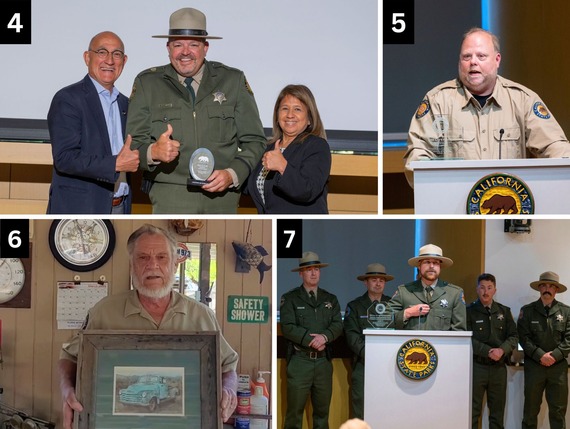 Photo 4: Gold Fields District Chief Ranger Barry Smith flashes his signature "thumbs up" sign with Director Quintero and Division of Boating and Waterways Deputy Director Ramona Fernandez. Photo 5: Park Maintenance Aide Tim Overbeck speaks after receiving his Special Act/Service Award. Photo 6: Maintenance Mechanic Bill Cardinal holds up a picture of his beloved 1954 Chevy. Photo 7: The Special Enforcement Team at Robert Louis Stevenson SP after receiving their Special Act or Service Award. All photos (except photo 6) from Brian Baer, Communications and Marketing Division. Photo 6 (screenshot) from Bill Cardinal, Ocotillo Wells District, all other photos from Brian Baer, Communications and Marketing Division.
State Parks Announces Partnership with The Unity Folks; New ‘Common Ground’ Training Set to Begin
Story from: Marty Greenstein, Communications and Marketing Division
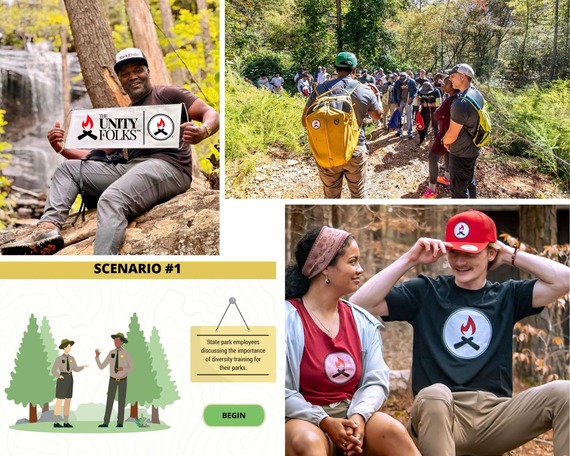 State Parks announced a partnership with The Unity Folks on a new training program called "Common Ground." Photos from The Unity Folks.
Building on the Newsom Administration’s work to make everyone feel welcome outdoors, California State Parks is embarking on an exciting multiyear partnership with The Unity Folks. This new program — called Common Ground: Cultivating Unity Across California State Parks, or just Common Ground for short — leverages The Unity Folks’ industry-leading, data-driven expertise that has already trained nearly 10,000 outdoor professionals nationwide, including four other state park systems, in fostering environments that promote increased participation and visitation from underrepresented groups.
“California’s state parks belong to everyone,” said Director Armando Quintero. “I’m proud of the work we’re already doing in this area. We’ve tended the soil and planted the seed — think of this training led by The Unity Folks as adding water and sunlight. I can’t wait to see how visitors’ experience will further blossom with the support of this program.”
The executive leadership team will be the first to take the training, which will be available on FOCUS, the department’s online training platform. Following the executive team, Common Ground will go to districts and divisions on a rolling basis before eventually expanding departmentwide and becoming part of all staff’s training curriculum.
Upon completion of the training, participants will be equipped with the knowledge and practical tools to:
- Understand lived experiences and historical context that shape participation in the outdoor lifestyle.
- Warmly greet and engage visitors.
- Design programs that resonate with new and returning audiences.
- Communicate rules and policies in ways that feel clear and welcoming.
- Create environments where visitors feel comfortable returning again and again.
At the center of this work is the Unity Blaze, symbolized by a campfire in The Unity Folks’ logo. Certified partners display Unity Blaze flags, staff wear Unity Blaze lapel pins, and each certified location is added to the Unity Blaze Partner Map, a public resource helping families, campers and adventurers identify outdoor spaces and businesses committed to invitation and welcome.
“The campfire has always been a place where stories are shared and strangers become neighbors,” said Earl B. Hunter Jr., founder and president of The Unity Folks. “By partnering with California State Parks, we are expanding a measurable strategy that helps parks better invite and welcome more families, first-time visitors and emerging audiences so they can see themselves here, feel comfortable showing up, become stewards of the land and build their own outdoor memories.”
While this is a new program, it builds on the work State Parks has been doing for years under the Newsom Administration. Through Outdoors for All, the Reexamining Our Past initiative, the Relevancy & History Program, heritage month celebrations and other department projects, State Parks is taking great strides in creating inclusive environments that celebrate diversity and promote a sense of belonging for all.
Common Ground is the natural progression of this essential work, and it also ties in perfectly with the department’s Waterway Connections Initiative to increase and expand inland water-related outdoor access for nearby communities that lack meaningful connection to nature.
Centered on the department’s mission to provide for the health, inspiration and education of the people of California, Common Ground will reinforce the importance of creating welcoming experiences, fostering positive first impressions, strengthening workforce pipelines and representing the department with pride.
“Thank you to our staff for approaching Common Ground with an open mind as we welcome everyone with open arms to their state parks,” said Director Quintero.
  Submit your photos via this Weekly Digest Submission Form or send them to WeeklyDigest@parks.ca.gov with the subject line “Awaken the Wild Photo Contest.”
  ADVENTURE OF THE MONTH
Antelope Valley California Poppy Reserve Showcases California’s State Flower
Story from: Andreas Agocs, Communications and Marketing Division
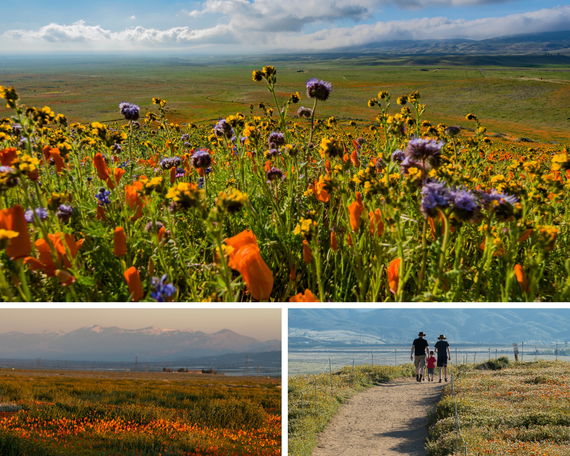 Clockwise from top: For a few weeks every spring, Antelope Valley California Poppy Reserve explodes with the colors and scents of wildflowers, here in 2019; visitors enjoy the park's views and trails year-round; a field of blooming poppies in 2023 against the backdrop of the San Gabriel Mountains. All photos from Brian Baer, Communications and Marketing Division.
The term “high desert” evokes landscapes of arid starkness and barren rocks, but for a few short weeks every spring, the hills and grasslands of Antelope Valley California Poppy Reserve State Natural Reserve glow in orange and many other colors. The park celebrates its 50th anniversary in April, a milestone that shines a spotlight on California’s state flower and State Parks’ role in protecting wildflower habitat from the challenges of encroaching development and a changing climate.
During the long, dry summer months, the seeds of countless wildflowers lie dormant under the park’s hilly grasslands. In spring, however, the water from the winter rains awakens a symphony of colors and scents. The duration and intensity of the wildflower bloom depend on the amount of winter rainfall and can vary from year to year but the season generally lasts from as early as mid-February through May. In addition to the orange California poppy, dozens of other wildflowers add to the park’s vibrant contrast of colors, among them purple lupines, phacelia and owl’s clover, and the radiant yellow of goldfields and coreopsis.
“Poppies are resilient and adapted to a wide range of climatic conditions and habitat types,” explains Senior Environmental Scientist Leah Gardner. “They produce large amounts of seed, which can remain dormant until conditions are favorable for germination.” Still, changing climate and rainfall patterns are affecting California’s poppy fields. “This spring, a heat wave in March meant that the bloom was largely over by April,” says State Park Interpreter III Lori Wear, from the Great Basin District. “Climate change has shifted the peak wildflower bloom from April to March.”
Read the complete story on our latest State Parks blog.
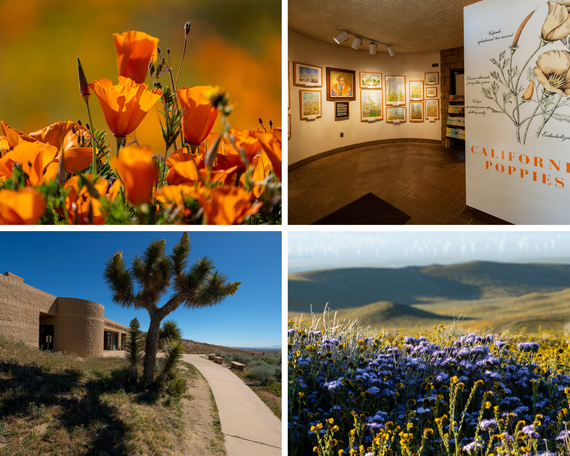 Clockwise from top left: A close-up portrait of California's official state flower; the park's Jane S. Pinheiro Visitor Center has rotating exhibitions of the artist's works; purple phacelia flowers add to the park's colors; the visitor center with one of the park's three Joshua trees.
|
|
Former State Parks Dispatcher Reflects on Evolution of Department Communication Centers
Story from: Tyler Hersko, Law Enforcement and Emergency Services Division
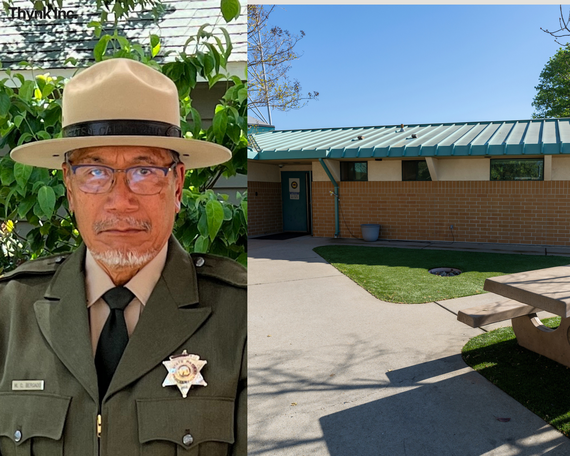 Left: Former Superintendent IV Manni Bergado. Photo courtesy of Manni Bergado. Right: The exterior of the Northern Communications Center. Photo from Brian Baer, Communications and Marketing Division.
California’s 280 state parks cover a vast amount of territory, and responding to emergency issues is no small feat for the State Parks communications operators, known as dispatchers, who coordinate emergency response efforts for park staff and visitors alike.
These dispatchers operate out of two State Parks communication centers: The Northern Communications Center (NORCOM) and the Southern Communications Center (SURCOM). In advance of National Public Safety Telecommunicators Week (April 13-19), Manni Bergado, who was a superintendent IV responsible for managing the department’s telecommunications before retiring in 2010, began working in the unit years before the dispatch centers were modernized. Bergado reflected on the technological upgrades the centers have received over the years and how they have empowered dispatchers to better serve staff and visitors.
“If one of our rangers calls in on an incident and gives their location, the dispatchers have the ability to quickly identify who would be the responding local agency that they need, such as fire or law enforcement,” Bergado said. “It makes things much faster, and with the CAD (computer-aided-dispatch) system we have now, it’s all recorded properly and placed in a way where dispatchers can access the information later.”
Bergado began serving as NORCOM’s supervisor in 1995, when the center only performed regional telecommunications. Bergado was part of the team that developed a budget change proposal to develop NORCOM and SURCOM into modernized dispatch centers. The State Parks-operated communications center that served the Central Valley known as CENCOM, received similar upgrades before it was intergraded with NORCOM and SURCOM, with its territory now handled by the two remaining dispatch centers.
Bergado noted that another key upgrade the centers received was the California Law Enforcement Telecommunications System, which allowed dispatchers to directly access law enforcement records, enabling them to respond to calls more efficiently. As staffing numbers grew, the centers began operating around the clock, ensuring consistent dispatch coverage across the state.
“We’re constantly looking forward, seeing if we can get better systems in place that can meet our needs,” Bergado said.
Año Nuevo Preserve Reopens for Self-Guided Tours
Story from: Daniel Farfan, Santa Cruz District
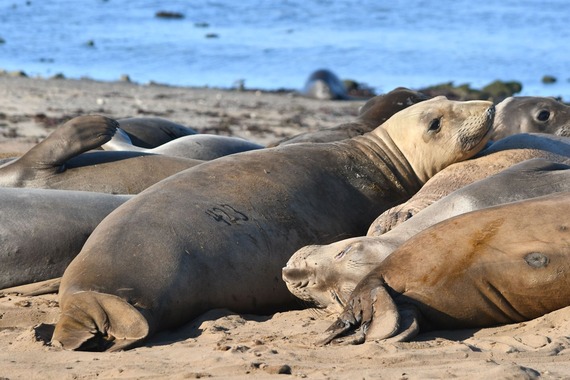 A female elephant seal at the center of a crowd. Photo from Emma Levy, Santa Cruz District.
Año Nuevo Preserve is open! Thanks to the tireless efforts of our researchers and scientists, as well as all the staff who support them, we are pleased to announce the marine preserve and elephant seal viewing areas will be open starting Saturday, April 11, following the earlier outbreak of avian flu. To enter the marine preserve and view the seals, guests can pick up their free permit at the park on the day of their visit (parking is $10 without a pass).
Now is the perfect time to view the young weanlings before they head out for their first migration, as well as adult female seals returning to molt. Please take special care to review a few of our updated safety guidelines:
- Visitors are asked to stay within the roped areas and must remain at least 30 feet away from elephant seals and any bird carcasses.
- Access to trails and overlooks is a dynamic process and depends on the location of seals - we are being more careful than usual to ensure public safety.
- Access to some areas may be closed.
- If you encounter a seal inside of (or very close to) the publicly accessible areas, please tell a docent so they can advise park staff.
For the latest information about the avian flu impacts on California wildlife click here. We look forward to your visit!
19,000 Programs, 1.7 Million Connections: Marine Protected Area Interpreters Making an Impact
Story from: Erika Delemarre, Interpretation and Education Division
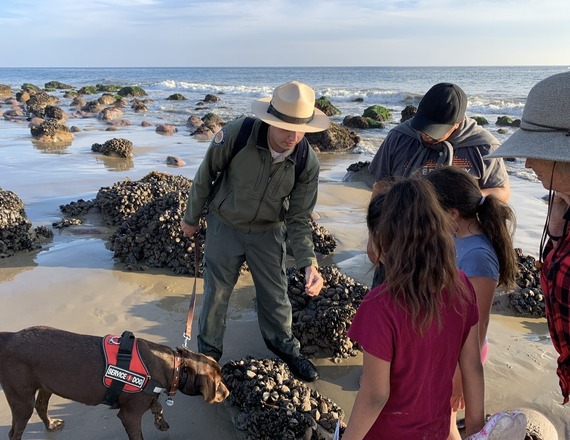 Interpreter I Parker Grand and "Bark Ranger" Saimaa at Gaviota State Park. Photo from California State Parks.
Over the past three years, State Parks’ Marine Protected Area (MPA) Outreach and Education Project has delivered more than 19,000 programs, reaching over 1.7 million people statewide and demonstrating the critical role interpretive staff play in connecting Californians to their coastal resources. Through this effort, interpreters across nine coastal districts have transformed parks into powerful spaces for learning, stewardship and safe recreation.
State Parks plays a key role in connecting the public to MPAs: Of 280 state parks, 128 are coastal and 70 of those parks sit adjacent to or near 65 MPAs. In total, roughly one-quarter of all state parks are positioned to support public understanding and stewardship of California’s network of 124 MPAs, which span the entire coast from Oregon to Mexico. With support from the California Ocean Protection Council (OPC), this statewide team of interpreters and volunteers has brought these places to life for visitors of all ages.
Interpretive staff and volunteers across nine coastal districts — North Coast Redwoods, Sonoma-Mendocino Coast, Santa Cruz, Monterey, San Luis Obispo Coast, Channel Coast, Angeles, Orange Coast, and San Diego Coast — play a critical role in supporting both visitor experience and resource protection. More than 12,000 guided interpretive programs in parks, including tidepool walks, roving interpretation and campfire programs, connected over 520,000 visitors directly to California’s coastal ecosystems. By connecting people to place, interpreters help visitors understand why MPAs exist and how to recreate responsibly within them by reducing unintentional violations, supporting public safety and reinforcing stewardship along some of the most heavily visited coastlines in the state.
MPA interpreters also extend their reach far beyond park boundaries. Through the PORTS (Parks Online Resources for Teachers and Students)® Program and other digital platforms, they delivered nearly 3,800 free educational programs, reaching more than 258,000 K–12 students with standards-aligned content focused on marine ecosystems, climate resilience and conservation. Digital engagement, including social media, virtual experiences and mobile platforms, reached more than 415,000 people, while live underwater broadcasts and virtual field trips brought California’s marine environments directly into classrooms in real time. These efforts ensure that even students who may never visit the coast can develop a meaningful connection to ocean stewardship.
This work would not be possible without the dedication, creativity and collaboration of State Parks interpretive staff and volunteers, and the continued partnership of the OPC. Together, they have built a strong foundation for MPA education statewide, one that supports safe and enjoyable visitor experiences, inspires the next generation of ocean stewards and ensures that California’s MPAs are understood, valued and cared for by the public.
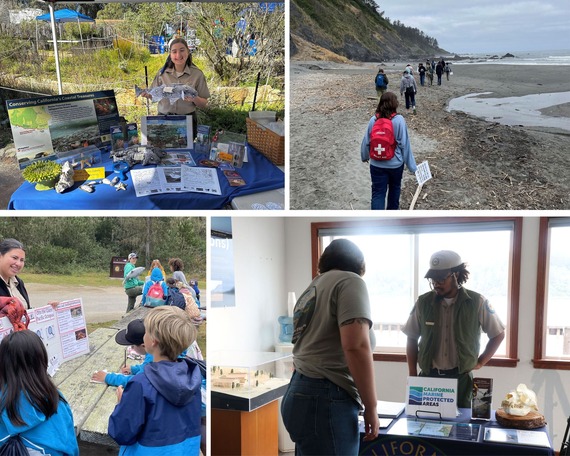 Clockwise from top left: Interpreter I Lily Aravanis at the Migration Festival at Natural Bridges State Beach. Students on an MPA field trip in North Coast Redwoods District. Interpreter I Kyle Buchanan performing MPA outreach during Latino Conservation Week. Interpreters Nichole Chaidez (left) and Ashley Wemp at Point Lobos State Natural Reserve. Photos from California State Parks.
Monterey State Historic Park Celebrates National Poetry Month
Story and photos from: Julia Madden-Fulk, Monterey District
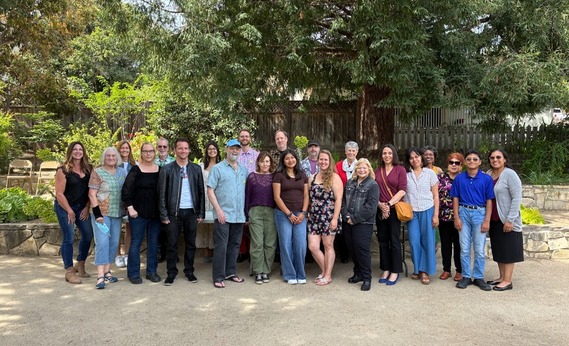 Poets gather for a group photo in the First Theatre’s shaded garden.
On a sweltering Saturday in early April, California’s First Theatre held Monterey State Historic Park’s inaugural Poetry in the Park celebration — a kick-off to National Poetry Month. The storied adobe was a gracious host, offering inspiration and cool air to 23 local poets and over 100 attendees. Participants brought the venue to life with their vulnerability, unique perspectives and vast expressions of poetry. The involvement of Monterey County’s Youth Poet Laureate Mya Pop and Poet Laureate Marie Boucher was made possible with the partnership of the Arts Council for Monterey County.
Attendees were invited to take a keepsake booklet to remember the occasion and marveled at the depth and diversity of Monterey’s literary community while flipping through the words and poet biographies. Monterey is truly a poetry hotspot, as we experienced an influx of submissions in response to our open call.
Boucher closed the event with an impromptu poem written during the event, weaving the words of fellow readers with the significance of the historic setting. As we leave you with her words, we are excited to deepen these community connections and host future poetry gatherings in these cherished historic spaces.
Homage to the Poets in the Park
April 4, 2026
by Marie Boucher
Mya says she’s done with playing “Simon Says“ in one nation divided under God. Is there blood remaining on the sand? Do you see the AWE patterns in the shrouds? The audience’s gaze remains fixed while Chris sets the tone in our first theater, recalling bards in adobes, so many firsts, firsts, firsts--while the bones of our ancestors still sing and fragrance of pink baby roses remind us of the light that comes after tumbleweeds.
Rivers remind us--We are comets-- un Paisaje, bright ojos, meaning our eyes touch everything. The comedian digs up more bodies from the trenches, while Peace clings to the stone, requiring copious amounts of water, fresh sugary, peachy peace, sweet as the baby who just arrived in the foyer, with apple-persimmon cheeks, sweet enough to eat.
Gratitude stands tall as we witness ancestral math. The room gets hotter, more crowded, with 4094×100 more ancestors shouldering next to us. I see the double helixes dancing through infinity. Can you taste the gumbo? While typing underwater? Or underground? Images of flamenco dancers twirl by while we watch for thorns in our throats, spitting out seeds and taking a breath for that first kiss under the redwoods.
Things are still eating the world, even while we weave words by the waves. Hawks cry, while crows screech like Jimi’s guitar. “Bitter men hate the truth,” while Artemis’ crew travels to the dark side of the moon. What does a feather look like from space? We see you through the ancient sandstone. We are the river, the stream, the hurricane, the yarrow, the poppies, the ancestors, all the seasons – grieving through the sinkholes, heaving and breaking our hearts open for the Sweet Peace.
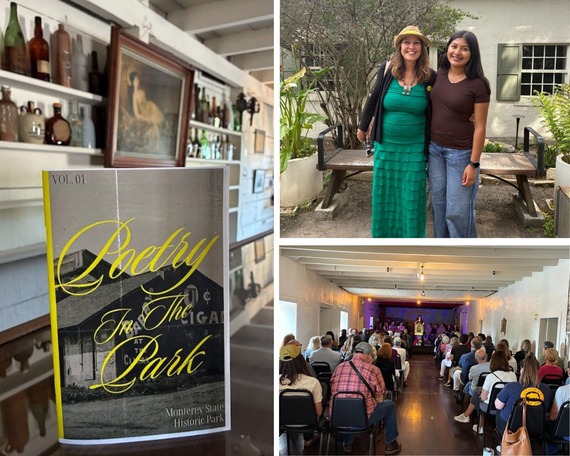 Clockwise from left: A keepsake booklet was provided to participants at the event; Monterey County Poet Laureate Marie Butcher and Monterey County Youth Poet Laureate Mya Pop; Pop opening the event.
'Special Rescue' at Statewide Program Support Center
Story and photos from: Sherry Dixon, Cultural Resources Division
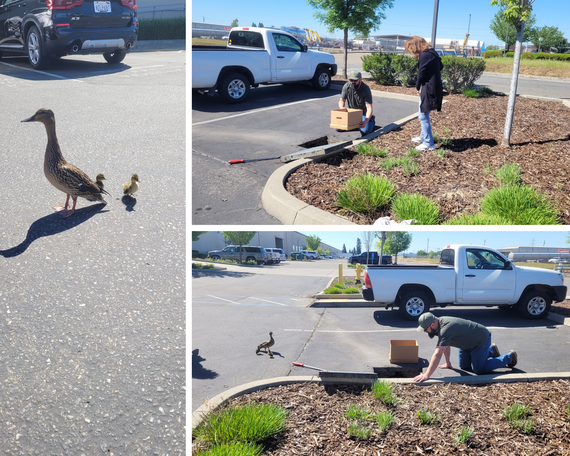 Clockwise from left: Mother duck with the first two ducklings rescued from the grate; Zach Reynolds of Law Enforcement and Emergency Services Division/Telecomm and Antionette Steiner of Parks Operations peering into the open grate; Reynolds leaning over the open grate as the mother duck and two ducklings watch and wait.
A crisis was averted and ducklings were rescued at the Statewide Program Support Center in McClellan on April 6.
After being informed of ducklings stuck in a grate in the parking lot and a very concerned mother duck, State Parks employees jumped into action to save the ducklings. A team from multiple units operating out of the Statewide Program Support Center worked together to lift the grate cover off and corral the mother duck so the ducklings would stay within arm's reach to be rescued.
After the first two ducklings were retrieved, which resulted in chaos as the mother duck was so happy, we realized we needed something to contain the ducklings to prevent them from falling into the grate again. We found a box and placed the ducklings inside; however, it did not take long for staff to realize the ducklings could escape the box through the handle cut-outs on the sides. This led to the cut-outs being stuffed with nitrile gloves and a staff person babysitting the rescued ducklings to make sure none escaped. With everyone’s collaborative efforts, 11 ducklings were rescued from the grate and reunited with their mother.
Special thanks to Zach Reynolds of Law Enforcement and Emergency Services Division/Telecomm for rescuing the ducklings. And thanks to Wil Jorae and Sherry Dixon of the Cultural Resources Division, Antionette Steiner of Parks Operations, and Mike Scott and Drew Rennie of District Facilities Management for assisting.
PARTNER NEWS
Choose Your Earth Day Adventure with Parks California
Story and photo from: Parks California
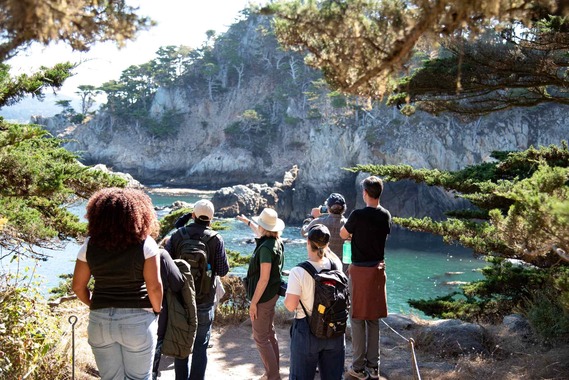 Parks California staff at Point Lobos State Natural Reserve in Monterey County.
Parks California celebrates Earth Month by highlighting the many ways Californians can connect with and care for public lands across the state.
This year’s Earth Day theme, "Our Power, Our Planet," reminds us that caring for our environment is a shared responsibility. Earth Day events compiled by Parks California include volunteer restoration days, educational programs like WonderFest at Malibu Creek State Park (SP) and guided hikes at Calaveras Big Trees SP, as well as community-driven experiences.
Read the full blog to find an Earth Day event near you and plan your adventure.
To view current job openings within California State Parks, please visit our jobs webpage at www.LiveTheParksLife.com.
State Parks Job Spotlights and Open Exams
Staff Park and Recreation Specialist (McClellan) — Apply by April 13: Join California State Parks’ new Coastal Resilience Team as a Staff Park and Recreation Specialist based in McClellan, CA, and play a key role in shaping climate adaptation strategies along California’s coast. This position combines facilities expertise, data analysis, and policy development to strengthen coastal infrastructure against sea level rise. If you bring strong project scoping, cost estimating, and collaboration skills, this is your opportunity to make a meaningful, lasting impact on coastal resilience. Click here to learn more.
Senior Environmental Scientist (Sacramento) — Apply by April 13: Based at Headquarters in Sacramento (715 P Street) and reporting to the Senior Environmental Scientist Supervisor (Coastal Programs), this position offers an exciting opportunity to help shape the future of California’s coast. You will play a key role in advancing sea level rise adaptation through policy development, project planning, and data driven analysis, supporting efforts to protect and strengthen the resilience of the state’s natural, cultural, and coastal resources. Apply now to join a dynamic team making a lasting impact on California’s coastal parks. Click here to learn more.
Associate State Archeologist (Sacramento) — Apply by May 8: Join our team at the Monterey District Office as an Associate Archaeologist, helping manage archaeological and ethnographic resources throughout the district. Working under the State Historian III, you will lead efforts to identify, document, map, and safeguard these resources. From GIS mapping to environmental review and tribal collaboration, this role blends fieldwork, stewardship, and meaningful partnerships. Apply today! Click here to learn more.
Park and Recreation Specialist Series: (Online): Do you have a passion for the outdoors and a knack for problem-solving? The Park and Recreation Specialist exam is your gateway to a career helping shape California’s recreational future. These roles blend planning, policy, and public engagement by analyzing data, identifying trends, managing grant programs, and working with local, state, and federal partners to enhance outdoor recreation across the state. Ideal candidates are strong communicators with backgrounds in planning, public administration, natural resources, or related fields. Click here for more information.
State Park Interpreter Classification Series (Online, Continuous): Looking for a career where you can share stories, inspire curiosity, and connect people to nature and history? Join California State Parks as an Interpreter (I, II, or III)! With parks spanning coastlines, forests, and deserts, interpreters lead engaging programs like hikes, campfires, and school visits that help visitors experience and appreciate the unique stories of each park. It’s more than a job—it’s a chance to make a lasting impact. Click here for more information.
Discover exciting career opportunities with California State Parks at our upcoming virtual webinars! Learn everything you need to know about the application process, assessments, and state hiring, all while getting your questions answered by our expert recruiters. Don’t miss this chance to gain valuable insights and take the first step toward your dream job. Click here for dates and registration info.
If you have any questions regarding these opportunities, connect with us at Recruiting@parks.ca.gov. We’re happy to help!
Interested in more jobs and exams like this? Explore www.LiveTheParksLife.com to discover the possibilities.
Join the Parks Jobs mailing list here. We can send you updates on jobs and exams that interest you!
|
|
|
Style time! Here are this week's tips to help spread the word about our departmentwide style guidelines:
-
century: Hyphenate when used as an adjective with a number. Do not hyphenate when used as a noun. Examples: The 20th-century masterpiece was worth a great deal. The 20th century was an exciting era. Please note: Spell out numbers one through nine (e.g., ninth century, fifth century).
- hard rock: two words (as in hard rock mining)
- visitor center: Lowercase unless you are naming a specific visitor center (e.g., Mount Diablo Visitor Center).
Keeping a consistent writing style ensures the Weekly Digest looks and sounds its best. Each week, the Communications and Marketing Division reviews submitted articles for proper grammar and punctuation and style consistency –– from capitalization and hyphenation to proper acronyms and active/passive voice usage. We follow our . For all questions that aren't addressed in our style guide, we follow the Associated Press style and .
We always welcome your feedback on how to “Live the Parks Life” in (writing) style. Connect with us via email at weeklydigest@parks.ca.gov.
|
|
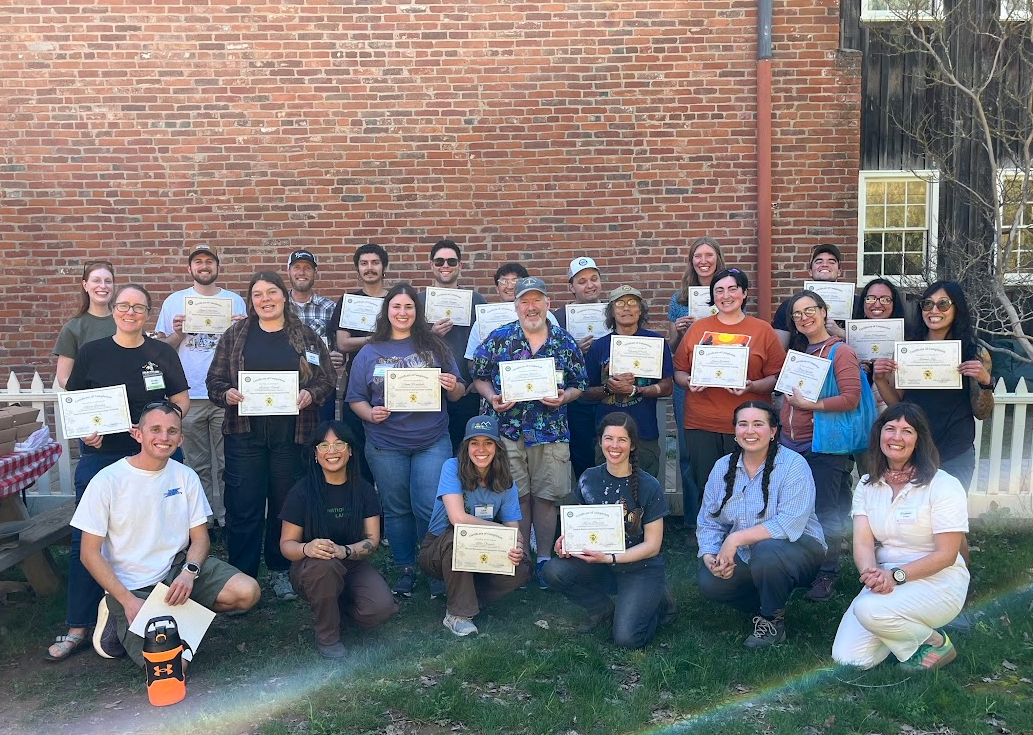 Columbia State Historic Park
Staff from across the state completed the Inland Mountains and Valleys cohort of Natural Resource Interpretation Training March 17-19. Cosponsored by the Cannabis Watershed Protection Program and Parks California, this training featured talks by expert scientists, climate communication practice and in-depth field experiences in the foothills and forests of the Sierra Nevada.
Photo from Elizabeth Evans, Interpretation and Education Division
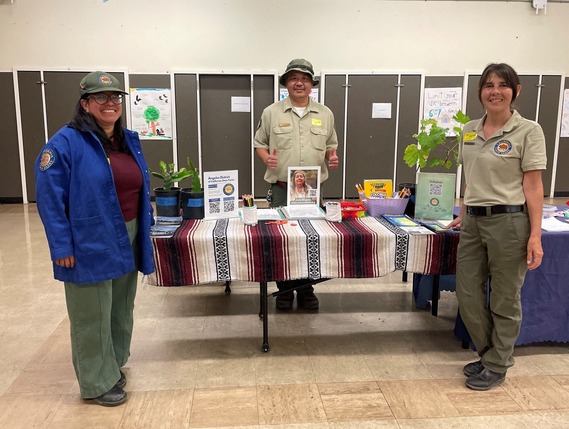 Los Angeles
The Community Engagement Team from Los Angeles State Historic Park participated in a Resource Fair at Castelar Elementary School on March 26. Local community groups were invited to share information with parents and students about their organizations and specifically information about sustainable energy. In our team’s ongoing effort to connect to the local community, we tabled at the event and provided information on park events in the upcoming months. Castelar Elementary School is a long-time partner of the park and our team has hosted various field trips for the children over the years.
Pictured (left to right): Park and Recreation Specialist Brenda Yancour, Senior Park Aide Ban Luu and Park and Recreation Specialist Helen Boek.
Photo from Angeles District Community Engagement Team
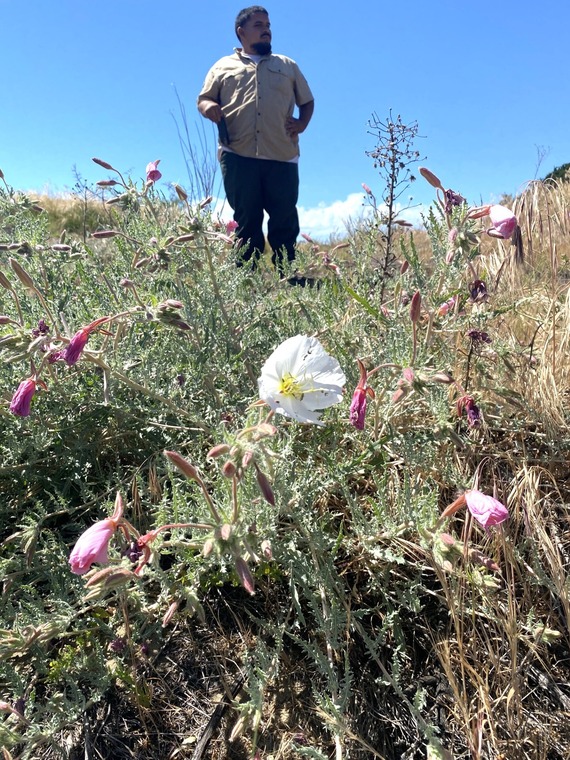 Brannan Island State Recreation Area
Senior Maintenance Aide Julian Garcia surveys the critically endangered Antioch dune evening primrose in bloom (from a safe distance!)
Photo from Jesse Peters, Diablo Range District
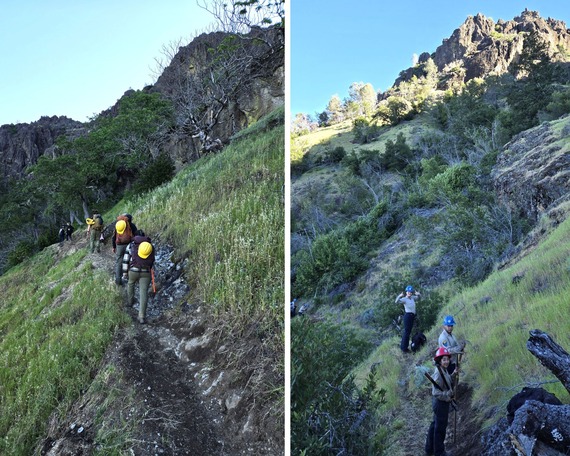 Robert Louis Stevenson State Park
Left: A Bay Area District trail crew hiking the Palisades Trail to clear the trail before next week's Calistoga Mountain Run. Right: A California Conservation Corps crew joins in the fun.
Photos from Mike Nelson, Bay Area District
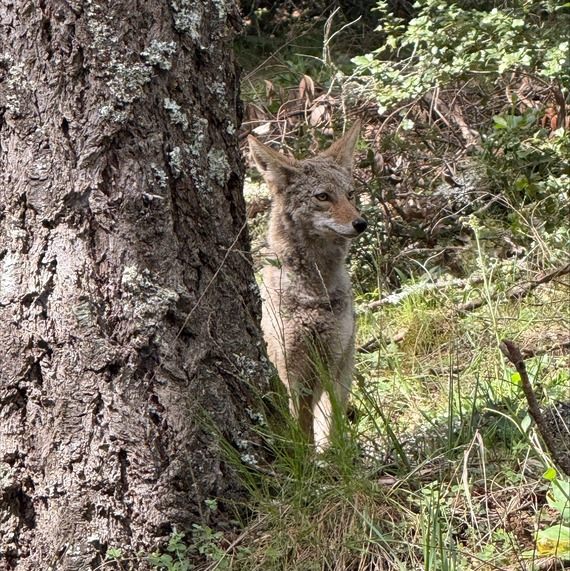 Mount Tamalpais State Park
The look a coyote gets when a squirrel won't stop screaming at it from the tree above and the "parkparazzi" won't stop photographing them from the trail below.
Photo from Hillary Colyer, Bay Area District
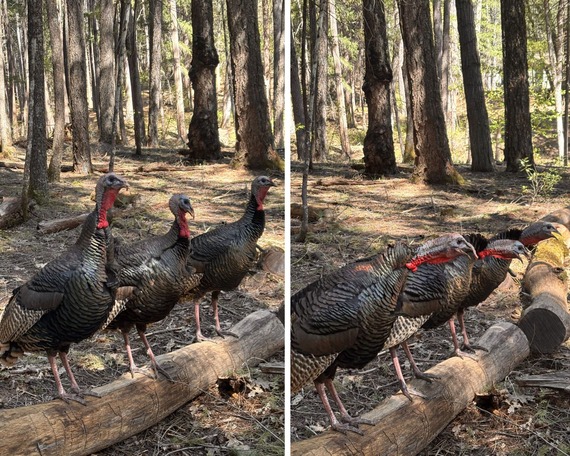 Castle Crags State Park
Wild turkeys posing and in a synchronized gobble on the Indian Creek Nature Loop Trail. It’s mating season so they’re being a bit dramatic these days.
Photos from Maddy Robertson, Northern Buttes District
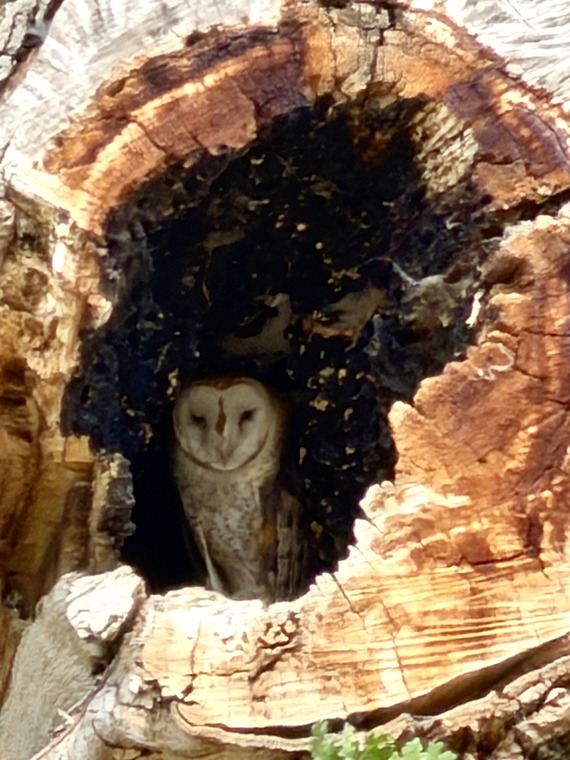 Carnegie State Vehicular Recreation Area
A resident barn owl — nice little house it has there.
Photo from Mike Nelson, Bay Area District
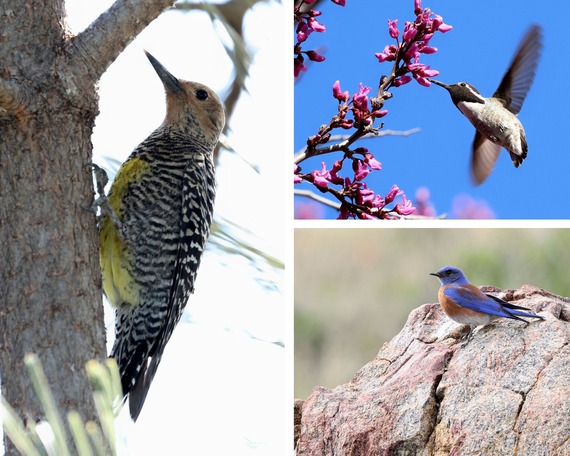 Cuyamaca Rancho State Park
It was a bird week! Clockwise from left: A female Williamson's sapsucker — seeing this bird was a treat and a first for me; a Costa's hummingbird feeding on a western redbud; a male western bluebird looking beautiful on a boulder.
Photos from Michele Hernandez, Colorado Desert District
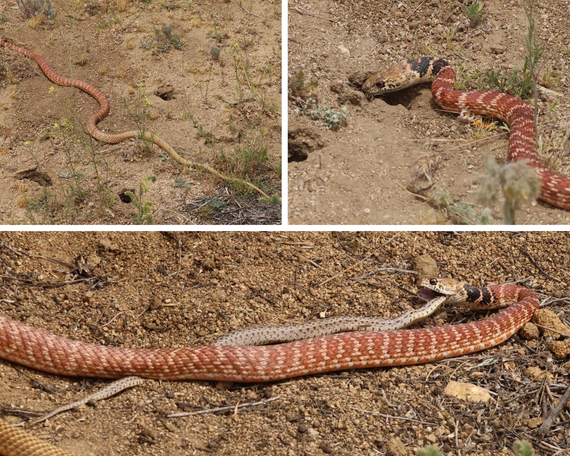 Antelope Valley California Poppy Reserve State Natural Reserve
However you want to call them: coachwhips, red racers, whip snake or Masticophis flagellum are stunningly beautiful nonvenomous snakes. Very sensitive to potential threats, they bolt when startled. People who see them often only catch a red flash as they race away. They are extremely fast and can move at over 4 mph. While not venomous, they do have a very painful bite. This series of amazing photos shows a coachwhip hunting (and eating) a young gopher snake.
Photos from Bob Waidner, docent with Great Basin District
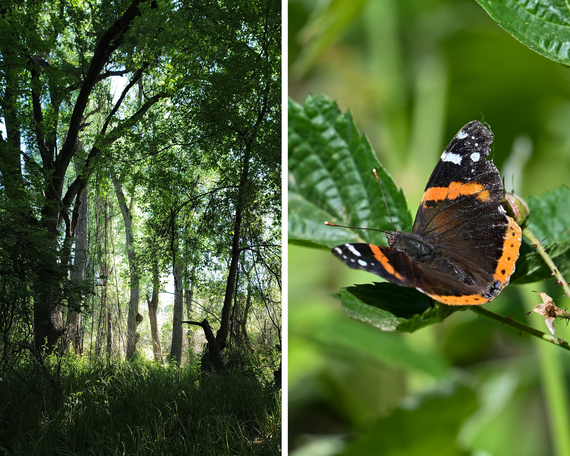 Caswell Memorial State Park
Views along one of the park's trails with a red admiral butterfly sunning on a plant.
Photos from Rick Lane, Capital District
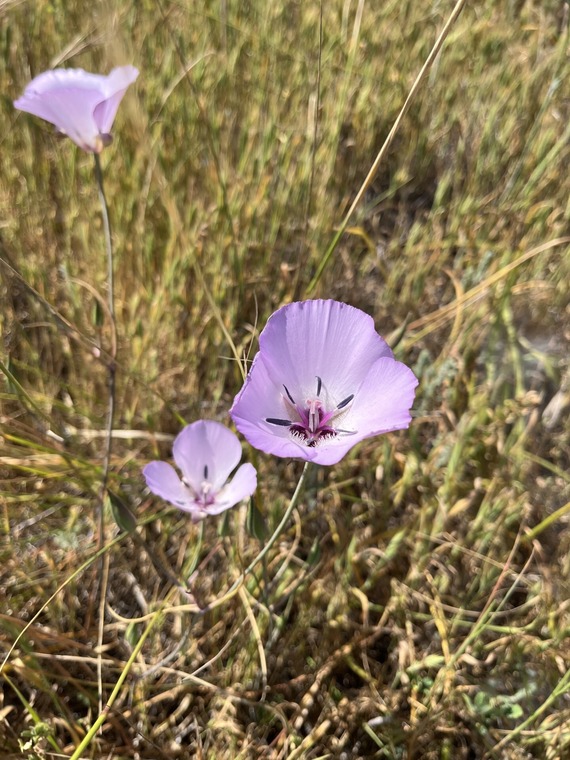 Torrey Pines State Natural Reserve
Splendid Mariposa lily (Calochortus splendens) in bloom.
Photo from Claire Zechiel, San Diego Coast District
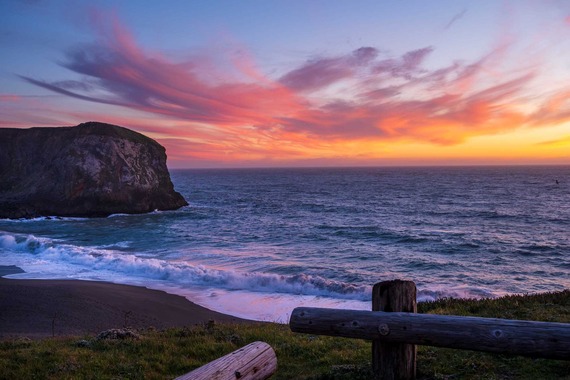 Sonoma Coast State Park
Goat Rock at sunset.
Photo from Matthew Richards, Sonoma-Mendocino Coast District
 Submit your photos via this Weekly Digest Submission Form or send them to WeeklyDigest@parks.ca.gov with the subject line “Awaken the Wild Photo Contest.”
Here are some upcoming State Parks events. For a list of more upcoming events, please visit www.parks.ca.gov/events.
Saturday, April 11
-
Earth Day Celebration — Point Lobos State Natural Reserve, 10 a.m.–2 p.m.: Join us for a fun-filled Earth Day celebration at Point Lobos State Natural Reserve! Discover a variety of activities located throughout the reserve, where visitors of all ages can connect with nature through hands-on experiences and engaging learning opportunities. Celebrate the beauty of our coast while exploring wildlife, habitats and ways to protect our planet. Event is free, $10 vehicle day-use fee.
-
Sheep Shearing Day — Petaluma Adobe State Historic Park, 11 a.m.–2 p.m.: How does wool come off sheep? How does raw wool turn into yarn? Come to Petaluma Adobe State Historic Park on Saturday, April 11 and find out! Heritage breed sheep from local farm animal rescue Flat Broke Farm will be losing their winter coats under the expert guidance of shearer John Sanchez. After the sheep are sheared, you can have fun learning how to turn the raw wool into yarn, the first steps to making a sweater. Volunteers will teach how to card and drop spin wool as rancho workers would have in the 1830s. Docents will be on site to give guided tours, so bring a picnic and spend the day at Petaluma Adobe State Historic Park. Admission fee: $3.00 for adults 18 and older, children 6 to 17 are $2.00, 5 and under are free. Prior to arrival, visitors with disabilities who need assistance should contact: Petaluma Adobe State Historic Park 707-762-4871.
-
Poppy Festival at Shasta State Historic Park! — Shasta State Historic Park, 11 a.m.–3 p.m.: Enjoy a day filled with hands-on activities, history, and family fun including blacksmith demonstrations, California poppy craft, cedar round branding, branded cedar round painting, poppy flower photo station and story walk. Bring your family, enjoy the spring blooms and experience the history of the Queen City of the Northern Mines. This event is made possible by generous support from the Town of Shasta Interpretive Association. For more information call 530-243-8194.
Sunday, April 12
-
Bob Baker Day — Los Angeles State Historic Park, 10 a.m. –5 p.m.: On April 12, 2026, Bob Baker Marionette Theater's FREE annual festival returns for its twelfth year. Bob Baker Day celebrates the legacy of our founder, Bob Baker, with puppets, art and fun for our whole community. Please note, RSVP is strongly encouraged to help us keep you updated on all the essential Bob Baker Day info. For more information, please visit the Bob Baker Day website.
 Submit your photos via this Weekly Digest Submission Form or send them to WeeklyDigest@parks.ca.gov with the subject line “Awaken the Wild Photo Contest.”
April 6, 2026
April 9, 2026
The Weekly Digest includes a collection of news articles related to the
California Department of Parks and Recreation. The views expressed and opinions do not always reflect that of the department.
To view this week's News Clips, please visit www.parks.ca.gov/NewsClips.
 Weekly Digest Article and Photo Submissions
If you have an article or photo you would like to submit for the Weekly Digest, please use this submission form or click the button above.
For an article submission, please include:
- Author’s name and division/district.
- All relevant information (e.g., headline, park name, dates, name of event, individuals’ full names and titles, etc.).
Articles should be no longer than 500 words. Articles may be edited for space.
For photos, please include:
- Photo credit info and captions.
- Photo release forms should be kept on file for non-employees or volunteers.
Unless otherwise noted, all photos included in the Weekly Digest are courtesy of the California Department of Parks and Recreation.
The deadline for Weekly Digest submissions is close of business Thursday. For more information, email WeeklyDigest@parks.ca.gov.
|
|
|
|
|