|
 April 3, 2026
|
|
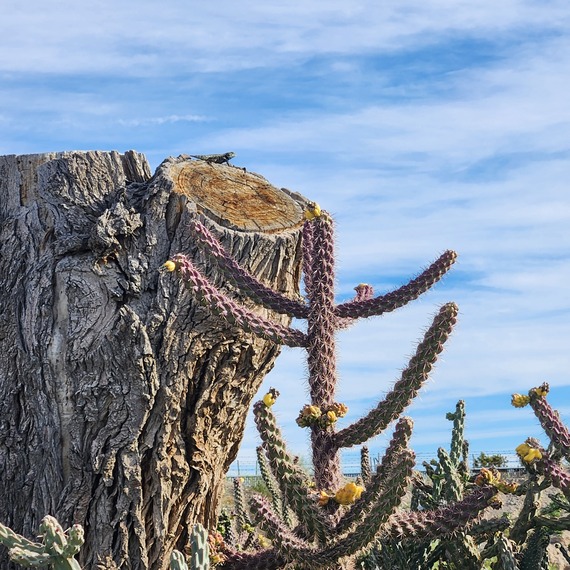 Saddleback Butte State Park
A tiny emperor surveying his kingdom.
Photo from Kady Lee, Great Basin District
|
|
  Submit your photos via this Weekly Digest Submission Form or send them to WeeklyDigest@parks.ca.gov with the subject line “Awaken the Wild Photo Contest.”
State Parks Communications Operators Celebrate 25 Years of Service
Story from: Tyler Hersko and Rebekah Handel, Law Enforcement and Emergency Services Division
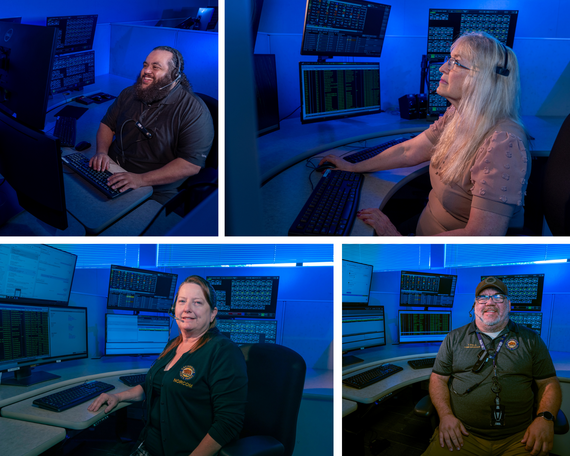 Dispatchers celebrate the upcoming National Public Safety Telecommunicators Week at the Northern Communications Center. Clockwise from top left: Dispatchers PJ Davis, Jennifer Draa, Julie Higday and Theodore Field. Photos from Brian Baer, Communications and Marketing Division.
From towering redwoods to vast deserts and sun-filled beaches, visitors at California’s 280 state parks often see rangers and lifeguards in action. The state’s emergency responders play a crucial and highly visible role in park operations, but there is another group working behind the scenes to keep both the public and park staff safe: State Parks communications operators known as dispatchers.
These dispatchers staff two vital communications centers operated by State Parks: The Northern Communications Center (NORCOM) and the Southern Communications Center (SURCOM). This year marks an especially meaningful year for the department’s dispatchers, as National Public Safety Telecommunicators Week, which runs from April 12 to April 18, coincides with the 25th year of State Parks’ centralized dispatch operations. April 2026 marks the 25th anniversary of NORCOM, while SURCOM was created in 2000.
Dispatchers at the centers, which operate around the clock 365 days a year, coordinate emergency response efforts for a variety of agencies, including State Parks, the California Department of Fish and Wildlife (CDFW), and the Mountain Recreation Conservation Authority.
The establishment of the centers marked a turning point for communication within the department. Jennifer Draa, a communications operator at NORCOM who has worked for State Parks and CDFW dispatch for over 28 years, noted that the centers provided dispatchers with important tools that enhanced their ability to assist park staff and visitors.
“The center that we had before this was a tiny room with maybe four pods and the radios that we had were just a dial that didn’t have recordings,” Draa said. “When I first started working for State Parks, we would close the center at a certain time of night. That changed, too, which was good.”
The dispatch centers have continued to expand over the years, implementing new technology that empowers dispatchers to better aid officers and visitors. For example, computer-aided dispatch allows dispatchers to precisely locate specific officers or emergency situations in the field, and dispatchers can oversee every region at both communication centers, ensuring consistent coverage across the state.
Though the work is invaluable, it can be challenging and often goes unnoticed, according to Communications Supervisor Theodore Field, who has worked at NORCOM since 2016.
“We are the voice behind the radio,” Field said. “We are the ‘unknown employee’ who makes sure our officers are safe and get home at the end of their shift. We get any type of medical or officer assistance to employees and visitors who are out at our parks. Ours is a thankless job because we don’t get to hear what happens after our officers get on scene and give us the ‘all OK.’ We’re on to our next call.”
National Public Safety Telecommunicators Week is an opportunity to recognize the dedication, resilience and professionalism of the dispatchers who serve as the unseen lifeline of State Parks. Dispatchers noted that it’s also the perfect time for state employees to visit the communications centers and meet the voices behind the radios.
Bidwell Mansion State Historic Park Tree Becomes a State Champion
Story and photos from: Chaye Vail, Northern Buttes District
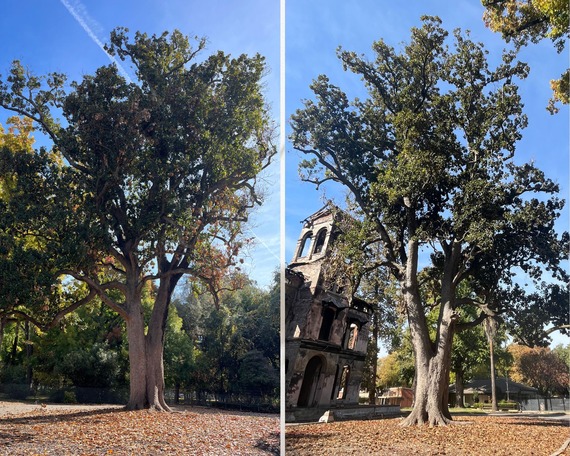 The southern magnolia tree in October 2025 at Bidwell Mansion State Historic Park.
The southern magnolia (Magnolia grandiflora) at Bidwell Mansion State Historic Park (SHP) became the state champion on March 24. What does this mean? It is recognized as the biggest southern magnolia in California. The tree was nominated by City of Chico Urban Forest Manager Richie Bamlet. The California Register of Big Trees uses the American Forests organization's points formula to determine if a tree is a champion. This formula includes the trunk circumference in inches plus the height in feet plus a quarter of the average crown spread in feet to achieve total points. Bidwell Mansion SHP’s southern magnolia has a circumference of 226 inches, a height of 92 feet and a crown spread of 65 feet for a total of 334.25 points. This beat the previous champion southern magnolia by over 55 points.
The southern magnolia is not a native California tree but this specimen has stood in front of Bidwell Mansion since construction began in 1865. It was planted by John Bidwell himself, making the tree around 161 years old. Because Chico is also known as the “City of Trees”, it was also nominated for the Chico Heritage Tree List as an outstanding specimen and for its historical interest.
Bidwell Mansion SHP’s magnolia has thrived throughout the Chico’s long history and continues to do so. It sustained some damage from the arson fire in December 2024 that destroyed the mansion, but the tree has put on new growth and has been recovering nicely. With the help of Bamlet and State Parks staff, the tree will be carefully monitored as remediation efforts within the historic park take place. The recognition of Bidwell’s magnolia as a state champion is a point of joy and pride as the undetermined future of the park unfolds. You can see a list of all the State Champion trees here.
|
|
|
To view current job openings within California State Parks, please visit our jobs webpage at www.LiveTheParksLife.com.
State Parks Job Spotlights and Open Exams
 JOB SPOTLIGHTS
Analyst I (Monterey) — Apply by April 17: Join our team at the Mott Training Center in Pacific Grove, where you will play a key role in supporting a dynamic maintenance training program. As a Maintenance Training Analyst (Analyst I), you will coordinate training logistics, manage projects, and collaborate with stakeholders and vendors to ensure everything runs smoothly. This fast-paced role is perfect for someone organized, adaptable, and passionate about delivering excellent service. This is an exciting opportunity you do not want to miss. Click here to learn more.
Water and Sewage Plant Supervisor (San Benito) — Apply by April 14: Join the Diablo Range District team at the Gavilan Sector Office in San Juan Bautista, CA. In this role, you will lead water and wastewater system operations, supervise and support staff, and collaborate across sectors to keep critical systems running smoothly. This is a great opportunity for a reliable, hands-on leader who is ready to take initiative, grow professionally, and make a direct impact in the field. Click here to learn more.
Guide II, Historical Monument (Supervisor) (Sacramento) — Apply by April 17: Based at the California State Railroad Museum in Sacramento, this rewarding opportunity reports to the State Park Interpreter III. The Guide II Supervisor leads and coordinates visitor services staff, including Guides, Park Aides, All Aboard Desk staff, and Docents, while overseeing daily operations such as ticketing, facility access, tours, school programs, and special events. As part of the museum’s management team, this role collaborates closely with staff across departments and requires successful completion of a Live Scan background check prior to appointment. Click here to learn more.
EXAM SPOTLIGHTS
State Park Interpreter Classification Series (Online, Continuous): Looking for a career where you can share stories, inspire curiosity, and connect people to nature and history? Join California State Parks as an Interpreter (I, II, or III)! With parks spanning coastlines, forests, and deserts, interpreters lead engaging programs like hikes, campfires, and school visits that help visitors experience and appreciate the unique stories of each park. It’s more than a job—it’s a chance to make a lasting impact. Click here for more information.
Communications Operator Series (April 1): Interested in keeping our beloved California State Parks safe? As a Communications Operator, you will respond to emergency calls, dispatch units as needed and collaborate with other agencies to effectively address critical situations. You will access and utilize vital data to make informed decisions, track incidents, and coordinate timely responses to emergencies. This position offers a unique opportunity to contribute to a fast-paced, high-impact environment while supporting the safety and well-being of the community. Click here for more information.
WORKSHOP SPOTLIGHT:
Discover exciting career opportunities with California State Parks at our upcoming virtual webinars! Learn everything you need to know about the application process, assessments, and state hiring, all while getting your questions answered by our expert recruiters. Don’t miss this chance to gain valuable insights and take the first step toward your dream job. Click here for dates and registration info.
If you have any questions regarding these opportunities, connect with us at Recruiting@parks.ca.gov. We’re happy to help!
Interested in more jobs and exams like this? Explore www.LiveTheParksLife.com to discover the possibilities.
Join the Parks Jobs mailing list here. We can send you updates on jobs and exams that interest you!
Style time! Here are this week's tips to help spread the word about our departmentwide style guidelines:
- led versus lead: "Led" (not "lead") is the past tense of "lead." Example: She led the group down the trail.
- Northern California, Southern California: Capitalize when referring to the regions
- redbud: one word
Keeping a consistent writing style ensures the Weekly Digest looks and sounds its best. Each week, the Communications and Marketing Division reviews submitted articles for proper grammar and punctuation and style consistency –– from capitalization and hyphenation to proper acronyms and active/passive voice usage. We follow our . For all questions that aren't addressed in our style guide, we follow the Associated Press style and .
We always welcome your feedback on how to “Live the Parks Life” in (writing) style. Connect with us via email at weeklydigest@parks.ca.gov.
|
|
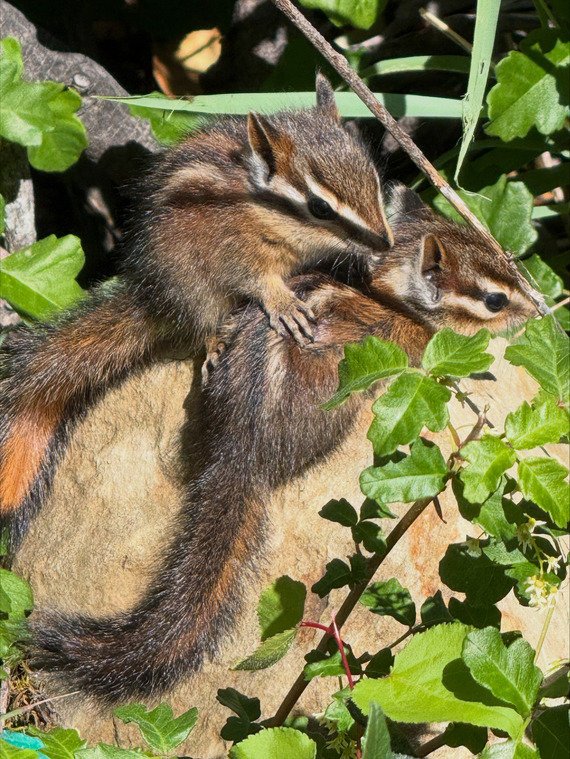 Mount Tamalpais State Park
Two young chipmunks sun themselves on a rock on East Peak.
Photo from Hillary Colyer, Bay Area District
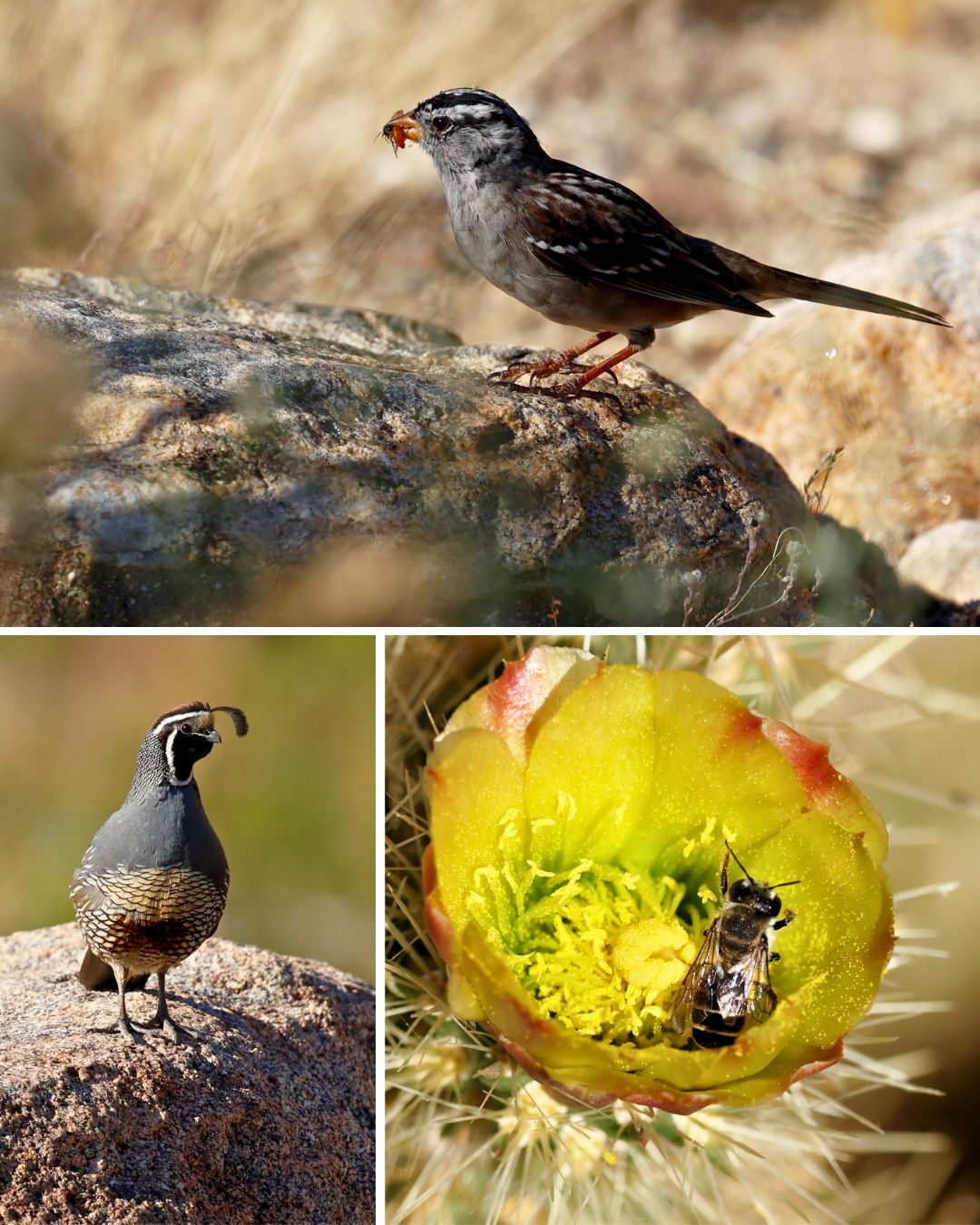 Anza-Borrego Desert State Park
Clockwise from top: A white-crowned sparrow with an insect nummy; cholla flower with a bee; a California quail on a boulder.
Photos from Michele Hernandez, Colorado Desert District
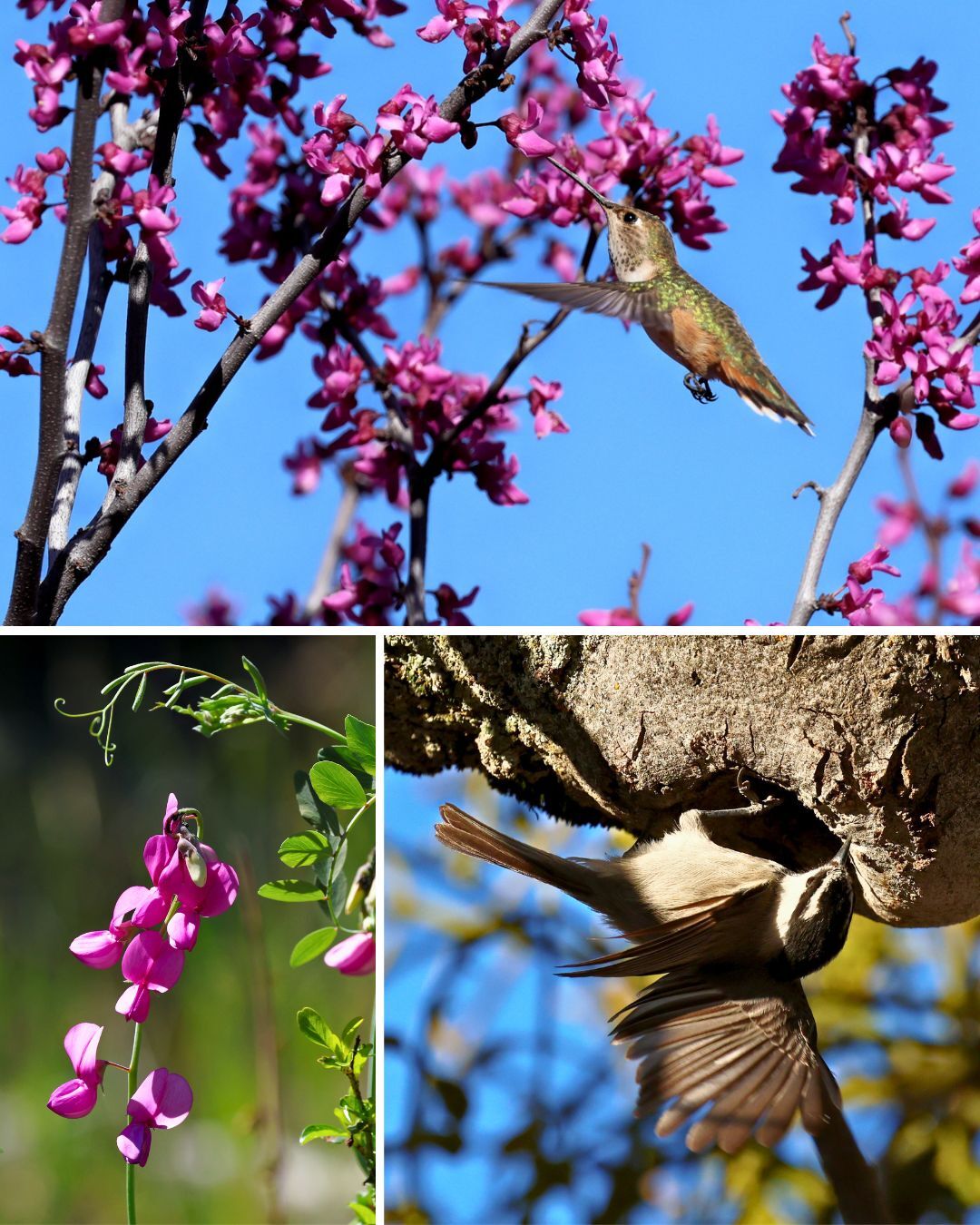 Cuyamaca Rancho State Park
Clockwise from top: A female rufous hummingbird with redbud flowers; a mountain chickadee hanging onto an oak; wild peas blooming.
Photos from Michele Hernandez, Colorado Desert District
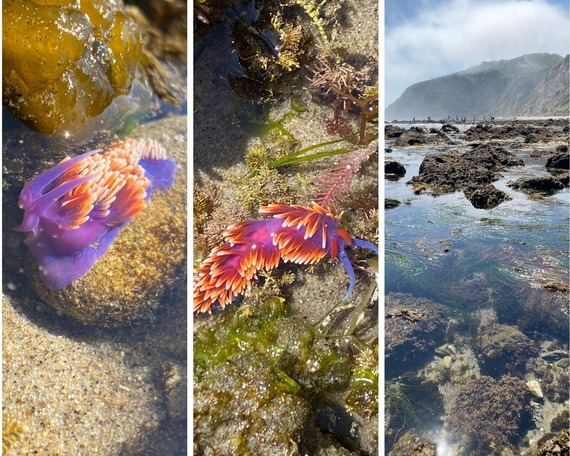 Point Dume State Beach
Snapped during a partner event with Heal the Bay for a bioblitz of the marine protected area, this vibrant Spanish shawl nudibranch was braving the lowering tides. You can see the 2-inch sea slug's two long cephala (feelers) and orange cerata on its back, being towed out by the water current. It is only secured by its purple foot, which has attached itself to a rock just beneath the waterline.
Photos from Hannah Eaton, Angeles District
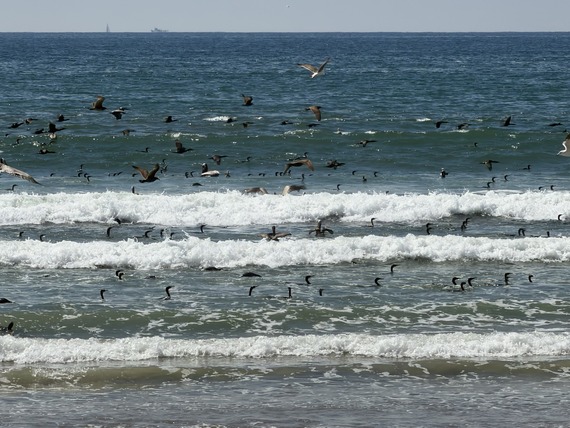 Silver Strand State Beach
Pelicans, cormorants and gulls, oh my! A mob of seabirds swept up the beach from the south and settled into the surf zone.
Photo from Elizabeth Wasserman, San Diego Coast District
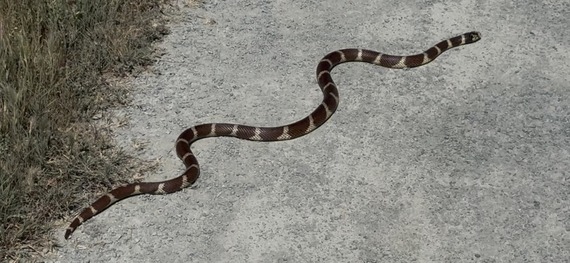 Tijuana River Estuary Natural Preserve
One of the many residents of the reserve, California king snakes are specialized predators that overcome rattlesnakes with a combination of venom resistance and raw constriction power.
Photo from Rosalind Morehead, San Diego Coast District
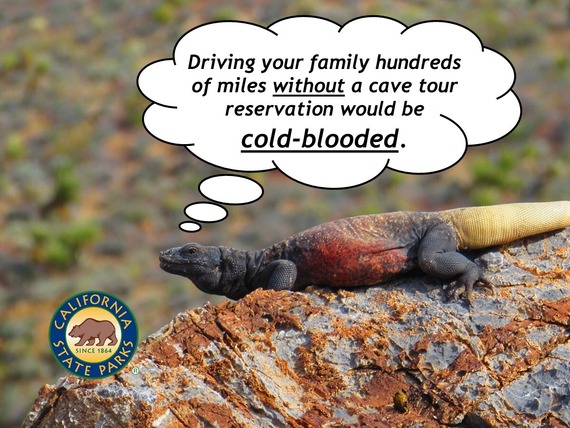 Providence Mountains State Recreation Area
Don't subject your loved ones to a long, fruitless drive. Get on ReserveCalifornia.com and make a reservation to see Mitchell Caverns. This public service announcement is brought to you by the local chuckwalla (Sauromalus ater) community.
Photo from Andrew Fitzpatrick, Inland Empire District
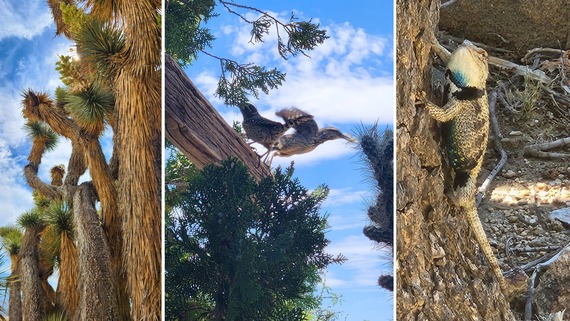 Antelope Valley Indian Museum State Historic Park
(From left to right) Joshua trees intertwined as the sun halos behind the Joshua tree fruit. Two cactus wren (Campylorhynchus brunneicapillus) going back and forth continuing to build up their nest, not worried about the camera in their space. A northern desert spiney lizard (Sceloporus magister uniformis) just happily enjoying a Joshua tree (Yucca brevifolia).
Photos from Kady Lee, Great Basin District
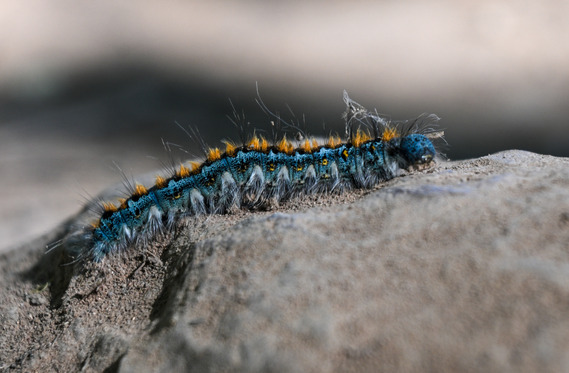 Trione-Annadel State Park
Pacific tent caterpillar strolling along in the park.
Photo from Rick Lane, Capital District
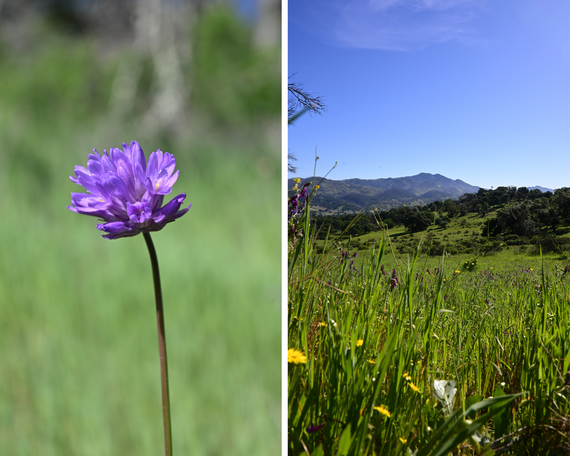 Trione-Annadel State Park
Spring blossoms at the park, including blue dicks (Dichelostemma capitatum), on the left.
Photo from Rick Lane, Capital District
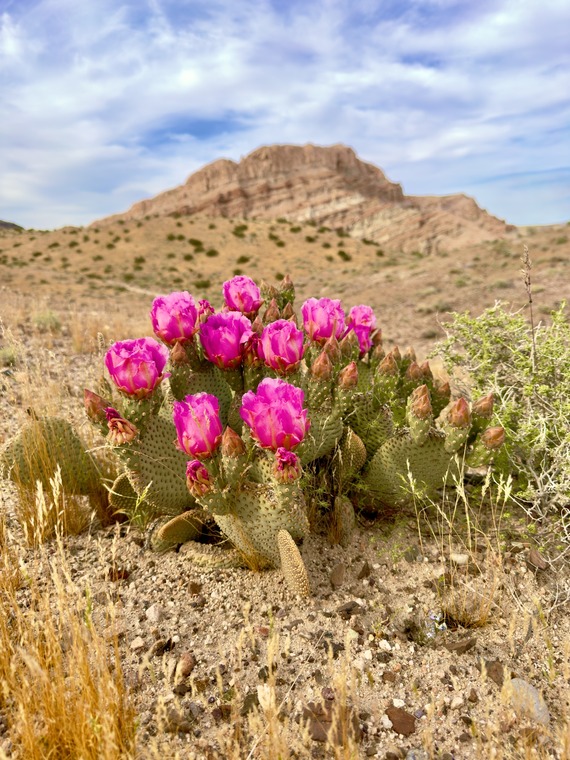 Red Rock Canyon State Park
A beavertail cactus in bloom on Iron Canyon Road.
Photo from Ku Xiong, Great Basin District
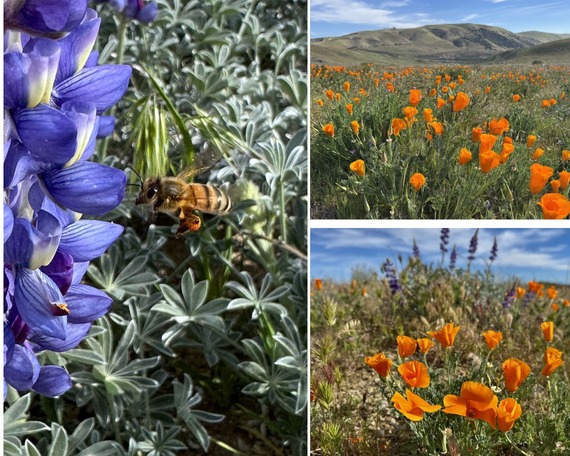 Hungry Valley State Vehicular Recreation Area
The poppies (right) are nice out here, and the honeybee (left) visiting a grape soda lupine, is loving it.
Photo from C. Blake Larson, Great Basin District
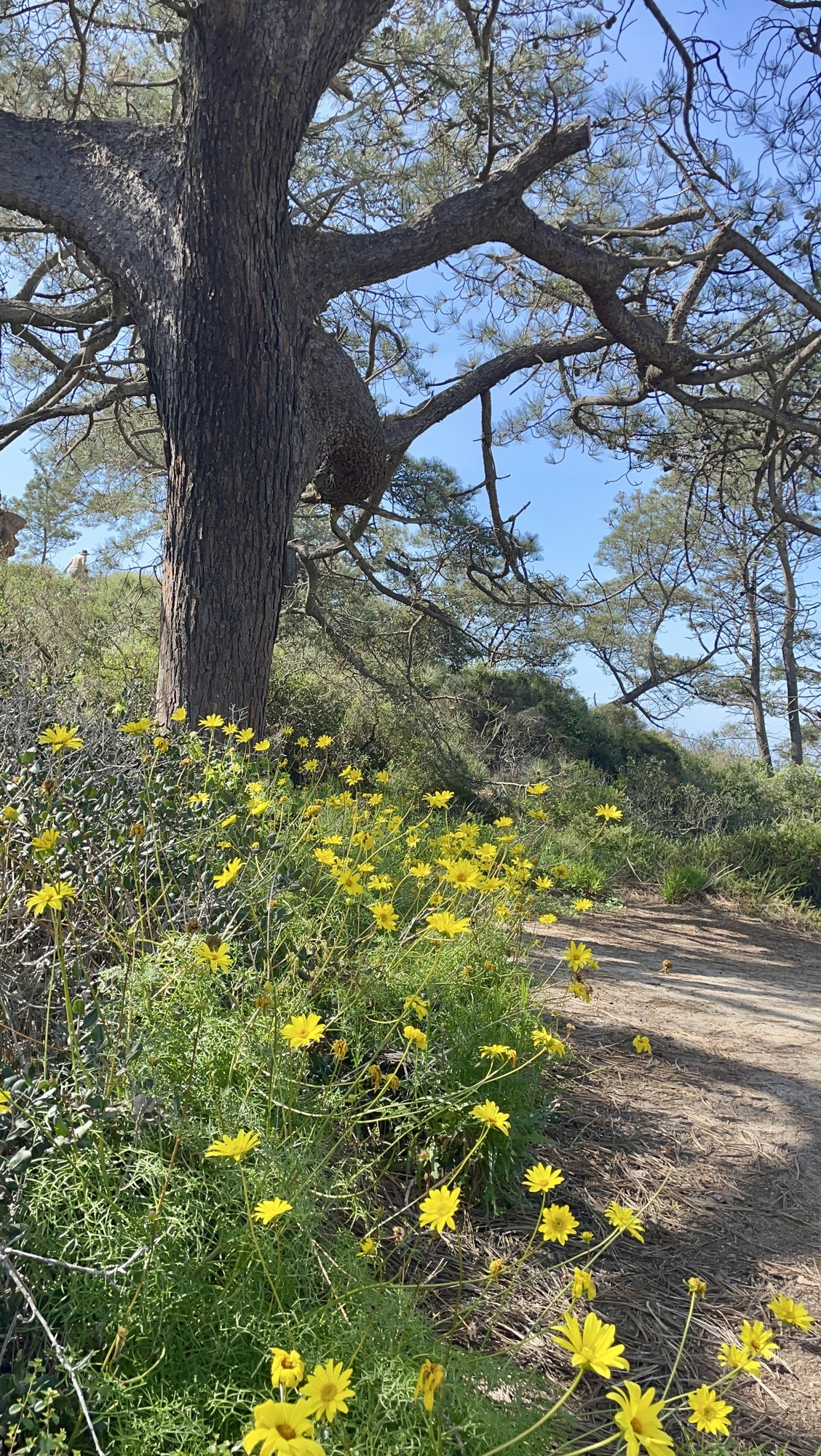 Torrey Pines State Natural Reserve
The sea dahlia is a rare wildflower native to coastal Southern California and northern Baja California, most commonly found near the San Diego County coast. It is a cheerful mid-spring bloomer that favors coastal bluffs, chaparral slopes and sage scrub communities, often growing beneath the Torrey pines.
Photo from Lila Beth Scott, San Diego Coast District
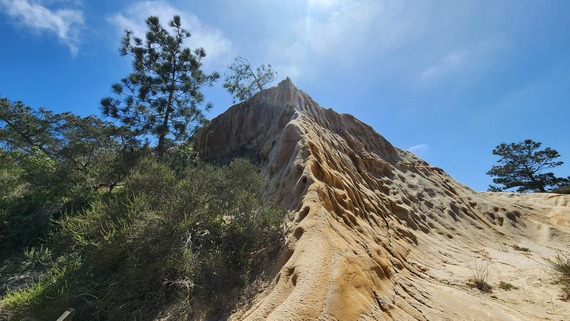 Torrey Pines State Natural Reserve
My favorite spot is the Guy Fleming Trail.
Photo from Victoria Bok, San Diego Coast District
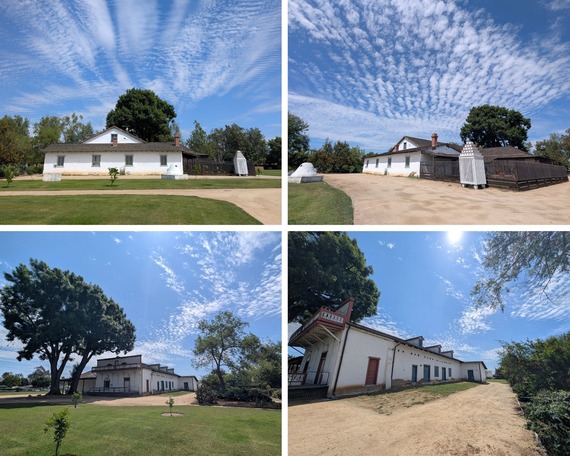 Pío Pico State Historic Park
The adobe home at El Ranchito seen from various angles on a sunny Sunday.
Photo from Corrin Cafferty, Angeles District
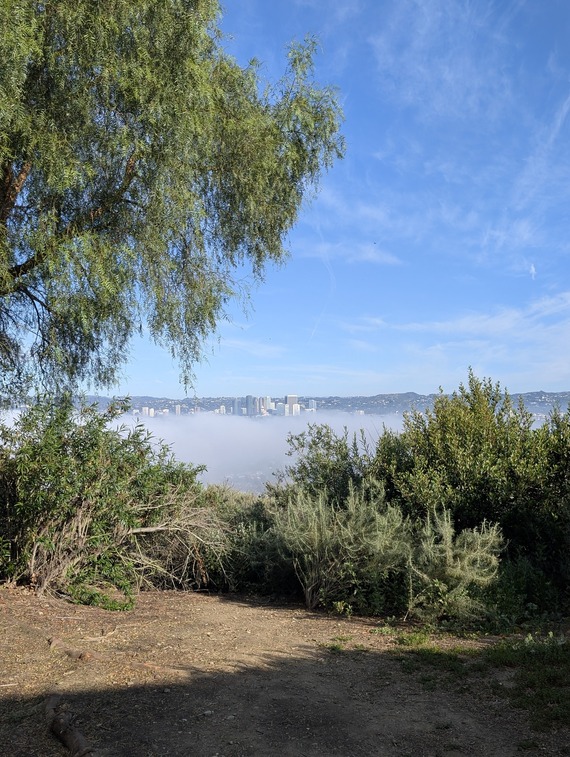 Baldwin Hills Scenic Overlook
Above the fog on a crisp day.
Photo from Corrin Cafferty, Angeles District
  Submit your photos via this Weekly Digest Submission Form or send them to WeeklyDigest@parks.ca.gov with the subject line “Awaken the Wild Photo Contest.”
|
|
|
Here are some upcoming State Parks events. For a list of more upcoming events, please visit www.parks.ca.gov/events.
Saturday, April 4
-
Welcome Walk — Malibu Creek State Park, at 10 a.m.:Join a Malibu Creek docent for an easy nature walk along the creek and under the oak trees. We'll talk about the animals and plants found in the mountains, plus the park's unique history, including its movie-making past. There's something for everyone in this 2 1/2-hour walk, whether you are a first-time visitor or a seasoned park enthusiast. Families are welcome. We'll meet at 10 a.m. in the park's Main Trailhead parking lot (second, lower lot) by the restrooms. No reservation required. Rain cancels event. No dogs. Questions can be sent to info@malibucreekstatepark.org.
-
Campfire Program — Pío Pico State Historic Park, noon–2 p.m.: Join us every first Saturday of the month, from noon to 2 p.m., for a free campfire program! This family-friendly event, presented by a park interpreter or guest speaker, celebrates the nature, history and community of Pío Pico State Historic Park. In preparation for the City Nature Challenge, we will be doing a family-friendly activity in community science, and we’ll read a themed children’s storybook, followed by a campfire. Our campfires are a fantastic opportunity to make lasting memories with family and friends as we bring the community together in a safe and inclusive space. (Minors are required to be accompanied by a parent or guardian.) RSVP here.
Wednesday, April 8
-
Education Station — South Carlsbad State Beach: Have you ever wondered what's inside the small brick building near the campfire center? Stop by before live music from The Camp Store and step inside South Carlsbad's "mini museum". During hours of operation, a state park interpreter is available to walk guests through interactive exhibits, explore natural artifacts, create crafts and answer general questions. Exhibits change seasonally but the fun is always there! Motivated youth can work through a Junior Ranger Challenge to earn a stamp or badge, just ask the Interpreter how to participate! Location: Campfire Arena (next to the Camp Store). All ages and abilities welcome!
|
|

The Weekly Digest includes a collection of news articles related to the
California Department of Parks and Recreation. The views expressed and opinions do not always reflect that of the department.
To view this week's News Clips, please visit www.parks.ca.gov/NewsClips.
 Weekly Digest Article and Photo Submissions
If you have an article or photo you would like to submit for the Weekly Digest, please use this submission form or click the button above.
For an article submission, please include:
- Author’s name and division/district.
- All relevant information (e.g., headline, park name, dates, name of event, individuals’ full names and titles, etc.).
Articles should be no longer than 500 words. Articles may be edited for space.
For photos, please include:
- Photo credit info and captions.
- Photo release forms should be kept on file for non-employees or volunteers.
Unless otherwise noted, all photos included in the Weekly Digest are courtesy of the California Department of Parks and Recreation.
The deadline for Weekly Digest submissions is close of business Thursday. For more information, email WeeklyDigest@parks.ca.gov.
|
|
|
|
|