State Parks and California Natural Resources Agency Celebrate Women’s History Month With Virtual and In-Person Events
Story from: Communications and Marketing Division
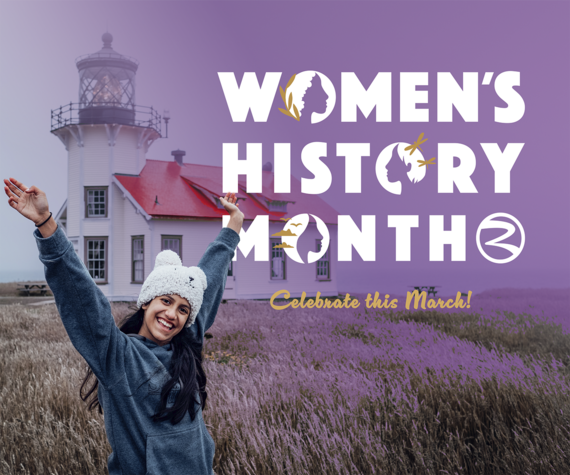 California State Parks, California Natural Resources Agency (CNRA) and its supporting departments invite you to celebrate Women’s History Month. The monthlong celebration is honoring women’s contributions and accomplishments to history, society and culture.
Celebrate this year’s Women’s History Month with our theme “Women Cultivating Community: Leading Her Way,” which honors the incredible women shaping our communities and leading with purpose. Through virtual and in-person events, CNRA departments, commissions and conservancies will be honoring women leaders in the environmental field who use their voices to communicate the importance of nurturing and protecting the environment for the future and to encourage others to become environmental stewards.
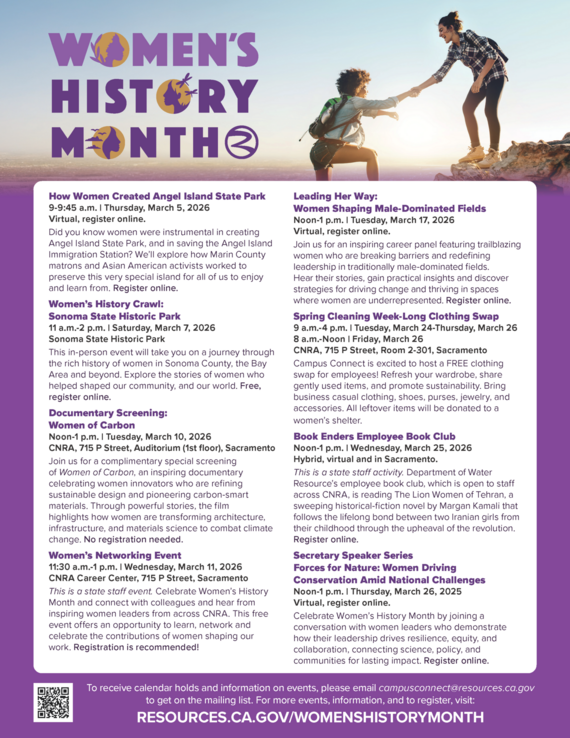
See the announcements below for events this month that you can participate in, virtually or in-person.
     Adventure of the Month
Sonoma State Historic Park Celebrates Women Who Shaped California
Story from: Andreas Agocs, Communications and Marketing Division
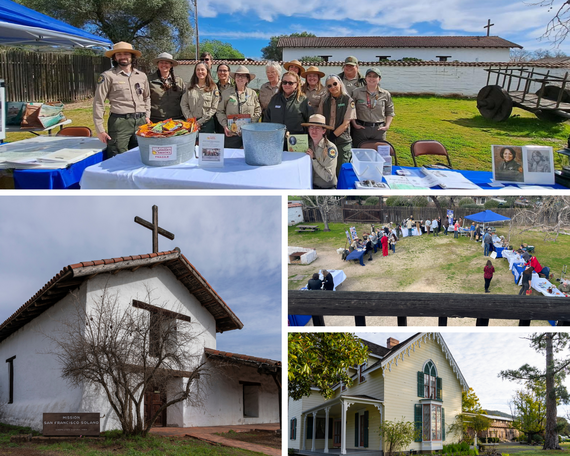 Clockwise from top: Bay Area District staff at last year's Women's History Month Crawl. View of the event in the Sonoma Barracks courtyard. General Vallejo's home, Lachryma Montis. The chapel of Mission San Francisco Solano, California's northernmost mission and the only mission established under Mexican rule. Photos from California State Parks.
Sonoma State Historic Park (SHP) is conducting its Second Annual Women’s History Month Crawl on Saturday, March 7.
The event is a great opportunity to delve into the history of women in Sonoma County and the Bay Area while exploring the park in the heart of California’s wine country. Held in the courtyard of the historic Sonoma Barracks, the event will highlight the accomplishments of famous women as well as the lives of little known or forgotten women who shaped the history of Sonoma County, the Bay Area and California.
Holding a Women’s History Crawl at Sonoma SHP was the idea of Deborah Lee, state park interpreter with the department’s Relevancy and History program. In the state archives, Lee found the names of seven women who were permitted to conduct business in Sonoma County after California passed the Sole Trader Act 1852, which authorized married women to transact business in their own name, separate from their husbands. The women were Martha A. Mann, Kezie Taylor, Elizabeth Pugh, Phebe Benedict, S.E. March, Henrietta Altmark and Eliza Jane Cook, who in 1862 acquired the right to use her own name in transacting the “business of farming, stock raising, teaming and dairying” in Sonoma County.
Lee’s research highlighted more women who were important in Sonoma’s business history, including Chee See, the wife of Po Hing (also known as Lu Hock). Po, a Chinese immigrant who was a mentioned in the Vallejo family papers, owned a general merchandise store in downtown Sonoma from 1865 to 1896. However, “there is testimony from local Sonoma citizens that Chee See actually ran the store while her husband worked as a laborer,” says Lee. The Immigration and Naturalization Service’s Alien Arrival Case Files from 1899 are so far the only written testimonies about the lives of Chee See and her daughter, Lu Ah Yung, who was reportedly born in the back of the couple’s store in Sonoma.
The Second Annual History Crawl on March 7 is a great way to learn about these and other stories of important women in Sonoma County and the greater Bay Area. Local historical societies, libraries, museums and several state parks will have their tables in the barracks courtyard. Visitors young and old can complete tasks at each of the tables and win prizes for their completed bingo cards while prizes last. Most importantly, they can learn about inspiring women surrounded by charming shops and restaurants in a state park with some of the most significant historic sites in California.
Read the full story with more information on Sonoma SHP on our latest California State Parks blog.
*Note: If you recognize and have more information about the women mentioned in this article, please contact State Park Interpreter I Deborah Lee Deborah.Lee@parks.ca.gov.
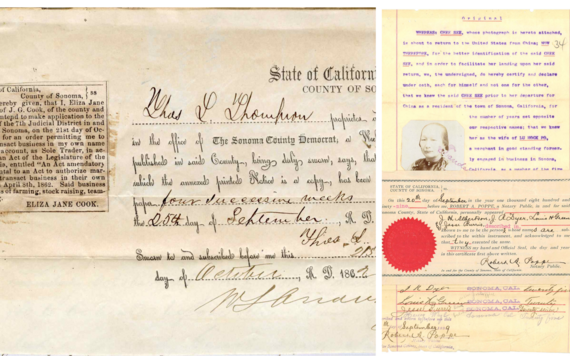 The history of women in Sonoma County as told by the archives. Left: Eliza Jane Cook's sole trader permission from 1862 to conduct business in her own name. Courtesy California State Archives. Right: The Alien Arrival Case file from 1899 for Chee See, who reportedly ran her family's general merchandise store in downtown Sonoma. Courtesy National Archives at San Francisco. Photos from Deborah Lee, Bay Area District.
A Message from Año Nuevo State Park
Story and photos from: Jordan Burgess, Santa Cruz District
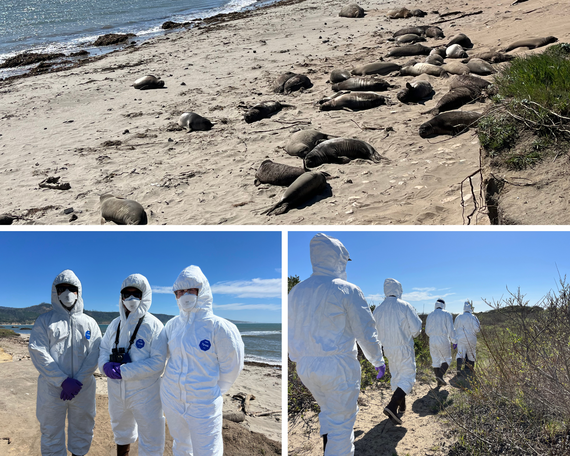 Top: The elephant seals at Año Nuevo State Park. Bottom row: Supervising State Park Peace Officer Stan Kopacz, Chief Ranger Mike McMenamy and Deputy District Superintendent Jordan Burgess observe the ongoing research activities.
Staff from the Santa Cruz District joined researchers from UC Santa Cruz, UC Davis and the State Veterinarian from the California Department of Food and Agriculture on March 6 for a visit to Año Nuevo State Park to observe the elephant seal rookery and learn more about the activities currently underway on the beach.
Researchers are closely monitoring the avian influenza situation at Año Nuevo after seven weaned elephant seal pups tested positive for highly pathogenic avian influenza (HPAI) H5N1 last week. Through regular drone flights and on-the-ground surveys, teams are evaluating animal health, collecting samples, and screening for HPAI H5N1 activity in both birds and marine mammals.
Dressed in Tyvek suits and other personal protective equipment, we were able to briefly peek into the world of the research teams working along the shore. From a careful distance, we watched two teams methodically move through the colony — pausing to observe animals, record notes and collect critical samples that will help scientists better understand what is happening at the rookery.
While it is difficult to witness abnormal mortality among these remarkable animals, the beach itself remains vibrant with life. Elephant seals continue to crowd the sand, tossing sand with their flippers and calling out across the colony.
Even in the midst of this challenging moment, the rookery is still very much alive. The sounds, movement and energy of the colony serve as a reminder that Año Nuevo’s rookery story is still unfolding— and there is reason to remain hopeful for the future of this extraordinary place. Though the popular guided seal tours are canceled for the remainder of the season as a precaution, the park remains open to the public.
The latest information on the outbreak is available on the UC Davis Institute for Pandemic Insights incident webpage.
Traveling the Road to Recovery: Off-Highway Motor Vehicle Recreation Commission Tours Hungry Valley SVRA, Meets in Santa Clarita
Story and photos from: Kevin Murphy, Communications and Marketing Division
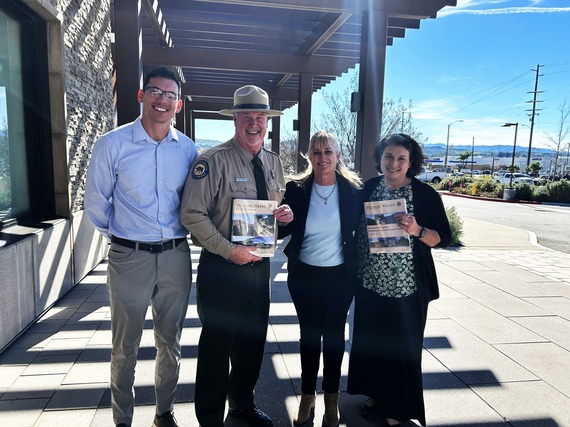
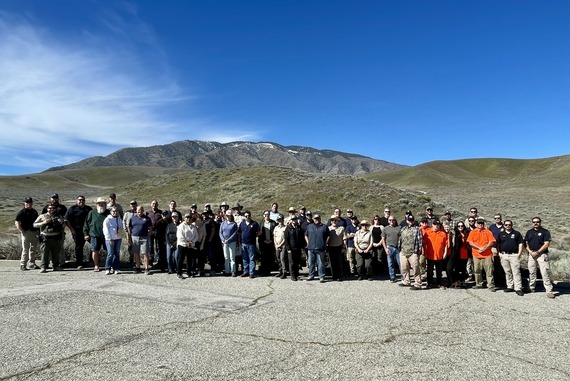 Participants pose for a photo during the Off-Highway Motor Vehicle Recreation Commission's recent tour of Hungry Valley State Vehicular Recreation Area.
A bright, sunny sky greeted California State Parks staff, guests and commissioners from the Off-Highway Motor Vehicle Recreation (OHMVR) Commission at Hungry Valley State Vehicular Recreation Area (SVRA) last week. Still recovering from the June 2024 Post Fire and recent flooding and mudslides from last December, the tour provided participants a thorough look into areas of the park that have been reopened and those that remain closed.
As visitors and commissioners made their way through the park in a caravan of off-highway vehicles and vans, Great Basin District and park staff provided information and presentations about the SVRA’s new general plan approved by the Commission at its meeting the following day (see the article below). One site included the Quail Canyon Special Event Area, which has been closed since its well failed in 2022 and no water source is available for the maintenance of its facilities. Without water, these facilities cannot be properly maintained, creating safety hazards for users. The process for establishing a new well is underway.
In addition to approving Hungry Valley SVRA’s new general plan, the Commission heard updates from the Interpretation and Education Division and the Ocean Dunes Habitat Conservation Plan. A full video recording of the Commission meeting is available at CAL-SPAN.org. A list of remaining meeting dates for 2026 is available on the Commission’s website. For information about the OHMVR Division, including a list of state vehicular recreation areas and available grant programs, visit ohv.parks.ca.gov.
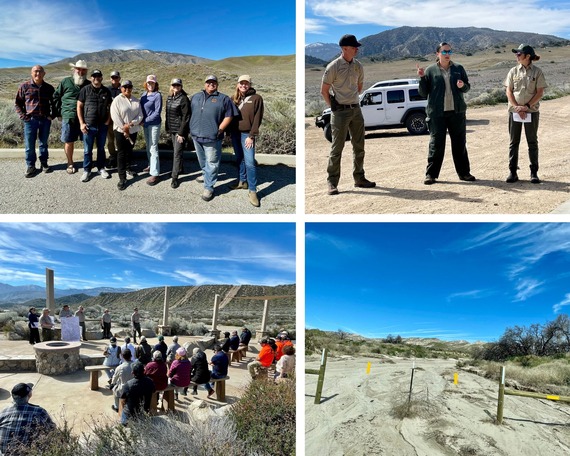 Clockwise from top left: State Parks Director Armando Quintero, OHMVR commissioners Tom Lemmon, Nick Mueller, Ed Patrovsky, Pat Ureña, Diane Ross-Leech, Kat Anderson, Roger Salazar and OHMVR Deputy Director Sarah Miggins. Hungry Valley SVRA partner agencies discuss their positive relationships with State Parks; from left to right, Ventura County Sheriff's Deputy Josh Vulich, U.S. Forest Service (USFS) District Ranger Karina Medina and USFS District Program Manager Ariana Sanger. Damage from the Post Fire and more recent floods and mudslides are preventing the full reopening of the park. Participants gather at Honey Valley Group Area.
OHMVR Commission Approves General Plan Update for Hungry Valley State Vehicular Recreation Area
Story and photo from: Katie Metraux, Strategic Planning and Recreation Services Division
 Hungry Valley State Vehicular Recreation Area General Plan Project team members and consultants. From left to right: Danny DeBrito (AECOM), Great Basin District Superintendent Russ Dingman, Valarie Yruretagoyena (AECOM) and General Plan Manager Katie Metraux.
The Off-Highway Motor Vehicle Recreation (OHMVR) Commission certified the Final Environmental Impact Report (FEIR) and approved the General Plan Update for Hungry Valley State Vehicular Recreation Area (SVRA) during its meeting in Santa Clarita on Feb. 26. The SVRA’s last general plan was approved in 1981.
The Commission toured Hungry Valley SVRA the previous day to gain firsthand insight into the area's recreational opportunities, resource management efforts, interpretation and education programs, park operations and environmental considerations. The General Plan Update marks a significant milestone in ensuring the sustainable management and continued enjoyment of Hungry Valley SVRA for future generations. With the FEIR certification, the plan incorporates community feedback and outlines strategies for balancing recreation, conservation and resource protection across the park's diverse landscape.
As the primary land use management document, a general plan provides a framework for resource stewardship, interpretation, facilities, visitor use and access, and park operations. The updated plan for Hungry Valley SVRA emphasizes a collaborative approach to managing the park’s nearly 19,000 acres of grasslands, woodlands and riparian habitats. Key components of the plan include opening a new area of the park to the public, enhancing the trail system, increasing camping opportunities, adding new skills tracks, upgrading facilities, and expanding educational programs to promote responsible recreation.
Community involvement played a crucial role in shaping the final plan, with public comments, stakeholder meetings and environmental review processes ensuring a wide range of perspectives were considered. The plan also addresses long-term challenges, including habitat protection, trail maintenance and adaptation to climate change. With the approval of the General Plan Update, Hungry Valley SVRA will remain a premier destination for off-highway vehicle enthusiasts while maintaining a strong commitment to environmental stewardship and public engagement.
In addition to the accolades the general plan team received during the Commission meeting, in April, the Association for Environmental Professionals will award California State Parks and its consultant, AECOM, for Outstanding Public Outreach Program and recognize their work on the FEIR for the Hungry Valley SVRA General Plan Update. The award is a perfect bookend to the years-long effort to provide a sustainable future for Hungry Valley SVRA and its many stakeholders and visitors.
Small Victories, Lasting Impact: Conservation Efforts at Carnegie State Vehicular Recreation Area
Story and photos from: Keith Griggs, Diablo Range District
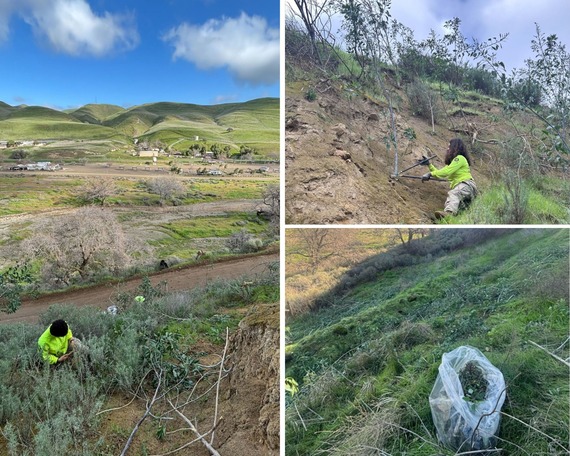 Clockwise from left: Greater Valley Conservation Corps members hike into locations with hand tools, remove invasive plants, and hike out the seed pods in trash bags. Removing tree tobacco is no easy task. A stand of tree tobacco has been cut down, and seeds and flowers cut and bagged for disposal.
Managing an off-highway vehicle (OHV) park such as Carnegie State Vehicular Recreation Area (SVRA) requires a deliberate balance between providing quality OHV recreation and protecting resources. This responsibility is complex and can be difficult, with competing interests and priorities requiring ongoing attention. Lasting success is not achieved in a single effort but through the steady accumulation of small victories. At Carnegie SVRA, many of those victories are made possible through partnership with the Greater Valley Conservation Corps (GVCC).
The GVCC, a youth corps organization operated by the San Joaquin County Department of Education, plays a visible and valuable role throughout the park. GVCC crews contribute to a wide range of projects, including painting, vegetation management, resource protection and facility improvements to name a few. The program supports workforce development, creating pathways to employment within Carnegie SVRA and State Parks.
Most recently, GVCC crews have been focused on removing stands of nicotiana glauca, commonly known as tree tobacco, an invasive plant species that poses a threat to sensitive riparian habitats. Crews have hiked into remote and challenging terrain — along drainages, up steep hillsides and through the creek corridor — to cut and remove the plants. Careful measures were taken to properly dispose of flowers and seeds to prevent further spread. To date, nine challenging acres have been mechanically treated by our GVCC crew this season.
Through steady effort and strong collaboration, Carnegie SVRA and the GVCC continue to demonstrate that meaningful progress is built incrementally. Each completed project strengthens the staff’s commitment to resource protection, enhances visitor experience and invests in the professional development of future conservation professionals. Together, these small victories contribute to the long-term stewardship and success of Carnegie SVRA’s resource management program.
Friends of China Camp Receive Grant to Help Beautify China Camp State Park
Story from: Noah Stewart, Bay Area District
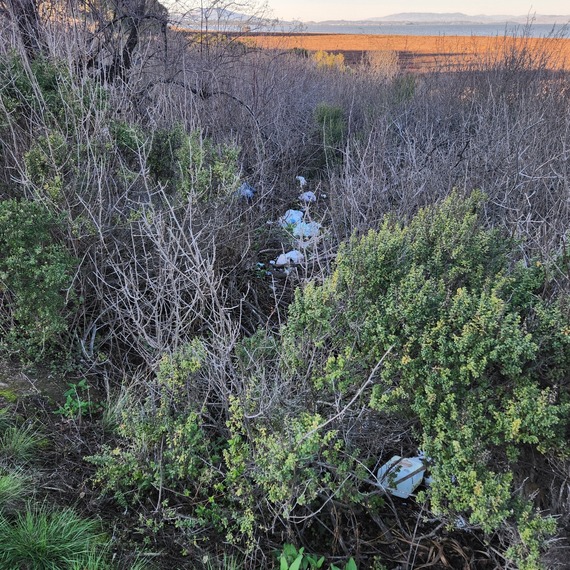 Trash along the area that Friends of China Camp helped clean up at China Camp State Park. Photo from Martin Lowenstein, Friends of China Camp.
Friends of China Camp (FOCC), California State Parks operating partner for China Camp State Park, recently received a "beautification grant" from the Mill Valley Outdoor Art Club. The club sought projects with a specific goal that would “yield observable results and that can be completed within one year." The FOCC's successful grant proposal focused on removing trash that accumulated within a 500-foot-long thicket of poison oak along North San Pedro Road, the main road through the park.
Working with Bay Area District's natural resources program, a plan was devised to trim the thicket and allow workers to access to the garbage but leave a screen of poison oak along the road to discourage off-trail entry to the sensitive tidal marsh. "This $16,000 grant is the largest that China Camp State Park has ever received," said FOCC Executive Director Martin Lowenstein. "We are incredibly grateful that the Mill Valley Outdoor Art Club has decided to partner with FOCC in its stewardship of China Camp State Park and its sensitive tidal salt marsh."
Eagle Scout Project Brings Free Sand Toy Exchange Program to Bolsa Chica State Beach
Story and photos from: Michelle Figueroa, Orange Coast District
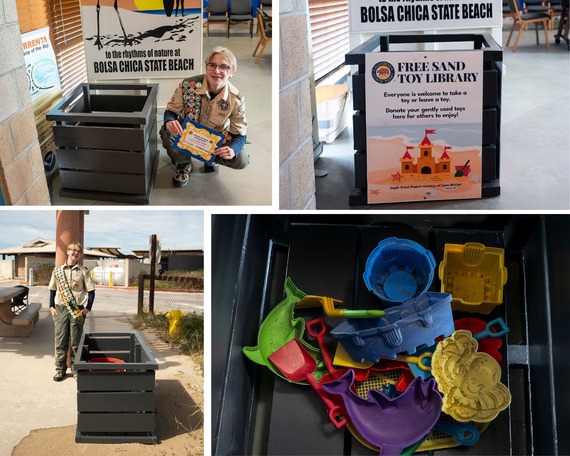 Eagle Scout Leon McCart of Troop 642 built a sand toy library for visitors at Bolsa Chica State Beach.
Got sand toys? Bolsa Chica State Beach (SB) has a new sand toy library for visitors to check out. Local Eagle Scout Leon McCart of Troop 642 created this library with help from Bolsa Chica SB’s maintenance and interpretation teams.
Plastics are the most common form of trash at the beach. It’s easy to find forgotten and discarded sand toys that are still in great condition out in the park. Rather than throw them away, the sand toy library will give a second life to these toys and allow other park visitors to enjoy them at no cost. Visitors are invited to stop by the visitor center or campground at Bolsa Chica SB to check out some new sand toys for your day at the beach!
Central Valley District Staff Learn Interpretation for Non-Interpreters
Story from: Lance Torgerson, Central Valley District
 A recent meeting that shared interpretation skills for non-interpreter State Parks staff was hosted by the Central Valley District at San Luis Reservoir State Recreation Area. Photo from California State Parks.
The Central Valley District hosted a meeting about interpretation for non-interpreters on Feb. 18. The meeting hosted park aides and senior park aides at headquarters at San Luis Reservoir State Recreation Area. State Park Interpreter II Lily Oravetz was the guest speaker at the meeting, where she discussed interpretation for non-interpreters.
Some of the objectives of the meeting were to define what interpretation is, what interpreters do, some practice at interpretation and taking the next steps. Participants learned that interpretation contains ideas and relationships that can be used to enhance a person's visit to a state park. Some of the activities that interpreters may participate in include hikes, ranger programs, social media, outreach, tours and planning. Other key responsibilities for interpreters include sharing information, one-on-one conversations, attentive listening, orienting yourself with the audience and sometimes crowd control.
The meeting emphasized showing enthusiasm and knowing about main themes and perhaps storytelling as important characteristic. It was also suggested that a good way to learn what interpreters do is by visiting a park on a busy day or join an outreach program. The PORTS (Parks Online Resource for Teachers and Students®) Program was highlighted for participants to gain more knowledge about interpretation. Some other tips included learning to read body language and directing people to more information through a visitor center if possible.
Toward the end of the meeting, participants practiced skills with some role-playing. During the session, we looked at scenarios interpreters may encounter as a park aide, as a ranger or as a visitor. The goal of the exercise was to practice skills after having learned from the presentation.
Brick by Brick, Bolt by Bolt: Pigeon Point Lighthouse Restoration Update
Story from: Julie Barrow, Santa Cruz District
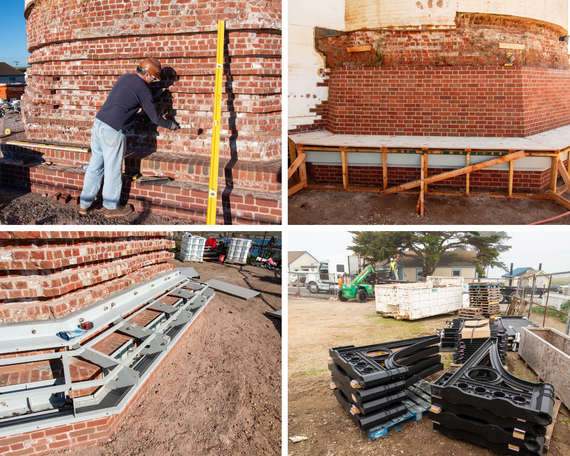 Top row: Almost 10,000 bricks have been used so far in the restoration of Pigeon Point Lighthouse’s foundation. Bottom left: Marine-grade stainless steel replacement parts are installed to recreate the belt courses of the lighthouse. Bottom right: The remaining replacement metal pieces are staged for the anticipated installation at the top of the tower. Photos from Jeff Parry, Coastside State Parks Association.
As winter settled in, masons began rebuilding the outer base of the lighthouse tower at Pigeon Point Light Station State Historic Park. Almost 10,000 new bricks have been laid to reconstruct the lower portion that forms the support for two belt courses. The bricks come from Stiles & Hart, a Massachusetts company that has been making bricks since 1893. Hundreds of buckets of mortar, mixed to the original chemical composition, hold the bricks together.
With the masonry in place, the new marine-grade stainless steel belt course skeleton is bolted into the brick and welded together. A “skin” is then added and welded, forming the belt course. Each of the two belt courses will be primed and then coated black. The new metalwork is being cast at Robinson Iron in Alabama.
The remaining stainless steel replacement parts have arrived and are being stored onsite in preparation for mounting near the top of the lighthouse. New deck plates, railings and support brackets await the demolition of the service room walls. The demolition will be done in phases to ensure the stability of the tower.
Current estimates indicate project completion in the spring of 2027. Find more details and updates on the lighthouse restoration here.
|