State Parks K-9 Teams Were the Real MVPs at Sunday's Super Bowl LX
Story from: Mike Gleckler, Law Enforcement and Emergency Services Division
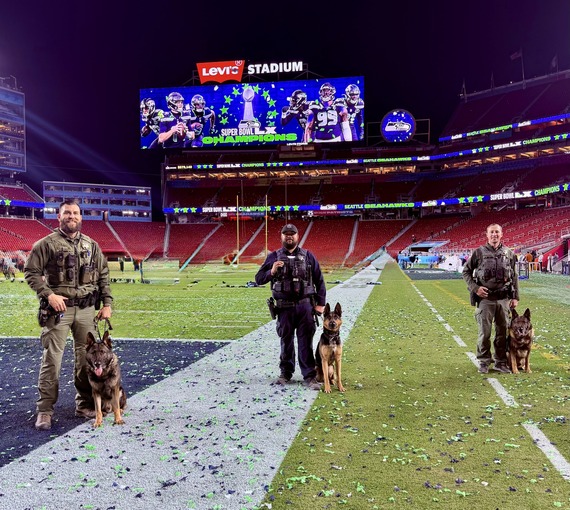 State Park Peace Officer (SPPO) Meza with K-9 Ghost, SPPO Cunningham with K-9 Doc and SPPO Pasquarella with K-9 Hugo at Sunday's Super Bowl LX pose after the game. Photo from California State Parks K-9 Team.
While focusing on safeguarding state parks, the department’s K-9 teams frequently assist allied agencies throughout the state with K-9 searches and explosives sweeps surrounding large events and dignitary visits. But this past weekend, several State Parks Explosives Detection K-9 teams assisted on a different mission …Super Bowl LX! While the Seattle Seahawks and New England Patriots battled it out in the field on Feb. 8, our operations started Feb. 1 and lasted through Sunday’s game in Santa Clara.
State Park Peace Officer (SPPO) Sergeant Cunningham and K-9 Doc (Monterey District), SPPO Meza and K-9 Ghost (Central Valley District), and SPPO Pasquarella and K-9 Hugo (Capital District) completed countless successful bomb sweeps while assisting statewide agencies and the Santa Clara Police Department. These highly trained K-9s and their handlers worked seamlessly with partner agencies to help ensure a safe, secure and stress-free game day for fans from near and far. From high-energy crowds to high-stakes security, K-9s Doc, Ghost and Hugo proved once again that when it comes to high profile events, our four-legged teammates are truly the real MVPs.
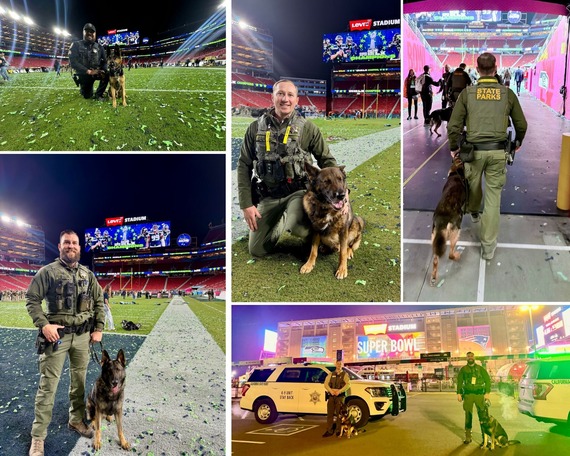 Photos clockwise: Sergeant Cunningham with K-9 Doc pose on the field; SPPO Pasquarella with K-9 Hugo pose on the field and walk through the stadium performing bomb sweeps. SPPOs Pasquarella with K-9 Hugo and Meza with K-9 Ghost outside the stadium; SPPO Meza with K-9 Ghost pose after the Seahawks won the Super Bowl. Photos from California State Parks K-9 Team.
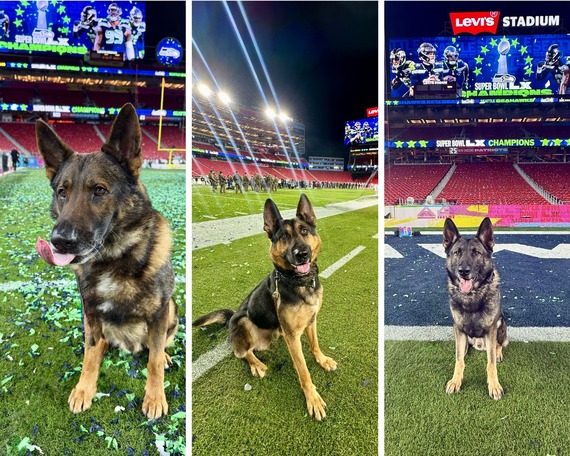 K-9s Hugo, Doc and Ghost take a short break for a photo after Super Bowl LX game. Photos from California State Parks K-9 Team.
This Valentine's Day, Love is on the Rails at Railtown 1897 State Historic Park
Story and photo from: Central Valley District
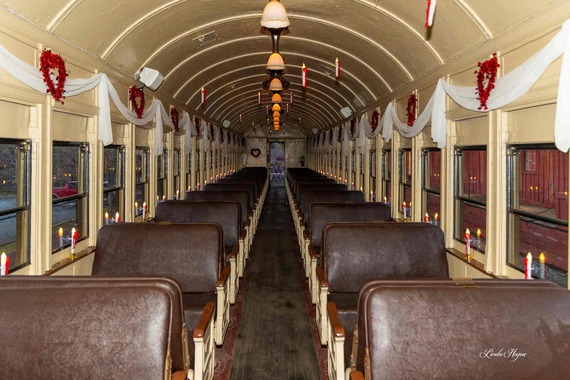 Couples can enjoy a relaxing 45-minute train ride aboard the Sweetheart Limited.
For those looking to celebrate this Valentine’s Day with a touch of history, charm and
old-fashioned romance, Railtown 1897 State Historic Park is offering a memorable experience aboard the Sweetheart Limited.
On Feb. 14, couples can indulge in a decadent dessert buffet and a complimentary glass of sparkling wine (or non-alcoholic sparkling cider) in the historic Carriage Room before enjoying a relaxing 45-minute train ride along the scenic Sierra Railway. Two train rides are available that evening departing at 5:30 and 7:30.
Designed as an adults-only (ages over 21) experience, the Sweetheart Limited pairs soft music and the gentle rhythm of the rails with attentive service from car attendants, who will top off commemorative sparkling-beverage glasses and capture keepsake photos of each couple along the way.
To buy tickets or for more information, visit here.
Oceano Dunes District Scientists Win Prestigious Award
Story and photo from: Ronnie Glick, Oceano Dunes District
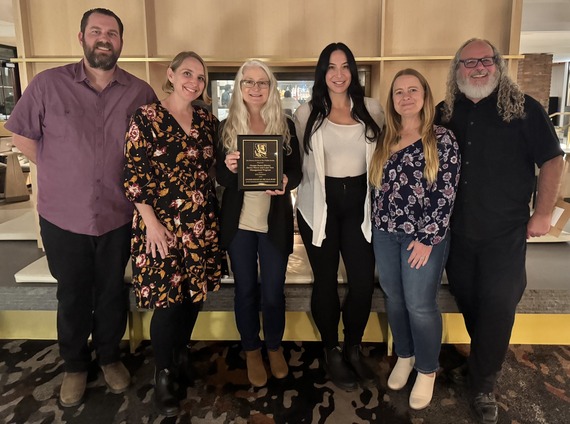 Oceano Dunes District environmental scientists (from left to right) Ryan Slack, Sarah Robinson, Joanna Iwanicha, Mattie Reddell, Amber Clark and Ronnie Glick (kvelling with pride) with the award.
Congratulations to Oceano Dunes District environmental scientists Joanna Iwanicha, Amber Clark, Ryan Slack, Sarah Robinson and Mattie Reddell for winning the Conservationists of the Year Award from the Western Section of the Wildlife Society.
The Western Section is a group of professional wildlife researchers and managers from the western United States and Pacific Islands. Members hold an annual meeting to discuss important research on wildlife. On Feb. 5, at a dinner ceremony in Monterey, the Western Section awarded the Oceano Dunes District Western Snowy Plover and California Least Tern Management Program with the Conservationists of the Year Award.
This recognition is especially meaningful because it comes from fellow wildlife professionals, who understand the complexity of managing endangered species. For more than 20 years, this team has led the protection and recovery of the western snowy plover and California least tern at the state’s most heavily visited state vehicular recreation area. In that time, they have built a science-based management program that is widely regarded as a model for the West Coast.
Congratulations to this team for highlighting the value of State Parks’ scientific programs!
Keeping Historic Items...Historic
Story and photos from: Angeles District Cultural Resources Staff
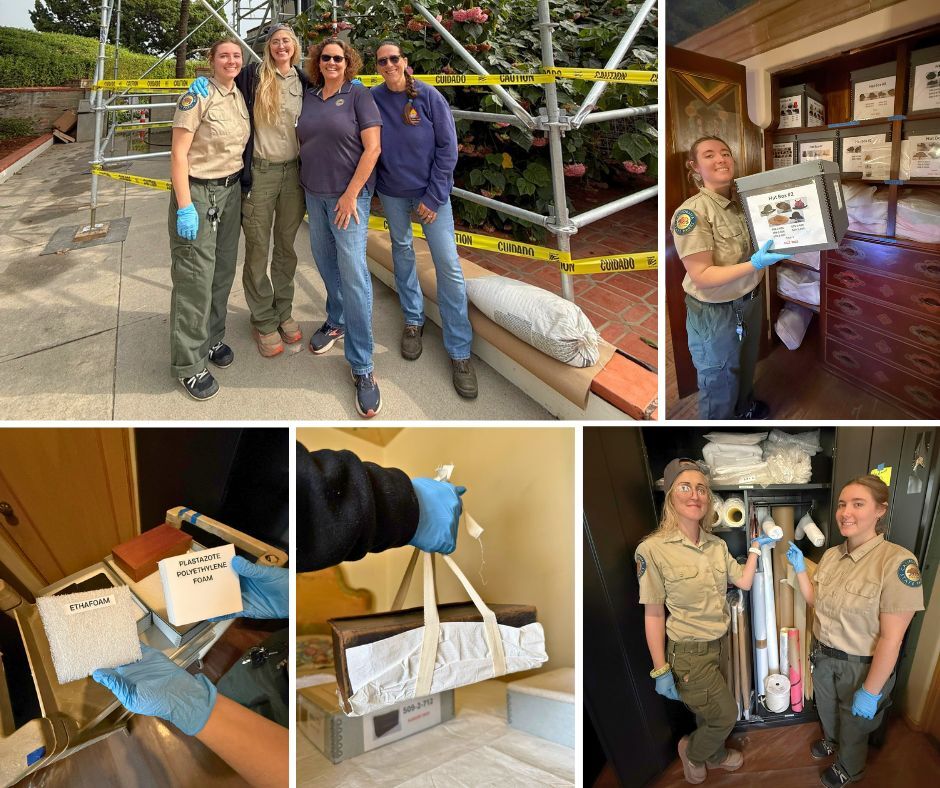 Clockwise from top left: Angeles District Cultural Resources staff (from left to right) Joy Johnston, Sabrina Zeri, Barbara Tejada and Ann Stansell. Joy proudly showcases a closet of hats. Sabrina and Joy show some of the museum-grade equipment and tools needed to protect items. Even when items are removed from their snug foam, they are carefully taken out. Two different types of acid-free foam used for museum grade packaging, ethafoam and plastazote polyethylene foam.
Preserving history takes more than careful display; it begins long before an object ever reaches a museum exhibit. At Malibu Lagoon State Beach's Adamson House, Cultural resources staff have been working diligently behind the scenes to ensure that historic items remain protected, documented and true to their original story.
Using museum-grade archival packaging, staff members carefully prepare each artifact for long-term preservation. Every item is thoughtfully handled and placed in protective materials designed to prevent damage from light, humidity and time. This process helps ensure that fragile pieces, from hats to personal journals, remain stable for future generations.
Cataloging is an equally essential part of the work. Each artifact is assigned a unique number, photographed in detail and recorded in the statewide collection database "The Museum System." These records capture vital information about an item’s origin, condition and historical significance, creating a permanent reference that supports research, conservation and exhibition planning.
Storage is anything but random. Items are carefully placed in organized, climate-controlled spaces where they can be easily located while remaining safe from unnecessary handling. This level of precision allows the museum to responsibly manage its collection and plan for future exhibits with confidence.
Though visitors may only see what is on display, the behind-the-scenes work is what truly keeps history alive. The dedication of cultural resources staff for the Adamson House ensures that each artifact is preserved with care and respect, allowing these historic items to eventually take their place in museum exhibits, where the public can connect with the past and enjoy these treasures for years to come.
Interns Dive Into Sonoma State Historic Park Archives to Unearth Its History
Story and photo from: Ward Eldredge, Bay Area District
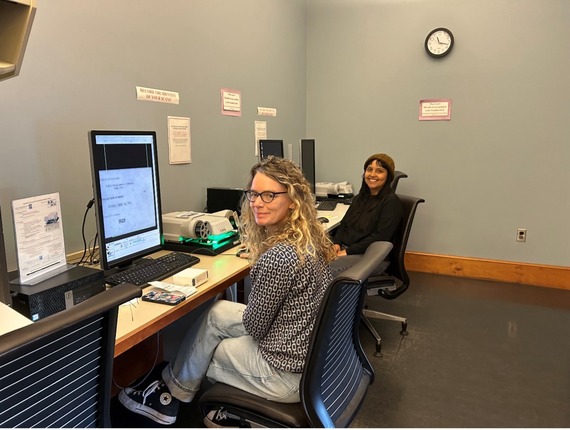 Interns Janel Pleskač (Ieft) and Marisol Martinez researching at the Bancroft Library at the University of California, Berkeley.
This academic year, the Sonoma State Historic Park museum program is lucky enough to host two participants in the State Parks’ Interpretation and Education Division Internship, Janel Pleskač and Marisol Martinez.
Janel is a second-year cultural heritage resources management master's degree student at Sonoma State University, whose research focuses on public history, data storytelling and care ethics in museum settings. Last summer, she led an oral history interview project in Ireland as part of an archaeology field school. She also volunteers as an oral historian in Livermore. Before graduate school, she worked as a middle school history and English teacher and has two amazing kids.
Marisol is a senior American multicultural bachelor's degree student at Sonoma State University, with an emphasis on the historical oppressions of Asian, Latinx, Black and Indigenous peoples in America. Last semester, she conducted an oral history research project on how Chicana and Diné artists use art as a form of resistance and cultural preservation against historical erasure. As a Mexican American born and raised in Santa Rosa, she has a personal interest in this project and is excited to be a part of preserving the local history and uplifting the stories of laborers who were foundational to this place we call home.
Based at the Sonoma Barracks, the interns are working to develop a more complete picture of the park’s early years by cataloging and scanning the research files and correspondence of the park’s first curator, Madie Brown Emparan (1889-1992). A lifelong historian, political activist and conservationist, Brown Emparan won an early victory in the 1920s by leading a grassroots campaign to preserve 20 acres of forest on the western slope of Mount Davidson as a public park. By 1934, Brown Emparan had become the first female member of the State Park Commission, a significant achievement for her era. In 1947, she was appointed curator of the Vallejo Home in Sonoma and published "The Vallejos in California," a definitive work on the Vallejo family and early Californian society published in 1968.
In addition to documenting her contributions to the early development and furnishing of the Vallejo Home, her research files also constitute a valuable primary resource for understanding the Vallejo Family, their economic interests and agricultural empire, and may provide some insight to the contributions of the many laborers involved in the family enterprise.
Administered in partnership with University Enterprises Inc., the internship is directed by the Access and Engagement Program in Sacramento. Anyone interested in learning more about this program can reach out directly to joshua.zafarmand@parks.ca.gov or blythe.wilson@parks.ca.gov.
China Camp State Park Releases New Virtual Tour
Story from: Ryan Forbes, Bay Area District
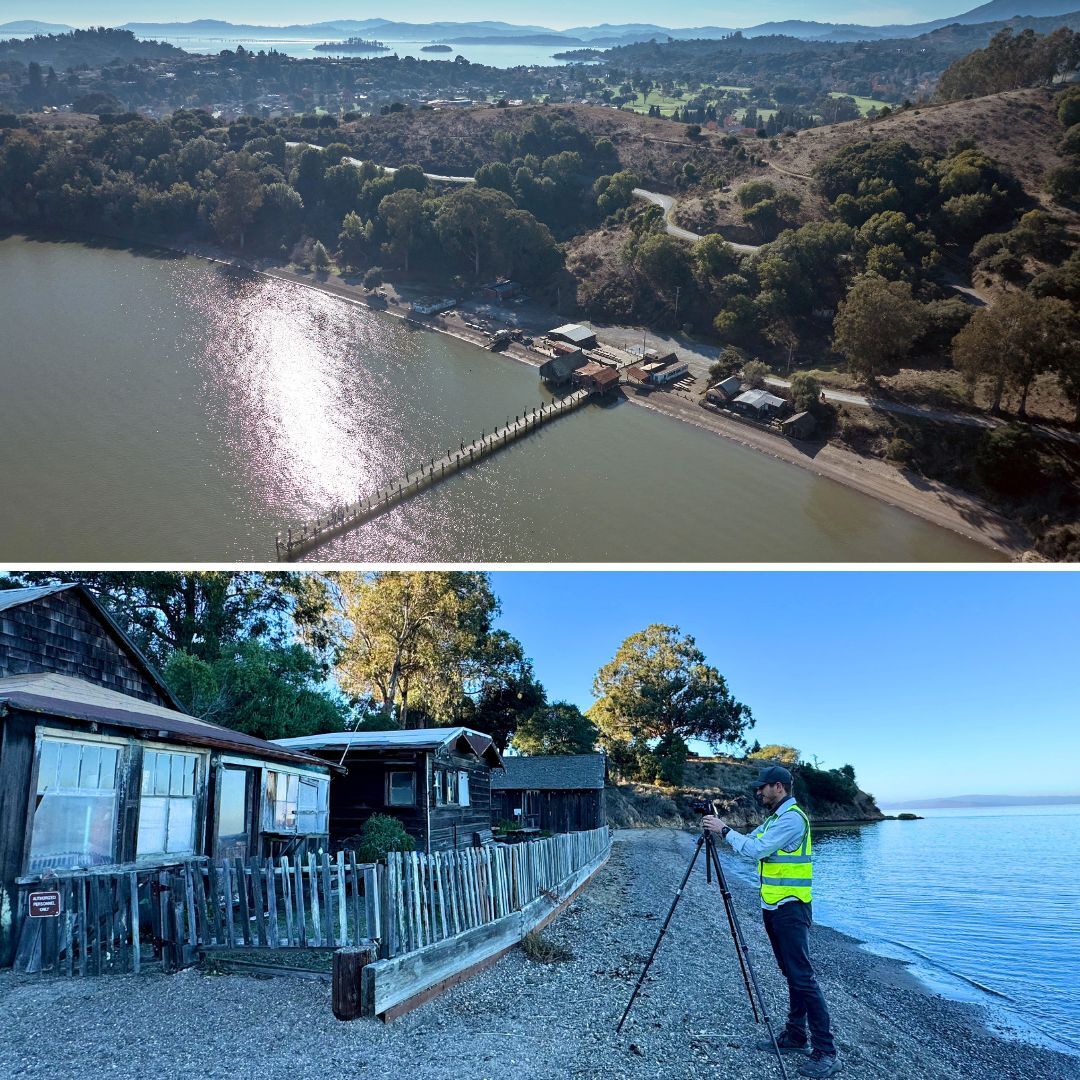 Top photo: China Camp State Park's historic village. Bottom photo: A member of nonprofit CyArk using photogrammetry to generate 3D models of the historic buildings to create a virtual guided tour. Photos from CyArk.
A free virtually guided tour of China Camp Village in China Camp State Park was made available to the public this week. This project is a collaboration between CyArk, California State Parks and Friends of China Camp.
The park is one of the last historic tidal salt marshes and Chinese fishing villages in the San Francisco Bay area, providing a unique window into the past. To create the experience, CyArk digitally documented the site, highlighting historic buildings that were utilized for shrimping and other services. In the virtual experience, you follow the Quan family and their relationship to this wetland ecosystem that people have relied on for centuries. Along the way, you are guided by experts and community members who share their expertise and first-hand experiences at China Camp Village.
What makes this work so impactful is not only the information it shares, but what it helps preserve. China Camp’s historic village is threatened by sea-level rise, with the last king tide submerging many of the buildings. The Virtual Tapestry created by CyArk ensures this important history can remain preserved even if the buildings themselves are threatened.
To try out this virtual tour yourself click here.
Dos Rios Receives Donation of Bilingual Trail Signs as Part of a Local Eagle Scout Project
Story from: Caitlin Torres, Central Valley District
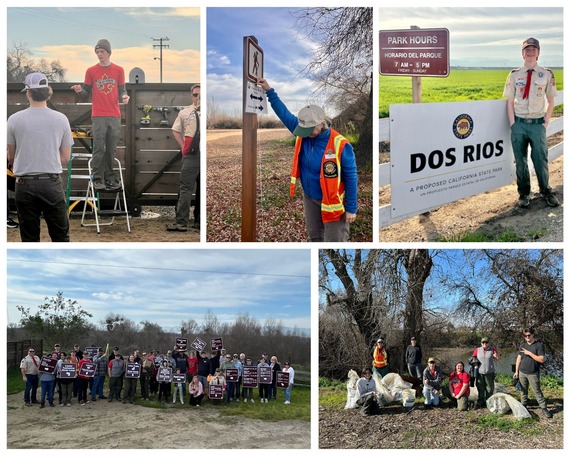 Clockwise from top left: Evan Matthews leading a safety and orientation meeting with volunteers. A State Parks volunteer measures the height of the post for signage compliance. Evan at the Dos Rios park sign. Volunteers collecting a truck load of trash at the oxbow pond. Volunteers, staff and scouts ready to head out to install trail signs. Photos from Scouting America Troop 43.
Saturday, Feb. 7, was a big day at Dos Rios! Evan Matthews, of Scouting America Troop 43 in Oakdale, concluded his Eagle Project by completing a trail signage project throughout the 1,600-acre property, California's newest state park. Twenty-seven navigational trail signs, most with Spanish translation, were donated and fabricated by Sign Designs, Inc. of Modesto, and the Scouting America troop showed up in full force to get the signs installed.
Facilities staff at Dos Rios made sure all posts were in place prior to the installation after completing all necessary project evaluations. The project was concluded just in time for National Boy Scout Day on Feb. 8, making this especially monumental for Troop 43 and Dos Rios staff.
Evan planned, organized and executed every detail of the project while working alongside park staff to complete it. As Evan explained, “This project pushed me to think beyond just getting the work done. I had to plan every small detail, coordinate with real professionals and make sure what we installed will last and truly help people experience the park. I’m proud to know that my work is going toward improving the public’s ability to experience the outdoors.”
Additionally, park staff offered a Dos Rios Trail Stewards volunteer opportunity to clean up an area of the oxbow pond led by environmental services intern Chrissy Sullivan. As pond levels are lower this time of year, litter and debris become exposed. The south end of the pond is an ideal location for a macroinvertebrate school program and now that the area has been cleaned up, we are ready to use it.
Dos Rios staff would like to thank Evan Matthews, Sign Designs, Inc, and the volunteers with Scouting America Troop 43 for making the trail sign project a reality. As California’s newest state park, this was a crucial need that was met in a timely manner. Evan not only completed a major state park milestone, but his service also saved the department significant cost and time. Way to go, Evan!
Volunteers Join Hands to Carry Out Restoration Work at Topanga State Park
Story from: Angeles District
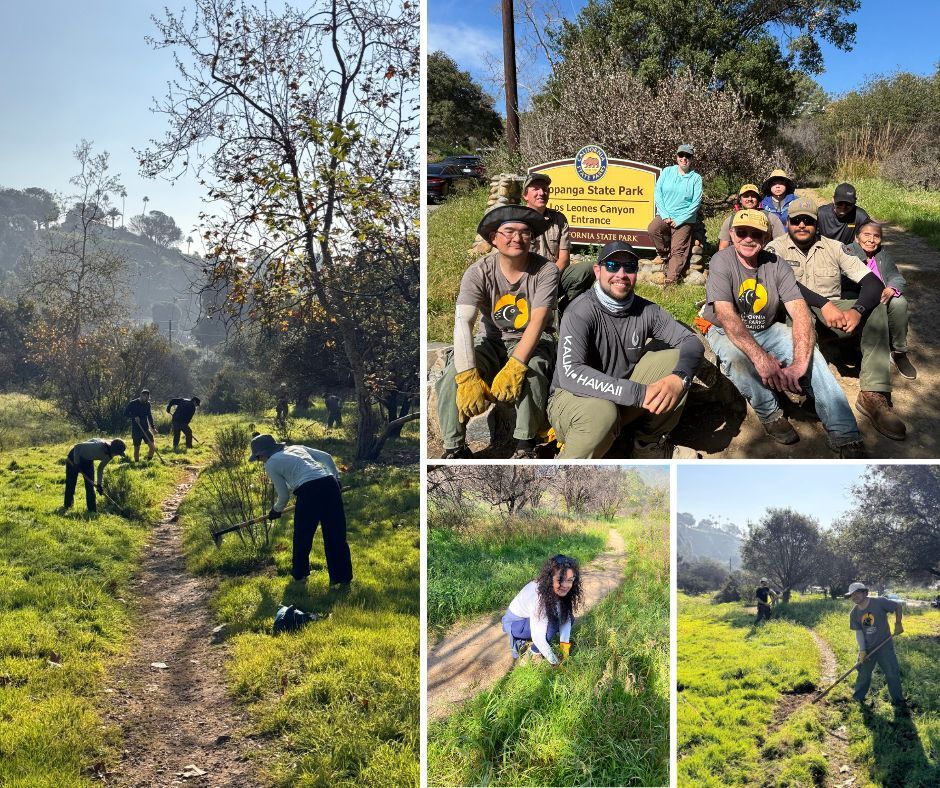 Volunteers came together to help with restoring Topanga State Park and make it safe and accessible for everyone. Photos from California State Parks Foundation.
A group of 29 volunteers showed up to spend the morning in Topanga State Park on Feb. 7. What could have been just another Saturday became a powerful example of community in action.
Volunteers split into two teams to tackle restoration projects. One group focused on clearing approximately 9,000 square feet of invasive euphorbia terracina, helping protect native habitats and prevent ecological damage. The second group took on moderately strenuous trail work, restoring a section of the Los Leones Trail that had been damaged during the fire. Together, they cleared debris, cut back new growth, reshaped the trail surface and stabilized damaged areas, making meaningful progress in reopening over a mile of trail through the popular day-use area.
A huge thank you to the California State Parks Foundation for partnering with State Parks to make this day possible! These collaborations are essential to keeping our state parks protected, restored and accessible for everyone.
Volunteers will be back on Saturday, March 7, from 8:30 a.m. to noon. Currently, 14 of 35 spots still open, and now is the perfect time to sign up and help restore this special place. To learn more and sign up, visit CSPF - Topanga State Park.
California Boating and Waterways Commission Hosts Workshop, Meeting at Sacramento State Aquatic Center
Story and photos from: Kevin Murphy, Communications and Marketing Division
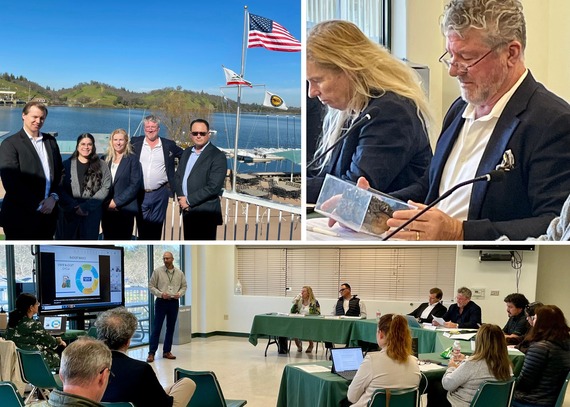 Clockwise, from top left: California Boating and Waterways commissioners posing at the Sacramento State Aquatic Center are (left to right) Hampus Idsater, Maricela Rosales, Maggie Hallahan, Tom Pier and Gonzalo Medina. Commission chairman Tom Pier examines a sample case filled with golden mussels. Jedidiah Anderson, from the Division of Boating and Waterways, provides an overview of the state’s annual budget timeline.
There was nothing that indicated the season was still winter as the California Boating and Waterways Commission hosted a public workshop and its first meeting of 2026 at the Sacramento State Aquatic Center last week. As commissioners and staff Division of Boating and Waterways (DBW) staff assembled for both gatherings, the docks at the aquatic center were bustling with activity; paddleboarders and rowing teams were on the water and across a short channel at the Nimbus Flat Day Use Area, part of Folsom Lake State Recreation Area, remote-controlled sailboats tacked through a light breeze during a regatta.
Inside a meeting room at the aquatic center, however, it was business as usual for the commission. During the workshop on Feb. 4, DBW staff engaged commissioners in the state’s budget process and reviewed the processes followed by applicants for the division’s several grant programs. During its meeting on Feb. 5, the commission heard staff updates and reports on DBW’s grant programs.
During her report, DBW Deputy Director Ramona Fernandez provided a review of division accomplishments during 2025, including:
- Continued participation in Operation Dry Water, a national year-round campaign to raise awareness about the dangers of boating under the influence.
- Secured funding for aquatic invasive species control, resulting in $5.2 million in reimbursable contracts.
- Continued funding of 38 aquatic centers, providing resources for kayaking, sailing, paddleboarding and motorboating, with approximately 67,000 participants, a 12% increase over 2024.
- Assisted 17 first responder agencies in purchasing vessels and safety gear.
- Continued collection of boating incident data, showing that boating fatalities in California decreased by 15%, boating injuries decreased by 27%, and total accidents decreased by 12%, compared to 2024. (Final numbers are expected in May.)
Fernandez also commented on the challenges of federal grant funding in recent years, including funding from the Recreational Boating Safety Grant (RBSG) Program, managed by the U.S. Coast Guard. DBW is now in full compliance with the requirements for the grant program and has applied for 2026 funding, which will be used for aquatic centers, law enforcement equipment grants, the division’s multimedia safety campaign, the law enforcement training program and incident reporting.
DBW goals for 2026 include maintaining funding for the division’s various grant programs; continuing collaboration with other state agencies to educate the public and contain the spread of golden mussels; efforts to modernize fee structures to maximize revenue opportunities; and continuing to meet statewide needs for education, outreach and enforcement.
A video recording of the meeting is available at CAL-SPAN. For more information about the Division of Boating and Waterways and its grant programs, please visit dbw.parks.ca.gov.
Nine Properties Recommended for State and Federal Registers by State Historical Resources Commission
Story and photo from: Kevin Murphy, Communications and Marketing Division
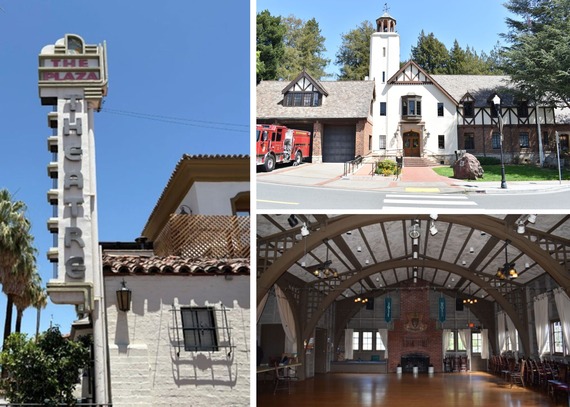 Clockwise from left: During last week’s meeting of the State Historical Resources Commission, several nominations previously forwarded to the National Park Service were placed on the National Register of Historic Places, including the Plaza Theatre in Palm Springs (photo from Architectural Resources Group) and the Mill Valley City Hall and Fire Station. The Claremont Club in Berkeley was approved by the Commission for placement on the California Register of Historical Resources (photos from Samantha Purnell).
During its first meeting of 2026, the State Historical Resources Commission (SHRC) recommended the nominations of eight properties be forwarded to the National Park Service for placement on the National Register of Historic Places (NRHP). One property was approved for the California Register of Historical Resources (CRHR). An additional property was recommended for removal from the NRHP due to its demolition in 2024.
Properties nominated to the NRHP included the Shinn Ranch Farmstead, later known as Shinn Historical Park and Arboretum, in Fremont and the Kimon Gakuen Building, a Mediterranean Revival-style building constructed in 1926 in San Francisco’s Japantown. Approved by the commission for the CRHR was the Claremont Club in Berkeley. The Commission also approved its 2025 annual report and heard an update about the California Historical Resources Information System (CHRIS). The CHRIS maintains a wide range of documents and materials relating to historical resources and operates structurally through the Office of Historical Preservation (OHP), eight information centers and the SHRC.
During her report, State Historic Preservation Officer Julianne Polanco mentioned the OHP will host two listening sessions this spring to elicit comments for the California Statewide Historic Preservation Plan. The listening sessions would be held in conjunction with events hosted by other organizations, including the Society for California Archeology, during its annual meeting in Palm Springs in March, and at the California Preservation Foundation’s (CPF's) conference in Riverside in May. Polanco suggested the next Commission meeting may take place during the CPF event as well.
A recording of the meeting, which highlights all the properties nominated, is available through CAL-SPAN. For information about past and future meetings, including properties nominated to the National Register of Historic Places, please visit the Office of Historic Preservation.
Afro-Latinidad Presence in Early California Exhibition at Pío Pico State Historic Park
Story and photo from: Angeles District
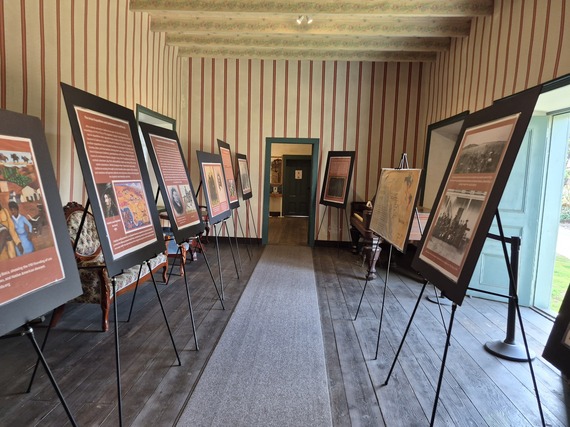 Through engaging displays, the exhibition at Pío Pico State Historic Park explores the vital contributions of Afro-Latine descendants.
Join us for the final two weekends of our special exhibition at Pío Pico State Historic Park, celebrating the story of Afro-Latine communities in early California. This powerful exhibit explores the vital contributions of Afro-Latine descendants who helped shape California’s history, from establishing towns and ranches to influencing the political and social landscapes of the state. Through engaging displays and thoughtful discussion, we trace the journey from the Anza Expedition to the challenges faced under U.S. rule, highlighting how these communities shaped the cultural fabric of California.
Part of the California Natural Resources Agency's celebration of Black History Month, this is a unique opportunity to reflect on California’s legacy and engage in meaningful conversations about the racial, ethnic and social dynamics that continue to resonate today. Don’t miss your chance to experience this important and timely exhibition before it closes.
 PARTNER NEWS
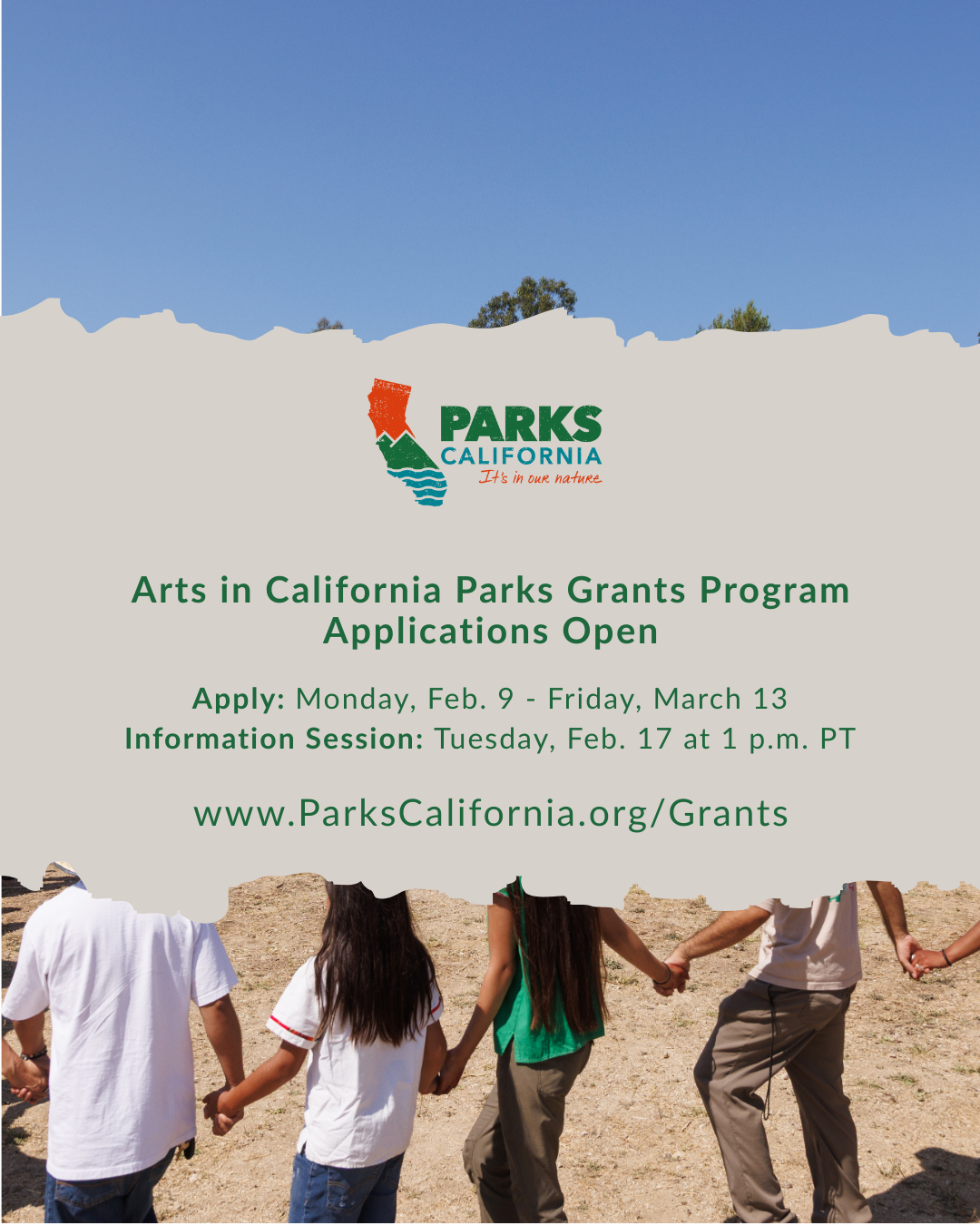 The Arts in California Parks grants program is accepting applications, with up to $2.5 million available to support nonprofit, community and tribal organizations across the state.
Launched in 2024, Arts in California Parks was developed in partnership with California State Parks, the California Arts Council and Parks California to bring art, culture and community into our parks by funding place-based art experiences led by culture bearers, tribes, and local and nonprofit organizations. From murals and permanent installations to performances and storytelling, funded projects reflect community identity and deepen connection to nature while helping parks feel more welcoming and vibrant.
The 2026–27 grant cycle will only support implementation projects across California. Applications are due Friday, March 13, at 5 p.m. Click here to apply.
|