|
 Jan. 30, 2026
|
|
 Tijuana Estuary Natural Preserve
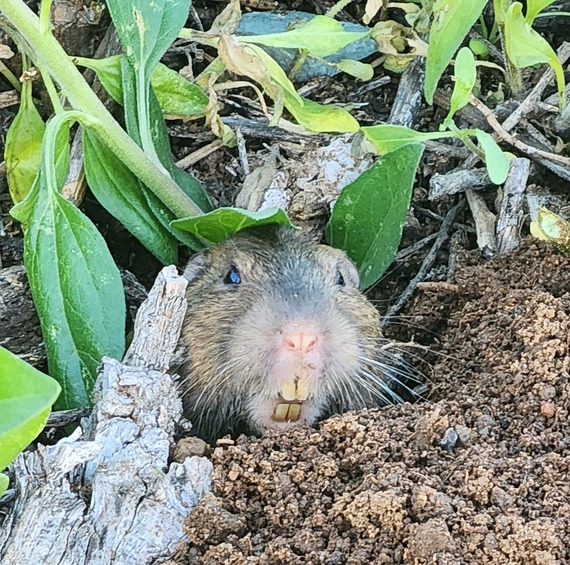
Punxsutawney Phil? Nope! Just a local pocket gopher hoping for spring in the National Estuarine Research Reserve, which connects the estuary to Border Fields State Park.
Photo from Victoria Bok, San Diego Coast District

|
|
Californians Invited to Attend Public Webinars on the Future of Trails
Story from: Communications and Marketing Division
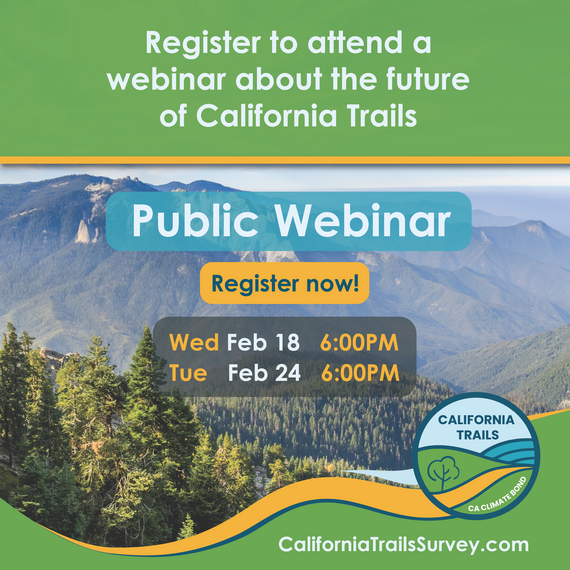 The California Natural Resources Agency (CNRA) and California State Parks invite trail users, community members, advocates and professionals to join two public webinars in February as part of the California Trails Survey — a statewide effort to improve access, safety and connectivity for nonmotorized recreational trails across California.
The webinars will include a presentation introducing the trails assessment process and key outcomes, details on the voter-approved Proposition 4 (Climate Bond) as it relates to trail funding, upcoming updates to the California Recreational Trails Plan, and how you can support the effort by spreading the word about the statewide survey. Each webinar will conclude with a live Q&A.
Public webinar dates and registration
-
Wednesday, February 18 (6-7 p.m.)
-
Tuesday, February 24 (6-7 p.m.)
Register for either webinar here.
Both webinars will be recorded and posted at CaliforniaTrailsSurvey.com for those who cannot attend live.
Why participate?
California’s trail network supports outdoor recreation, health, mobility and connection to nature — yet access and trail quality vary widely by region and community. The California Trails Survey is gathering input statewide to understand what’s working, what’s missing and what could be improved across California’s nonmotorized recreational trails. Feedback will help identify barriers to access and opportunities to expand safe, high-quality trails for everyone.
How public input will be used
Insights from the survey and public webinars will help guide future priorities for trail-related projects across California. The findings will also inform the next update to the California Recreational Trails Plan, scheduled for 2027. The plan was last updated in 2011 and is the statewide guide for agencies that plan, maintain and manage trails, assessing demand, identifying priorities and recommending an integrated system of trail routes.
Help spread the word
All Californians are encouraged to support this effort by:
-
Taking the online survey (open through February 2026).
-
Attending a public webinar and sharing it with friends, neighbors and community organizations.
-
Sharing trail photos and stories through the online photo contest.
For updates and participation opportunities, visit CaliforniaTrailsSurvey.com and follow CNRA and State Parks on social media.
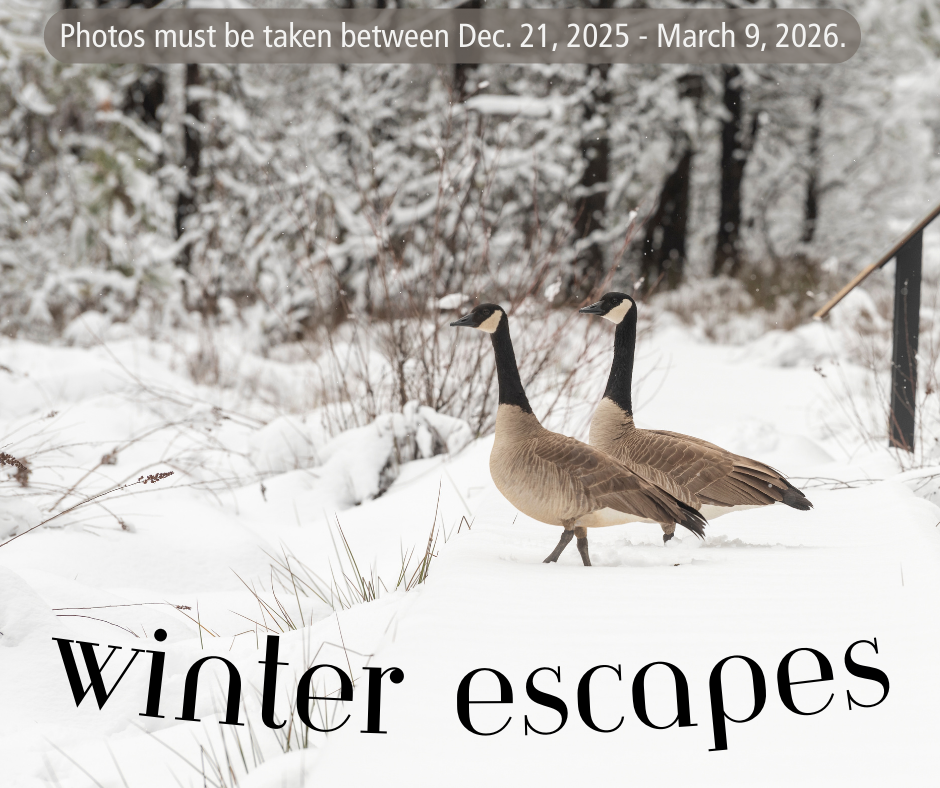
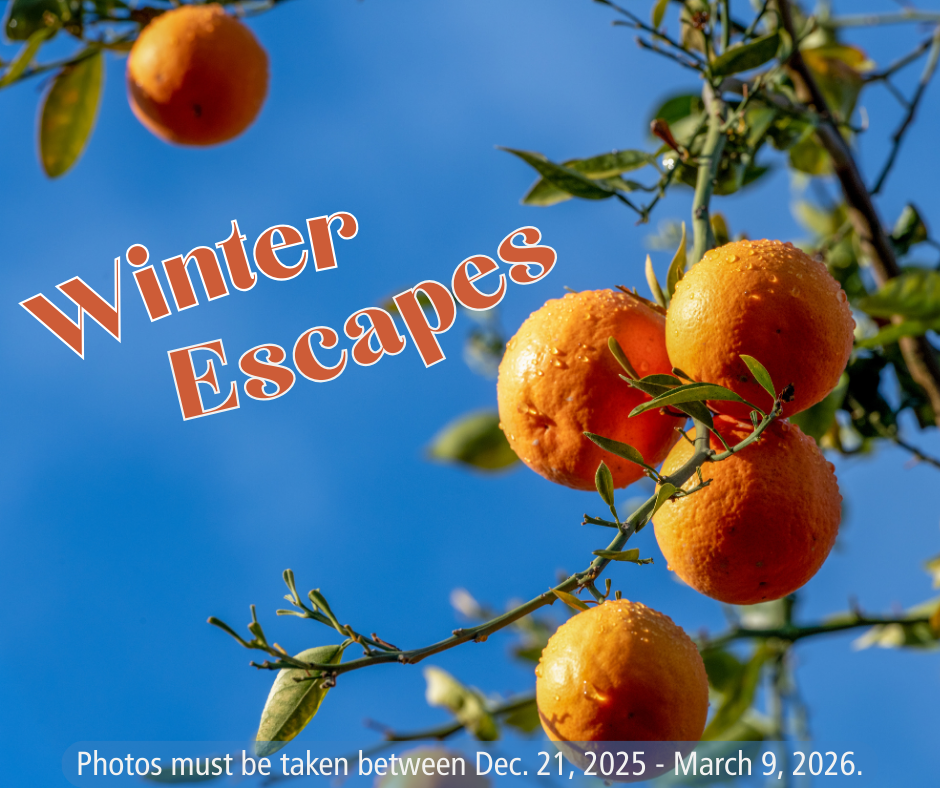
Enter Our Winter Photo Contest, ‘Winter Escapes’
Story from: Communications and Marketing Division
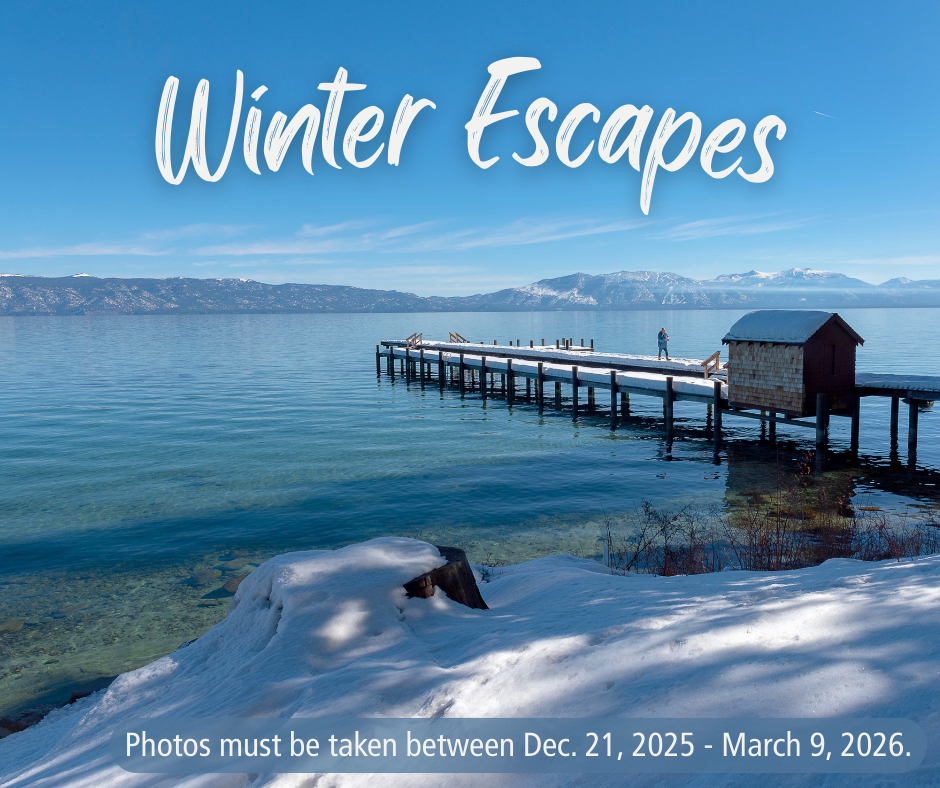
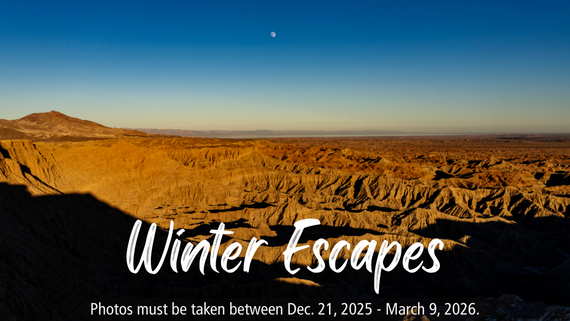
California State Parks employees and volunteers are invited to participate in our current winter photo contest. “Winter Escapes” celebrates the many ways California’s state parks offer the perfect getaway as the days grow shorter and temperatures drop. For some, that means embracing winter’s charm – snowy landscapes, frosty mornings and seasonal adventures. For others, it’s about fleeing winter for desert sunshine or mild coastal air. However you choose to experience the season, we invite you to capture what your parks offer, whether it be comfort, adventure and/or inspiration all winter long.
Photos for the Winter Escapes contest must be taken at one of the 280 California state parks between Dec. 21, 2025, and March 9, 2026. If your photos include people who are non-State Parks employees or volunteers, remember you must have a photo release form.
-
Only California State Parks employees and volunteers are eligible to participate.
-
Photos must be taken between Dec. 21, 2025, and March 9, 2026.
-
Photos must be taken at one of California’s 280 state parks.
-
Photos with images of non-State Parks staff or volunteers must include a filled and signed photo Visual Media Consent form (DPR 993).
-
Photos will be judged on quality, uniqueness, the moment captured and content.
-
The top five photos chosen will be announced in early spring and shared on California State Parks’ social media channels and in the Weekly Digest. Photos that didn’t make the top five might also be published on social media.
-
Photos will be judged by the Communications and Marketing team (whose members are not eligible to participate in the contest).
-
Photo images should be a minimum of 1920×2400 ppi.
Questions? Reach out to us at WeeklyDigest@parks.ca.gov and we’ll be happy to answer them. If you have a photo contest idea, let us know. And have a great winter!
  ADVENTURE OF THE MONTH
Following in the Footsteps of Olympians at Ed Z'berg Sugar Pine Point State Park
Story from: Andreas Agocs, Communications and Marketing Division
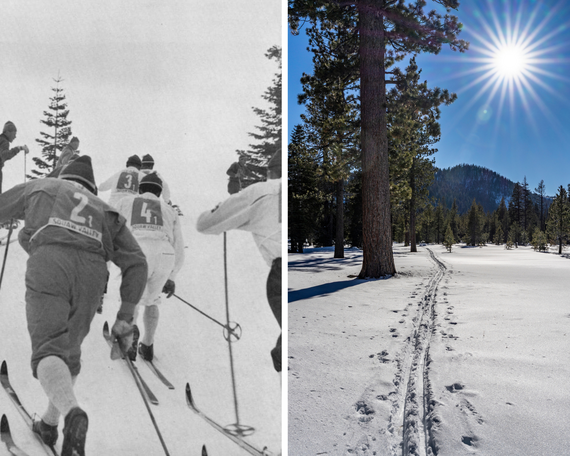 Left: Participants in the 4x10 km cross-country skiing relay race at the 1960 Winter Olympics, part of which were staged in today's park area. Photo from Sierra District. Right: Part of the former Olympic cross-country skiing trail today. Photo from Brian Baer, Communications and Marketing Division.
Klas Lestander of Sweden only had the 15th-best running time of the 30 participants in the first Olympic biathlon, the grueling combination of cross-country skiing and rifle shooting that made its debut at the 1960 Winter Olympics. However, a few miles west of Lake Tahoe, Lestander became the first athlete to hit all 20 targets in an international biathlon championship, a feat that won him the Olympic gold medal in his discipline. Only pine trees witnessed his historic score, though, because live spectators were barred from attending an event that involved firearms.
Today, winter sports enthusiasts who can’t make it to the 2026 Winter Olympics, which kick off in the Italian Alps next week, can find traces of the earlier event at a California state park. The 1960 Winter Olympics historic event put Lake Tahoe into the international spotlight and changed the trajectory of the area that would become Ed Z'berg Sugar Pine Point State Park.
Find the full story and more photos on our latest California State Parks Blog!
|
|
Gold Fever Returns: Marshall Gold Discovery State Historic Park Celebrates Gold Discovery Day
Story and photos from: Kevin Murphy, Communications and Marketing Division
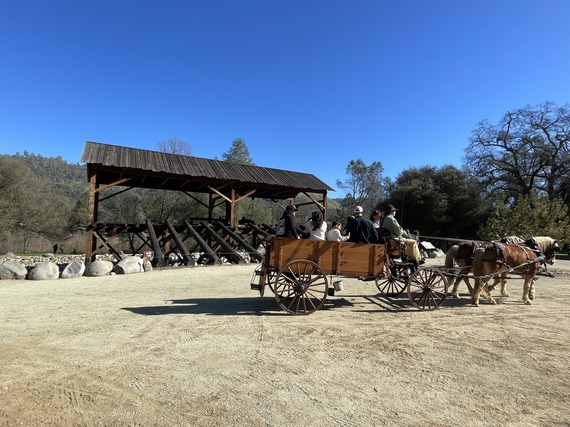 A wagon with visitors passes the sawmill replica during Gold Discovery Day at Marshall Gold Discovery State Historic Park.
Holding a vial of small nuggets of gold up to the bright sun, volunteer Eileen Hook remarked, “It’s still out there. The gold.”
Hook, a former State Parks employee and longtime volunteer, was just one of dozens of volunteer interpreters educating visitors during Marshall Gold Discovery State Historic Park’s (SHP) recent Gold Discovery Day. The annual event celebrates the day James Marshall discovered the precious metal in the tailrace of a sawmill he was building with partner John Sutter on the South Fork of the American River. On Jan. 24, 1848, the history of California would be forever changed and its nickname, the Golden State, would soon come.
The official end of the Mexican-American War was just two weeks away, as American and Mexican representatives would soon sign the Peace Treaty of Guadalupe Hidalgo, with Mexico ceding territory that created much of today’s American Southwest. Neither government knew about the discovery of gold in Coloma at the time. And while Marshall and Sutter tried to keep the discovery a secret, that secret didn’t last long. The rest, as they say, is history.
Visitors at the event moved between stations hosted by volunteers from organizations including the California Pioneer Heritage Foundation and the Gold Discovery Park Association. Visitors of all ages learned about gold, made corn husk dolls and practiced living skills from the mid-1800s. Visitors also explored the park's many historic buildings, including the blacksmith shop, and the Gold Discovery Museum.
Marshall Gold Discovery SHP regularly hosts community events, in addition to thousands of schoolchildren each year. Check out the park's website for future activities.
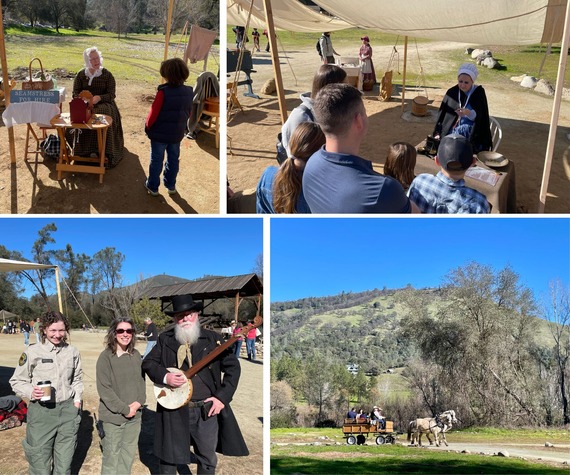 Clockwise from top left: Volunteer Eileen Hook shows off her sewing skills to a young visitor. Virginia Guilbert, a volunteer from the California Pioneer Heritage Foundation, educates visitors about gold. A wagon passes in front of Mount Murphy. Park Aide Ayden Subject, Senior Park Aide Haley Friegang and volunteer Wes Murrish pose near the mill replica.
California Boating and Waterways Commission to Host Workshop and Meeting in Gold River
Story from: Kevin Murphy, Communications and Marketing Division
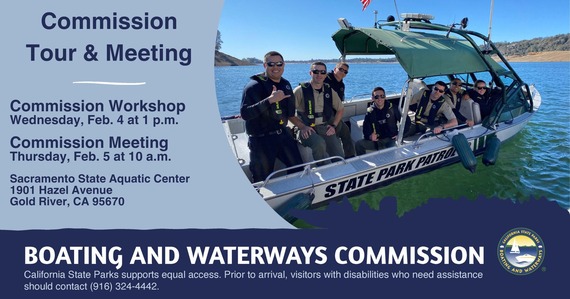 The California Boating and Waterways Commission will host a workshop and its first quarterly meeting of 2026 next week. The workshop begins at 1 p.m. on Wednesday, Feb. 4, at the Sacramento State Aquatic Center in Gold River. The workshop will provide clarification on various grant programs and processes concerning the Division of Boating and Waterways and is open to the public.
The Commission meeting will follow at the same location on Thursday, Feb. 5, at 10 a.m. The meeting agenda will include reports from Division of Boating and Waterways staff on several topics, including the Surrendered and Abandoned Vessel Exchange grant program, Boating and Safety and Enforcement Equipment grants and the Aquatic Invasive Plant Control Program.
Agendas and additional information for both the workshop and meeting are available at parks.ca.gov/PublicNotices. Registration links to join the Commission meeting virtually are also available on the website. For more information about the California Boating and Waterways Commission, visit the Commission webpage. California State Parks supports equal access. Prior to arrival, visitors with disabilities who need assistance should contact 916-324-4442.
Historic Farmstead, School for Japanese Americans Among Properties to Be Considered by State Historical Resources Commission
Story from: Kevin Murphy, Communications and Marketing Division
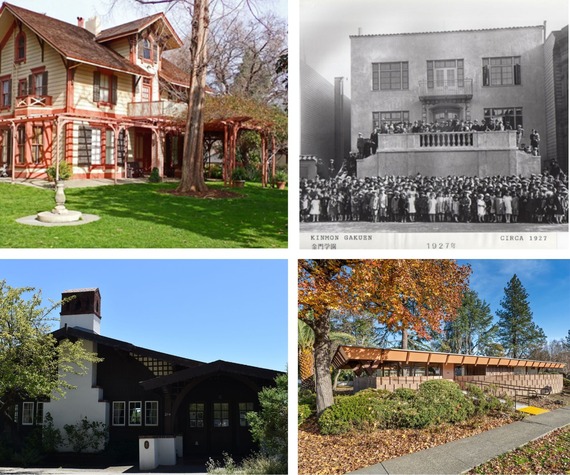 Properties nominated to the National Register of Historic Places include (clockwise, from top left): Shinn Ranch Farmstead in Fremont. Photo courtesy of Michael Corbett. Kinmon Gakuen in San Francisco. Photo courtesy of Kinmon Gakuen. Ives Dental Building in Cloverdale. Photo courtesy of Joe Pheffer. Claremont Club in Berkeley. Photo courtesy of Samantha Purnell.
Eight historic sites, including a California homestead and an educational building in the continental United States’ oldest Japantown, are on a list of properties being considered for nomination to the National Register of Historic Places. On Friday, Feb. 6, the State Historical Resources Commission will review nominations beginning at 9 a.m. in Sacramento, inside the California Natural Resources Building auditorium. The Commission will also consider the Claremont Club in Berkeley for California Historical Landmark status.
Shinn Ranch Farmstead, later known as Shinn Historical Park and Arboretum, occupies 4.5 acres in a central area of Fremont and is the last surviving part of Shinn Ranch that once consisted of just over 300 acres. The property is significant for its association with the operation of Shinn Ranch, with the influential and highly accomplished members of three generations of the Shinn family, and as a rare surviving embodiment of a once typical California farmstead.
A Mediterranean Revival-style building constructed in 1926 in San Francisco’s Japantown, the Kimon Gakuen Building was initially associated with the social, cultural and educational development of Japanese immigrants and Japanese American children. In 1942, the building was seized by the U.S. military as a processing center for persons of Japanese ancestry living in the City and County of San Francisco. The building also served as the temporary facility for the Booker T. Washington Community Service Center, which served African Americans recruited to work in San Francisco to meet wartime requirements. In 1952, the building was restored to its former use, holding classes and offering community services ever since.
Nominations for the National Register of Historic Places approved by the Commission will be forwarded to the National Park Service for final consideration. Full details of all properties nominated may be found on the pending nominations webpage. Please visit the National Register of Historic Places website or the California Historical Resources website for properties currently listed.
Participants may attend the meeting in person or virtually. Visit State Parks’ Public Notices for meeting details, including how to register in advance. California State Parks supports equal access. If you are in need of a reasonable modification or special accommodation at the meeting or in accessing the agendas or submitting comments, please contact the Office of Historic Preservation at 916-445-7000 or email calshpo.shrc@parks.ca.gov.
Meet the Commissioner: Adam Sriro, State Historical Resources Commission
Story from: Kevin Murphy, Communications and Marketing Division
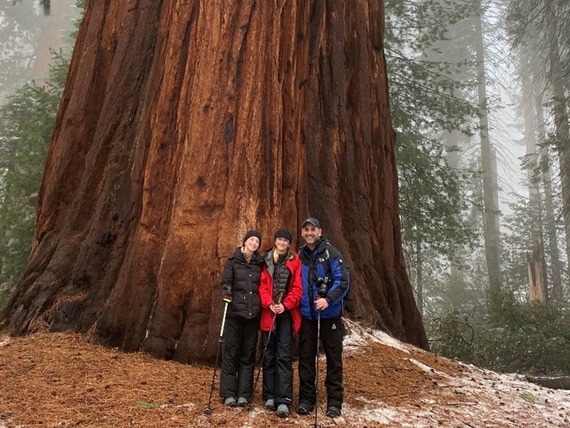 State Historical Resources Commissioner Adam Sriro with his daughters among the giant trees at Sequoia National Park. Photo from Adam Sriro.
Meet the Commissioner, an occasional series in the Weekly Digest, continues with a profile of Adam Sriro. Commissioner Sriro is the incoming chairperson for the State Historical Resources Commission (SHRC). The SHRC is a nine-member state review board, appointed by the governor, with responsibilities for the identification, registration and preservation of California's cultural heritage.
Sriro resides in Culver City and is manager of the archaeology program at Southern California Edison (SCE), a position he has held since 2010. He has worked at SCE since 2002 in several positions, including archaeologist and senior archaeologist. Prior to that he held the position of associate archaeologist with the California Department of Transportation. He earned a master of arts degree in cultural resources management from Sonoma State University. He answered five of our questions to learn more about him:
Why did you apply for the Commission?
I became familiar with the SHRC after attending several meetings to request better processes and transparency for the California Historical Resources Information System. I quickly learned about all the great and important programs the SHRC oversees. As a fourth-generation Californian, I was immediately taken with the idea that documenting our history and serving in this capacity is something I would love to do.
Since joining the Commission, what’s one thing that has surprised you?
The variety of National Register of Historic Places nominations is always surprising. The range of different properties we review is impressive. From archaeological sites to majestic hotels… we have it all.
Why do you think it is important for the public to engage with the Commission?
In my opinion, the public is the primary stakeholder for the SHRC. They are the ones who benefit the most from documenting California’s heritage.
What is your favorite form of recreation and do you have a favorite state park or historic site to visit?
My family loves to travel to national and state parks on vacation. For the quick weekend away, Leo Carrillo State Park has the best campsites on the coast.
What would someone be surprised to learn about you?
I have hiked the Inca Trail from Cuzco to Machu Picchu (many, many years ago).
Ranger Parking Spot Unveiled at the Republic of Slowjamastan
Story and photos from: Andrew Ahlberg, Ocotillo Wells District
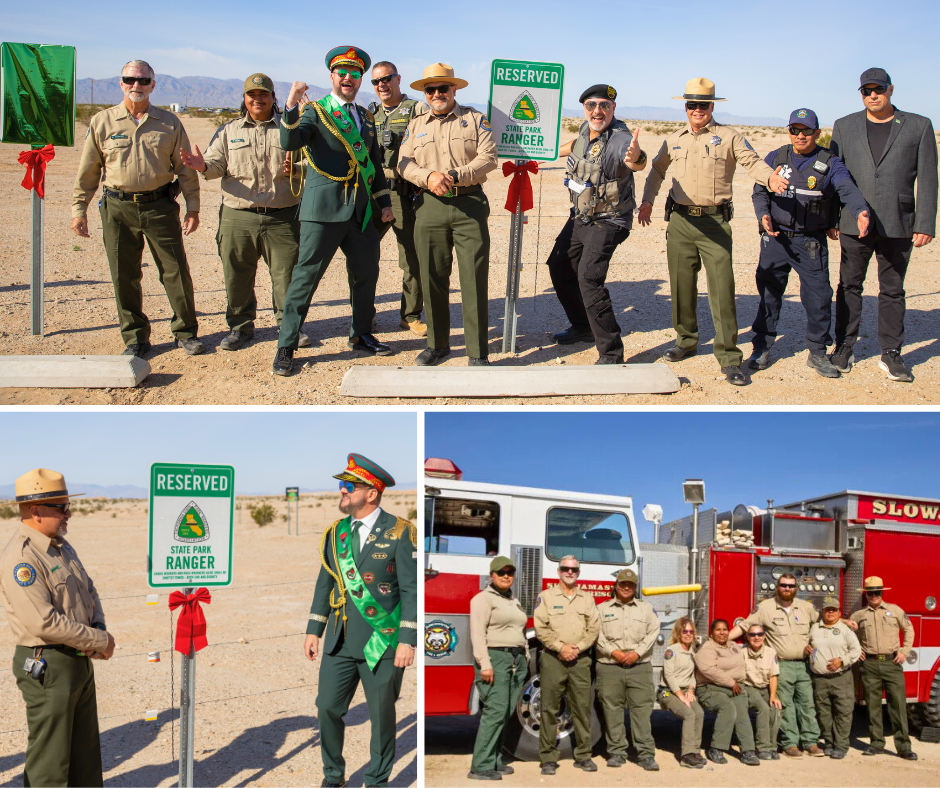 Counter-clockwise from top: Ocotillo Wells District staff and members of "The Republic of Slowjamastan" celebrate after the unveiling of a ranger station. District Superintendent Enrique Arroyo and "Sultan" Randy Williams admire the new station. District staff pose in front of the Republic's fire engine.
Ocotillo Wells District Superintendent Enrique Arroyo, Chief Ranger Andrew Ahlberg, and members of the Ocotillo Wells State Vehicular Recreation Area (SVRA) staff attended the unveiling of a "designated ranger parking spot" on Jan. 25 at the "Republic of Slowjamastan," a private inholding located within Ocotillo Wells SVRA.
The unveiling event highlighted the positive working relationship between California State Parks and its neighbor, the Republic of Slowjamastan. Both share a commitment to cooperation, safety and appreciation of the desert environment. The designated ranger parking spot serves as a symbolic gesture of support for ranger presence and underscores the importance of collaboration between public agencies and private landowners within Ocotillo Wells SVRA.
The Republic of Slowjamastan is an 11.07-acre self-declared micronation founded on Dec. 1, 2021, by San Diego–based radio host Randy “R Dub!” Williams. Located along State Route 78 between the communities of Ocotillo Wells and Westmorland in Imperial County, the site features defined borders, a flag, national anthem, currency known as the “duble,” and a capital city called Dublândia. Williams serves as the micronation’s self-appointed sultan.
Established as a whimsical and creative destination, Slowjamastan operates on privately owned land and has attracted thousands of registered “citizens,” though it is not officially recognized by the United States or other nations. The micronation also features a unique set of lighthearted “laws,” including a ban on Crocs, a requirement that string cheese be pulled rather than bitten and a rule that the left lane is for passing only.
Parks California Announces 2026 Route to Parks Grant Recipients
Story from: Parks California
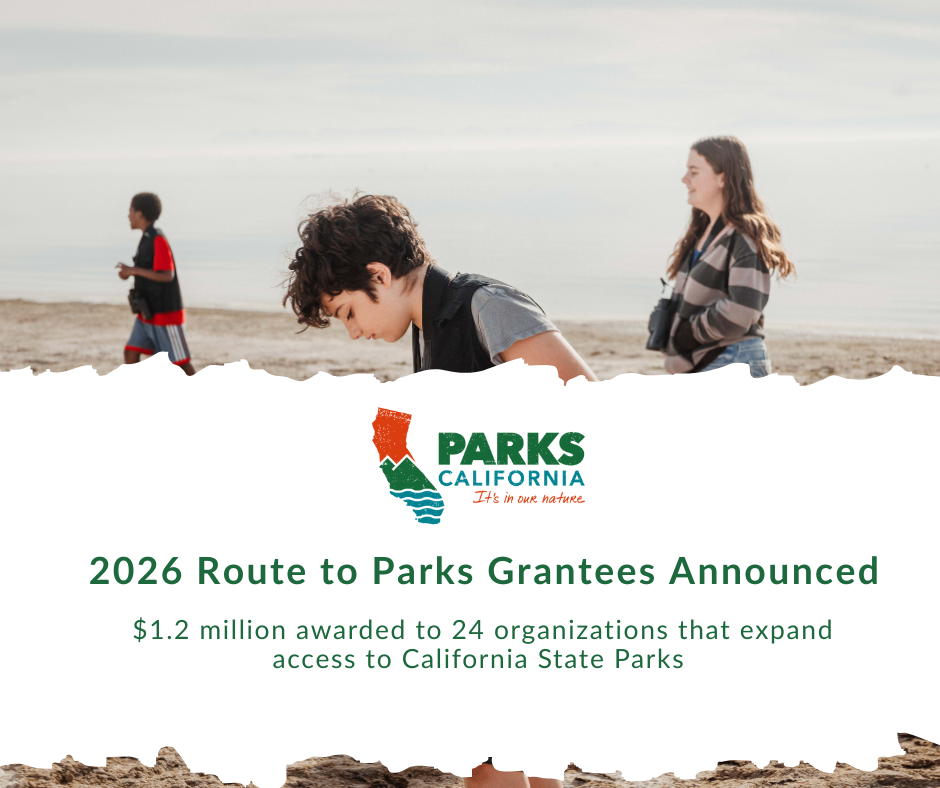 Parks California and California State Parks announced the 2026 Route to Parks grant recipients, awarding more than $1.2 million to 34 community organizations across California. These grants are expected to help more than 15,000 people — many visiting a state park for the first time — access and enjoy California’s state parks.
The Route to Parks program supports community-led outdoor experiences by removing transportation barriers. The 2026 grantee projects serve urban, rural and tribal communities. Transportation support includes free bus service, biking programs, train tickets, gas cards and ride-share reimbursements. More than half of these programs include waterway education or activities, giving participants hands-on experiences with California’s rivers, lakes, coasts and watersheds.
Since 2020, Route to Parks has partnered with more than 120 local, tribal and nonprofit organizations. The grants program has invested more than $3.1 million to support access for more than 20,000 people statewide, with 75% of participants experiencing a state park for the first time. View the complete list of 2026 Route to Parks grantees.
|
|
|
To view current job openings within California State Parks, please visit our jobs webpage at www.LiveTheParksLife.com.
State Parks Job Spotlights and Open Exams
 JOB SPOTLIGHTS:
State Park Interpretive Specialist (Seasonal) (Multiple Opportunities) — Dates Vary: Bring California’s parks to life as a State Park Interpretive Specialist. In these dynamic roles, you may lead guided tours and campfire programs, captivating visitors with stories of nature, history, and culture. Opportunities include creating engaging exhibits and interactive trails while inspiring curiosity and promoting conservation. If you love storytelling, adventure, and helping history and nature come alive for others, there is a role here for you. Click here to learn more.
State Park Interpreter I (Permanent Intermittent) (Columbia) — Apply by Feb. 5: Step back in time and bring the Gold Rush to life at Columbia State Historic Park! As a State Park Interpreter I, you will create unforgettable experiences for K–12 students, delivering interactive programs both in-person and through California’s innovative PORTS (Parks Online Resources for Teachers and Students) distance learning platform. You will guide students through one of the best-preserved Gold Rush towns in California, connecting them to history while supporting curriculum standards. This role is perfect for storytellers and educators who love sparking curiosity, building digital engagement, and helping students experience history in a fun and memorable way. Click here to learn more.
Analyst II (Sacramento) — Apply by Feb. 23: As a Recruitment Analyst, you will join a collaborative team focused on attracting a large, diverse and highly qualified candidate pool through outreach, presentations, analytics and creative recruitment initiatives. This role offers a mix of independent and team-based work, connecting with jobseekers and promoting California State Parks as an employer of choice while helping others find meaningful, purpose-driven careers. This is a challenging and rewarding opportunity that includes travel throughout California! Click here to learn more.
EXAM SPOTLIGHTS:
Guide I, Historical Monument (March 31): Are you passionate about history and storytelling? As a Guide I, Historical Monument, you'll lead engaging tours, interpret California’s rich historical heritage, and help preserve some of the state's most treasured landmarks. If you're ready for a role where each day offers a chance to bring the past to life, take the assessment and begin your journey as a historical guide. Apply to take the Guide I, Historical Monument assessment and start your career journey today! Click here for more information.
State Park Equipment Operator (March 31): Ready to put your heavy equipment skills to work in California’s stunning state parks? State Park Equipment Operators help maintain roads, construct fire breaks, remove hazards, and support emergency response efforts like wildfire and flood control. This role requires independence, technical skill, and the ability to operate a variety of heavy and specialized equipment in challenging and in challenging and unpredictable conditions. If you are ready to take on tough terrain and help keep parks safe and accessible, apply today to take the State Park Equipment Operator assessment. Click here for more information.
WORKSHOP SPOTLIGHT:
Discover exciting career opportunities with California State Parks at our upcoming virtual webinars! Learn everything you need to know about the application process, assessments, and state hiring, all while getting your questions answered by our expert recruiters. Don’t miss this chance to gain valuable insights and take the first step toward your dream job. Click here for dates and registration info.
If you have any questions regarding these opportunities, connect with us at Recruiting@parks.ca.gov. We’re happy to help!
Interested in more jobs and exams like this? Explore www.LiveTheParksLife.com to discover the possibilities.
Join the Parks Jobs mailing list here. We can send you updates on jobs and exams that interest you!
|
|
|
Style time! Here are this week's tips to help spread the word about our departmentwide style guidelines:
-
Dollars: Do not use zeros or spell out. Example: Use $5, not $5.00 or five dollars.
-
"in order to" versus "to": Use "to" instead of "in order to." Write in plain, straightforward language as much as possible.
-
Olympics: Either the Olympics or the Olympic Games is correct. Always capitalized. There are Summer Olympics and Winter Olympics, or Summer Games and Winter Games. Always capitalize Games for the Olympics, even when standing alone: The Games open on Feb. 6. This was a change beginning with the Tokyo Games from previous AP style, which called for capitalization only when attached to the host city or the year.
Keeping a consistent writing style ensures the Weekly Digest looks and sounds its best. Each week, the Communications and Marketing Division reviews submitted articles for proper grammar and punctuation and style consistency –– from capitalization and hyphenation to proper acronyms and active/passive voice usage. We follow our . For all questions that aren't addressed in our style guide, we follow the Associated Press style and Merriam-Webster.
We always welcome your feedback on how to “Live the Parks Life” in (writing) style. Connect with us via email at weeklydigest@parks.ca.gov.
|
|
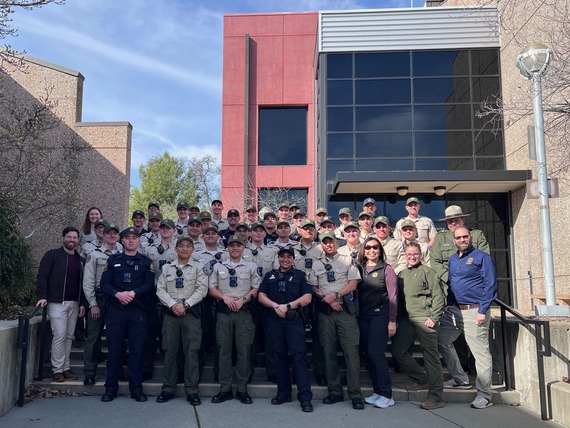 Butte College
Cadets with Basic Visitor Services Training (BVST) 52 with members of the Communications and Marketing Division, Gold Fields District and the Sierra District after media training. This academy class is set to graduate on April 10.
Photo from Marty Greenstein, Communications and Marketing Division
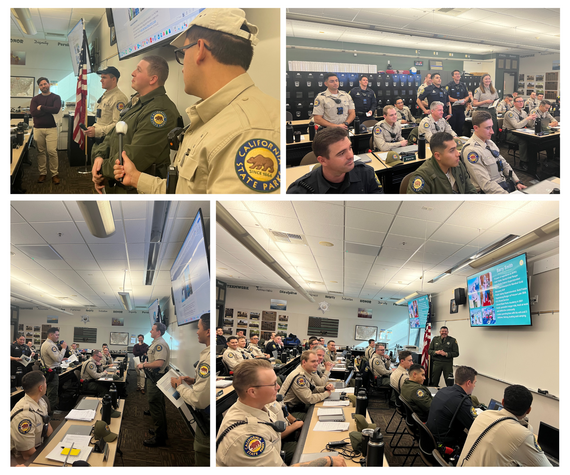 Butte College
BVST 52 participated in mock interviews with the Communications and Marketing Division. Gold Fields District Chief Ranger Barry Smith and Sierra District's Partnership and Communications Manager Kaytlen Jackson participated as guest speakers during the media training.
Photos from Adeline Yee, Communications and Marketing Division
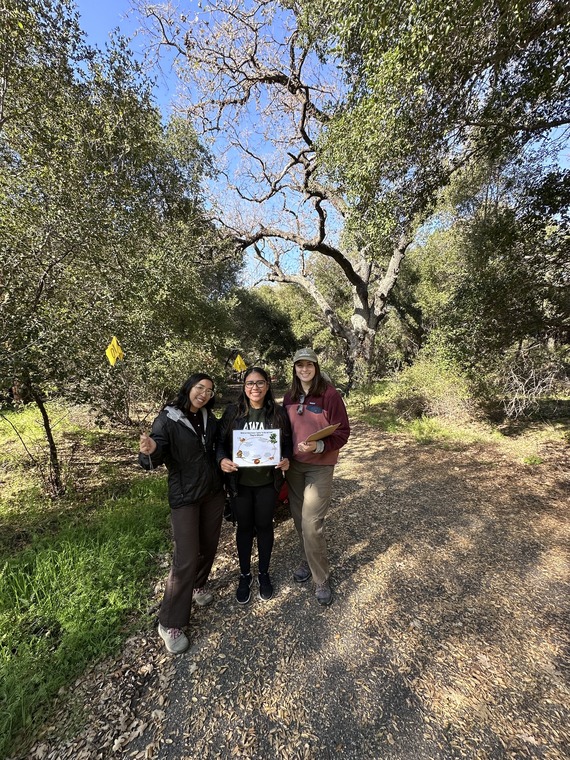 Malibu Creek State Park
Field trips up ahead! Our interns from both the Outdoor Education Internship and the UCLA Internship Program (left to right) Aly, Rose and McKenna, train before our field trips begin in February.
Photo from Angeles District
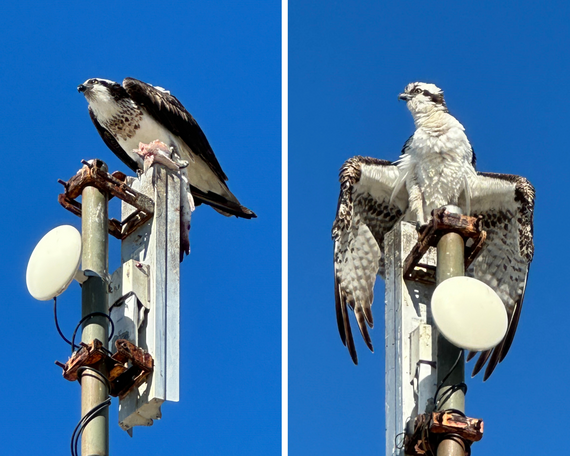 Torrey Pines State Natural Reserve
Ospreys are some of our most honored residents and often have a meal in talon. Fun fact: Females are larger than males and have a brown "necklace" unlike the males, which have full white chests.
Photos from Rosalind Morehead, San Diego Coast District
 Angel Island State Park
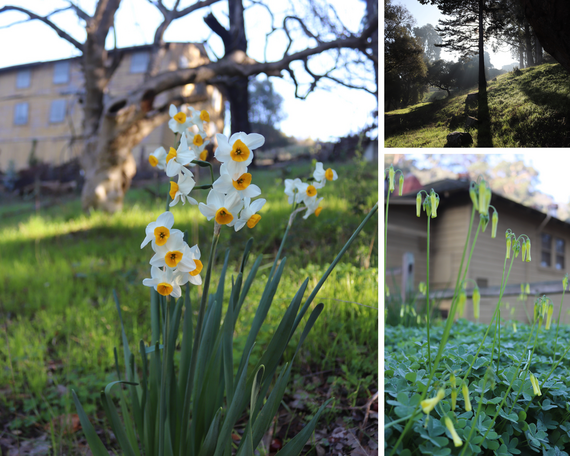
Fred Korematsu worked at his family’s flower nursery in Oakland, was incarcerated during World War II, sued the United States over Japanese Internment and would later go on to advocate for reparations to be paid to Japanese Americans who were incarcerated during World War II. I was really inspired how Angel Island’s flowers have sprung to life in the area that was once a site of Japanese internment. I took these photos to illustrate how Angel Island serves as a very special state park where natural beauty and historical remembrance help to foster healing.
Clockwise from left: Narcissus flowers in front of an abandoned World War II barracks. Shadowy tree on the trail to the immigration station illuminated by morning light. Oxalis flowers (sometimes known sour grass) in front of Mess Hall Museum.
Photos from Andy Padilla, Bay Area District
 Pfeiffer Big Sur State Park
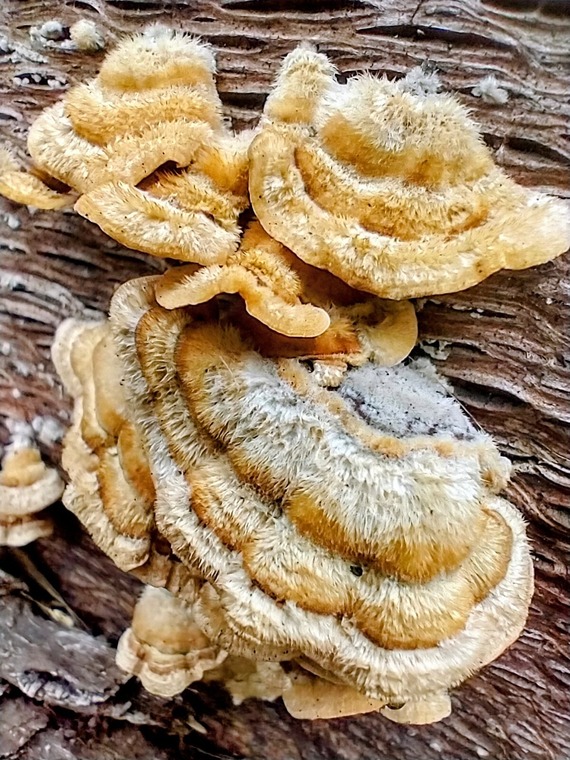
A fuzzy fungus captured during this year's annual Forager's Festival.
Photo from Melody Hildreth, Monterey District
 Great Basin District
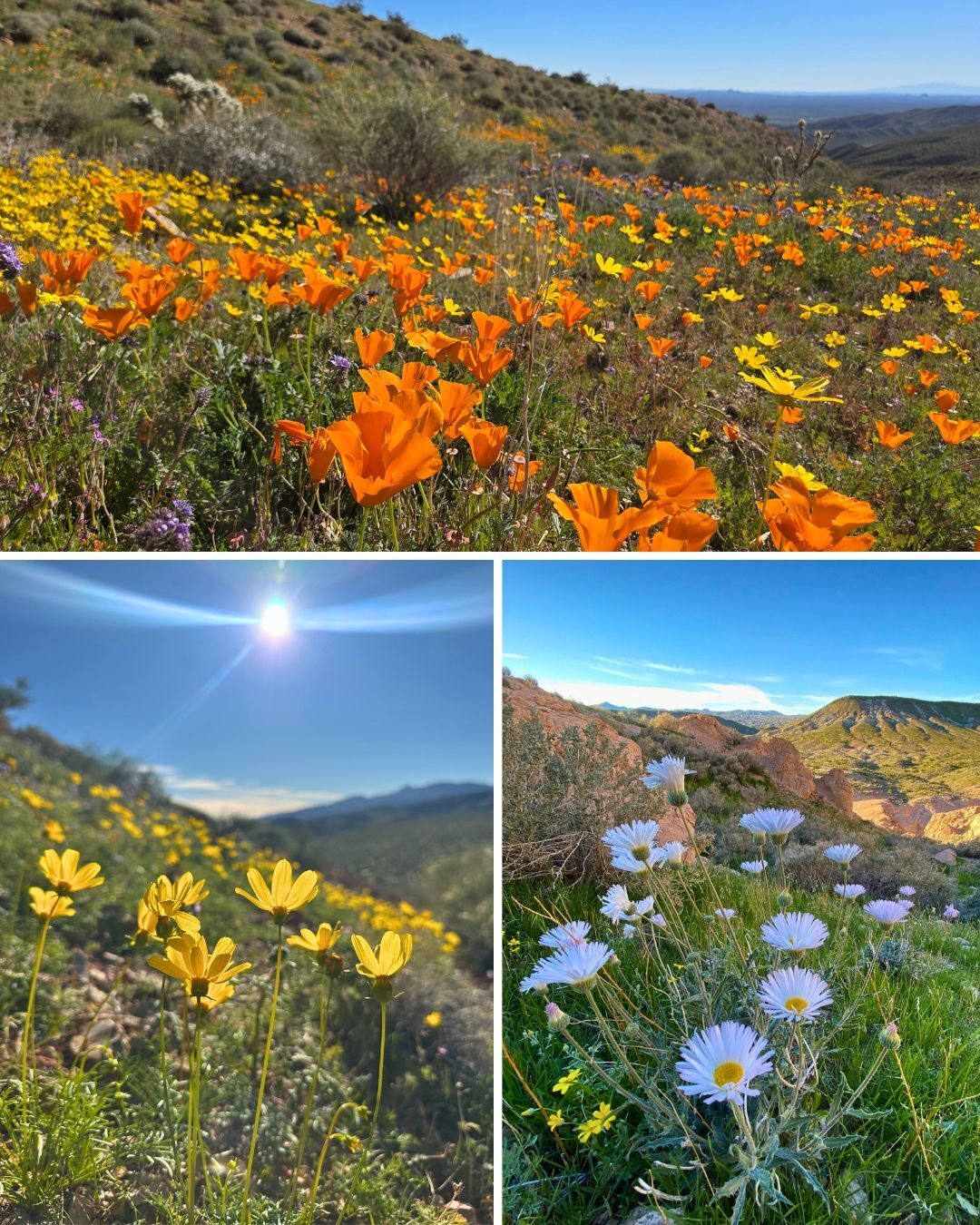
Wildflowers are blooming at the Mojave Desert state parks.
Clockwise from top: California poppies and coreopsis at Onyx Ranch State Vehicular Recreation Area. Mojave woodyaster and coreopsis at Red Rock Canyon State Park.
Photos from Rocio Martinez and Damion Laughlin, Great Basin District
 Anza-Borrego Desert State Park
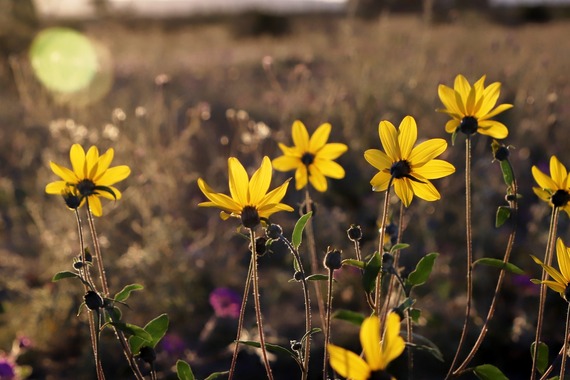
Gray sunflowers just after sunrise.
Photo from Michele Hernandez, Colorado Desert District
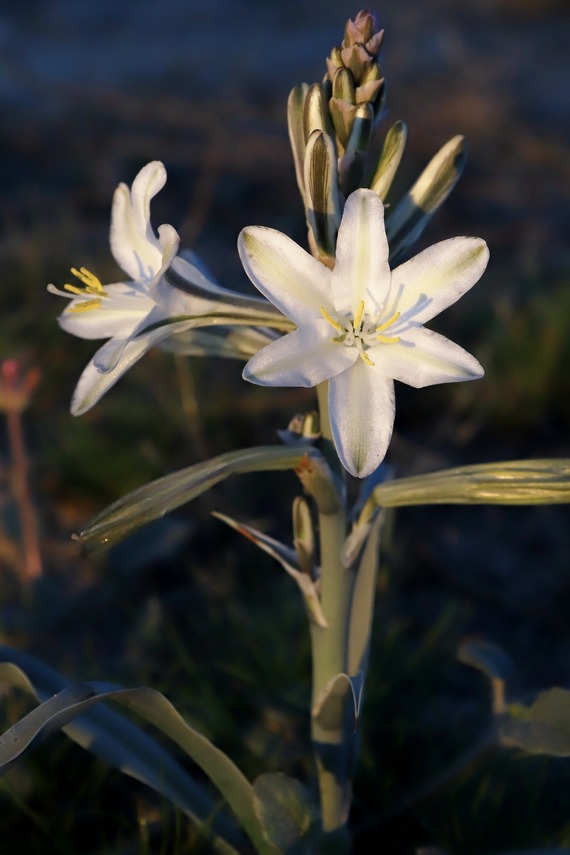 Anza-Borrego Desert State Park
A desert lily early in the morning
Photo from Michele Hernandez, Colorado Desert District
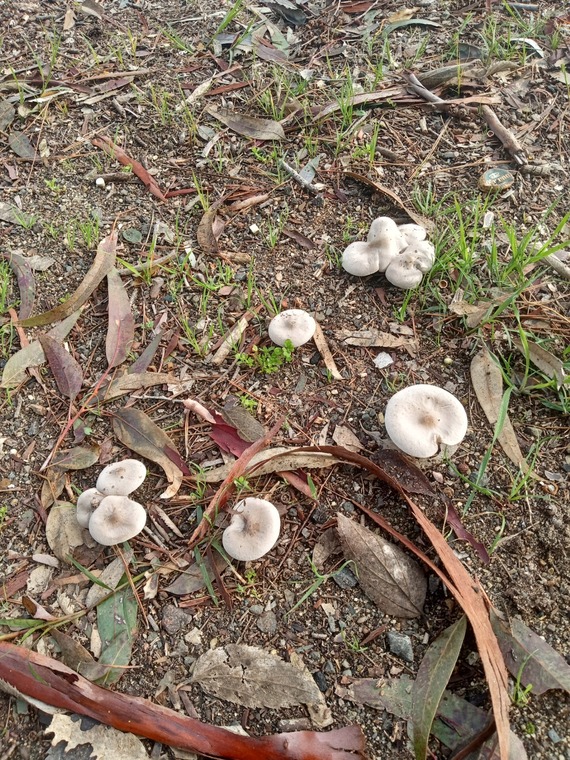 San Luis Reservoir State Recreation Area
On a damp foggy afternoon in late January, mushrooms grow near the paved trail at the San Luis Creek day-use area.
Photo from Lance Torgerson, Central Valley District
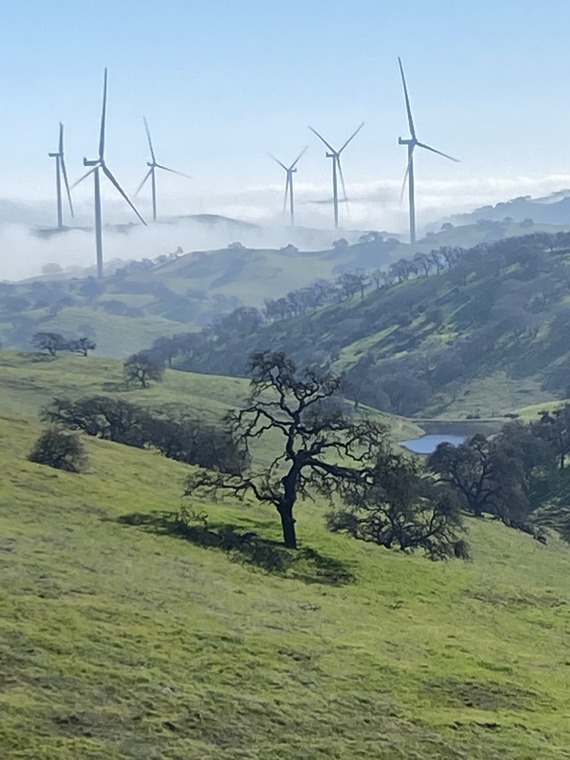 Pacheco State Park
Our new wind turbines are rising out of the tule fog with Pig Pond in the foreground.
Photo from Nathan Aeschleman, Central Valley District
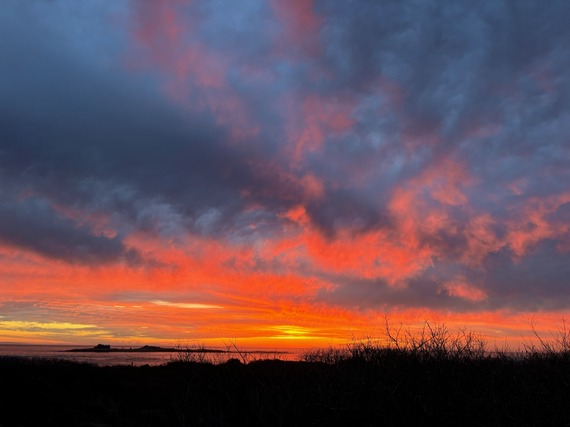 Año Nuevo State Park
Winter sunset viewed from the Año Nuevo Natural Reserve.
Photo from Gabe McKenna, Santa Cruz District
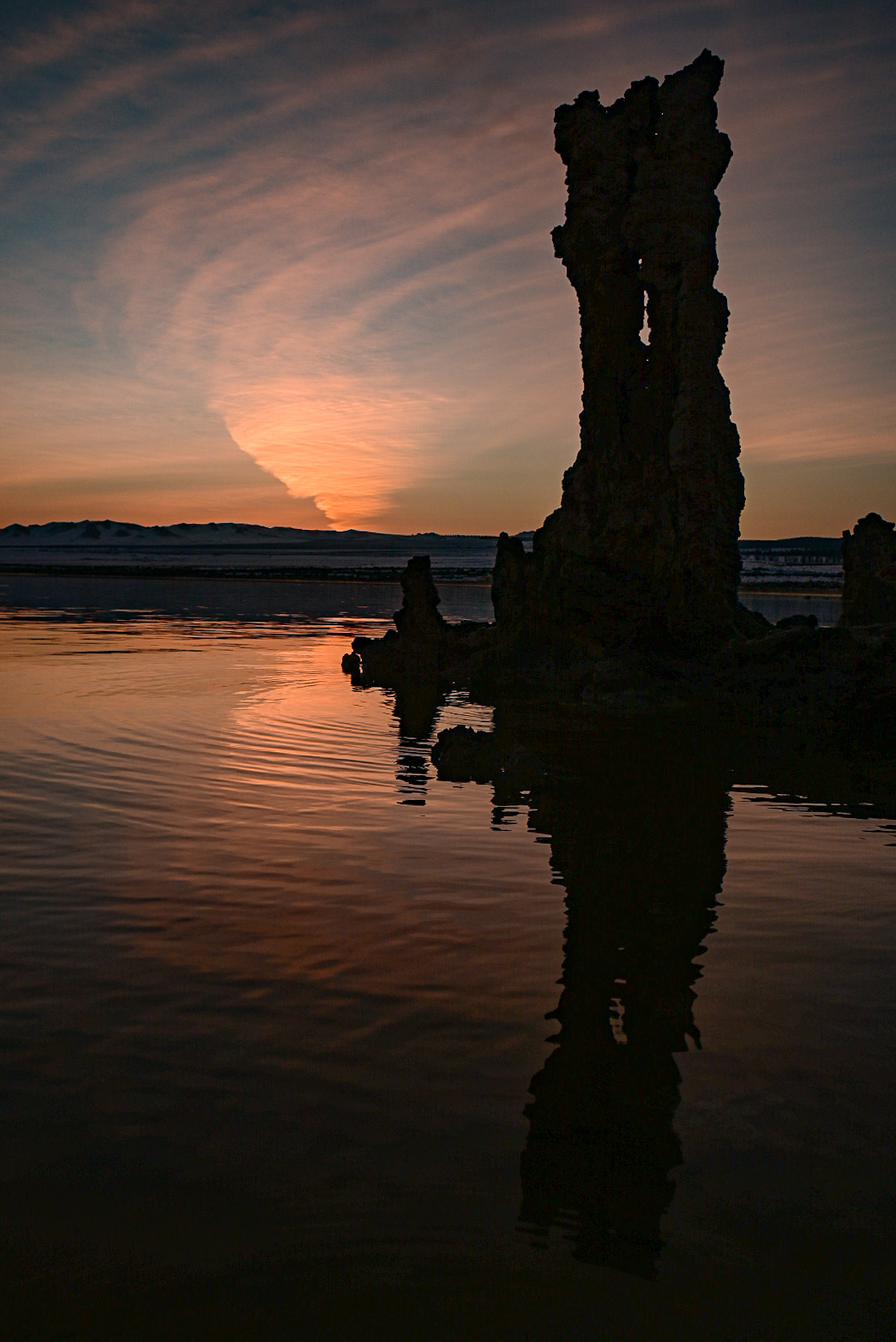 Mono Lake Tufa State Natural Reserve
Tufa silhouette reflection at sunrise.
Photo from Rick Lane, Capital District
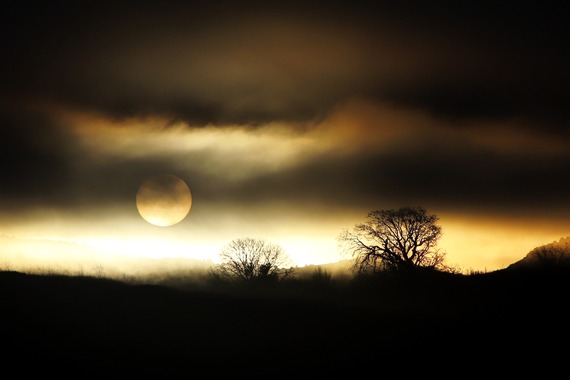 Cuyamaca Rancho State Park
A little after sunrise on a foggy morning at the park.
Photo from Michele Hernandez, Colorado Desert District
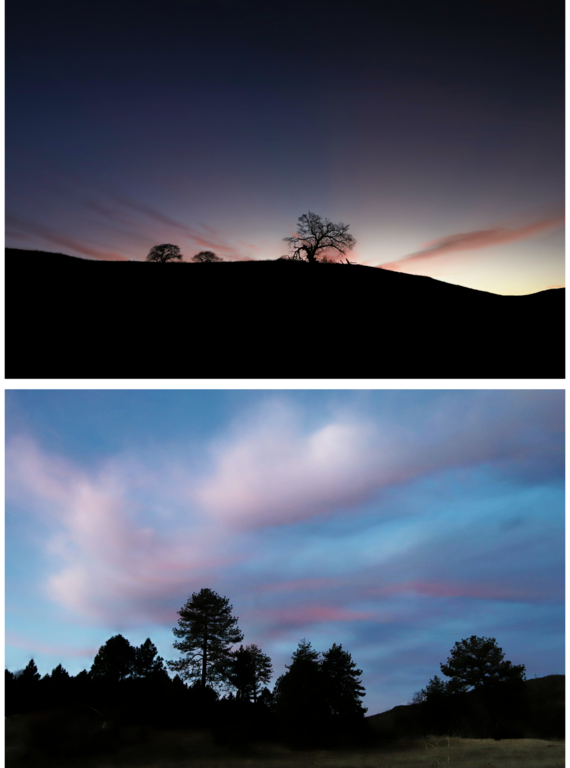 Cuyamaca Rancho State Park
These two photos were taken on the same morning. The photo on top is of the sunrise to the east. There wasn't much going on. The photo below is of the sunrise a little later looking to the west where there were clouds. This photo has a pastel look to the color.
Photos from Michele Hernandez, Colorado Desert District
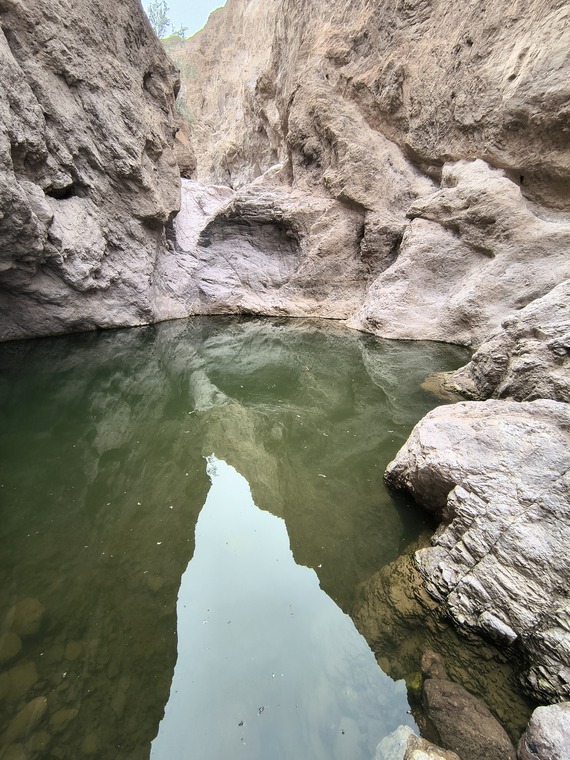 Picacho State Recreation Area
A healthy rainy season left us with a nice reflecting pond.
Photo from Eric Kung, Ocotillo Wells District
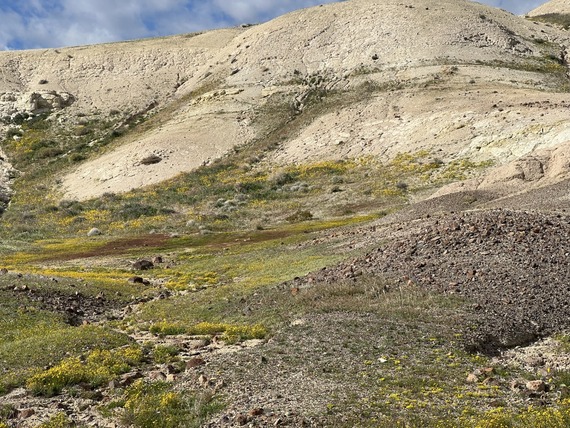 Red Rock Canyon State Park
The canyon is very green this time of year.
Photo from Shepard Greer, Inland Empire District
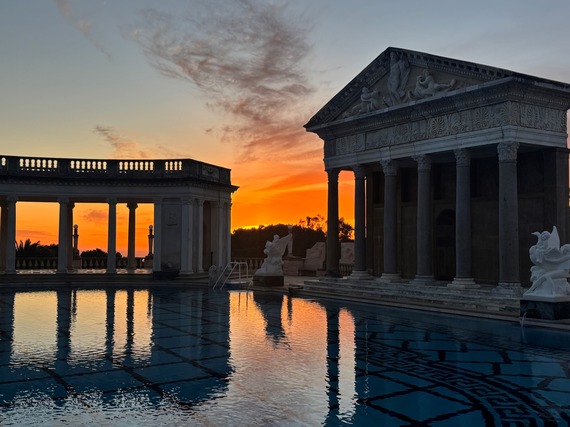 Hearst San Simeon State Park
Hearst Castle's Neptune Pool at sunset.
Photo from Jason Rule, San Luis Obispo Coast District
|
|
|
Here are some upcoming State Parks events. For a list of more upcoming events, please visit www.parks.ca.gov/events.
Saturday, Jan. 31
-
Mt. Tam Morning Broom Pull — Mount Tamalpais State Park, 9 a.m.–noon: Join us for some volunteer habitat restoration work, taking out invasive French broom (and picking up any stray litter while we're at it). French broom is the [wanted] poster child for just about every negative effect an invasive plant species can have on the habitat it is invading. It outcompetes and excludes native plants while offering no benefits to native wildlife. It alters soil chemistry and microclimate, making it unsuitable not only for native plants but for many native arthropods as well. Its high rate of growth and oil content also make it a ladder fuel that can exacerbate wildfires. With that in mind, we're getting rid of some of this rude invader! We will meet at Bootjack and work in the picnic area and campground. We will remove plants by hand-pulling or with tools. Tools are provided, but participants should bring their own work/garden gloves (there are a limited number available for those that forget or do not have any). Participants should bring water bottles and wear sturdy shoes. Long sleeves and long pants are recommended as ticks and poison oak may be present. We recommend arriving early to find parking as nearby parking can fill up before 9 a.m. on pleasant Saturdays.
Sunday, Feb. 1
-
Afro-Latinidad Presence in Early California — Pío Pico State Historic Park, 10 a.m.–3 p.m.: Join us in celebrating the story of Afro-Latine in early California with an exhibition. This event explores the contributions of Afro-Latine descendants who played a role in shaping the state’s history, from establishing towns and ranches to influencing political and social landscapes. Through engaging displays and discussion, we’ll explore the history from the Anza Expedition, the challenges Afro-Latine faced under U.S. rule, and how these communities helped shaped the culture of California. This event offers an opportunity to reflect on the legacy of California and engage in conversations of racial, ethnic and social dynamics that continue to resonate today. Exact meet-up location: Adobe Media Room.
-
Scenic Overlook Hike — Santa Susana Pass State Historic Park, 1–3 p.m.: Location of event: Santa Susana Pass State Historic Park Lilac Lane Trailhead. Description of event: Volunteer Hike Leader Sophia. Difficulty Level: Moderate. Length ¾ mile. For more information: http://fpssm.org/hikes-and-events.php. Directions: To get to Lilac Lane Trailhead: Take Topanga Canyon Boulevard north, and just past Stoney Point is the Santa Susana Pass Road. Turn left. After you pass the Rocky Peak exit off the 118 Freeway, start looking to your left for Lilac Lane. Turn left on Lilac Lane. Drive a short way and look to your left for a large dirt parking lot with a State Parks wooden kiosk. Park in the dirt parking lot and meet at the kiosk. (Do not park in the street.)
Also note these upcoming California Natural Resources Agency (CNRA)-sponsored event celebrating Black History Month:
Wednesday, Feb. 4
-
Black Leadership in Action: Connecting Communities to Nature, noon–1 p.m.: CNRA will honor the 100th anniversary of the first Black History Week by celebrating Black leaders who connect people to nature and collective action to create healthier communities. Join Secretary Crowfoot for a conservation with leaders who will share – what makes a movement – how to build trust, grow participation and turn shared values into action across neighborhoods, parks, coastlines, and public lands. Learn how community – led efforts strengthen equity, access, and belonging across California’s natural spaces. Whether joining an existing movement or helpful build one from the ground up, this webinar will show how people power works- and how everyone can be part of it. This event is virtual. Register here.
Saturday, Feb. 7
-
Allensworth Black History Month Festival — Colonel Allensworth State Historic Park, 10 a.m.–4 p.m.: Join us for this celebration of the achievements and contributions made by African Americans at the Colonel Allensworth State Historic Park, sharing the story of Allensworth with others to educate and inspire future generations. Activities and events include food and merchandise vendors, park tours, dancing, music, and learning about Black history.
|
|
|
Jan. 27, 2026
|
|
|
The Weekly Digest includes a collection of news articles related to the
California Department of Parks and Recreation. The views expressed and opinions do not always reflect that of the department.
To view this week's News Clips, please visit www.parks.ca.gov/NewsClips.
 Weekly Digest Article and Photo Submissions
If you have an article or photo you would like to submit for the Weekly Digest, please use this submission form or click the button above.
For an article submission, please include:
- Author’s name and division/district.
- All relevant information (e.g., headline, park name, dates, name of event, individuals’ full names and titles, etc.).
Articles should be no longer than 500 words. Articles may be edited for space.
For photos, please include:
- Photo credit info and captions.
- Photo release forms should be kept on file for non-employees or volunteers.
Unless otherwise noted, all photos included in the Weekly Digest are courtesy of the California Department of Parks and Recreation.
The deadline for Weekly Digest submissions is close of business Thursday. For more information, email WeeklyDigest@parks.ca.gov.
|
|
|
|
|