Multiple Agencies Work Together During Rescue at Carnegie State Vehicular Recreation Area
Story from: Jeremy Olson, Diablo Range District
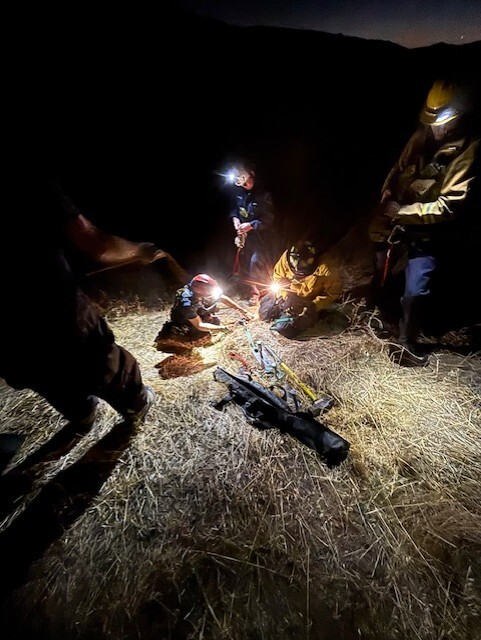
Alameda County firefighters setting up for a high-angle rescue. Photo from C. Mendoza, Diablo Range District.
Staff at Carnegie State Vehicular Recreation Area (SVRA) received a call on July 19 at approximately 5:30 p.m. from a worried woman whose husband, operating a dirt bike in the park, was overdue. She had spoken to him around 3:30 p.m. and he said he was stuck in a creek bed. After the Facetime call, she was not able to reach him.
Ranger C. Mendoza began a preliminary search on a dirt bike of the SVRA’s many main trails. After clearing several areas, Mendoza requested a call out of Ranger D. Rodrigues, a State Parks drone pilot, who was off duty. As the sun went down and the wind picked up, Rodrigues began searching remote areas of the park with infrared and image recognition technology. After a few minutes, Rodrigues was able to locate the rider approximately 1,000 feet down a steep canyon trail named Happiness Valley at about 8 p.m. The rider was not moving and appeared to be unconscious. While details of how the rider became injured are not known, it is believed he suffered from injuries sustained while attempting to ride out of the canyon.
Mendoza began hiking on foot as the drone hovered overhead, guiding him to the rider. Alameda County Fire Department personnel arrived and started setting up a high-angle rescue system above the rider’s location. A California Highway Patrol (CHP) helicopter arrived to hoist the rider out of the canyon due to the location.
With the scene in darkness, the CHP helicopter was not able to perform a rescue hoist. Calls were made to several other agencies, which were not available or did not have nighttime capabilities. Finally, while carrying the rider up the steep canyon with a rope system, a helicopter from U.S. Coast Guard (USCG) Air Station San Francisco attempted a hoist at 11 p.m. and was later able to lift the rider out of the canyon. The USCG helicopter flew the rider a short distance to the CHP helicopter that had landed nearby and then transported the rider to Santa Clara Valley Medical Center at approximately 1 a.m. on July 20.
After a long night, it was a relief to find out the rider, although pretty banged up, was recovering well. Doctors believe he will make a full recovery from his injuries. The family is thankful to the agencies who helped. Diablo Range District is proud of the teamwork and utilization of technology and resources that went into this rescue.
No matter what your skill level, accidents can happen to anyone. Carnegie SVRA always recommends never riding alone.
Ed. note: Visit the USCG Southwest District's Instagram account for a video of the rescue.
Off-Highway Motor Vehicle Division Engages with Enthusiasts at 2025 Cal4Wheel Sierra Trek
Story from: Jack Gorman, Off-Highway Motor Vehicle Recreation Division
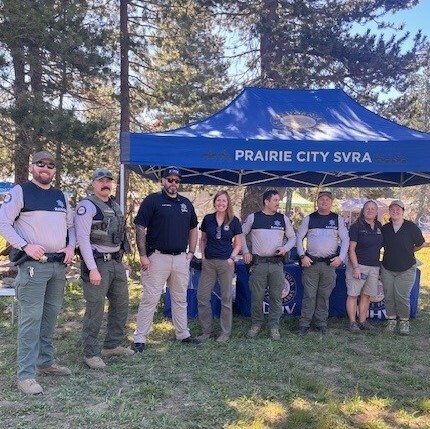
Off-Highway Motor Vehicle Recreation (OHMVR) Sierra Trek group (left to right): State Park Peace Officer (SPPO) Supervisor Cameron O’Quinn, SPPO Colin Bliese, OHMVR Division Chief Callan McLaughlin, OHMVR Deputy Director Sarah Miggins, Public Safety Superintendent Luke Ware, Assistant Chief Jack Gorman, State Park Interpreter Joleen Ossello and State Parks volunteer Autumn Harvest-Ossello Heffernan. Photo from Josh Bernadas, OHMVR Division.
California State Parks Off-Highway Motor Vehicle Recreation (OHMVR) Division attended the Cal4Wheel Sierra Trek, one of the premier annual events for off-highway vehicle (OHV) enthusiasts, last weekend. Hosted in the scenic Sierra Nevada near Meadow Lake, the event brought together hundreds of off-road drivers, campers and industry supporters for a weekend of trail runs, camaraderie and education.
The OHMVR Division team was on hand to connect directly with the off-road community, share information about responsible recreation, and promote safe riding practices. Staff engaged with participants at the event’s basecamp, as well as on the trail.
“Our presence here isn’t just about regulations — it’s about building relationships,” said Callan McLaughlin, OHMVR Division Chief. “Events like Sierra Trek are a great way to hear directly from the people who use these trails, understand their concerns and work together to protect access for future generations.”
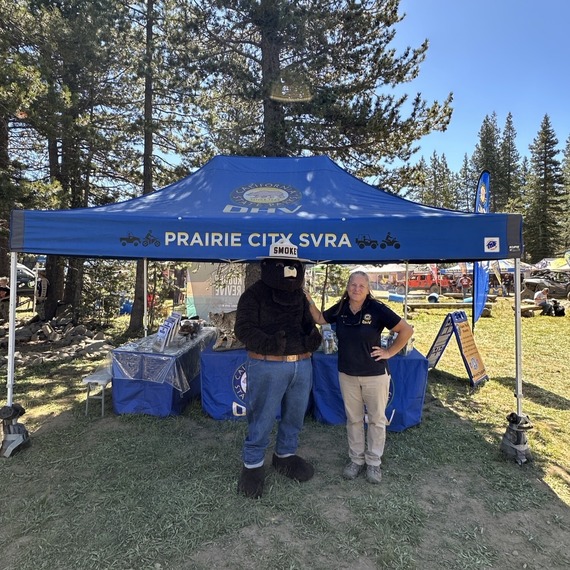
In addition to an informational outreach booth provided by Prairie City State Vehicular Recreation Area Interpreter Joleen Ossello, the division showcased trail stewardship efforts and the importance of maintaining sustainable routes. Attendees were encouraged to participate in packing out litter and follow Tread Lightly! principles.
OHMVR law enforcement staff assisted the Nevada and Placer County sheriff’s offices with patrol duties along the famous Fordyce Trail, one of California’s most technical and demanding off-highway routes. Due to the extreme conditions, patrolling the Fordyce Trail requires purpose-built off-road vehicles. These highly specialized patrol vehicles are funded by OHV law enforcement grant funds. OHMVR Commission Chairman Roger Salazar gave OHMVR Deputy Director Sarah Miggins a ride in his trail-ready Jeep during the event.
The Cal4Wheel Sierra Trek, now in its 57th year, is known for its challenging Fordyce Trail runs, family-friendly atmosphere and strong tradition of supporting public land access. The OHMVR Division’s continued involvement underscores its commitment to supporting organized off-highway events while balancing safety, resource protection and recreation opportunities.
As the OHMVR Division looks ahead, staff plan to expand outreach at similar gatherings across the state, ensuring riders have the knowledge, resources and opportunities to enjoy California’s unique off-road destinations responsibly. For more information on safe and sustainable OHV recreation, visit ohv.parks.ca.gov.
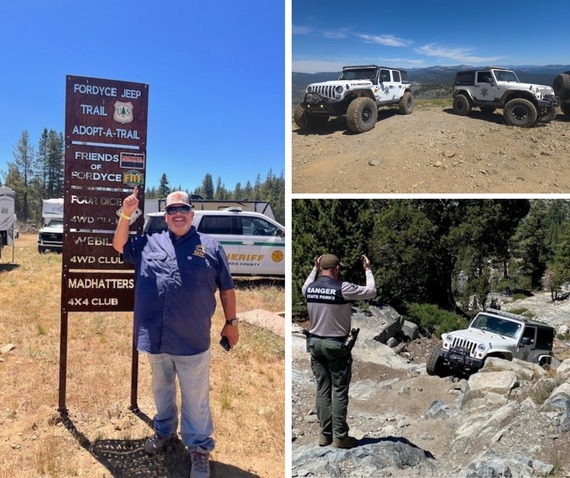 Clockwise from left: OHMVR Commission Chairman Roger Salazar at the Sierra Trek base camp. Photo from Sarah Miggins, OHMVR Division. OHMVR Division Jeeps at Signal Peak while on patrol with the Nevada Placer County Sheriff’s Office. Photo from Colin Bliese, OHMVR Division. Cameron O’Quinn spots a State Parks Jeep through obstacles on the Fordyce Trail. Photo from Jack Gorman, OHMVR Division.
California Boating and Waterways Commission Tours Grant Sites in Humboldt County
Story and photos from: Kevin Murphy, Communications and Marketing Division
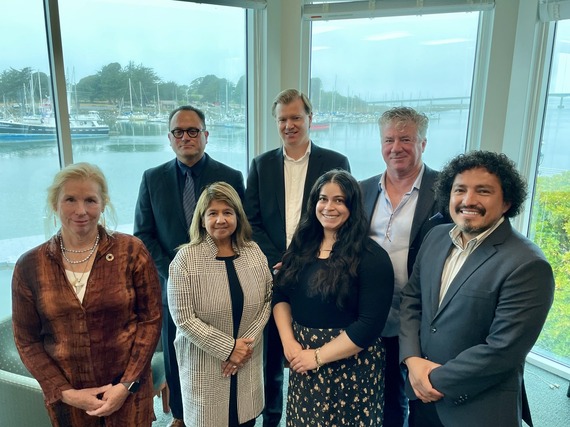 The California Boating and Waterways Commission recently met at the Humboldt Bay Aquatic Center, overlooking the bay in Eureka. From left to right: Maggie Hallahan, Gonzalo Medina, Deputy Director of the Division of Boating and Waterways Ramona Fernandez, Hampus Idsater, Maricela Rosales, Tom Pier and José González.
High in Six Rivers National Forest, Fish Lake in Humboldt County provides a stillness that is surprising. Arriving at the lake after a 2.5-hour drive from Eureka, several commissioners from the California Boating and Waterways Commission immediately commented on the silence.
“It wasn’t like this a few weeks ago,” said LeRoy Cyr, a fish biologist from the U.S. Forest Service (USFS). “We just hosted the 49th Annual Fish Lake Kids Fishing Derby. Around 100 kids and their families were here, some learning to fish for the first time.”
Commissioners visited the site in advance of their meeting the next day to consider a design and build project to be funded by a grant from the Division of Boating and Waterways’ (DBW's) Waterway Connections Initiative (WCI). Met by several USFS representatives, commissioners learned the history of the lake, sandwiched between the traditional lands of the Yurok and Hoopa Valley tribes. The $525,000 project would create nonmotorized boating access at the day-use area of the existing campground with 13 new parking spaces, a new, low-freeboard boarding float measuring 50 feet long and 8 feet wide and a short accessible trail from the day-use parking area. The project is expected to benefit 2,000 visitors annually.
Returning to the coast, commissioners met the mayor and several staff members from the city of Arcata at the Arcata Marsh and Wildlife Sanctuary nonmotorized boat launch. The launch, which opened early in 2024 with funding by the Harbors and Watercraft Revolving Fund (HWRF), includes paved accessible parking and a pathway to an 80-foot gangway to a dock providing access to a natural channel slough on Humboldt Bay. The facility is part of the Humboldt Bay Water Trails system.
“This was a long time in planning,” said Arcata Mayor Alexandra Stillman. “We’re so excited it’s finally here and being actively used by members of the community and visitors.”
Commissioners closed out the public tour with a visit to the Humboldt Bay Aquatic Center in Eureka, a boating instruction and safety center. Initially funded by $4.07 million from the DBW’s HWRF, construction of the center was completed in 2008. It is managed by California State Polytechnic University (Cal Poly), Humboldt.
Commissioners toured the facility, including the classrooms, aquatic equipment storage facilities and the long dock adjacent to the center. Since its opening, DBW has provided nearly $750,000 in grant funding for equipment, scholarships, instructor training and event support.
During the Commission meeting on Aug. 7, commissioners provided comments and unanimous support for the Fish Lake grant project and heard reports from DBW staff members, including updates on the division’s budget, aquatic center grants and other administrative items. A video recording of the meeting is available at CAL-SPAN. For more information about the Division of Boating and Waterways and its various grant and safety programs, please visit dbw.parks.ca.gov.
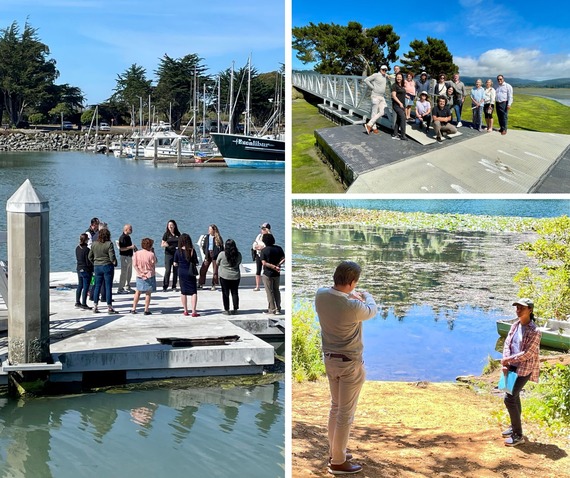 Clockwise from left: Members of the California Boating and Waterways Commission and Division of Boating and Waterways staff meet with representatives from Cal Poly Humboldt on the dock at the Humboldt Bay Aquatic Center in Eureka. Commissioners and DBW staff pose at the completed Arcata Marsh and Wildlife Sanctuary nonmotorized boat launch with Arcata Mayor Alexandra Stillman and staff from the city. Commissioner Hampus Idsater asks USFS Civil Engineer Belen Gomez a question about the location of the proposed nonmotorized dock at Fish Lake in Six Rivers National Forest.
State Historical Resources Commission Hosts Workshop, Nominates Five Properties for Historical Preservation
Story from: Kevin Murphy, Communications and Marketing Division
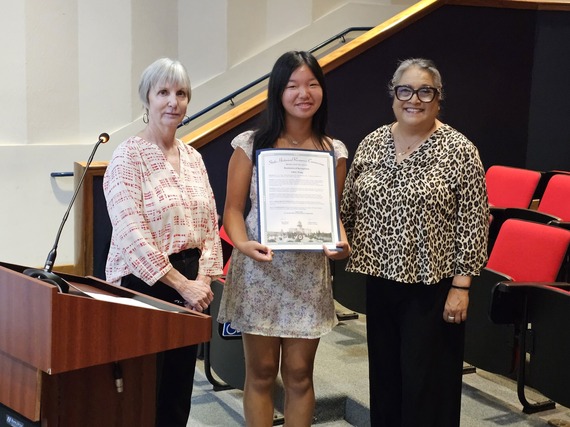 Ashely Wang (center) is recognized with a proclamation for her National History Day in California project, a documentary video on the history of minority housing and education in Marin City. Pictured with Ashely is State Historical Resources Commission Chairperson Janet Hansen (left) and State Historic Preservation Officer Julianne Polanco. Photo from William Burg, Office of Historic Preservation.
The State Historical Resources Commission hosted a workshop and its quarterly meeting in Sacramento last week. The workshop, held on Aug. 7 at the California State Indian Museum, delivered an in-depth training on Multiple Property Documents. These documents are used to facilitate nomination of properties related to their historic contexts to the National Register of Historic Places. Discussion included how these documents are written, with examples of statewide documents facilitated by the Office of Historic Preservation (OHP), including Latinos in 20th-Century California, Asian Americans and Pacific Islanders in California, Native Americans and the California Mission System, and African Americans in California. Participants also learned how to write shorter, faster nominations. A recording of the workshop has been posted to the OHP’s YouTube channel.
During the Commission’s meeting on Aug. 8., State Historic Preservation Officer (SHPO) Julianne Polanco welcomed the newest member of the Commission, Neal Payton. Payton is currently a senior principal at the architectural firm Torti Gallas + Partners in Los Angeles and was appointed to the Commission by Gov. Gavin Newsom in June. He also serves on the Santa Monica Landmarks Commission.
During the meeting, the Commission acknowledged three students with resolutions, recognizing them as recent award winners for National History Day in California. The annual cocurricular program engages students in grades 4-12 in historical inquiry and analysis on a topic of their choice. This year’s theme was Rights and Responsibilities in History.
Resolutions were presented to Max and Shawn Castrapel and Ashley Wang. The Castrapels won recognition in the category of junior group website for their project "Rights and Responsibilities: The Hetch Hetchy Dam and Its Environmental Impact." Wang won for senior individual documentary for her video, "Separate and Unequal: How African Americans Were Chased Out of the Neighborhood and the Classroom," which shares the history of minority housing and education in Marin City. Wang accepted her award in person from Commission Chairperson Janet Hansen and SHPO Polanco. Max and Shawn Castrapel thanked the Commission virtually from their home in Irvine.
The Commission also reviewed and approved five nominations to be forwarded to the Keeper of the National Register of Historic Places. Properties approved included the Henry O. Bollman House in Los Angeles, the Los Angeles County Law Library, also in Los Angeles, Corona Foothill Ranch in Corona, the Tognini and Ghezzi Building in Cayucos, and the Huntington Hotel in San Francisco. La Puerta, located in Santa Clarita, was added to the California Register of Historical Resources by the Commission as a point of historical interest as a passageway along El Camino Viejo. The Commission also reviewed and approved a request to decrease the boundaries of Railroad Square Historic District in Santa Rosa due to the removal of several historic buildings from the original 1978 listing and the addition of newer buildings.
A recording of this and previous meetings of the Commission is available through CAL-SPAN. For information about past and future meetings, including properties nominated to the National Register of Historic Places, please visit the Office of Historic Preservation.
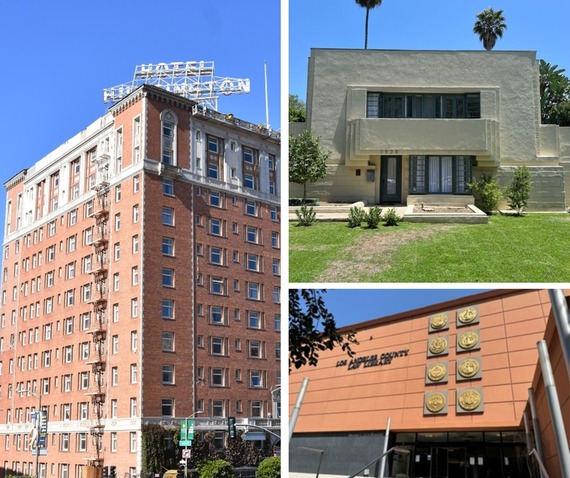 Properties nominated to the National Register of Historic Places include (clockwise, from left): the Huntington Hotel in San Francisco (photo courtesy of Jennifer Hembree and Jason Wright); the Henry O. Bollman House in Los Angeles (photo courtesy of Timothy Penich); and the Los Angeles County Law Library (photo courtesy of Teresa Grimes).
The Fruits of Their Labor: Staff and Volunteers Reduce Bear Risk in Humboldt Redwoods State Park
Story from: John Hardcastle, North Coast Redwoods District
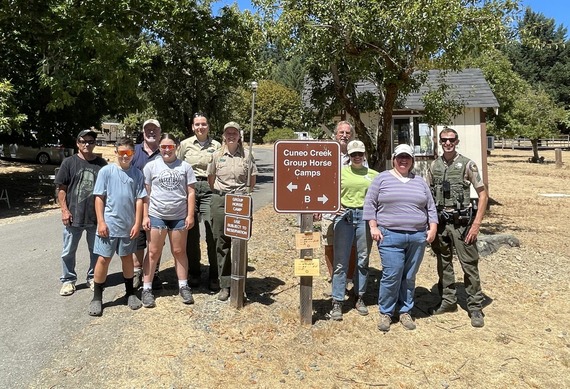 A picking crew recently culled apple and pear trees at Humboldt Redwoods State Park to reduce bear risk. Photo from Thomas Valterria, North Coast Redwoods District.
This year, an unusually large number of bears descended on the historic apple and pear orchard at the Cuneo Creek Horse Camp in Humboldt Redwoods State Park. In an effort to remove the bear attractants from the campground, North Coast Redwoods District staff and volunteers spent a day in the sun removing all the fruit from the orchard.
When all was said and done, a dozen park aides, volunteers, cultural resources staff and rangers came out to pick apples and pears. After the hard work was done, staff spread the fruit in a nearby historic orchard outside the campground. Hopefully the bears enjoy the fruits of our labor!
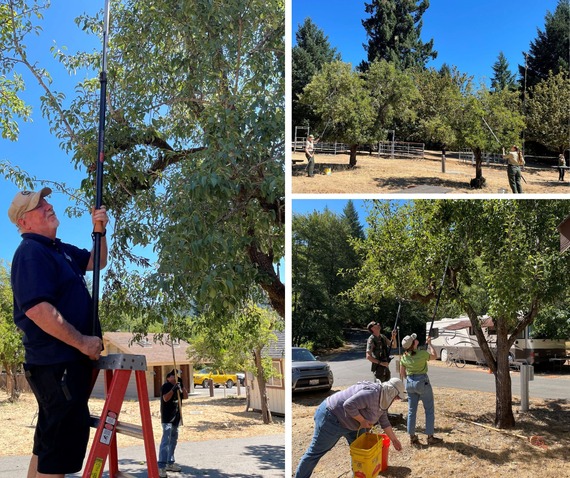 Clockwise from left: Camp Host Andrew Southall hard at work. Park Aide Ruby McCabe, Senior Park Aide Iris Mahoney Moyer and Park Aide Jackie Southall cleaning up pear trees. From left to right: Staff Services Analyst Racheal Marte-Taylor, Supervising Ranger John Hardcastle and District Historical Archaeologist Breezy Akeson cull the fruit from a tree. Photos from Thomas Valterria, North Coast Redwoods District.
Angeles District Natural Resources Team Works to Preserve Plant Diversity in Topanga State Park
Story from: Angeles District Natural Resources Team
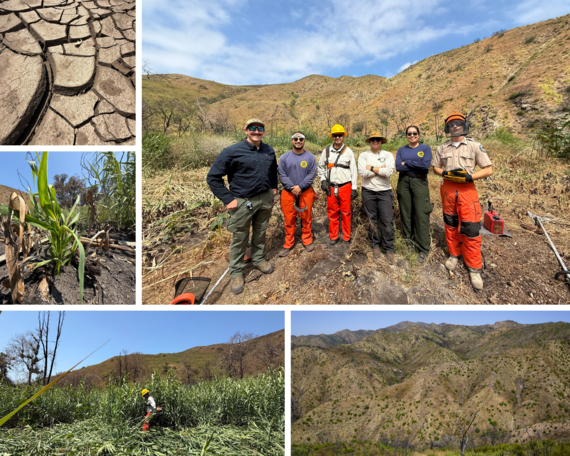 Counterclockwise from top left: Water sources sucked dry by invasive species. Arundo quickly growing from burn scars. Forestry Aide Will Cruz removing some of the Arundo to allow for other plants to grow. Overlooking Topanga State Park burn scar, nature is healing. Some of the Natural Resources Team members, from left to right: Cody Hoffman, Adrian Jimenez, Cruz, Ariana Magaña, Dayana Doroteo, Chris Middelton. Photos from Cassandra Chavez, Angeles District.
Wildfires are a natural and necessary part of the ecosystem in Topanga State Park (SP), playing a key role in renewing native plant communities and maintaining biodiversity. Many local species have adapted over thousands of years to fire, relying on its periodic occurrence to clear overgrowth, recycle nutrients and trigger new growth. However, in recent decades, the natural recovery process has been disrupted by the spread of invasive species, particularly Arundo donax, or giant reed.
Native to the Mediterranean and South Asia, Arundo is a tall, fast-growing grass that thrives in disturbed areas, especially along streambeds and in post-fire landscapes. After a wildfire, when native vegetation is weakened or destroyed, Arundo can quickly establish itself and outcompete native plants such as willows, sycamores and understory shrubs. It forms dense monocultures that offer little habitat value and significantly reduce biodiversity.
Arundo poses additional threats in fire-prone areas. It consumes large amounts of water, contributes to erosion due to its shallow roots, and becomes highly flammable when dry, fueling more intense and frequent fires. This creates a destructive feedback loop that further degrades the landscape and hinders native plant recovery.
To combat this, our natural resources team actively monitors plant diversity throughout the park and removes invasive species like Arundo when necessary. This includes manual removal, habitat restoration and replanting with native vegetation. These efforts help stabilize soils, reduce wildfire risk, and support the long-term health of Topanga’s ecosystems, particularly as the park recovers from the devastating Palisades Fire in January. By controlling invasive species and protecting native plant communities, we can help ensure that Topanga SP remains a resilient, biodiverse landscape for future generations.
PARTNER NEWS
Sacramento Youth Develop Skills, Network for Careers in Parks
Story and photo from: Parks California
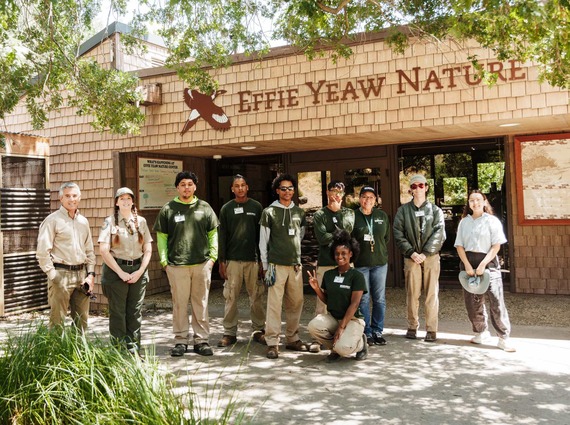 Pictured from left to right: Greg Ira from University California Agriculture and Natural Resources (UCANR), Sarah Hauck, Sacramento Regional Conservation Corps members and staff member Monica Kling (front) and Karyn Utsumi (UCANR) on the far right.
Parks California’s Career Pathways grant program helps shape the next generation of park stewards through hands-on training and mentorship opportunities. University of California Agriculture and Natural Resources (UCANR), a 2025 grantee, is making an impact through its Environmental Stewards Program. The program expands on the University of California naturalist certification course and prepares young adults in the greater Sacramento area for fulfilling careers in parks and public lands.
Partnering with the Sacramento Regional Conservation Corps, participants take part in an eight- to 10-week course that brings them into the field at state and regional parks along the American River, from Folsom Lake to where it meets the Sacramento River. Working closely with State Parks and Effie Yeaw Nature Center staff at Sacramento County’s Ancil Hoffman Park, the experience encourages corpsmembers to explore their interests and strengths while building confidence in pursuing a career in parks.
Six Willis shared on the final day of the course, "I want to work with State Parks — anything that revolves around being able to go from park to park. As long as I get to my end goal of being a park ranger, I don't mind how I get there." Sarah Hauck, an environmental scientist with State Parks who worked closely with the participants, said, "Youth development programs are important for state parks. When you have people who start building their foundation from an earlier age, it really opens people's minds to the possibilities for careers that are out there that sometimes people just don't know about."
At the end of the course, students complete and present a stewardship project that brings together their passions and new knowledge. The skills gained in the course translate well to park interpretation, planning and natural resource management. Learn more about the corpsmembers' experiences and the program in this new three-minute video.
 Employee Spotlight: Ryan Rzab
Story from: Kevin Murphy, Communications and Marketing Division
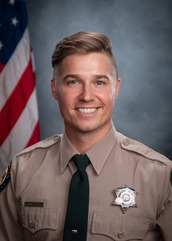
Meet State Park Peace Officer (SPPO) Supervisor Ryan Rzab. Ryan's colleague Justin Edwards, who nominated Ryan for the Employee Spotlight, calls him "one of the best instructors our department has and also one of the best supervisors.”
According to Justin, Ryan makes sure to include different learning aspects when instructing staff and makes the subject matter more interesting and memorable. “When it comes to supervising, he is fair and pays attention to detail. He is always checking on his staff and offering help/resources should they be needed.”
Tell us a little bit about yourself and your role in the department.
I am humbled, grateful and slightly embarrassed that I was nominated for this. I'm very much an introvert and prefer to talk about other’s achievements rather than to speak at length about myself, so I will start with that: All that I have learned, know, achieved, or succeeded at is completely due to every friend, family member, employee, peer, boss and student that have taken the time to help, mentor, teach and challenge me to be more open-minded. My role in the department: SPPO supervisor assigned to the Training Section. I supervise a variety of first responder training courses that our department offers throughout the state.
How did you get started in your career field?
After teaching English for a few years, I became claustrophobic in the classroom. I made a pivot and began looking for more exciting options. I became an emergency medical technician in Chicago and then started looking for outdoor jobs. I worked seasonally in Glacier National Park and with Colorado State Parks prior to being hired full time by California State Parks.
What does a typical day look like for you at work?
When not working patrol shifts, I spend time in the office preparing content for courses, maintaining training records and ensuring we are aligned with industry standards, regulations and policy. I then travel to training sites throughout the state to supervise and instruct our scheduled courses. There tends to be a lot of variety, which I enjoy.
Can you share a project or accomplishment you're particularly proud of?
Our recent Inland Lakes Lifeguard Training at Folsom Lake in June produced a class of 36 new seasonal lifeguards. While we released some trainees who were not meeting the minimum physical standards, none of them were released due to a failure of written or skills testing. This is the first time I have seen a 100% pass rate on classroom/field content in 12 years of instructing Inland Lakes Lifeguard Training.
Is there something you're particularly skilled at that people might find surprising?
I can fall asleep within five minutes of laying down.
|
Nominate An Exemplary Colleague
Do you know of an exceptional State Parks colleague in your field, division, or district, who goes above and beyond in their role? Nominate them for Employee Spotlight! In upcoming issues, the Weekly Digest team will spotlight outstanding employees, sharing insights into their journey, experiences, and wisdom gained during their career at State Parks.
- Specific reasons for why you are nominating them. This could be based on their outstanding achievements, dedication, teamwork, or any other qualities that make them stand out.
- The name of the nominee's supervisor (if you know who that is).
|