Big things are happening across California's waterways! Local, state, and federal teams are working together to improve our water systems for people and nature alike. The Healthy Rivers and Landscapes Program is advancing a groundbreaking approach to water management and environmental restoration.
The eight-year program focuses on two of California’s most important river systems — the Sacramento and San Joaquin — and their many smaller tributaries. By improving environmental flows and restoring habitats, the program aims to reverse the decline in native fish species like Chinook salmon.
Building on a foundation of science, partnering agencies are working together to close knowledge gaps and help make real-time water operations adjustments based on the latest data. This partnership-driven approach is more flexible and leverages new and existing resources to speed up restoration.
Now under consideration by the State Water Resources Control Board as part of the update process for the Bay-Delta Plan, the Healthy Rivers and Landscapes program offers an innovative approach to achieving water quality goals for the Sacramento-San Joaquin Delta and San Francisco Bay. This approach seeks to restore ecosystem health and improve water reliability, offering a more collaborative and adaptive strategy to protect fish and wildlife and local economies.
✅ Enhancing habitat for crucial species
✅ Building resilience against climate change
✅Ensuring a sustainable future for our ecosystems
California is turning ideas into action with real restoration projects on the ground. Here are a few highlights:
Prospect Island Tidal Habitat Project
In November, a new project broke ground in Solano County to bring 1,600 acres of tidal and wetland habitat back to life! This will help struggling species like the Delta Smelt and Chinook salmon. Led by the Department of Water Resources with significant funding from the Bureau of Reclamation, the Prospect Island Tidal Restoration Project will also support the Central Valley Project and State Water Project that millions of Californians rely on.
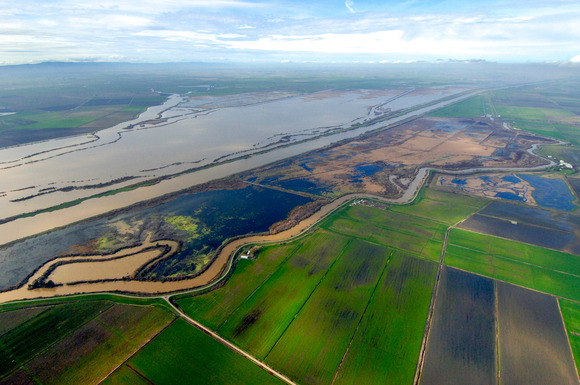 Bird's-eye view of the Prospect Island Tidal Habitat Project
Lower Elkhorn Basin Levee Setback Project
We’re also working to manage floods and create habitat at the same time. The Lower Elkhorn Basin Levee Setback project is moving Yolo Bypass and Sacramento Bypass levees back to open up 1,000 acres for habitat and wildlife-friendly farming. The new levees are done, and work on the land is expected to wrap up in 2025.
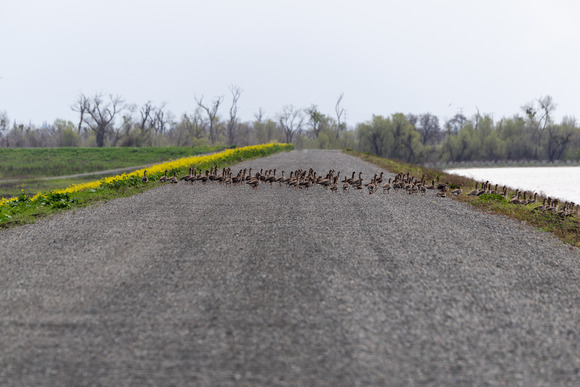 Ducks crossing at the Lower Elkhorn Basin Levee Setback Project site
The Draft Strategic Plan and Draft Governance Program (Appendix B) emphasize the importance of incorporating Tribal perspectives and honoring Tribal sovereignty. The 2023 Draft California Water Plan Update recognizes Indigenous Knowledge as Best Available Science, and its inclusion in implementing these agreements is essential.
This commitment is reinforced in the Draft Science Plan (Appendix C) and the Science Committee Charter (Appendix D). Appendix D outlines data management standards that:
- Respect Tribal data sovereignty;
- Require Tribal consent before using data based on Indigenous Knowledge;
- Call for data-sharing agreements with Tribes to protect sensitive or confidential information; and
- Ensure that the use of Tribal data provides collective benefits, including for Tribes themselves.
As presented in the December 3 State Water Resources Control Board workshop, the Healthy Rivers and Landscapes Program is in the process of contracting with a consultant to aide in Tribal engagement, facilitate discussions, and develop a Tribal engagement plan.
This newsletter can be translated into additional languages upon request. Please contact HealthyRiversandLandscapes@resources.ca.gov if needed.
|