Remembering K-9 Armin
Story and photos from: Mike Gleckler, Law Enforcement and Emergency Services Division
 K-9 Armin at the State Capitol in Sacramento and taking a rest in his patrol vehicle.
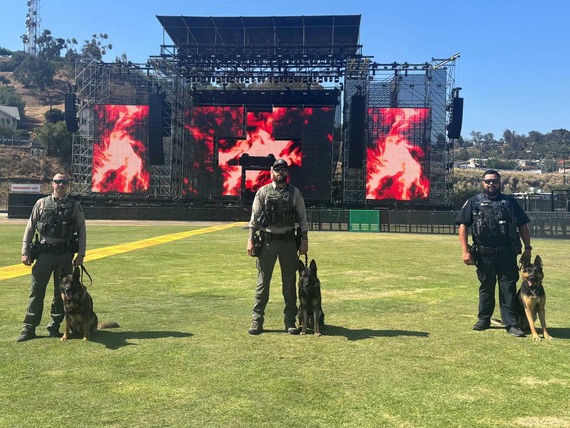
The California State Parks K-9 Program regretfully announces the passing of K-9 Armin. Armin was assigned to the Capital District in Sacramento and later to the Law Enforcement and Emergency Services Division, which covers statewide operations. He was trained and certified in patrol and explosive detection. During Armin’s five-year career, he performed hundreds of explosives detection sweeps for dignitaries, including presidents and governors, large events and concerts, and calls for service for unattended items, safeguarding the public and his partner.
Armin performed his work without fail or compromise every shift. Sadly, cancer took him from us too early, and he passed away on June 29 with his family by his side. The people of California, California State Parks, your fellow officers, handlers and your K-9 brothers and sisters bid you a heartfelt farewell for a service so bravely and nobly done.
First Tents, Lasting Memories During California State Parks Week in the North Coast Redwoods District
Story from: Erika Granadino, North Coast Redwoods District
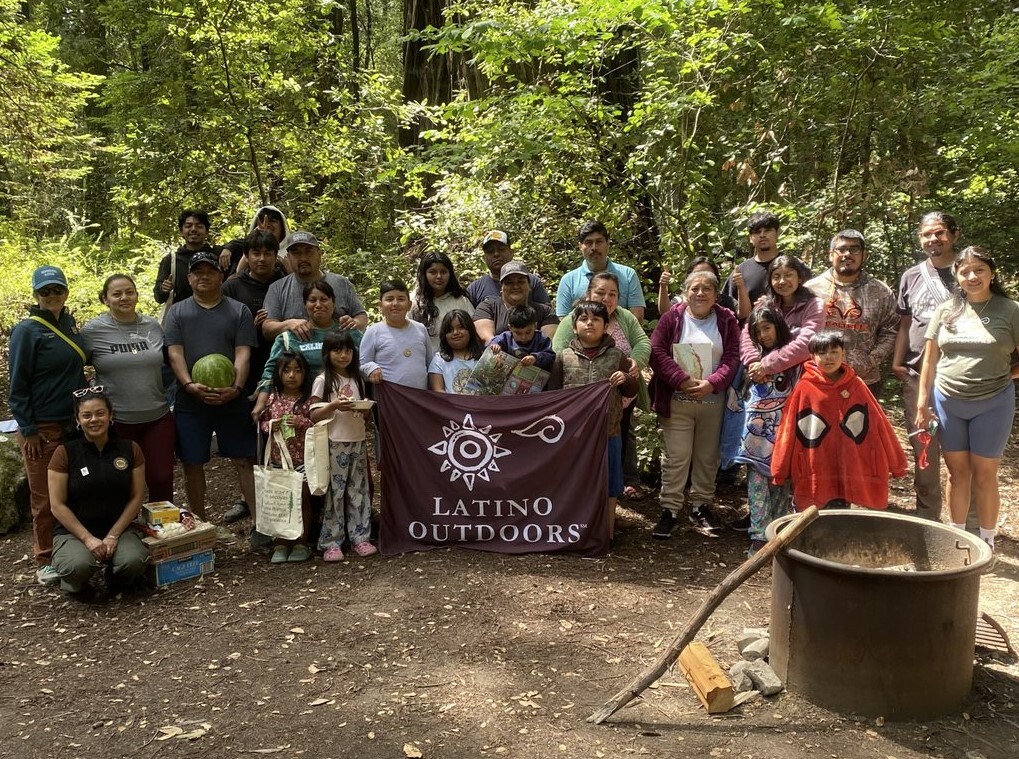 State Park interpreter I Erika Granadino, Save the Redwoods League Senior Manager of Community Engagement Leslie Parra, participants from CUMBRE Humboldt and Latino Outdoor leaders Sebastian Castillo and Karina Juarez pose for a group photo at Benbow State Recreation Area. Photo from Karla Jovel, North Coast Redwoods District.
As part of California State Parks Week, the North Coast Redwoods District proudly hosted a weekend full of discovery and community connection. One of the standout moments of the week was a family campout at Benbow State Recreation Area, held in collaboration with CUMBRE Humboldt, Latino Outdoors and Save the Redwoods League.
Families from Arcata, Eureka, Fortuna and Rio Dell traveled to Garberville to camp under the towering redwoods. For many, it was their first time camping and thanks to the support of FamCamp®, a State Parks access program, participants were provided the resources necessary to safely and effectively engage in an overnight experience.
California State Parks interpreters, rangers and lifeguards led a variety of engaging activities, including aquatic safety demonstrations and nature hike, Lotería game, and a Junior Ranger program for kids. Through bilingual interpretive opportunities, participants learned about local native plants, water safety and the basics of outdoor recreation. This event wasn’t just about pitching tents — it was about building lasting memories, breaking down barriers and empowering families to feel at home in the outdoors. With its deep roots in educational equity and Latinx cultural enrichment, CUMBRE Humboldt played a vital role in uniting families and supporting the shared mission that California State Parks are for everyone.
One participant shared, “Tengo mucha ansiedad, pero estar en el río fue la primera vez en mucho tiempo que sentí que la ansiedad se derretía con la corriente. ¡Gracias por esta experiencia!” (“I have a lot of anxiety, but being in the river was the first time in a long time I felt the anxiety melt away with the current. Thank you for this experience!”)
Events like this remind us that Outdoors for All is more than a slogan — it’s a shared commitment requiring coordination, creativity and heart. By working with partners like CUMBRE Humboldt, Latino Outdoors and Save the Redwoods League, we are not just opening gates — we are building trust, sharing knowledge and creating space for every family to see themselves in our parks. This campout is a testament to what’s possible when we center equity and community in our work.
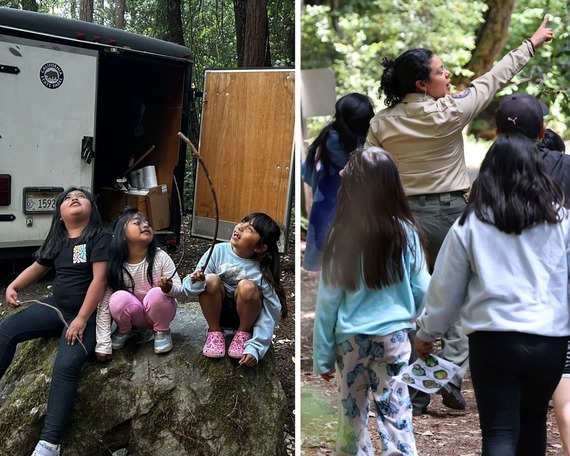 Left: Three participants sitting in front of the FamCamp trailer. Right: Interpreter I Erika Granandino leads the group on a nature walk. Photos from Karla Jovel, North Coast Redwoods District.
State Parks Helps Rescue Endangered Fish After Devastating Palisades Fire
Story and photos from: Cassandra Chavez, Angeles District
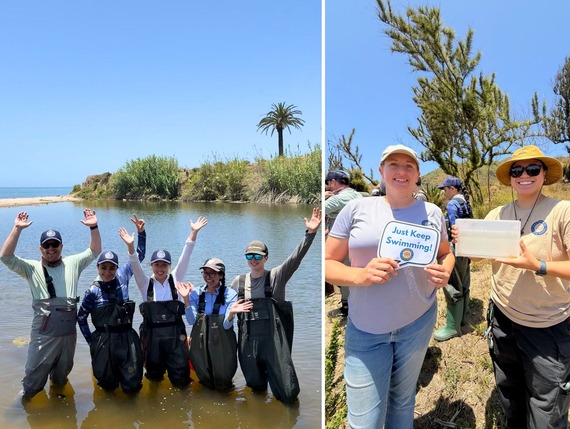 Left: Faculty and students from California State University,-Channel Islands, celebrating the release of endangered gobies. Right: Noa Rishe and Ariana Magaña from the Angeles District Natural Resources Division team holding some of the gobies prior to their release.
After the January 2025 Palisades Fire devastated one of the last habitats of the northern tidewater goby in Topanga Canyon Lagoon, a major collaborative rescue and rehabilitation effort was launched. This small, endangered fish species is vital to the health of coastal lagoon ecosystems, regulating invertebrate populations and serving as prey for native wildlife. With runoff and sedimentation damaging the Topanga Lagoon, biologists alongside staff from California State Parks, the Resource Conservation District of the Santa Monica Mountains, California State University-Channel Islands and others stepped in to save the gobies and transported them to the Aquarium of the Pacific and Heal the Bay Aquarium, where they were housed temporarily.
On June 17, once habitat conditions had improved, the gobies were successfully returned to the wild. Their reintroduction is critical to restoring the Topanga Lagoon’s ecosystem, which once supported the most robust goby population in Los Angeles County. This successful rescue underscores the importance of state parks in conserving endangered species and protecting vital ecosystems from wildfire and climate-related threats. Continued monitoring and support will ensure the gobies’ survival and ecological resilience.
Student Photography Digital Exhibit Explores Land and Belonging at State Indian Museum
Story from: Sienna Weldon, Capital District
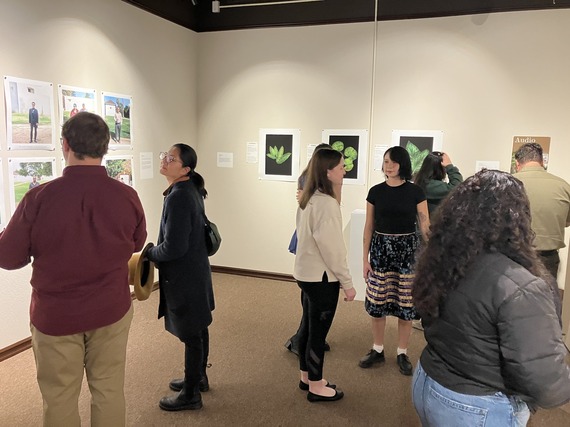 During the opening night of the show at the State Indian Museum's Basket Gallery, visitors were encouraged to view the works of art and interface with student artists. Photo from Emma Silverman, Capital District.
In fall 2024, 35 students in a senior photography class at California State University, Sacramento (Sacramento State) embarked on a novel artistic collaboration, titled "[Placeholder: Swallowtail]." Over the three months of the semester, they immersed themselves in creative research to explore themes of land and belonging at two local state historic parks: The State Indian Museum and Sutter's Fort State Historic Park. Students were guided by State Parks staff, as well as Native Californian artist consultants, specialists in traditional ecological knowledge, and their personal reflective experiences. Photographic works of art captured native plants and married that with an understanding of the prevalence of historical relevance to a frequently accessed and uniquely situated urban park landscape.
The [Placeholder: Swallowtail] project offered students an invaluable opportunity to engage with timely, real-world issues as well as a space to forge a new relationship to the land on which they live. Now, this digital exhibit offers a window into the project and presents the students' final artwork as it was displayed in the galleries. What’s more, the spirit of this multi-faceted project can live on in an alternative format, intended to be enjoyed by both previous project collaborative partners and the broader public.
The digital exhibit premiered and was prominently featured at the recent Hornet Community Bus Tour on May 21, an annual event hosted by Sacramento State that aims to “familiarize faculty and staff with the communities where they reside, work, and engage in recreational activities.” Sacramento State faculty were joined by key State Parks staff for a night of fruitful networking, with a goal of creating bridges between educational institutions and State Parks in the perpetuation of future semester-long programs.
We invite all to view and celebrate the culmination of this rich project — both student work and the project’s process — by visiting the digital exhibit here. This project is supported by Arts in California Parks, a partnership between California State Parks, Parks California, the California Arts Council, the donors of the Photography Special Projects Fund at Sacramento State, and the California Indian Heritage Center Foundation.
Ahjumawi Lava Springs State Park Gets New Food Lockers
Story from: Chaye Vail, Northern Buttes District
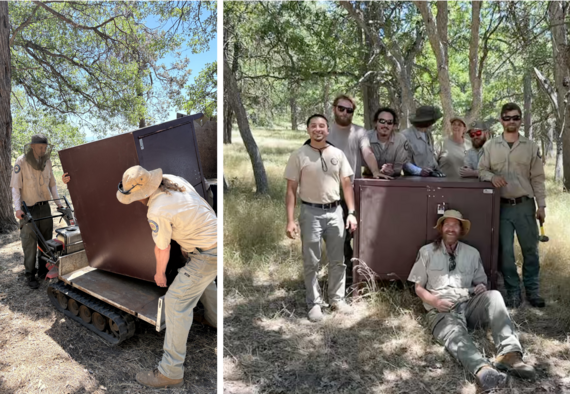 Left: Chad Morgan and Marcus Buck load a bear box onto the gas-powered wheelbarrow at Ahjumawi Lava Springs State Park. Photo from Terri Ashe, Northern Buttes District. Right (left to right): Carlos Palacios, Steven Caesar, Branndon Billington, Chad Morgan, Terri Ashe, Shawn McGrath, Aaron Langston and Marcus Buck in front of the new bear-proof locker. Photo from Cassie Lonsberry, Northern Buttes District
Just before the Fourth of July holiday weekend, Northern Buttes District trail crew and Cascade Sector maintenance staff installed new bear boxes at Ahjumawi Lava Springs State Park (SP). This was a significant upgrade since there is no public vehicle access and campers must boat into the park. Visitors have to pack everything they want onto their kayaks or boats and bring it by water. At nighttime, there is only one place to store tasty treats and scented items that might attract bears. Now that place is bigger! These new bear-proof food storage lockers are bigger and more robust than the old ones. While campers are few and far between at the park, those who come to enjoy this peaceful place are sure to appreciate more room for food and ice chests.
Like many California state parks, Ahjumawi Lave Springs SP is a wild place and prominent bear country; therefore it is important to lock up all food when not in use and pick up all trash around the campsite. Some visitors were not using the old bear boxes because their ice chests would not fit in the small area. This caused issues in the past with keeping bears out of campsites. Fortunately, most visitors of Ahjumawi are “bear aware” and the incidents were minor. The hope is these new and improved bear boxes will be used more regularly and deter human-bear interactions.
The installation process was fairly straightforward and the removal of the old storage lockers went smoothly, allowing the team to swap out all nine boxes in one day. The use of a gas-powered wheelbarrow made a huge difference with hauling in the new lockers and bringing out the old ones. We watched bald eagles, ospreys and pelicans fly overhead while we worked. We ate lunch by the clear, blue waters of Ja-She Creek and took pride in a job well done. It is a beautiful place to visit and a beautiful place to work. Grab your canoe, kayak or boat and come visit us at Ahjumawi Lava Springs SP!
An Old-Fashioned 4th of July at Old Town San Diego State Historic Park
Story and photos from: Claire Nauman, San Diego Coast District
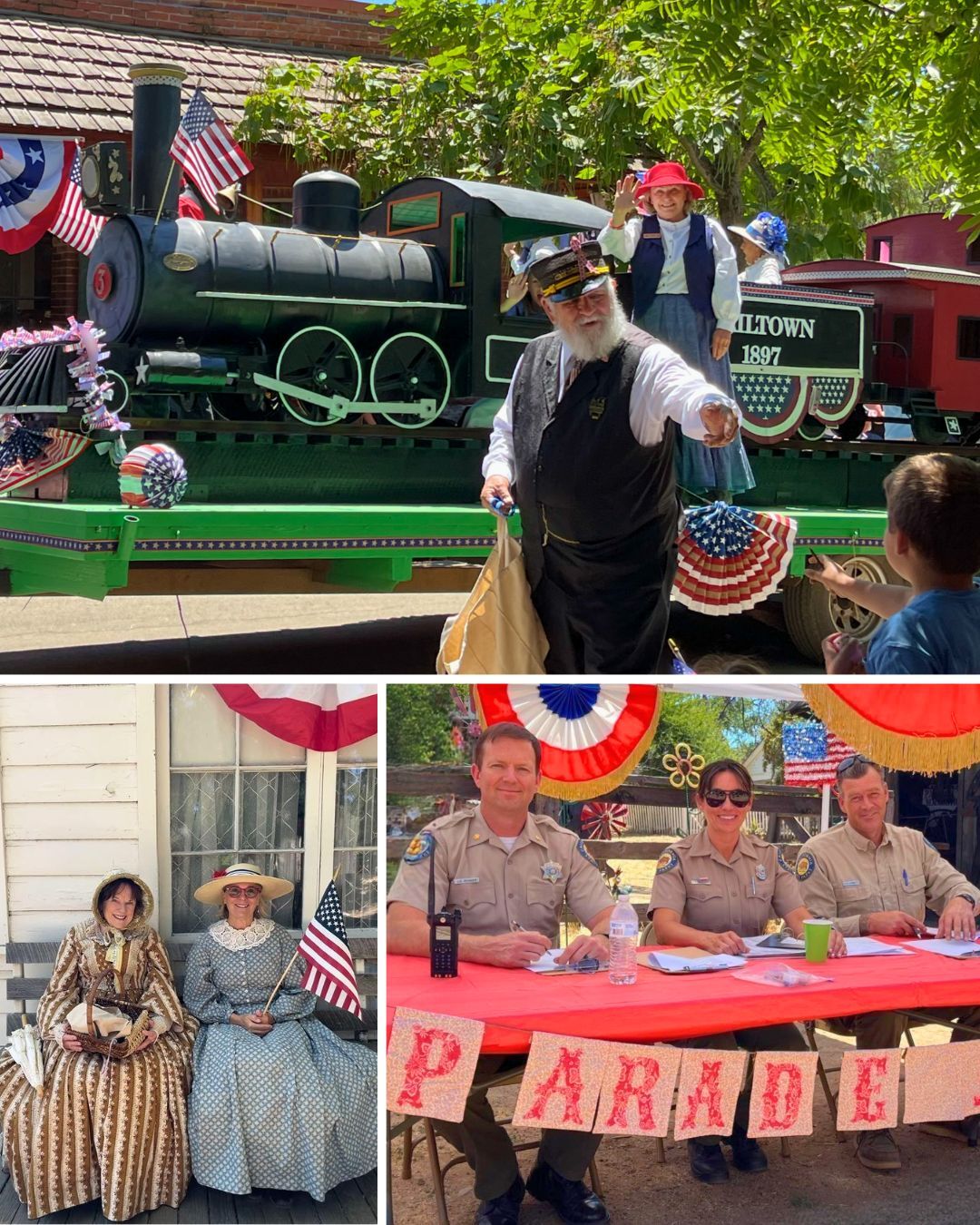
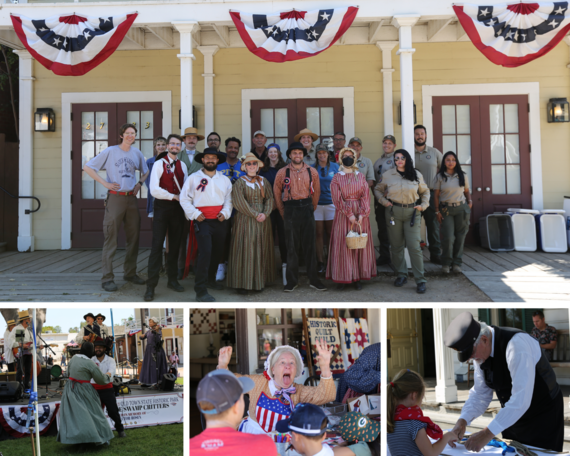 Clockwise from top: Event staff in front of the Colorado House after finishing event cleanup. Al Wolfing, a park interpretive specialist, helps visitors get a second stamp in their museum passports by teaching them historic knot-tying. Volunteer Pat Sietas takes a break from teaching park visitors how to handsew quilt squares together to surprise the photographer. Interpreter I Aaron Navarro and volunteer Carol Ann dance to live music by Billy Lee and the Swamp Critters.
Old Town San Diego State Historic Park (SHP) celebrates our nation’s Independence Day the old-fashioned way. This past weekend, park staff, living-history volunteers and our cooperating association Boosters of Old Town hosted "An Old-Fashioned 4th of July", featuring with live entertainment, historic hands-on art, competitive and collaborative lawn games, and so much more.
The event kicked off with a warm welcome from Chief Ranger Nichole Van Doren, then Local Honor Guard Troop 1212 from the San Diego Imperial Council of Scouting America conducted the flag-raising ceremony, complete with the 1846 American flag.
Visitors spent the rest of the day enjoying music from Billy Lee and the Swamp Critters as they made historic arts and crafts like pioneer dolls, Morse code bracelets, and 19th-century scrapbooks with interpreters. In the center of the plaza, senior park aides Daniel Dickinson and John McCaull hosted traditional competitive lawn games like wheelbarrow racing, sack racing, and tug-of-war, with first-place and participant ribbons to match. Our collaborative games of hoop-and-stick and graces were just as popular as the competitive games; no winners needed.
Our second annual watermelon-eating contest was the talk of the town as three age brackets (7-12, 13- 17, and 18+) competed for prizes sponsored by the Old Town San Diego Chamber of Commerce. Our last bracket yielded a three-way tie, each competitor eating three wedges from a giant watermelon in under three minutes. The winner was crowned after tearing through another full wedge!
Throughout the day, Living-History volunteers Patt Sietas, Ginny Pence and Carol Ann Vorce encouraged visitors to decorate fabric squares which would be handsewn together and eventually made into a community quilt during regular demonstrations throughout the year. Each Fourth of July, the previous year’s quilt is raffled off, while our dedicated volunteers lovingly start the process again. According to Ginny Pence, her favorite part of the process is connecting with the families who return each year to see their patch in the finished quilt.
Monterey State Historic Park Holds Fourth of July Living History Festival with Special Dr. Seuss Guest
Story from: Aaron Gilmartin, Monterey District
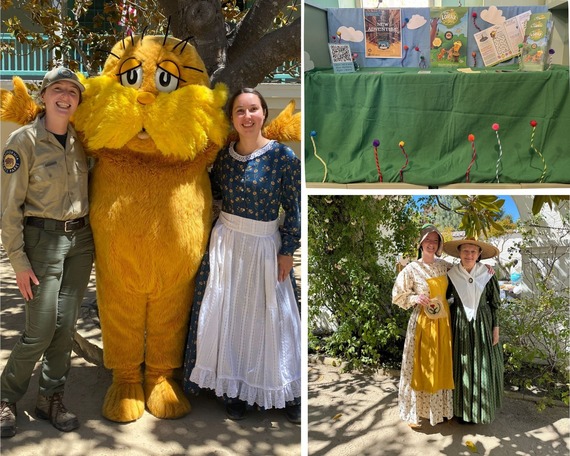 Left photo: Interpreter I Isabella Brown (left), the Lorax, Guide Trainee Rose Madison. Photo from Jenifer Lineau-Thompson, Monterey District. Top right: Display of the Lorax and the California State Library Pass information. Photo from Aaron Gilmartin, Monterey District. Bottom right: Guide I Julia Madden-Fulk and volunteer Deborah Curtis. Photo from Danielle Nabozny, volunteer from Monterey District.
Monterey State Historic Park’s annual Living History Festival took place on the Fourth of July. The Pacific House and Memory Garden at the historic park were decorated for the festivities while staff and volunteers donned period attire dating to the early 1850s, a time shortly after statehood and the beginning of Independence Day celebrations in the West.
Guests entered the garden behind the 178-year-old Pacific House to find several interactive activities waiting for them such as rope making, leather stamping, tortilla making, candle making, cartography, embroidery, lassoing, and various 19th-century games. It was clear that a grand time was had by all, with many staying for a few hours. Approximately 1,000 visitors enjoyed the festivities making it one of our best attended Living History events in recent years.
The park had another special guest at the event. As part of the California State Parks partnership with Dr. Seuss Enterprises, the Lorax character made an appearance to meet with visitors and promote sustainability and the California State Library Parks Pass. It was wonderful to see families interact with the Lorax and to hear how many people love using the library pass to visit State Parks. Though the Lorax’s visit only lasted one day, we have set up a small display in the Pacific House Museum to promote the partnership and encourage our guests to take an activity book and learn about the California State Library Parks Pass.
Inland Empire District Staff and Volunteers Get WILD with New Curriculum Training
Story from: Ian Bernstein, Inland Empire District
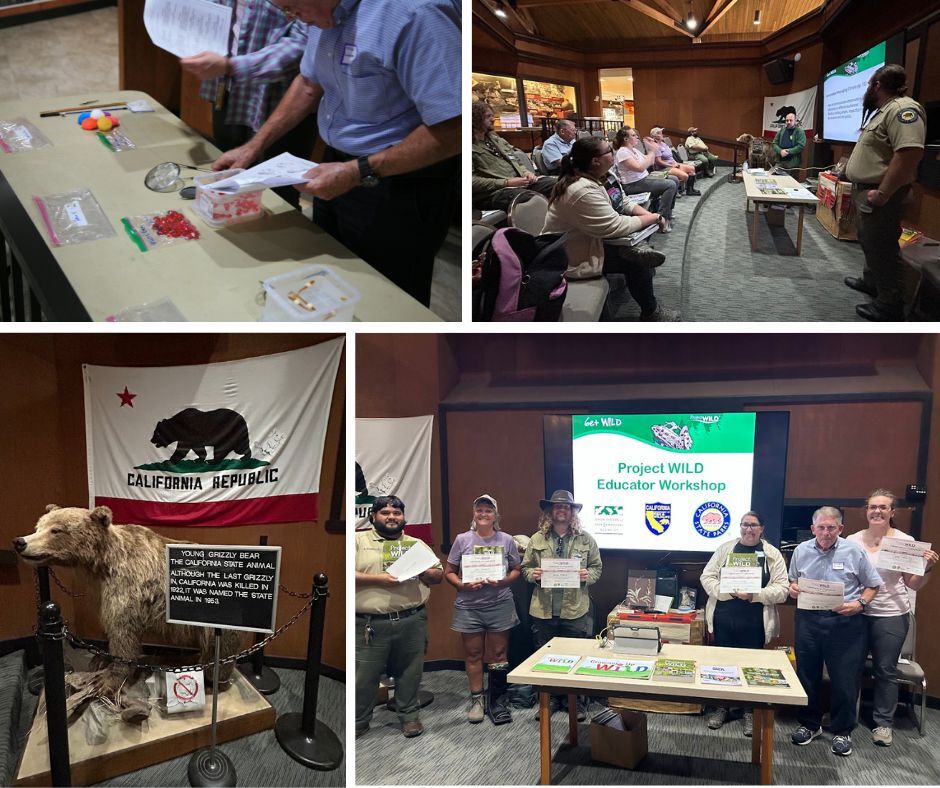 Clockwise from top left: Project WILD workshop participants learning about beak adaptations at Lake Perris State Recreation Area. Top right: Workshop in progress. Bottom right): Attendees Jose Cabello, Lori Lawrenz, Nathan Swiderski, Melissa Easley, Michael Lindsey and Corrin Cafferty holding their new curriculum books and completion certificates. Two camouflaged mice well hidden among the exhibit display by attendees. Photos from Phil Harvey and Ian Bernstein, Inland Empire District.
Volunteers and staff from across the Inland Empire District recently came together at Lake Perris State Recreation Area (SRA) for a hands-on Project WILD workshop—an engaging training designed to bring wildlife education to life in California state parks. The group explored fun, field-tested activities from the Project WILD series of curriculum books, learning how to adapt them for Junior Ranger programs, school field trips and even Scout badge events.
Project WILD curriculum is facilitated statewide by the California Department of Fish and Wildlife (CDFW), and two of our district’s interpreters are now certified facilitators, allowing them to bring this training to our staff and volunteers and expanding it in the future to include schoolteachers and administrators.
This training was hosted by State Park Interpreter I Phil Harvey, Interpreter II Ian Bernstein and CDFW Interpreter I Jose Munoz and gave participants a chance to try out activities themselves — playing games that teach about bird beak adaptations, camouflage and even creating conservation public service announcement posters. Laughter, teamwork and lots of aha moments made it clear that this curriculum isn’t just educational — it’s exciting and easy to use in real park settings.
Best of all, the workshop sparked great conversations about connecting the curriculum with what our state parks already do best: inspiring curiosity about the natural world. Whether it’s on a weekend hike, at a school program or during a summer Junior Ranger event, the Project WILD resources offer ready-to-go activities that align with California education standards and help deepen the impact of our interpretive work.
Big thanks to everyone who participated! We’re looking forward to seeing these new ideas in action throughout the district.
Last Call: Reserve Your Space for the 75th Anniversary Lifeguard Awards Night Celebration
Story from: Ryan Gates, Orange Coast District
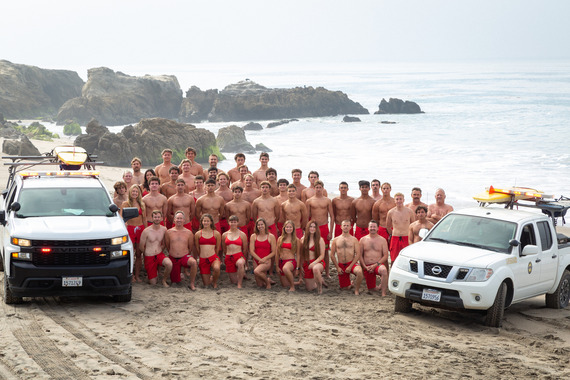
 This is the last opportunity to participate in a special evening honoring individual California State Lifeguard legends who have made significant impacts throughout their careers. The event will feature historical displays, dinner, an In Memoriam tribute movie, and an awards ceremony concluding with the Robert J. Isenor Award presented to outstanding individuals.
The event will be held at the Hyatt Regency in Huntington Beach on Monday, Aug. 4, 2025. For those interested in participating, tickets are available and can be purchased here.
History of Lifeguarding in California: California State Parks’ lifeguard service has its roots in the early 20th century, when growing beach attendance led to widespread drownings. As the Division of Beaches and Parks (now California State Parks) began acquiring iconic coastal properties like Doheny, Huntington, and Silver Strand, the need for a dedicated, in-house lifeguard team became clear.
That team has since evolved into a modern, highly trained rescue force, responsible for patrolling California’s over 300 miles of ocean coastline and over 600 miles of lake and reservoir shoreline. Each year, State Parks lifeguards respond to thousands of emergencies, often risking their own lives to save others from rip currents, powerful surf and extreme weather. Since the formation of the California State Lifeguard Association in 1967, its members have carried out more than 250,000 rescues.
 PARTNER NEWS
Explore Arts in California Parks This Summer
Story and photos from: Parks California
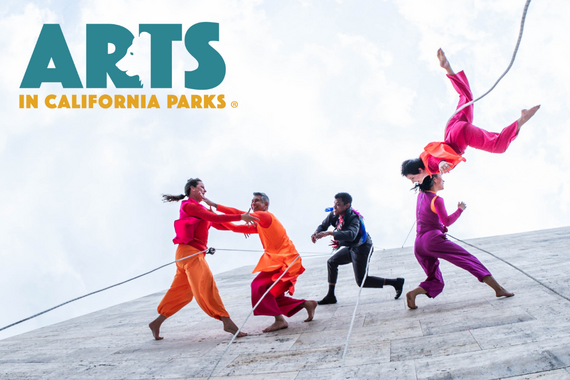 BANDALOOP performers dancing vertically on the wall of a building. Performers leap through the air in bright orange, pink and purple clothing. Photo courtesy of BANDALOOP.
This July, discover more than 30 Arts in California Parks events across the state. Nature and art infuse creativity and life into parks. From vertical dances on city walls to experimental art studios and concerts in parks, there is something for everyone.
Make your way to BANDALOOP’s incredible aerial performances, “Somewhere to Land,” happening Thursdays and Saturdays at Frank H. Ogawa/Oscar Grant Plaza in Oakland. In Nevada City, look for art installations along four different trails. The Bear Yuba Land Trust commissioned the pieces and are available to view through August.
Join actors for Shakespeare in the Park on Friday, July 11 or Saturday, July 12 at Citrus State Historic Park in Riverside. Or head to Alameda’s Shoreline Park on July 12 or Aug. 23 for Rhythmix Cultural Works’ timely dance piece, “Rising Seas.”
More highlights include:
- VETART Paint and Pastries in the Park Saturdays and Sundays through Aug. 31 | Oakcrest Park, San Diego County
- Concerts in the Park Thursdays through Aug. 28 | Fair Oaks Park, Sacramento County
- Hijos del Sol Experimental Traveling Arts Studio Saturdays, July 12-26 | Acosta Plaza, Salinas
- Arts in Parks with Coastal Corridor Alliance Saturdays, July 19 and Aug. 16 | Fairview Park, Orange County
Pack a picnic, your dancing shoes and art supplies and head out this month. This program is a collaboration between California State Parks, California Arts Council and Parks California designed to bring art, and new visitors, to parks around the state. Learn more at artsincliforniaparks.org.
|