WATER QUALITY IMPROVEMENTS

Rainy Season Tips for Preventing Stormwater Runoff
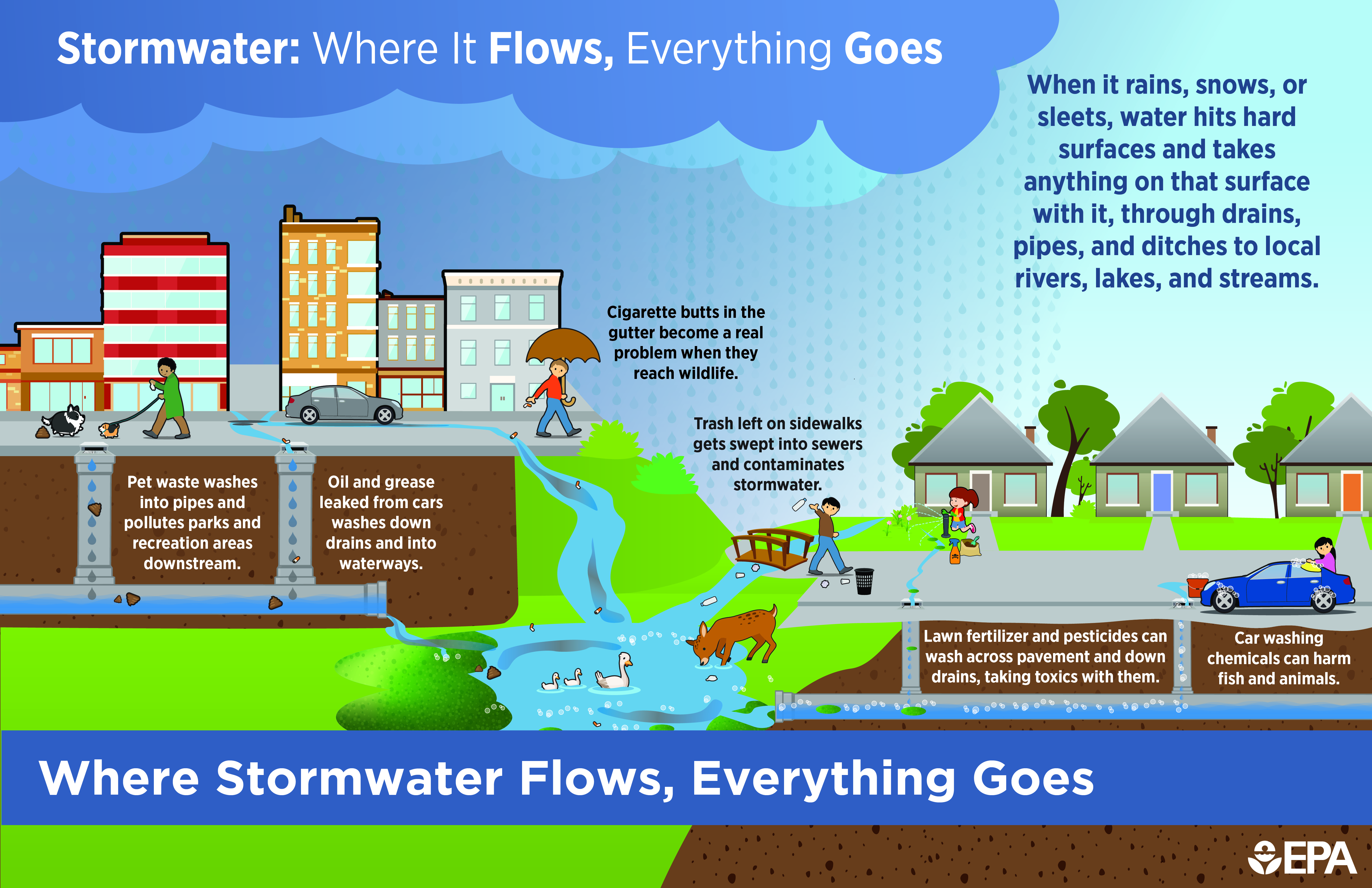
The start to the rainy season (October 1st through April 30th) is approaching! Two of the most effective actions you can take to not only leverage our much-needed rainfall but also prevent polluted runoff from washing into our waterways, include rain harvesting and rain infiltration (soak-up techniques). During a rainstorm, runoff from roofs, sidewalks, and driveways can carry trash, pet waste, pesticides, fertilizers, automobile fluids, and other pollutants into our storm drains. Here in San Diego County, water in storm drains is not treated before it reaches our local creeks, rivers, and the ocean. By focusing on these two best management practices, you’ll be helping to prevent polluted runoff from entering our storm drains untreated and polluting our waterways.
|
Rain harvesting is the collection, storage, and re-use of natural rainfall. Not only will you be getting free water for use in your yard, but you will also be conserving water and protecting our waterways and ocean from polluted runoff.
-
Install rain barrels and cisterns to save water for future use – A 1,000-square-foot roof can collect over 600 gallons from just one inch of rain. Check out the Solana Center for Environmental Innovation’s rain barrel webpage for information on discounted rain barrels. Or, consider making your own D-I-Y rain barrel using these instructions.
-
Take advantage of rain-saving rebates – Rebates for unincorporated residents are also available through the County’s Waterscape Rebate Program. They are offered on a variety of rain-saving equipment and landscape features like rain barrels, gutters, rain gardens, turf replacement, and more. See what rebates are available.
-
Attend rain harvesting workshops – The County also hosts rainwater harvesting workshops throughout the year. The workshops will teach you how to capture rainwater and help you lower your water bill. Check here regularly for upcoming workshops.
Rain infiltration is the process by which water seeps into the ground and is filtered through soil, vegetation, and other landscape materials (i.e. gravel and rock) to naturally remove pollutants. Basins and other types of stormwater infiltration systems allow water to infiltrate into the ground as opposed to creating runoff or flooding. Consider adding these infiltration features and best management practices (BMPs) into your landscaping design to help prevent polluted runoff.
-
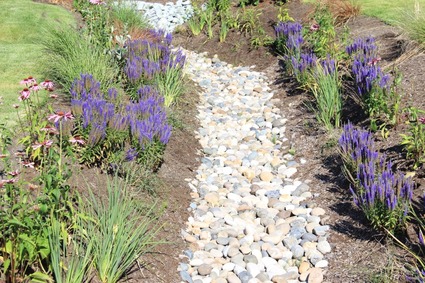
Infiltration basins and trenches: Infiltration Basin BMPs are often shallow and are designed to hold water temporarily. Then, they infiltrate water into the soil while removing sediment and pollutants. Infiltration trenches are long, excavated channels often filled with gravel. They are optimal for small spaces and rapidly infiltrate water back into the soil.
-
Vegetated channels: Vegetated BMPs (often various shrubs and grasses) and soil are designed to filter and slow down stormwater runoff as well as reduce the amount of pollutants discharged to the local storm drain system. Dispersion Area BMPs are also vegetated and work to receive and divert stormwater runoff.
-
Rain gardens: Rain gardens, often created by building depression areas with mulch, gravel or vegetation, capture rain and infiltrate it into the ground. This allows water to soak into the ground thereby minimizing stormwater runoff impacts. In addition, they also support soil moisture and healthy plant growth.
-
Permeable pavements: These are permeable surfaces that allow water to directly pass through and infiltrate the soil. Replace concrete driveways or patios with permeable pavers or gravel to allow water to soak into the ground.
The County of San Diego thanks its residents for protecting our water resources this rainy season and year-round!
County-Sponsored Stormwater Pollution Prevention Events – October 2026
Play a role in protecting the County’s waterways from stormwater pollution by attending these pollution-prevention and waste reduction events being offered in October.
I Love a Clean San Diego (ILACSD) – The following events will be offered in October.
Unincorporated Residents of San Diego Recycling and Waste Reduction Events – The following events will be offered in October.
-
Residential Cleanup Events – Household Hazardous Waste and E-Waste Collection – Unincorporated residents are invited to properly dispose of household hazardous waste and electronic waste. Household hazardous waste includes, but is not limited to, batteries, cellphones, computers, printers, oils, paint, and more. No business waste, tires, medication, large appliances, and more allowed.
-
October 3, 8am to 12pm – Lakeside – Site location: Lakeside Rodeo, 12584 Mapleview Street, Lakeside. Learn more.
-
October 24 – Ramona – Site location: Ramona High School, 1401 Hanson Lane, Ramona. Details to come, check back here.
-
San Diego Fix-It Clinics – Learn how to reduce waste by fixing things instead of throwing items away at the following San Diego Fix-It Clinics in October. Bring broken or non-working items for assessment, disassembly, and possible repair. Workspace, specialty tools, and guidance to help you take apart and troubleshoot your item will be provided. Clinics hosted by SD Fixit Clinic with the help of many other zero waste partners.
-
October 3, 10am to 1pm – San Diego Fixit Clinic – Lemon Grove. Site location: Lemon Grove Library, 3001 School Lane, Lemon Grove, CA 91945. Learn more or RSVP.
-
October 7, 5pm to 7pm – San Diego Fixit Clinic: Textile & Bike Repair at San Diego Climate Week – University of San Diego. Site location: 5998 Alcala Park Way, San Diego, CA 92110. Learn more or RSVP.
-
October 17, 12pm to 3pm – San Diego Fixit Clinic – Point Loma. Site location: Point Loma/Hervey Library, 3701 Voltaire Street, San Diego, CA 92107. Learn more or RSVP.
-
October 24, 10am to 1pm – San Diego Fixit Clinic – Carlsbad. Site location: Carlsbad City Library, Dove, 1775 Dove Lane, Carlsbad, CA 92011. Learn more or RSVP.
University of California Cooperative Extension’s (UCCE) Integrated Pest Management (IPM) Program – Healthy Garden-Healthy Home Workshop Fall Virtual Workshop Series – A variety of garden-related and pest prevention workshops will be offered in October. See the full description of events here.
- October 10, 10am to 11:30am – Herb Gardening.
-
October 17, 10am to 11:30am – All about Ants!
-
October 24, 10am to 11:30am – Grow a Salsa Garden.
Solana Center for Environmental Innovation Waste Reduction Events – A variety of waste reduction and composting events will be offered in October. The County of San Diego is proud to sponsor the events below. See the full calendar and description of events here.
Growtober Compost Giveaways - Through October 25 – Fall planting season is here and the County is giving away free compost and mulch! These giveaway events are self-serve and self-loading so please bring your own shovels, tools, buckets, containers, and tarps for truck beds. Check back for individual event details.
|