|
Prepared by Precision Advocacy
While the legislature remains on summer recess, attention is beginning to shift toward the November 3, 2026, statewide ballot. This update provides an overview of how the final slate of measures took shape, including the legislative actions and last-minute stakeholder agreements that removed several proposals from consideration. It also offers an initial preview of the 14 measures voters will consider, the emerging support and opposition campaigns, and the potential fiscal, operational, and policy implications for Orange County.
The legislature and administration wrapped up negotiations over the 2026 general election initiatives on June 25, setting up California voters for a crowded November 3, 2026, statewide ballot. Fourteen qualified measures have been assigned proposition numbers, with major proposals affecting housing, taxes, elections, health care, environmental review, public campaign financing, recall elections, and voter identification requirements. The ballot could have been even longer, but several high-profile conflicts were resolved through last-minute compromises involving personal injury attorneys and rideshare companies, hospital executives and a health care union, and local tax vote thresholds.
In total, six measures were removed from the November 2026 ballot through negotiated agreements. These withdrawals reflect three major deadline-driven compromises – the local tax agreement that replaced the Howard Jarvis Taxpayers Association (HJTA) initiative, the health care agreement that removed competing hospital and health care labor measures, and the rideshare liability settlement that removed dueling initiatives backed by Uber and the Consumer Attorneys of California.
Taxpayer Protection Act Swap. The most significant local-government deal involved the HJTA Local Taxpayer Protection Act to Save Proposition 13, ACA 13 (Ward, 2023), and the negotiated replacement measure, ACA 22 (Wicks). The HJTA initiative would have required all local special taxes, including those proposed by local voter initiative, to receive two-thirds voter approval. It also would have prohibited local governments from imposing most new parcel taxes, property ownership-related taxes, or real estate transfer-related taxes beyond the documentary transfer tax rate allowed under state law as of January 1, 2025. Existing local taxes not meeting the new requirements would have become invalid two years after voter approval of the initiative.
ACA 13, which had been placed on the ballot in response to a prior HJTA initiative, would have required any initiative constitutional amendment to comply with the same voter approval threshold it sought to impose on future ballot measures.
Rather than proceed with both ACA 13 and the HJTA initiative, the legislature advanced ACA 22 as the negotiated replacement. ACA 22 restores a two-thirds vote requirement for local special taxes, including those proposed by voter initiative. At the same time, the legislature passed ACA 21, directing the Secretary of State to remove ACA 13 from the November ballot. With ACA 22 moving forward and ACA 13 removed, HJTA agreed to withdraw Save Prop. 13. The net result was a ballot swap – the HJTA initiative and ACA 13 were removed, and ACA 22 moved forward as Proposition 43.
Health Care Agreement. Two health care-related initiatives were also withdrawn as part of a negotiated agreement between the California Hospital Association and SEIU-UHW, avoiding a costly ballot fight between hospital interests and health care labor organizations.
The first measure, the Health Care Union Transparency, Accountability, & Union Member Right to Vote Act, was sponsored by the California Hospital Association and targeted political spending by large health care unions. It would have prohibited covered unions from spending above specified thresholds on state or local ballot measure campaigns unless they first obtained member consent, among other provisions. The proposal appeared to be a direct response to organized labor’s role in this cycle’s tax and health policy fights, particularly SEIU-affiliated health care unions and the billionaire tax measure. Notably, the measure would have applied only to unions, not to employers, hospitals, or health systems.
The competing measure, The Health Care Executive Compensation Act of 2026, was sponsored by SEIU-UHW and would have capped total annual compensation for covered health care executives, managers, and administrators at $450,000.
Rather than proceed to the ballot, the California Hospital Association and SEIU-UHW reached a late agreement to withdraw both measures. Their removal narrowed the health care fights headed to voters, although Proposition 40, the billionaire wealth tax tied largely to health care funding, remains on the ballot.
Uber Versus the Consumer Attorneys – Legislative Compromise. The final pair of withdrawn measures involved rideshare liability and personal injury litigation. Uber and the Consumer Attorneys of California had been headed toward a costly ballot fight over accident liability, medical cost recovery, and rideshare safety rules. Uber’s measure would have capped attorney contingency fees at 25% in auto accident cases statewide and limited recoverable medical costs to Medicare- and Medi-Cal-linked benchmarks. The Consumer Attorneys’ competing measure would have expanded rideshare companies’ liability for driver sexual misconduct and required stronger driver background checks and reporting requirements.
That fight was resolved through a settlement that produced a legislative compromise. Under the agreement, contained in SB 623 (Reyes), Uber accepted stronger passenger-safety and driver background-check rules, including annual background check renewals and disqualification standards for certain violent felony and DUI convictions. The plaintiffs’ attorneys accepted limits on recoverable medical expenses, but the compromise was narrowed to rideshare-specific crashes rather than all auto accident cases. SB 623 caps recoverable medical lien charges at the 70th percentile of a recognized billed-charges database, such as FAIR Health, while leaving attorney contingency fees untouched. It also bars attorneys from steering clients to medical providers in which they have a financial interest. After Governor Newsom approved the legislative deal, both sides withdrew their competing initiatives.
The measures removed demonstrate how the final statewide ballot was shaped not only by qualification deadlines, but also by late political and stakeholder agreements. The billionaire wealth tax did not become part of a withdrawal deal. Its proponents refused to pull the measure by the deadline despite pressure from Governor Newsom, leaving Proposition 40 and the related opposition countermeasures, Propositions 41 and 42, as the central unresolved tax fight on the November ballot. With a broad set of measures still before voters, the November ballot is expected to draw substantial voter attention and significant campaign spending.
Initiatives on the 2026 General Election Ballot
Fourteen measures are on the November 3 ballot – five placed by the legislature and nine placed by initiative. The first five measures carry proposition numbers assigned by AB 182 (Pellerin) prescribing the measures that will appear first on the ballot.
|
Measure
|
Subject
|
Type
|
|
Prop 1
|
Veterans and Affordable Housing Bond Act of 2026
|
Legislative
|
|
Prop 2
|
Rainy Day Fund Changes
|
Legislative
|
|
Prop 3
|
Extends Existing High-Income Tax for Schools and Health Care
|
Initiative constitutional amendment
|
|
Prop 4
|
California Fair Elections Act/Public Campaign Financing
|
Legislative
|
|
Prop 5
|
Recall of State Officers
|
Legislative
|
|
Prop 37
|
Middle-Class Homeownership and Family Home Construction Act of 2026
|
Initiative statute
|
|
Prop 38
|
Bonds For Immunology Research
|
Initiative statute
|
|
Prop 39
|
Voter Identification and Citizenship Verification Requirements
|
Initiative constitutional amendment
|
|
Prop 40
|
Billionaire Tax
|
Initiative constitutional amendment and statute
|
|
Prop 41
|
Audits of Programs Funded by New State Special Taxes/Spending Limit
|
Initiative constitutional amendment
|
|
Prop 42
|
Prohibits New State Personal Property Taxes and Certain Retroactive Taxes
|
Initiative constitutional amendment
|
|
Prop 43
|
Local Tax Limitation: Two-Thirds Vote for Special Taxes
|
Legislative
|
|
Prop 44
|
Community Health Clinics 90% Program-Services Spending Requirement
|
Initiative statute
|
|
Prop 45
|
Environmental Review for Certain Projects
|
Initiative statute
|
The Secretary of State is currently collecting arguments for the official voter information guide, which will be posted on the Secretary of State’s website for public viewing between July 21 and August 10. The summaries below are intended to provide an overview of each measure, including potential impacts on Orange County and available support and opposition information.
Proposition 1: The Veterans and Affordable Housing Bond Act of 2026
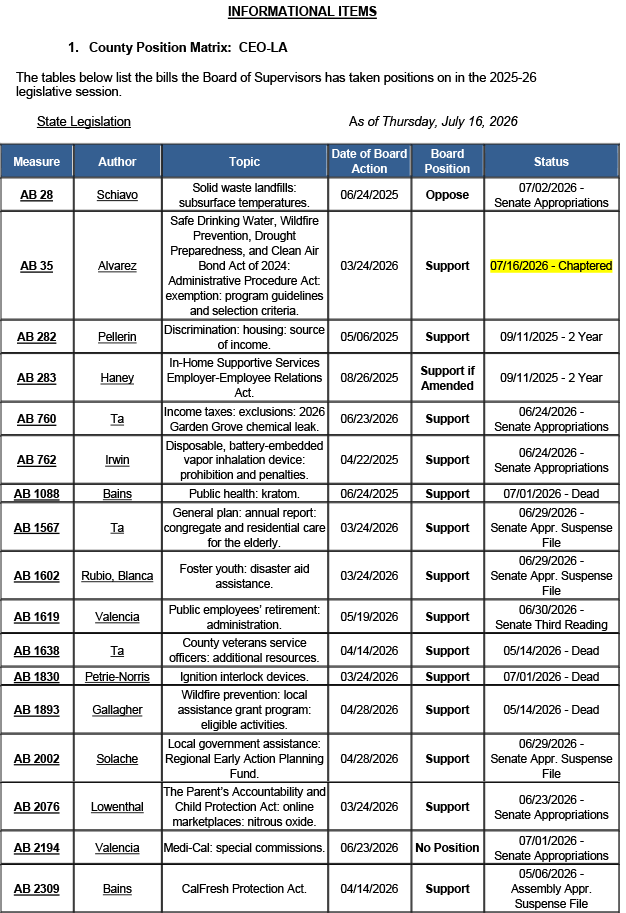
Previously contained in AB 736 (Wicks) and SB 417 (Cabaldon), the final housing bond legislation was ultimately advanced through SB 417 (Limón). On June 22, Governor Gavin Newsom, the Assembly, and the Senate announced a three-party agreement to place the Veterans and Affordable Housing Bond Act of 2026 on the November 2026 ballot. The measure represents a record $11.25 billion housing bond package, including $10 billion in voter-approved general obligation bonds for the construction, rehabilitation, acquisition, and preservation of affordable rental housing. The package also includes $1.25 billion in self-supporting revenue bonds for the CalVet Home Loan Program, which would be repaid through mortgage payments rather than taxpayer dollars.
The bond is framed as a major response to California’s ongoing housing affordability crisis. The administration notes that only 17% of California households can afford to purchase a median-priced single-family home, while more than half of renters are rent burdened, spending more than 30% of their income on housing. The administration also estimates that the bond could help more than 40,000 Californians purchase homes, support the creation or preservation of tens of thousands of affordable homes, and generate tens of thousands of construction jobs. The administration contends that every state dollar invested would leverage roughly $4 in federal, local, private, and other financing.
Official Title. SB 417 (Chapter 16, Statutes of 2026) Limón. The Veterans and Affordable Housing Bond Act of 2026.
Summary. The initiative includes two major financing components – $10 billion in voter-approved general obligation bonds for affordable housing and housing-related infrastructure programs, and a separate $1.25 billion authorization for the CalVet Home Loan Program to help veterans and military families purchase homes. Bond proceeds would be distributed across established state housing programs as follows:
-
$5.1 billion - Multifamily Housing Program, with at least 10% of assisted units in each funded development affordable to extremely low-income households.
-
$1.15 billion – Permanent supportive housing, including capitalized operating subsidy reserves for people experiencing homelessness, chronic homelessness, or at risk of homelessness.
- Up to $172.5 million (15%) may be used to acquire, convert, or rehabilitate interim housing into permanent housing.
- $150 million is reserved for current or former foster youth, homeless minors or youth, and youth at risk of homelessness.
-
$750 million - Portfolio Reinvestment Program, preserving existing affordable housing assets and extending the useful life of older affordable developments.
-
$200 million - Acquisition and rehabilitation of unrestricted housing, supporting acquisition and rehabilitation of unrestricted units with long-term affordability restrictions and displacement protections.
-
$600 million - CalHome Program, supporting direct forgivable loans, self-help mortgage assistance, manufactured homes, and ownership housing development.
-
$500 million - CalHFA Home Purchase Assistance Program, supporting lower- and moderate-income homebuyers with upfront purchase costs.
-
$450 million - Farmworker Housing Grant Program, supporting construction, rehabilitation, acquisition, manufactured housing, displacement prevention, and technical assistance for farmworker housing.
-
$200 million - Tribal Housing Grant Program, supporting housing and housing-related activities for tribes.
-
$500 million - Infill Infrastructure Grant Program, supporting infrastructure needed for high-density affordable and mixed-income housing in infill locations.
-
$350 million - Affordable student housing, split evenly between the University of California and California State University systems.
-
$200 million - Local Housing Trust Fund Matching Grant Program and housing innovation, supporting competitive grants or loans to local housing trust funds and innovative, cost-saving housing pilots.
-
$1.25 billion - CalVet Home Loan Program. Separate from the affordable housing bond, funds would support veterans’ farm and home purchase assistance.
Fiscal Impact. The affordable housing portion of the bond is estimated to cost approximately $17.39 billion in principal and interest over time, with General Fund debt service of about $580 million annually once all bonds are sold. The CalVet portion is described as self-supporting because loan repayments by participating veterans would service the debt.
Impact on Orange County. Passage would likely have a positive but indirect impact on Orange County. The measure does not provide a county-specific earmark, so Orange County’s benefit would depend on how successfully the County, cities, housing authorities, affordable housing developers, and the Local Housing Trust Funds compete for statewide program dollars.
The most relevant funding streams for Orange County would be affordable rental housing production, supportive housing and homelessness response, preservation of existing affordable units, homeownership assistance, local housing trust fund opportunities, infill infrastructure, veterans housing assistance, and student housing. From a fiscal perspective, Orange County would not appear to face a direct local cost or mandate from the bond.
Support. Supporters argue that the bond builds on recent housing production reforms and provides needed capital for proven affordable housing and homeownership programs, including assistance for veterans, first-time homebuyers, lower- and moderate-income households, farmworkers, tribal communities, students, youth, and people experiencing or at risk of homelessness.
Specific supporters include the City of Santa Ana, Santa Ana City Councilmember Jessie Lopez, Jamboree Housing Corporation, Orange County Waterkeeper, the Southern California Association of Non-profit Housing, Linc Housing, PATH Ventures, Enterprise Community Partners, CSAC, Cal Cities, and statewide housing, labor, environmental, and civil rights organizations.
Opposition. Some Republican legislators have raised concerns that adding General Fund-backed debt is the wrong approach given the state’s ongoing multi-year structural deficit.
Proposition 2: Save for California’s Future Act
Proposition 2 reached the November 2026 ballot through the legislative process as ACA 20 (Gabriel), developed in response to California’s ongoing revenue volatility and repeated budget swings, particularly the state’s reliance on capital gains and other asset-related income from high-income earners.
The measure was advanced in the final days of the legislative session as part of a broader package of measures placed before voters for the November 2026 ballot.
Official Title. ACA 20 (Resolution Chapter 130, Statutes of 2026) Gabriel. Save for California’s Future Act.
Summary. Proposition 2 is a proposed constitutional amendment that would revise California’s rainy-day reserve structure to allow the state to save more money in strong revenue years and use the debt-payment mechanism for a broader set of state liabilities.
The measure would double the cap on required deposits into the Budget Stabilization Account, commonly referred to as the Rainy Day Fund, from 10% to 20% of General Fund proceeds of taxes. It also would increase the amount set aside when capital gains revenues are especially high by requiring 150% of excess capital gains above 10% of General Fund taxes to be set aside for reserves and extra debt payments.
The measure would extend extra debt-payment requirements from 2030 to 2040 and expand eligible debt payments to include Proposition 98 settle-up obligations, budgetary borrowing, and repayment of the state’s federal Unemployment Insurance loan. It also changes how reserve deposits and withdrawals are treated under the State Appropriations Limit and clarifies how the governor’s May Revision may serve as the formal budget emergency proclamation when constitutional conditions are met.
Fiscal Impact. The measure is intended to increase state reserve deposits in strong revenue years and broaden debt repayment options. The Department of Finance estimates that if the revised capital gains provision had been in effect from 2019-20 through 2021-22, an additional $4.7 billion may have been transferred to the Budget Stabilization Account. The measure does not create a direct local mandate, but it could change how much state revenue is saved, used for debt repayment, or available for current-year programs.
Impact on Orange County. For Orange County, the impact would be indirect. A larger state reserve could help stabilize state funding for county-administered and local-facing programs during downturns, including health and human services, public safety, courts, housing, homelessness, and emergency response programs.
The tradeoff is that, in strong revenue years, more state revenue could be set aside for reserves or debt repayment rather than immediately available for program expansions, local assistance, or new discretionary investments.
Support. The legislature and administration frame the measure as a prudent response to California’s heavy reliance on volatile capital gains revenues and argue that a larger rainy-day fund would better position the state to manage future downturns without deeper cuts.
Opposition. Potential concerns would likely focus on whether additional reserve deposits could constrain near-term spending on programs, services, or local assistance during high-revenue years.
Proposition 3: Extends Existing Tax for Schools and Health Care
Proposition 3 reached the November 2026 ballot through the citizen initiative process, rather than through a measure placed on the ballot by the legislature. The measure was advanced by education and labor advocates seeking to make permanent the high-income tax rates first approved by voters through Proposition 30 in 2012 and later extended through Proposition 55 in 2016.
Official Title. Provides Permanent Funding for Schools and Healthcare by Extending Existing Tax on High Incomes. Initiative Constitutional Amendment.
Summary. Proposition 3 would make permanent the higher personal income tax rates on high-income earners that were first adopted by voters through Proposition 30 in 2012 and extended by Proposition 55 in 2016. Under current law, those higher rates are scheduled to expire after 2030. This measure would keep them in place permanently rather than allowing them to revert to lower rates in 2031.
The measure applies only to high-income taxpayers, with rates continuing for income above the highest brackets. The fiscal estimate notes that the top 2% of California taxpayers pay these higher rates and about half of all state income taxes.
The initiative directs revenue through the Education Protection Account, with funds intended for school districts, county offices of education, charter schools, and community college districts. It also restricts administrative spending, requires local public spending decisions, and subjects the funds to annual audit requirements.
Fiscal Impact. The Legislative Analyst’s Office (LAO) and Department of Finance estimate that the measure would maintain $5 billion to $15 billion annually in state income tax revenue. The amount would vary significantly from year to year because much of the revenue comes from investment income and capital gains. Typically about 40% of the revenue would go to K-12 schools and community colleges under the state Constitution, a smaller portion would go to reserves, and remaining funds could support other state programs.
Impact on Orange County. For Orange County, Proposition 3 would primarily benefit school districts, county offices of education, charter schools, and community college districts by preserving a major ongoing revenue stream that otherwise would expire after 2030. The measure could also indirectly support county priorities by strengthening the state budget and preserving resources for health and human services.
Support. Californians for Protecting Public Education, Health Care and Budget Stability is leading the support campaign. The committee is sponsored by education and labor organizations, and its listed top funders are the California Teachers Association and the California Federation of Teachers. Supporters argue that the measure would extend an existing tax on the wealthiest Californians rather than create a new tax structure, preserving a funding stream for public schools, community colleges, health care, and Medi-Cal. Education advocates characterize the measure as necessary to avoid future cuts, protect classroom stability, and prevent the expiration of revenues that have supported education funding for more than a decade.
Additional key supporters include SEIU California, AFSCME California, and California Professional Firefighters.
Opposition. Formal opposition to the measure appears limited at this stage, Precision has not identified a campaign committee registered to oppose the initiative. However, some education advocates have expressed concern that voters could confuse the measure with Proposition 40, the separate billionaire wealth tax proposal, which some education groups oppose because of its potential interaction with school-funding formulas. The measure has also drawn opposition from tax and business-oriented critics, including Wayne Winegarden, a senior fellow at the Pacific Research Institute, who argues that extending higher income tax rates would reinforce incentives for high-income taxpayers to leave California.
Proposition 4: California Fair Elections Act of 2026
Proposition 4 reached the November 2026 ballot through the legislative process as SB 42 (Umberg). The measure was introduced to address a long-standing restriction in California law that generally prohibits the use of public funds for candidate campaigns, except in charter cities that have adopted their own public financing systems.
Official Title. SB 42 (Chapter 245, Statutes of 2025) Umberg. Political Reform Act of 1974: public campaign financing: California Fair Elections Act of 2026.
Summary. Proposition 4 would allow the state and local governments to create public campaign financing programs. The measure does not itself create a public financing program or require any jurisdiction to offer one; instead, it would remove the current statewide prohibition and give counties, districts, general law cities, and the state the same option currently available to charter cities.
Public funds could be used by candidates only if a program meets safeguards. Funds earmarked for education, transportation, or public safety could not be used. Participating candidates would have to agree to expenditure limits and meet strict criteria showing broad-based support, such as receiving small-dollar contributions or vouchers from a specified number of voting-age residents. Public funds could not be used for legal defense fees, fines, or repayment of a candidate’s personal loan to the campaign.
Fiscal Impact. The Fair Political Practices Commission (FPPC) would face estimated costs of about $205,000 in the first year and $198,000 annually thereafter for additional legal workload, with possible unknown enforcement costs. Public financing programs could redirect public funds and create cost pressure, though education, transportation, and public safety funds would be protected.
Impact on Orange County. For Orange County, the measure would be permissive rather than mandatory. The County, cities, and other local jurisdictions could choose whether to create public campaign financing programs, but would not be required to do so.
If Orange County or its cities ever adopted such a program, the local impact would depend on program design, eligibility criteria, funding source, administrative costs, and enforcement needs.
Support. Supporters of Proposition 4, including the California Clean Money Campaign, California Common Cause, the League of Women Voters of California, ACLU of California, Represent.Us, Consumer Watchdog, End Citizens United, the California Democratic Party, and the California Working Families Party, argue that public campaign financing would reduce the influence of wealthy donors and special interests, amplify the role of small donors, lower barriers for candidates, and help diversify the candidate pool.
Opposition. Opposition to the underlying measure has been led by the California Taxpayers Association, which argues that taxpayers should not be required to finance political speech they may oppose. Opponents also raise concerns that public agencies would have too much discretion in determining candidate eligibility and that public financing programs could be vulnerable to fraud, abuse, and fiscal pressure. CalTax has emphasized that taxpayers generally expect public funds to support core services such as schools, fire departments, libraries, and roads rather than campaign advertisements. Precision has not identified a formal opposition campaign on Proposition 4.
Proposition 5: Elections: Recall of State Officers
Proposition 5 reached the November 2026 ballot through the legislative process as SCA 1 (Newman, 2024). The proposal was developed to revise the state recall process after continued criticism of California’s two-question recall ballot, under which voters first decide whether to remove an elected official and then separately choose a replacement candidate if the recall succeeds.
Official Title. SCA 1 (Resolution Chapter 204, Statutes of 2024) Newman. Elections: recall of state officers.
Summary. Proposition 5 would change California’s state recall process by removing the second question on a recall ballot – the election of a replacement candidate. Voters would decide only whether the officer should be recalled. If a majority votes to recall, the office becomes vacant and is filled under the normal constitutional and statutory vacancy process.
For a gubernatorial recall, if the governor is recalled, the lieutenant governor would become governor for the remainder of the term. If the recall occurs early enough in the governor’s term, a special election would be held and consolidated with the statewide primary and, if necessary, the statewide general election.
The measure also shifts responsibility for administering a gubernatorial recall. Instead of the lieutenant governor performing the governor’s recall duties, the Secretary of State would do so. If recalls of both the governor and Secretary of State are initiated at the same time, the Controller would perform those duties.
Fiscal Impact. Estimated one-time costs of about $203,000 for VoteCal system changes and $738,000 to $984,000 for Secretary of State printing and mailing costs associated with placing the measure on the ballot. Additional costs for the Secretary of State and Controller to assume recall duties are unknown but expected to be minor and absorbable.
Impact on Orange County. For Orange County, the measure would primarily affect state recall election administration. The Registrar of Voters may need to adjust ballot materials, voter education, and procedures for state officer recall elections, but the measure does not appear to impose a major direct county program cost.
Support. Supporters of Proposition 5, including Secretary of State Shirley Weber, Lieutenant Governor Eleni Kounalakis, California Common Cause, and the League of Women Voters of California, argue that California’s current two-question recall system can allow a replacement candidate to win office with only a small plurality, even if more voters supported retaining the incumbent. Supporters argue the measure would reduce voter confusion, prevent political gamesmanship, and ensure that statewide and legislative recalls are decided in a manner more consistent with majority voter preference.
Opposition. Opposition during the legislative process was led by Election Integrity Project California, Inc., which argued that the measure would weaken voters’ ability to choose a replacement after voting to remove an official. Opponents specifically object to the gubernatorial recall provisions, arguing that automatically elevating the lieutenant governor could deny voters a meaningful choice if voters have decided to remove the governor. They contend that recalls should preserve both parts of the process: the ability to remove an official and the ability to directly select a successor.
Proposition 37: Middle-Class Homeownership and Family Home Construction Act of 2026
Proposition 37 reached the November 2026 ballot through the citizen initiative process and was submitted by former state lawmaker Robert M. Hertzberg. Unlike Propositions 1, 2, 4, and 5, which were placed on the ballot by the legislature, Proposition 37 qualified through voter signatures as one of the citizen initiatives on the statewide ballot.
The proposal was developed in response to California’s homeownership affordability crisis and is intended to help middle-income Californians purchase newly constructed homes or newly converted residential units.
Official Title. Creates Loan Program for Middle-Income Buyers of Qualified New Homes. Initiative Statute.
Summary. Proposition 37 would create a new CalHFA-administered loan program to help middle-income Californians purchase newly constructed homes or newly converted residential units.
CalHFA could issue up to $25 billion in revenue bonds to fund middle-class homeownership loans. These loans would function as second mortgages and could cover up to 17% of the purchase price of a qualified new home. Borrowers would need to contribute at least 3% down and obtain a primary mortgage for the remaining purchase cost.
Eligible borrowers would have to be California residents for at least one year, occupy the home as a primary residence, have family income of no more than 200% of area median income, and meet CalHFA underwriting standards. Eligible homes would include newly constructed single-family homes, townhomes, row houses, condominiums, manufactured homes, and converted residential units, with purchase prices below county-specific limits.
Fiscal Impact. The fiscal estimate finds no direct state or local costs. The measure is structured so that CalHFA revenue bonds and administrative costs would be repaid through homeowners’ mortgage payments rather than the State General Fund or local government funds.
Impact on Orange County. For Orange County, the initiative could be relevant because the County’s high housing costs make middle-income homeownership difficult. A second-mortgage product covering up to 17% of a new home’s purchase price could help some households bridge the affordability gap, particularly where new for-sale housing is available within program limits.
The measure’s local impact would depend on whether Orange County builders produce eligible units, whether borrowers can qualify for primary mortgages, whether the county price limits fit the Orange County market, and whether CalHFA can issue bonds on terms that make the loans attractive.
Support. Proposition 37 is supported by the California Coalition for Homeownership, which is leading the campaign in favor of the initiative. Supporters argue that the initiative is intended to increase the supply of middle-class homeownership opportunities rather than rely on subsidy programs that may increase purchasing power without adding new housing. The committee supporting the measure has reported more than $12.7 million in contributions.
Additionally, support for the measure includes several prominent statewide officials and candidates, including State Controller Malia Cohen, State Treasurer Fiona Ma, and gubernatorial candidates Xavier Becerra, Matt Mahan, Katie Porter, Tony Thurmond, and Antonio Villaraigosa.
The campaign also has support from labor and housing interests, including the Northern California Carpenters Regional Council, the United Brotherhood of Carpenters and Joiners of America, the Western States Regional Council of Carpenters, and the California Association of Realtors.
Opposition. Precision has not identified a registered campaign opposing Proposition 37. Potential concerns include whether the program would meaningfully improve affordability in high-cost markets, whether it could increase demand-side pressure on home prices, and whether builders and buyers would use the program at sufficient scale to affect housing supply.
Proposition 38: California Immunology Research and Cures Initiative
Proposition 38 reached the November 2026 ballot through the citizen initiative process as the California Immunology Research and Cures Initiative.
Official Title. Authorizes Bonds for Immunology Research. Initiative Statute.
Summary. The California Immunology Research and Cures Initiative would authorize the state to issue up to $8.4 billion in general obligation bonds to fund immunology and immunotherapy research and development in California. At least $4.2 billion of the bond proceeds would have to be used for research related to cancer, heart disease, and Alzheimer’s disease.
Fiscal Impact. The LAO and Department of Finance estimate concludes that the measure would increase state General Fund costs by about $500 million per year for 25 years to repay the bonds. The state could eventually recoup some or all of those costs if funded research produces revenue-generating discoveries, but the amount and timing are uncertain and could take decades.
Impact on Orange County. The measure would not create a direct County mandate or local allocation. The potential local benefits would be indirect and could include new research opportunities for California universities and nonprofit research institutions, growth in the state’s biomedical sector, and possible long-term patient access to lower-cost therapies if funded research produces successful treatments.
The tradeoff for Orange County is fiscal and statewide – the bond would create a long-term General Fund debt-service obligation that could compete with other state priorities, including local assistance programs that counties rely on.
Support. Proposition 38 is supported by Californians for Immunology Research and Cures, which is leading the campaign in favor of the initiative. Supporters frame Proposition 38 as an opportunity for California to accelerate medical research and expand access to future treatments by investing in immunology and immunotherapy.
The measure has received support from a range of health, medical, and research-related organizations, including the ALS Association, Alzheimer’s Association, American Nurses Association of California, California Black Health Network, Michelson Center for Public Policy, and Parkinson Association of Northern California.
Opposition. Precision has not identified a campaign organized in opposition to Proposition 38. However, potential concerns could focus on the size of the proposed bond, the long-term general fund debt service obligations, and the uncertainty of state revenue recovery in future budget years.
Proposition 39: Voter Identification and Citizenship Verification Requirements
Proposition 39 reached the November 2026 ballot through the citizen initiative process, and was submitted by Assemblymember Carl DeMaio (R-Valley Center), Senator Tony Strickland, and businessman Donald J. DiCostanzo.
Official Title. Establishes Additional Voter Identification and Citizenship Verification Requirements. Initiative Constitutional Amendment.
Summary. This proposed constitutional amendment would create new voter identification requirements for California elections. Voters would be required, when registering, to designate a government-issued form of identification that would be used to verify identity.
For in-person voting, a voter would have to present the designated government-issued identification. For vote-by-mail voting, a voter would have to provide the last four digits of a unique identifying number from that designated identification on the ballot envelope.
The measure also requires the Secretary of State and county elections officials to use best efforts to verify citizenship attestations using government data and annually report what percentage of each county’s voter rolls have been citizenship-verified. The state would be required to provide a voter identification card at no charge to any eligible voter who requests one, and the State Auditor would audit state and county compliance in every odd-numbered year.
Fiscal Impact. The LAO and Department of Finance estimate one-time state and local costs in the tens of millions of dollars to prepare for implementation. Ongoing annual state and local costs could range from the tens of millions of dollars to the low hundreds of millions of dollars, depending on implementation. Major cost drivers would include free voter ID cards, elections system updates, citizenship verification, State Auditor workload, Secretary of State workload, and county elections operations.
Impact on Orange County. Proposition 39 would likely have one of the most direct county operational impacts on the ballot. The Registrar of Voters would need to modify voter registration records, vote-by-mail envelopes, in-person voting procedures, identity verification processes, provisional ballot review, citizenship verification reporting, and audit compliance.
The measure could increase county costs and workload substantially, particularly during the initial implementation period. It could also require voter outreach and education to reduce confusion and avoid ballot rejection or delays. Whether counties would receive state reimbursement or funding support would be a key implementation issue.
Support. Proposition 39 is supported by Reform California and Californians for Voter ID and Reform California have reported about $11.9 million in contributions. Supporters frame the measure as an election integrity proposal intended to increase public confidence in California elections. They argue that voter identification requirements are broadly supported by voters and would provide clearer verification standards for both in-person and vote-by-mail ballots.
Opposition. Californians for Voting Rights is leading the campaign in opposition to Proposition 39. Opponents, including voting rights, civil liberties, and disability rights organizations, argue that the measure could create new barriers within California’s heavily used vote-by-mail system and make it more difficult for some eligible voters to cast ballots.
The opposition coalition includes the ACLU of Northern California, ACLU of Southern California, Asian Law Caucus, California Common Cause, California Donor Table, Courage California, Disability Rights California, Equality California, and the League of Women Voters of California.
Proposition 40: Billionaire Tax Act
Proposition 40 reached the November 2026 ballot through the citizen initiative process. The measure was backed by SEIU-UHW, which became the major force behind the campaign.
The measure qualified during a period when several other potential ballot fights were being resolved through last-minute negotiations and withdrawals. Unlike those measures, the billionaire wealth tax remained on the ballot after proponents declined to withdraw it before the June 25 deadline, despite pressure from Governor Newsom and a broad opposition coalition.
The initiative also triggered two competing countermeasures, Propositions 41 and 42, backed by opponents of the billionaire tax further described below. The resulting ballot fight is expected to be among the most expensive of the 2026 cycle. Under California’s conflicting-measures rule, if voters approve Proposition 40 and one or both countermeasures, the measure receiving the highest number of affirmative votes would prevail to the extent the measures conflict.
Official Title. Imposes One-Time Tax on Certain Individuals and Trusts. Initiative Constitutional Amendment and Statute.
Summary. Proposition 40 would create a one-time state wealth tax on California billionaires to raise dedicated funding for health care, education, and food assistance programs. The measure is framed as a response to federal and state funding reductions affecting Medi-Cal, public education, CalFresh, and other safety-net programs.
The measure would impose a 5% tax on the net worth of billionaires living in California on January 1, 2026. The tax would be due in 2027, with an option to pay over five years. It applies to individuals with net worth of $1 billion or more and certain trusts. Real estate, pensions, and retirement accounts would be excluded.
Revenue would be deposited into a new 2026 Billionaire Tax Reserve Fund outside the General Fund. After administrative expenses, 90% would go to a health account and 10% would go to an education and food assistance account. The measure includes non-supplantation language and gives the legislature authority to appropriate up to $22.5 billion per year from the health account and up to $2.5 billion per year from the education and food assistance account.
Fiscal Impact. The LAO and Department of Finance estimate that the measure would likely produce a temporary state revenue increase totaling tens of billions of dollars, spread over several years beginning in 2027. However, the estimate notes significant uncertainty because billionaire wealth is heavily tied to fluctuating stock values and because affected taxpayers may take steps to reduce tax exposure. The estimate also warns that the measure would likely cause an ongoing decrease in state income tax revenues of hundreds of millions of dollars or more per year, primarily if some billionaires leave California or change behavior. State administrative costs could be tens of millions of dollars per year, paid from the new tax revenues.
Impact on Orange County. For Orange County, the measure could be significant if revenues are used to backfill or protect health care, Medi-Cal, safety-net providers, food assistance, and education programs that affect County residents.
The risk is that the revenue would be temporary, restricted, and uncertain, while the official fiscal estimate warns of likely ongoing General Fund revenue losses. If broader General Fund resources decline over time, Orange County could face indirect pressure on state-supported county programs even as dedicated health or food assistance funds are available.
Support: Proposition 40 is supported by Save California Health Care and Public Education, sponsored by SEIU-UHW. Supporters frame the initiative as a way to protect or replace funding for health care, education, and food assistance programs by taxing a small number of billionaires, and argue that recent federal funding changes have created significant budget pressure for California’s health care system and other core public programs. They contend that the measure would help prevent reductions to hospitals, emergency rooms, schools, and safety net services by creating a new revenue source from the state’s wealthiest residents.
The support coalition includes U.S. Sen. Bernie Sanders, U.S. Rep. Ro Khanna, California Superintendent of Public Instruction and gubernatorial candidate Tony Thurmond, and gubernatorial candidate Tom Steyer. The measure is also backed by Teamsters California, UNITE HERE Local 11, and California Democratic Socialists of America.
Opposition. No on the So-Called Wealth Tax is leading the campaign in opposition to Proposition 40. The opposition coalition includes a mix of business, health care, housing, labor, and advocacy organizations, including the California Teachers Association, State Building and Construction Trades Council of California, California Business Roundtable, California Medical Association, California Primary Care Association, California Council for Affordable Housing, California Housing Consortium, California YIMBY, Housing Action Coalition, and Planned Parenthood Affiliates of California. Individual opponents include Governor Gavin Newsom, Congressman Kevin Kiley, San Francisco Mayor Daniel Lurie, gubernatorial candidate Steve Hilton, and several former officials and candidates, including Xavier Becerra, Ian Charles Calderon, Katie Porter, and Antonio Villaraigosa.
Opponents argue that the measure could create significant fiscal and economic risks for the state, including potential effects on school-funding formulas, state revenue stability, and California’s ability to retain high-income taxpayers, entrepreneurs, and investors. They are expected to vastly outspend supporters and have raised concerns that the measure could create broader budget uncertainty at a time when the state is already facing fiscal pressure.
Proposition 41: Audits of Programs Funded by New State Special Taxes
Proposition 41 reached the November 2026 ballot through the citizen initiative process, and is one of two countermeasures backed by opponents of Proposition 40. While Proposition 40 would create a new dedicated tax and exempt its revenues from certain constitutional budget rules, Proposition 41 is designed to impose additional audit requirements on new statewide special taxes and prevent new state taxes from being excluded from the existing voter-approved state spending limit.
Official Title. Requires Audits of Programs Funded by New State Special Taxes. Prohibits New State Taxes That are Excluded from Existing Voter-Approved State Spending Limit. Initiative Constitutional Amendment.
Summary. This proposed constitutional amendment would require new audit and transparency requirements before and after California adopts certain statewide special taxes - taxes dedicated to specific purposes rather than general government use.
The measure would require the California State Auditor to conduct a pre-election financial and performance audit of any statewide initiative that includes a special tax once proponents report that they have collected 25% of the signatures needed to qualify the initiative for the ballot. If the initiative qualifies, the State Auditor’s executive summary would be printed in the state voter information guide.
The measure would also require ongoing audits every four years for programs funded by any special tax enacted by the legislature or statewide initiative on or after January 1, 2026. A separate provision would prohibit any state tax enacted or taking effect on or after January 1, 2026 from being exempted or excluded from the Government Spending Limitation under Article XIII B. The measure includes a conflicting-measures clause aimed at measures with different audit rules or state taxes exempted from the spending limit.
Fiscal Impact. The LAO and Department of Finance estimate an unknown fiscal effect. Costs or savings would depend on how many special tax initiatives trigger audits, how many pages are added to the voter information guide, and whether audit recommendations are implemented. Voter guide costs could increase by a few hundred thousand dollars per qualified initiative. If a special tax initiative is approved, audit costs would be reimbursed from special tax revenue; if an initiative triggers an audit but fails to qualify or is rejected, the General Fund would cover one-time audit costs that could total in the low millions of dollars for each two-year election cycle.
Impact on Orange County. For Orange County, the measure would have an indirect fiscal and policy impact. It could increase transparency around statewide special tax measures that affect programs used by County residents, including health, education, food assistance, or other dedicated revenue programs.
The more significant practical impact is that the measure could constrain future statewide special taxes that attempt to exclude revenues from the state spending limit. If it reduces or invalidates future dedicated revenues, Orange County could see indirect effects on state-supported local programs.
Support. Proposition 41 is supported by Californians for a More Transparent and Effective Government, sponsored by Building a Better California. Supporters frame Proposition 41 as a taxpayer accountability and government efficiency measure. They argue that new taxes should be subject to greater oversight, performance review, and audit requirements to ensure that revenues are spent effectively and that voters can track whether programs are producing the promised results. Supporters also argue that new taxes should not be structured in a way that places revenues outside California’s existing voter-approved spending limit.
The support coalition includes Reform California and several prominent business and technology figures, including Google co-founder Sergey Brin, Stripe CEO Patrick Collison, Kleiner Perkins Chairman John Doerr, Affirm CEO Max Levchin, The Wonderful Company President and Chairman Stewart Resnick, former Google CEO Eric Schmidt, and DoorDash CEO Tony Xu. FPPC reporting also identifies Building a Better California as the top contributor to the supporting committee.
Opposition. Precision has not identified a campaign organized in opposition to Proposition 41. However, potential concerns could focus on added ballot-measure costs, delays in initiative campaigns, and constraints on the legislature or voters when creating dedicated revenues for health care, education, housing, or other statewide priorities.
Proposition 42: Retirement and Personal Savings Protection Act of 2026
Proposition 42 reached the November 2026 ballot through the citizen initiative process. It emerged in the same broader tax fight as Proposition 40, the proposed one-time billionaire wealth tax, and Proposition 41, the special-tax audit and spending-limit measure. Together, Propositions 41 and 42 are competing countermeasures backed by opponents of the billionaire tax.
Official Title. Prohibits New State Personal Property Taxes and Certain Retroactive State Taxes. Initiative Constitutional Amendment.
Summary. Proposition 42 would amend the California Constitution to prohibit new taxes on the ownership or control of retirement holdings, individually owned assets, and other forms of personal savings.
The measure would prohibit any state law or constitutional provision enacted on or after January 1, 2026 from imposing or authorizing a tax on the ownership or control of retirement holdings, individually owned assets, or other personal savings, whether held directly or indirectly. The definition is broad and includes pensions, 401(k)s, 403(b)s, IRAs, mutual funds, financial assets, investment accounts, business interests, digital assets, intellectual property, personal belongings, and other assets used to produce income or support retirement or financial planning.
The measure also restricts retroactive taxes. New state laws or constitutional provisions enacted on or after January 1, 2026, generally could not create tax liability based on conduct, activities, status, or residency that occurred before the effective date of the tax, except for a narrow emergency-related exception. It also includes a conflicting-measures provision that could cause the measure to prevail over a conflicting tax measure if it receives more affirmative votes.
Fiscal Impact. The LAO and Department of Finance estimate that the measure could reduce future tax revenues by limiting options available to the state and local governments to raise taxes in the future. The fiscal impact is uncertain because it depends on whether future policymakers or voters would otherwise have approved taxes on financial assets, personal property, or retroactive tax changes.
Impact on Orange County. For Orange County, the initiative would not create an immediate hit to current County revenues, but it could restrict future state or local tax options. The most direct benefit would be to Orange County residents and businesses with retirement holdings, investments, business interests, or other personal assets.
The main County-level risk is indirect – if future state revenues are lower or harder to raise, Orange County could face increased pressure on state-supported local programs.
Support. Proposition 42 is supported by Californians to Protect Retirement and Life Savings, sponsored by Building a Better California. The Yes to Protect Retirement and Life Savings campaign frames the measure as a way to protect retirement savings, investments, business interests, and other personal assets from new asset-based or retroactive taxation. The campaign describes the initiative as protecting retirement, savings, and personal property from new taxes and banning retroactive taxes.
The support coalition includes taxpayer, business, veterans, senior, and community organizations, including the California Black Chamber of Commerce, California Enlisted Association of the National Guard of the United States, California Multicultural Business Alliance, California Senior Alliance, California Small Business Association, California Taxpayers Association, Contra Costa Taxpayers Association, Disabled American Veterans Department of California, Placer County Taxpayers Association, Reform California, and Ventura County Taxpayers Association.
The measure is also supported by several prominent business and technology figures, including Google co-founder Sergey Brin, Stripe CEO Patrick Collison, Kleiner Perkins Chairman John Doerr, Affirm CEO Max Levchin, The Wonderful Company President and Chairman Stewart Resnick, former Google CEO Eric Schmidt, and DoorDash CEO Tony Xu. The campaign website identifies Building a Better California as the committee’s top funder.
Opposition: Precision has not identified a campaign organized in opposition to Proposition 42. However, potential concerns could focus on reducing future fiscal flexibility for the state and local governments, particularly during fiscal emergencies, major budget shortfalls, or periods when voters or policymakers may want to consider new revenue options.
Proposition 43: Local Taxes: Limitation
As described in the first section of this report, Proposition 43 reached the November 2026 ballot through the legislative process as ACA 22, its path shaped by a last-minute compromise over HJTA’s qualified initiative, the Local Taxpayer Protection Act to Save Proposition 13, which would have restored a two-thirds vote requirement for local special taxes proposed by voter initiative and imposed new limits on municipal transfer taxes. The original HJTA measure drew strong opposition from local governments, which warned that it could significantly reduce local revenue authority and cost cities and counties billions of dollars annually.
Official Title. ACA 22 (Resolution Chapter 132, Statutes of 2026) Wicks. Local taxes: limitation.
Summary. ACA 22 is a constitutional amendment that would require all local special taxes, including those placed on the ballot through the local voter initiative process, to receive two-thirds voter approval before they may be imposed, extended, or increased. The measure would take effect beginning January 1, 2027.
The measure responds to the California Supreme Court’s decision in California Cannabis Coalition v. City of Upland, which led proponents of some local revenue measures to argue that voter-sponsored special taxes could be approved by a simple majority rather than the two-thirds threshold generally required for local government-sponsored special taxes.
Proposition 43 would close that distinction by making clear that local governments and local electorates using the initiative power are subject to the same two-thirds approval requirement for special taxes. It would also prohibit local governments, including voters acting by initiative, from imposing ad valorem taxes on real property except as otherwise permitted under specified constitutional provisions. The measure was placed on the ballot as a negotiated replacement for the broader HJTA initiative, which was withdrawn.
Fiscal Impact. The real impact is indirect – by raising the approval threshold for voter-initiated special taxes to two-thirds, the measure could reduce future local revenue options compared with current law.
Impact on Orange County. Proposition 43 would not create an immediate direct fiscal hit, but it would make it harder for the County, cities, special districts, or voter-led local initiatives to raise dedicated local revenue through special taxes beginning January 1, 2027.
Any future Orange County special tax - whether placed on the ballot by the Board of Supervisors, a city council, a special district, or local voters through the initiative process - would need two-thirds approval. This matters most for dedicated revenue measures tied to public safety, homelessness, behavioral health, parks, libraries, flood control, transportation, infrastructure, or other countywide and local services.
Support. Proposition 43 is supported by Protect Prop. 13, which is leading the Yes on Prop 43 campaign. Supporters include HJTA and Reform California, with broader taxpayer and business support associated with the California Business Roundtable, California Taxpayers Association, and California Business Properties Association.
Supporters frame the measure as a taxpayer protection proposal intended to restore stronger limits on local tax increases and ensure taxpayers have a meaningful vote before local governments impose new or higher special taxes.
Opposition. Assemblymember Buffy Wicks, who authored ACA 22 as part of the compromise that removed the broader HJTA initiative from the ballot, has urged voters to reject Proposition 43. Wicks has said she introduced ACA 22 not because she wanted it enacted, but because it was the only remaining path to keep what she viewed as a more far-reaching taxpayer initiative off the ballot.
Opposition concerns focus on the potential effect on local revenue authority. Local government advocates could argue that additional limits on local tax measures may make it more difficult for cities, counties, schools, and special districts to fund infrastructure, housing, public safety, transportation, and other local priorities. Opponents may also argue that the measure would deepen fiscal uncertainty for local governments by narrowing the tools available to address community needs or respond to future budget pressures.
Proposition 44: Requires Community Health Clinics Spend 90% of Revenue on Program Services
Proposition 44 reached the November 2026 ballot through the citizen initiative process.
Official Title. Requires Community Health Clinics Spend 90% of Revenue on Program Services. Initiative Statute.
Summary. Proposition 44 would apply to certain nonprofit safety-net health clinics, primarily nonprofit federally qualified health centers. The measure would require covered clinics to spend at least 90% of annual revenue on mission-related expenses tied to providing primary care services to medically underserved communities.
Covered clinics would be required to annually report data to the Attorney General sufficient to calculate a Mission Spend Ratio, comparing mission-related spending to total revenue. Clinics that fail to report or fail to meet the 90% spending threshold without a waiver would face penalties.
The measure provides a path for clinics to recover penalty funds if they later come into compliance and reach an agreement with the Department of Public Health to spend the reimbursed funds on mission-directed expenses. Clinics could seek a one-year waiver or temporary pause based on exceptional circumstances or economic hardship.
Fiscal Impact. The LAO and Department of Finance estimate new state enforcement costs for the Attorney General and the California Department of Public Health, likely up to the low tens of millions of dollars annually. Much of those costs would likely be covered by fees and penalties charged to affected clinics. The broader fiscal impact is uncertain and would depend on how clinics respond. Some clinics could increase patient services, potentially increasing Medi-Cal spending, while others could reduce administrative costs, restructure operations, seek waivers, close, or reduce services. Service reductions could shift patients to publicly operated safety-net providers and increase state or local costs.
Impact on Orange County. Orange County would not appear to face directly mandated County costs, but the measure could affect the local health care safety net through its impact on nonprofit community clinics. The upside is more transparency and potential redirection of clinic revenue toward patient care.
The downside is possible financial stress for clinics that cannot meet the 90% standard, with potential spillover effects on access, emergency care, Medi-Cal delivery, and local safety-net costs.
Support. Proposition 44 is supported by Californians for Responsible Healthcare, sponsored by SEIU-UHW West, which is leading the campaign in favor of the initiative.
Supporters frame Proposition 44 as a clinic accountability and transparency measure intended to ensure that nonprofit federally qualified health centers devote more of their revenue to patient services and mission-related programs. The measure would require covered clinics to spend at least 90% of revenue on program services that advance their charitable purpose, including patient services, rather than management and overhead.
Opposition: Proposition 44 is opposed by a coalition of health care providers and clinic advocates, including the California Hospital Association, California Primary Care Association, and Open Door Community Health Centers. California Primary Care Association Advocates is sponsoring the No on Prop 44 campaign.
Opponents argue that the measure could destabilize California’s safety-net clinic system by imposing rigid spending requirements and financial penalties on community health centers that already operate under federal and state oversight. They contend that the measure could force clinics to reduce services, lay off staff, or close sites, particularly in underserved communities where federally qualified health centers are a major source of primary care.
The California Primary Care Association and Open Door Community Health Centers have also filed a lawsuit challenging the measure’s legality under federal law.
Proposition 45: Building an Affordable California Act
Proposition 45 reached the November 2026 ballot through the citizen initiative process. The proposal, backed by the California Chamber of Commerce and other business, housing, energy, and infrastructure interests, would amend the California Environmental Quality Act (CEQA) to create an expedited review process for specified categories of projects, including most housing, transportation, water, health, and clean energy projects.
The measure advanced after efforts to resolve the issue outside the ballot process failed. Late negotiations between CEQA streamlining supporters and the State Building and Construction Trades Council of California broke down, with each side arguing that the other had rejected a balanced approach.
Official Title. Modifies Environmental Review for Certain Projects. Initiative Statute.
Summary. Proposition 45 would create a new streamlined CEQA and permitting process for certain essential projects. The stated purpose is to reduce delays, lower costs, and speed delivery of major infrastructure and development projects while maintaining existing state and federal environmental laws. The measure says it does not exempt projects from environmental review or require agencies to approve projects; rather, it creates new timelines, procedures, and litigation limits for qualifying projects.
The initiative applies to broad categories of projects, including housing, clean energy, water systems, medical treatment facilities, public safety facilities and wildfire risk reduction projects, broadband, education facilities, and transportation projects. The fiscal estimate notes several exclusions, including Delta conveyance facilities, jails and prisons, and high-speed rail.
The measure would impose deadlines for completeness determinations, environmental review, permit decisions, and court challenges. It would cap certain public comment periods, allow a single project alternative under specified conditions, modify tribal consultation procedures, narrow the administrative record, and limit judicial remedies. Non-housing essential projects generally would have to comply with specified labor requirements, and some housing projects would be subject to prevailing wage and other labor provisions.
Fiscal Impact. The LAO and Department of Finance fiscal estimate finds that state and local agencies would likely face implementation costs in the tens of millions of dollars annually during the first several years, including administrative work to develop guidelines and standards and potential legal costs to defend CEQA decisions under the new process. Over the long term, the net state and local fiscal effect is uncertain, but the estimate says state and local governments would likely experience net savings due to reduced administrative and legal workload. For state courts, annual effects could range from savings up to the tens of millions of dollars to costs up to the low tens of millions of dollars.
Impact on Orange County. The measure could be helpful for Orange County’s infrastructure, housing, transportation, public safety, water, health, broadband, and wildfire prevention priorities by reducing delay and litigation risk. The County and its cities could benefit if qualifying capital projects move more quickly and face narrower litigation exposure.
The tradeoff is that Orange County and its cities would need to operate under tighter timelines, narrower public review procedures, and a more applicant-driven process. The measure could create implementation costs, staffing pressure, and would impact local jurisdiction’s discretion, especially for controversial land use or infrastructure projects.
Support. Proposition 45 is supported by the Committee to Build an Affordable California, which is leading the campaign in favor of the initiative. Supporters frame Proposition 45 as a CEQA streamlining measure intended to reduce delays, limit litigation abuse, and help deliver housing and essential infrastructure more quickly. They argue that California’s current approval process can add years of delay and significant costs to projects needed for housing, transportation, water reliability, clean energy, wildfire resilience, and health care infrastructure.
The support coalition includes Assemblymember Buffy Wicks, American Clean Power - California, Associated General Contractors of California, California Building Industry Association, California Business Roundtable, California Chamber of Commerce, California Hospital Association, California Water Association, Housing Action Coalition, and the NAACP California/Hawaii State Conference. Reported supporters also include Building a Better California, PG&E, and Edison.
Opposition. People Over Polluters is leading the No on Prop 45 campaign. Opposition includes the State Building and Construction Trades Council of California and environmental, labor, and community advocates concerned that the measure would weaken environmental review and public accountability.
Opponents argue that Proposition 45 would sidestep important safeguards, reduce community voice, and clear the path for developers and large project sponsors without creating balanced CEQA reform. Their concerns focus on whether expedited timelines and limits on litigation would reduce meaningful review of project impacts, particularly for communities affected by pollution, industrial development, or large infrastructure projects.
Upcoming Hearings
- Agendas are typically posted on the committee websites in the Assembly and Senate a few days prior to the hearings.
- To watch live: Assembly/Senate
- To view hearings after they take place, you may access them in the Assembly or Senate media archives where they are generally available within a few hours of committee adjournment.
Tuesday, August 04, 2026, 1:30 p.m.
Assembly Joint Hearing Assembly Environmental Safety and Toxic Materials and Senate Environmental Quality
State Capitol, Room 447
Oversight Hearing: Department of Toxic Substances Control Reform: Update Evaluation of the Board of Environmental Safety
Tuesday, August 04, 2026, 2:00 p.m.
Assembly Select Committee on Racism, Hate, And Xenophobia
State Capitol, Room 127
Informational Hearing: State of Hate and Xenophobia and Online Radicalization
Wednesday, August 05, 2026, 9:00 a.m.
Assembly Budget Subcommittee No. 7 on Accountability and Oversight
State Capitol, Room 126
Part 1: Indigent Health
Part 2: State Leadership Accountability Act and Audit Reporting Trailer Bill
Wednesday, August 05, 2026, 1:30 p.m.
Assembly Utilities and Energy
1021 O Street, Room 1100
Oversight Hearing: Savings You Don't See: California's Energy Efficiency Programs
Grant Opportunities
Below is a list of the latest grant opportunities released by the state. All opportunities for local jurisdictions may be found here.
Application Deadline: 10/7/26 00:00
Title: Farm and Ranch Solid Waste Cleanup and Abatement Grant Program FR92
State Agency / Department: Department of Resources Recycling and Recovery
Match Funding? No
Estimated Total Funding: $200K maximum per applicant each FY $50K maximum per cleanup site
Funding Method: Reimbursement(s)
Application Deadline: 11/2/26 23:59
Title: Local Highway Safety Improvement Program (HSIP)
State Agency / Department: Department of Transportation
Match Funding? No
Estimated Total Funding: $370,000,000
Funding Method: Reimbursement(s)
Application Deadline: 8/14/26 17:00
Title: 2026 Cooperative Endangered Species Conservation Fund: Conservation Planning Assistance (Nontraditional Section 6)
State Agency / Department: Department of Fish and Wildlife
Match Funding? 25%
Estimated Total Funding: $8,740,000
Funding Method: Reimbursement(s)
Application Deadline: 8/14/26 17:00
Title: 2026 Cooperative Endangered Species Conservation Fund: HCP Land Acquisition (Nontraditional Section 6)
State Agency / Department: Department of Fish and Wildlife
Match Funding? 25%
Estimated Total Funding: $26,000,000
Funding Method: Reimbursement(s)
Governor’s Press Releases
Below is a list of the governor’s press releases beginning July 8.
July 15: Governor Newsom announces deployment of California firefighters to support wildfire efforts in Oregon
July 15: California leads the nation in cracking down on deadly Kratom goods — the feds are now following our lead
July 15: As California heads into a hotter, drier season, Governor Newsom launches One Less Spark wildfire prevention campaign
July 14: Governor Newsom warns that lenders must provide timely and fair payouts to LA fire survivors
July 14: Governor Newsom announces appointments 7.14.2026
- Tyrone Evans, of San Francisco, has been appointed to the California Workforce Development Board
- Brendalynn Goodall, of Oakland, has been appointed to the California Workforce Development Board
- Joshua Lepper, of Atwater, has been appointed to the Occupational Safety and Health Standards Board
- Kathy “Cassie” Hilaski, of Moraga, has been appointed to the Occupational Safety and Health Standards Board
- Joseph M. Alioto, of San Francisco, has been reappointed to the Occupational Safety and Health Standards Board
- Chris Laszcz-Davis, of Orinda, has been reappointed to the Occupational Safety and Health Standards Board
- Nola Kennedy, of Reseda, has been reappointed to the Occupational Safety and Health Standards Board
July 14: Governor Newsom calls for renewing the American Dream for working families at NALEO National Conference
July 14: Governor Newsom announces $20 million in grant funding matched by Google to support local journalism across the state
July 13: Governor Newsom signs legislation 7.13.2026
July 13: Governor Newsom signs legislation securing permanent funding for nation-leading Farm to School Program championed by First Partner
July 13: MORE HOUSING, FASTER: Governor Newsom signs historic housing affordability reforms
July 13: Governor Newsom signs DMV modernization law, expands mobile driver’s license access for millions of Californians
July 13: Governor Newsom extends business incentive program, bolstering California’s nation-leading job creation
July 13: As Trump cedes global clean car race to China, Governor Newsom fights back with instant ZEV rebates for first-time buyers
July 10: Paws on patrol: Governor Newsom announces six newly graduated K-9 teams to join CHP
July 10: ICYMI: Newsom administration advances historic return of Blues Beach to local tribal stewardship
July 10: Governor Newsom signs legislation enacting long-recommended changes to improve TK-12 school governance in California
July 9: Governor Newsom signs historic investments to bolster support for special education
July 8: Governor Newsom announces appointments 7.8.2026
- Amy Tong, of Elk Grove, has been appointed to the Scholarshare Investment Board.
- Brandy Buenafe, of Sacramento, has been appointed to the California Library Services Board
- Claire Zurcher-Hamm, of Three Rivers, has been appointed to the California Library Services Board
- Nancy Pacheco, of Woodland, has been appointed to the California Library Services Board
- Starla Villalba, of Covina, has been appointed to the California Library Services Board
- Giselle Luevanos, of Escondido, has been appointed to the California Library Services Board
July 8: Governor Newsom signs legislation to ensure corporations pay their fair share, protecting vital services for Californians
|