|
Prepared by Precision Advocacy
The 2026 legislative session is ramping up, and although only 351 bills have been introduced, we anticipate an extremely busy period over the next three weeks, during which we expect approximately 2,100 additional pieces of legislation to emerge. We are tracking all new legislation and will provide timely updates to county staff regarding any measures that may impact County operations, policies, or finances.
We are pleased to report that the County's sponsored legislative proposals are making steady progress through the initial stages of introduction and referral.
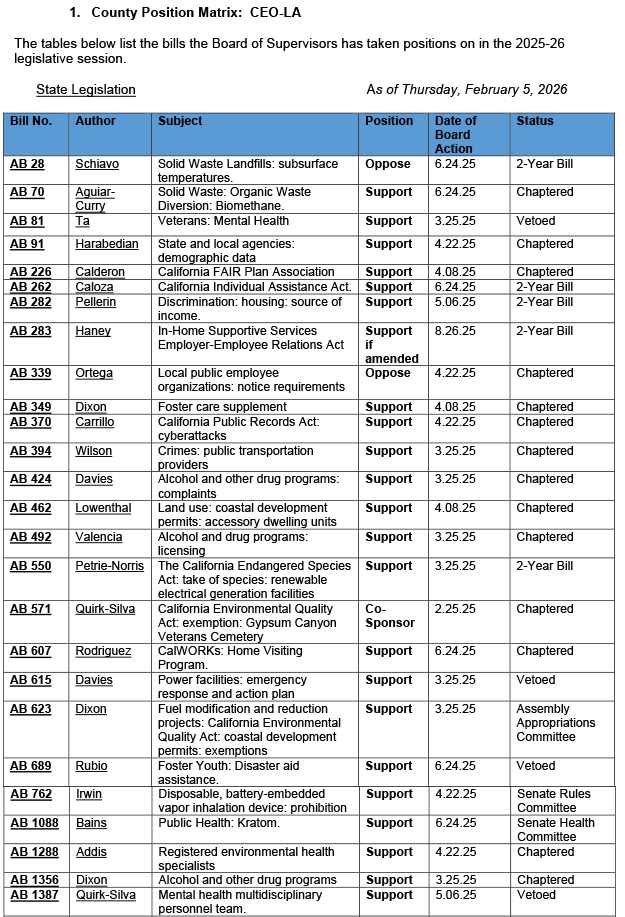
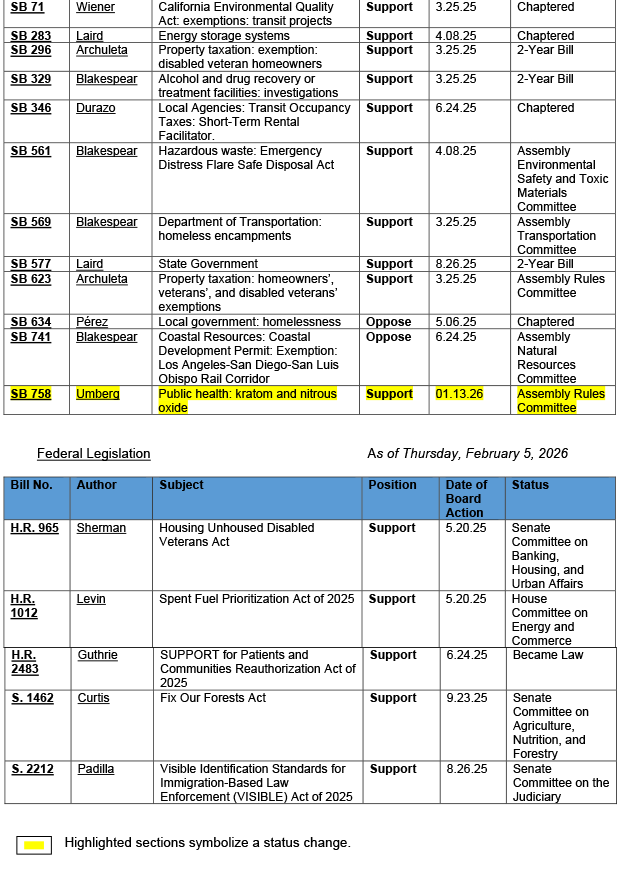
SB 758 (Umberg), highlighted in a previous update, which addresses the public health and safety concerns surrounding the misuse of nitrous oxide, continues to move forward. This bill specifically prohibits a tobacco retailer, as defined under state law, from selling nitrous oxide at a retail location. The bill has successfully passed through its initial committee hearings in the Senate and is currently awaiting assignment to a relevant policy committee within the Assembly. We will continue coordinating with the author, co-sponsors, and various stakeholders to support the bill's advancement in its second house.
This week saw the introduction of two additional critical bills sponsored by the County, both carried by Senator Blakespear.
SB 936 directly addresses the retail availability of nitrous oxide tanks. This measure would prohibit the public retail sale of nitrous oxide tanks, with targeted, limited exemptions maintained for legitimate uses, including medical, dental, culinary, and specified automotive applications. This prohibition aims to significantly curtail the non-medical recreational use of the substance, which poses a serious public health risk. The County's efforts on this bill are bolstered by key coalition partners, the Rural Counties Representatives of California (RCRC) and the National Stewardship Action Council. The bill will be eligible for its first committee hearing after March 1 and is anticipated to be referred to the Senate Public Safety Committee for its initial policy review.
Blakespear’s second County sponsored bill, addressing the critical statewide need for housing, particularly for vulnerable populations, SB 967 aims to incentivize local government support for transitional housing development to prevent and address homelessness. The bill allows cities and counties to receive credit towards their Regional Housing Needs Allocation (RHNA) acutely low-income requirements for transitional housing units. The County is collaborating on this important policy measure with San Diego County. SB 967 will be eligible to be heard in a policy committee after March 6 and is most likely to be referred to the Senate Housing Committee. RHNA legislation is extremely challenging to advance through the legislature and we have begun coalition building and outreach to stakeholders, the Department of Housing and Community Development, and committee staff to make the process as smooth as possible.
We will provide further updates as these, and other County-sponsored measures advance through the legislative process.
Assembly Health Informational Hearing on H.R. 1 Impacts
The Assembly Health Committee held an informational hearing last Tuesday, entitled, “The Devastating Impact of Federal Disinvestment on California's Health Care System.” Chaired by Assemblymember Mia Bonta (D-Oakland) and attended by Assemblymembers Dawn Addis (D-San Luis Obispo), Patrick Ahrens (D-Cupertino), Jessica Caloza (D-Los Angeles), Juan Carillo (D-Palmdale), Pilar Schiavo (D-Santa Clara), and Esmeralda Soria (D-Merced), the hearing included three panels and highlighted the impacts of H.R. 1 including the potential loss of health insurance for up to 2 million Californians. Background materials for the hearing may be found at the end of this section.
Overview. The first panel, “Overview: A High-Stakes Moment for Health Care in California,” included Dr. Sandra Hernandez, CEO, California Health Care Foundation; Jason Constantouros, Principal Fiscal & Policy Analyst, Legislative Analyst’s Office; and Chaz Franklin, Colusa County Resident, Retired Teacher, Veteran, and Covered California enrollee.
Hernandez reviewed the potential devastating nature of the cuts but underscored that California can limit the damage by investing in the system and increasing efficiency, noting that up to 25 cents on every healthcare dollar is wasted on inefficient administration.
Constantouros reported that the LAO is still reviewing and determining the impacts of H.R. 1 and flagged three key areas for legislative consideration:
-
Managed Care Organization (MCO) Tax: Whether to allow for a large, proportionate tax on health plans to preserve Medi-Cal funding, which would increase costs to private health insurance consumers.
-
Hospital Fee: How to adjust the fee on private hospitals, by maximizing it to support Medi-Cal or reducing it to limit the cost to certain hospitals.
-
Eligibility Exemptions: Whether to adopt more exemptions to new eligibility rules allowed under H.R. 1, preserving coverage for a few hundred thousand people but potentially with added administrative complexity.
The legislature lacks the fiscal capacity to completely backfill federal healthcare reductions. While county programs could be reinstated, this would require significant fiscal restructuring. H.R. 1 bans many people who exit from Medi-Cal from accessing subsidies in Covered California.
Franklin, a Covered California enrollee, shared his experience with the financial strain of being a retiree facing escalating healthcare costs. Without subsidies, his health care costs climbed from about $540 per month to nearly $4,000.
State Level Impacts and Responses. The second panel discussion brought together state and county representatives to examine the implications of H.R. 1 on California's healthcare landscape. Panelists, including Michelle Baass, Tyler Sadwith, and Yingjia Huang from the California Department of Health Care Services (DHCS), Jessica Altman of Covered California, Michelle Gibbons of the County Health Executives Association of California, Martha Santana-Chin from LA Care Health Plan, and Hannah Orbach-Mandel of the California Budget and Policy Center, collectively voiced significant concern, particularly regarding the new work requirements.
5 million of the 14 million of the enrollees in the program will be expected to demonstrate a set number of working hours or other qualifying activities. DHCS anticipates that these requirements will result in up to 1.4 million members losing coverage when the program is fully implemented. DHCS staff detailed their efforts to automate verification of exemptions and work requirements in order to limit the number of enrollees who must provide manual verification of eligibility.
Altman emphasized the increase in uninsured people and a dramatic increase in premiums for those who can maintain their insurance. She noted that in 2025, Covered California boasted 2 million enrollees, and the state saw a record low 6.4% uninsured rate. Without subsidies, she estimates that enrollees will see an average of 97% increase in their healthcare premiums. Gibbons underscored the major impacts of the new policy change to counties and their indigent care programs. Prior to the Affordable Care Act (ACA), counties served a significantly larger indigent population with healthcare of last resort. The change in policy is expected to be a double whammy for counties, increasing both indigent care costs and administrative costs.
Panelists generally acknowledged the major rollback that the change in policy represents to the current healthcare safety net. While coverage for all has been the policy goal in California in recent memory, panelists acknowledged that it was not achievable in the short term under H.R. 1. Reducing administrative complexity and utilizing technological administrative efficiencies were offered as tools to help address the policy and fiscal constraints of the moment. There was a widespread acknowledgement that major pressure would be placed on county services while revenues to pay for them would be severely constrained. Orbach-Mandel raised some ideas for revenue generation to help backfill some of the cuts to the healthcare safety net including the closing of certain corporate tax loopholes.
Community Perspectives. The final panel “Community Perspectives” included panelists: Dr. Dolly Goel, MD, Chief Clinical Managed Care Officer, Santa Clara Valley Health; Doug Archer, President and CEO, Dignity Health Mark Twain Medical Center, San Andreas; Robert Gamboa, MPP, Associate Director of Public Policy, Los Angeles LGBT Center; Veronica Palacios, SEIU Local 1021, Chapter Vice President for Alameda Health Systems; Dr. Raul Ayala, MD, Ambulatory Medical Officer and Designated Institutional Official, Graduate Medical Education, Adventist Health, Hanford; and Stacy Cross, President and CEO, Planned Parenthood Mar Monte.
The panel underscored the precarious state of hospital services, particularly in rural areas. Panelists highlighted the high dependency on Medi-Cal funding in these settings. Archer discussed specific local strategies to combat the healthcare worker shortage in rural communities. Cross reinforced this need, calling for increased funding and student loan repayment programs to incentivize healthcare professionals to relocate to rural areas.
The panelists stressed the severe consequences of the proposed H.R. 1 cuts, noting they would intensify pressure on healthcare services and restrict access, even for those with private insurance. This concern echoed prior healthcare policy discussions regarding the high cost of relying on emergency services instead of investing in more affordable, continuous preventative and primary care.
Background Materials
Agenda
Background paper
DHCS - Medi-Cal Impact Presentation
CA Budget & Policy Center - How Corporations Reduce Their California Tax Bill
CA Budget & Policy Center - Closing the Largest Corporate Tax Loophole in California
CA Budget & Policy Center - Impact of Federal Funding Cuts
CHCF - The 25% Problem
County Indigent Care Fact Sheet
LAO - Medi-Cal in Changing Fiscal and Policy Landscape
Sandra Hernandez - California Health Care Foundation Slides
Covered California - Impact Update
Planned Parenthood - Defund Impact Fact Sheet
Assembly Insurance FAIR Plan Hearing
The Assembly Insurance Committee’s oversight hearing on January 28, painted a picture of a FAIR Plan that has quietly transformed from a narrow safety net into one of the largest property insurers in California. Chair Lisa Calderon (D-Whittier) opened by noting that the Plan no longer functions as an “insurer of last resort” but as the default option for hundreds of thousands of homeowners who have been pushed out of the voluntary market. FAIR Plan President Victoria Roach reported that the program now carries more than 668,000 policies and roughly $724 billion in exposure, a scale that would have been unthinkable only a few years ago. Growth has slowed somewhat, she said, largely because the wave of bulk non-renewals from admitted insurers has eased, but the overall trajectory remains upward. The central tension of the hearing was whether the FAIR Plan is stabilizing the market or inadvertently competing with it.
Roach acknowledged that in many low-and moderate-risk communities, consumers can now buy a FAIR Plan fire policy paired with a “difference-in-conditions” wraparound policy for less than half the price of a traditional admitted-market product. Mortgage companies and realtors, she said, are sometimes steering buyers toward the FAIR Plan precisely because it is cheaper. That dynamic, echoed by industry witnesses, has turned the FAIR Plan into a de facto competitor to private insurers rather than a temporary bridge. Efforts to “depopulate” the program through the state’s clearinghouse have been limited; only about fifteen insurers are actively using the system, and brokers can effectively block transfers if they are not appointed with the receiving carrier. The result is that many policyholders remain in the FAIR Plan for years, even when alternatives exist.
Financial sustainability was another dominant theme. Roach explained that for decades the FAIR Plan was barred from reflecting the true cost of reinsurance in its rates, leaving premiums below actuarially sound levels. A pending 35.8% rate filing would help, but even that would not fully close the gap. Without adequate rates, she warned, the Plan cannot responsibly expand coverage limits or absorb the next major disaster. After the 2025 fires the FAIR Plan was forced to assess the admitted market $1 billion to pay claims, a reminder that instability in the Plan ultimately ripples back to all policyholders.
The committee also pressed the FAIR Plan on claims handling, particularly for smoke damage. Roach described new guidance clarifying that cleaning alone is not covered, but items that cannot be deodorized must be replaced, and specialized work, such as duct or piano cleaning, is paid for. To manage the surge after the fires, the Plan added more than 200 claims examiners and restructured oversight to improve consistency. Looking ahead, the FAIR Plan is also facing a potential mandate to offer a full homeowners policy, a change Roach said could require a 30-50% increase in the organization’s budget and an entirely new operational infrastructure.
While the hearing remained statewide in focus, the issues raised, price-driven migration to the FAIR Plan, limits on depopulation through brokers, and the challenge of insuring higher-value properties, mirror conditions seen in coastal and suburban markets such as Orange County. Members left with the unresolved question Chair Calderon posed at the outset: whether California can restore a healthy admitted market without turning the FAIR Plan into the permanent insurer for vast swaths of the state.
Background Materials
Agenda- 01/28/26
Background- 01/28/26
FAIR Plan Slide Deck
Upcoming Hearings
Agendas are typically posted on the committee websites in the Assembly and Senate a few days prior to the hearings. To view hearings after they take place, you may access them in the Assembly or Senate media archives where they are generally available within a few hours of committee adjournment.
Wednesday, February 11, 2026, 9:00 a.m.
Senate Budget and Fiscal Review
1021 O Street, Room 1200
Informational Hearing: The Impacts of H.R. 1 (Public Law No. 119-21) on California's Safety Net
Grant Opportunities
Below is a list of the latest grant opportunities released by the state. All opportunities for local jurisdictions may be found here.
Application deadline: 3/2/26 15:00
Title: Farmworkers Advancement Program (FAP) Grant for Program Year 2025-26 (PY 25-26)
State Agency / Department: Employment Development Department
Match Funding? No
Estimated Total Funding: $5,000,000
Funding Method: Reimbursement(s)
Governor’s Press Releases
Below is a list of the governor’s press releases beginning January 22.
February 4: Governor Newsom signs Executive Order to assist Imperial County’s recovery following 2025 August Monsoon Storms
February 4: Governor Newsom on Republicans losing challenge to new Congressional maps at U.S. Supreme Court
February 4: Governor Newsom announces new funding through LA Rises to support youth mental health for LA firestorm survivors
February 3: Governor Newsom announces major high-speed rail milestone, track installation to begin
February 3: Governor Newsom’s statewide Jobs First investments created more than 61,000 jobs, trained more than 142,000 workers in 2025
February 2: Governor Newsom proposes improving access to menopause health care
February 2: California closes in on completing the world’s largest wildlife crossing
February 2: Governor Newsom announces judicial appointments 2.2.2026
February 2: Delivering results at the border: Governor Newsom announces record $506 million in illicit fentanyl seized since launching counterdrug operations
February 2: California hosts Super Bowl LX and other upcoming events, setting gold standard for sports and bringing $18 billion+ in economic benefits
February 1: Governor Newsom proclaims CalEITC Awareness Week
January 30: California-Mexico military partnership strengthens with visit to the Golden State
January 30: Governor Newsom declares Fred Korematsu Day 2026
January 29: Governor Newsom announces appointments 1.29.2026
January 29: Governor Newsom, Sacramento State, and Meta advance major redevelopment in downtown Sacramento
January 29: Governor Newsom, Sacramento State, and Meta advance major redevelopment in downtown Sacramento to create affordable housing for students
January 28: Governor Newsom announces appointments 1.28.2026
January 28: Governor Newsom deploys incident management resources and personnel to Tennessee amid deadly winter storm
|