|
Prepared by Precision Advocacy
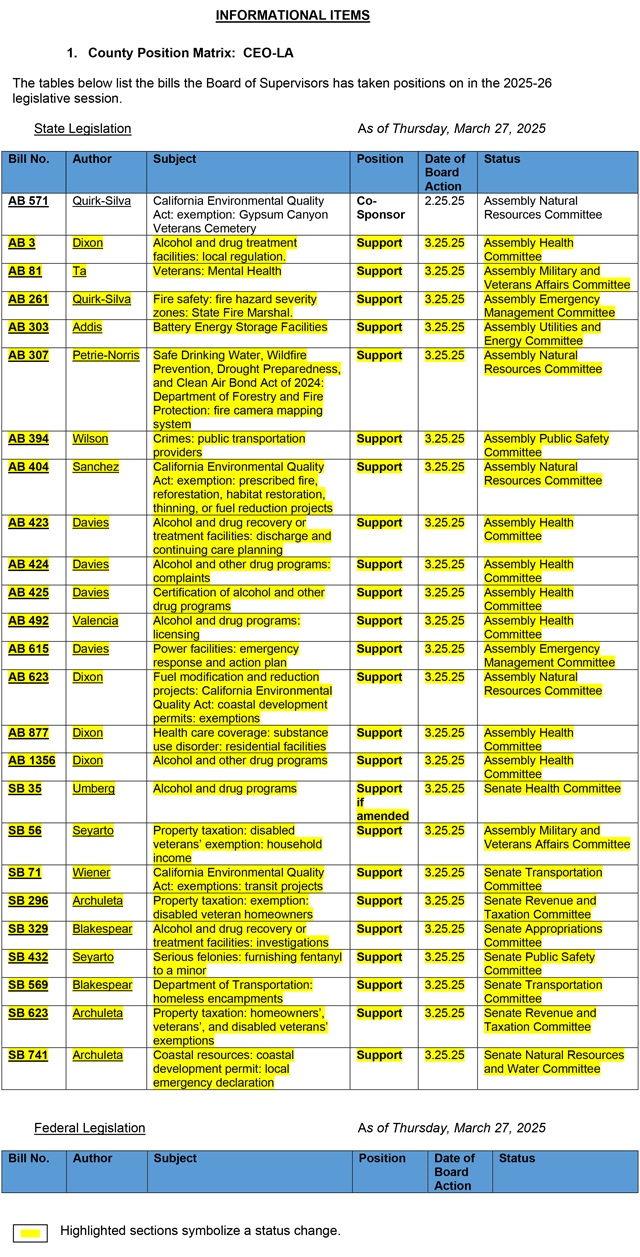
Orange County’s sponsored bill AB 571 (Quirk-Silva), which would provide a CEQA exemption for the completion of the Gypsum Canyon Veterans Cemetery, is set for hearing in the Assembly Natural Resources Committee on April 7. After it passes Natural Resources, it will then head to the Assembly Military and Veterans Affairs Committee.
Assembly Health Hearing on Proposition 1
Earlier this month, the Assembly Health Committee held an informational hearing to discuss Proposition 1 implementation. Overarching themes from the committee hearing include the following:
- Equity in funding remains a concern. Historical service levels should not dictate future funding distribution.
- Large counties are better positioned to apply for funding quickly, leaving smaller, rural counties at a disadvantage.
- Cities are strained when counties fail to establish behavioral health facilities, partly due to resistance from residents opposed to facility siting.
- More coordination is needed to ensure housing and behavioral health infrastructure align effectively.
- Some overfunded counties have facilities that don’t serve Medi-Cal populations, requiring careful monitoring of how resources are used.
- A statewide transparency report will track behavioral health outcomes, ensuring public accountability.
- California’s behavioral health data systems are outdated, and the Behavioral Health Services Act (BHSA) is driving a major modernization effort to streamline reporting and improve data accuracy.
- Loss of dedicated innovation funding under BHSA is a major concern.
- Counties and providers must now choose between funding traditional services and investing in new models.
The County Behavioral Health Directors Association (CBHDA) expressed concerns about the revisions to the BHSA, including that:
- Counties are receiving less flexible funding and must redirect funds to housing and high-cost treatment programs.
- The association is anticipating that outpatient and crisis services will shrink, creating concerns about access to care.
- State oversight is increasing, adding new administrative burdens and accountability measures.
- Counties now compete with private entities for infrastructure funding, making it harder to secure resources.
- Substance Use Disorder (SUD) services remain critically underfunded, despite new legal requirements for treatment expansion.
The Legislative Analyst’s Office (LAO) presented findings from their report on how well Behavioral Health Continuum Infrastructure Program (BHCIP) grants have been allocated so far. Their findings indicate that Over 50% of BHCIP-funded projects are expected to serve Medi-Cal enrollees, $540 million of the $1.7 billion in past grants was awarded to projects serving children and youth, and data on whether other priority populations (such as justice-involved individuals) are benefiting remains unclear, raising questions for future legislative oversight.
Some regions received more funding than expected, while others received less than projected based on need. The Department of Health Care Service’s (DHCS’) regional funding approach is based on historical service provision, meaning funding may be reinforcing past infrastructure inequities rather than addressing actual need. Finally, adult inpatient mental health bed shortages were not properly addressed in that most new beds were added in regions with the least need, and no beds were awarded to the region with the highest need, the Southern San Joaquin Valley (Fresno, Inyo, Kern, Kings, Tulare counties).
DHCS favors “launch-ready” projects, meaning applicants with pre-existing plans are given priority. While this helps ensure funds are spent quickly, it may disadvantage small or under-resourced applicants that lack the ability to develop a “shovel-ready” project in advance. The focus on launch-ready projects could limit BHCIP’s ability to build more complex or hard-to-site facilities, which may be most needed but take longer to develop.
Susan Holt, Director of Fresno County Behavioral Health, stated that demand for BHCIP funding far exceeded availability, leading to a highly competitive grant process. Counties struggled to secure funding, despite demonstrating urgent need. Even when beds exist, counties struggle to place patients with complex medical, substance use, or justice-involved histories, as private facilities often decline high-need cases. Policy changes from Proposition 1, SB 43, and Proposition 36 have significantly increased the burden on counties to provide integrated substance use disorder (SUD) and mental health treatment. Counties need additional funding to expand facilities that treat both mental health and SUD within the same location.
Holt recommended that future BHCIP allocations prioritize funding by level of care and region to address highest-need areas; expand facilities designed for hard-to-place populations, including individuals with serious mental illness, co-occurring disorders, and justice-involved histories; improve data collection on facility capacity to ensure funding aligns with real needs; and address regional inequities - counties in rural Northern California are often lumped in with Sacramento, distorting funding priorities.
Marlies Perez, Community Services Division Chief at DHCS provided a snapshot of challenges in the application process:
-
Many small counties did not apply due to:
- Lack of staff/resources to complete applications.
- Requirement that facilities must provide behavioral health services for 30 years.
- Lack of suitable property for facilities (due to land costs, zoning, and environmental concerns).
- 18 small counties did not receive funding from Rounds 3-5, but 16 of them did not apply.
- Encouragingly, 7 of these counties have now applied for the first round of Proposition 1 bond funding.
Project Progress and Completion Timeline:
- 19 BHCIP-funded projects were completed in 2024 (15% of all projects).
- 47 projects are expected to be completed in 2025, 48 in 2026, and the remaining 16 in 2027.
- 7 facilities are already open and providing services.
- Some projects are still awaiting final licensing, certification, or furnishing before opening.
Implementation of Proposition 1 Bond Funding:
-
First round of bond funding ($3.3 billion) applications closed in December 2024.
- 294 applications were submitted, requesting a total of $8.8 billion, far exceeding available funds.
- Award announcements are anticipated in May 2025.
- Second round of bond funding ($1.1 billion) will open in May 2025, with awards expected in spring 2026.
UC San Francisco Report on Behavioral Health and Homelessness
A new report from the UC San Francisco (UCSF) Benioff Homelessness and Housing Initiative, titled “Behavioral Health and Homelessness: findings from the California Statewide Study of People Experiencing Homelessness,” was released last week. The report delves into the experiences of individuals facing behavioral health needs and homelessness. It presents crucial data and background information on this complex issue, which continues to challenge policymakers at all government levels. Additionally, the report offers recommendations for state and local policymakers based on the research findings.
Overview of the Study. The California Statewide Study of People Experiencing Homelessness (CASPEH) is the largest representative study of homelessness in the United States since the mid-1990s. Researchers at the UCSF Benioff Homelessness and Housing Initiative (BHHI) recruited a representative sample of adults experiencing homelessness in California; all participants (3,200) completed an administered questionnaire. A subset (365) participated in one of seven in-depth interviews to provide context. The findings of the research have frequently been covered in legislative committee hearings and have played an influential role in the state’s policy discussions on homelessness.
UCSF BHHI has released a series of reports, including a comprehensive report, a report on intimate partner violence and homelessness, a report on racial equity and Black people experiencing homelessness, a report on older adults experiencing homelessness, and topic briefs on pregnancy and homelessness, and unsheltered homelessness as well as tools to support responses to encampments.
BHHI trained interviewers used standard research methods and questions around behavioral health. Because people experiencing homelessness may have limited access to healthcare, researchers chose questions that asked people to report their mental health symptoms, rather than diagnoses. The report defined a specific category “complex behavioral health needs,” those whose behavioral health required a higher level of care and support.
A complex behavioral need was defined as one or more of the following:
- Regular (three times per week or more) illicit drug use (methamphetamines, non-prescribed opioids, or cocaine);
- Heavy episodic alcohol use (six or more drinks in one sitting, at least once a week);
- Current hallucinations (defined as a self-report of hallucinations in the past 30 days); and/or
- Psychiatric hospitalization within the last six months.
Key Findings of the Study
- 32% of adults experiencing homelessness reported regular methamphetamine use, 11% regular opioid use, and 3% regular cocaine use. Among those who reported regular illicit drug use, 91% reported regular methamphetamine use.
- Of current regular opioid users, 80% reported concurrent regular use of methamphetamine.
- White people younger than 50 were the most likely to report regular illicit drug use (52%) and Black people under 50 were the least likely (20%).
- Among the overall population of adults experiencing homelessness in California, 9% reported regular heavy episodic drinking, defined as six or more drinks on one occasion at least once a week.
- Among people who used drugs regularly, 42% reported that they began to use regularly after the first time they experienced homelessness.
- Of those with regular drug use or current heavy alcohol use, 28% reported that during this episode of homelessness, they wanted substance use treatment but were unable to access it.
- 13% of adults experiencing homelessness reported that they currently experience hallucinations.
- 5% of adults experiencing homelessness reported having a recent inpatient psychiatric hospitalization.
- Over half of participants (51%) reported current symptoms of anxiety severe enough to interfere with some degree of functioning, and nearly half (48%) reported severe symptoms of depression.
- 75% of regular users of cocaine and 68%s of regular opioid users reported severe anxiety.
- 71% of regular opioid users reported severe depressive symptoms.
- 48% of adults experiencing homelessness reported having at least one complex behavioral health need.
- People with complex behavioral health needs were over twice as likely (27% versus 12%) as those without to have entered their current experience of homelessness directly from an institutional setting (jail, prison, or inpatient behavioral health treatment setting).
- People with complex behavioral health needs were more likely to report unsheltered homelessness (89%) than those without complex behavioral health needs (68%).
- Those with complex behavioral health needs reported higher rates of jail stays during their episode of homelessness (37%) than those without (22%). They were more likely to report having been “roughed up” by the police (57% versus 38%) or having experienced a forced displacement in which they lost their belongings (49% versus 23%).
- People with complex behavioral needs reported higher rates of having experienced violence during their episode of homelessness.
- People with complex behavioral health needs, like those without, most frequently reported cost as a major barrier to housing (89% of those with complex needs and 90% of those without).
Homelessness Prevention Recommendations. Because of the high proportion of people with complex behavioral needs entering homelessness from institutional settings, researchers recommend that:
- Policymakers and program leaders should ensure that residential treatment programs, youth correctional facilities, and jails have strong relationships with Continuums of Care and coordinated entry processes to ensure that people can access appropriate services and housing upon release.
- Policymakers should ensure that housing support is a fully integrated and required component of prison re-entry support services.
- Policymakers and program leaders should ensure access to services funded through Behavioral Health Community-Based Organized Networks of Equitable Care and Treatment (commonly called BH-CONNECT) to stabilize those leaving institutional settings such as prison, jail, and psychiatric hospitals through a range of supports, including transitional rental assistance. To do so, they should build strong connections between Continuums of Care and housing supports.
- Administrators of justice programs should maximize use of CalAIM’s Justice-Involved Reentry Initiative for those exiting prisons and jails. The initiative provides an array of Medi-Cal funded services up to 90 days prior to release, including clinical behavioral health services, medications (including Medication Assisted Therapy for opioid use disorder), and reentry care management services.
Homelessness Response System Recommendations. Because of the high burden of mental health and substance use disorders among people experiencing homelessness, the researchers recommend:
- Continuum of Care leaders, in collaboration with health experts, policymakers, people with lived experience, and other community leaders, should redesign coordinated entry systems to match clients to the appropriate services or service setting rather than simple prioritization. This redesign may require introducing clinical evaluation at certain junctures to ensure the appropriate treatment is identified for the client.
- Policymakers and program leaders should integrate methamphetamine treatment into programs that support people who experience homelessness, including contingency management and other promising strategies.
- Policymakers should invest in targeted responses for people experiencing homelessness who have an alcohol use disorder, including sobering centers and managed alcohol programs. They should expand access and reduce barriers to evidence-based medication treatment including naltrexone.
- Policymakers and program leaders should design and fund programs to respond to the high prevalence of anxiety and depression. Such programs would include trauma-informed design, connection to outpatient behavioral health supports, and training staff on how to effectively respond to clients who are experiencing severe anxiety or depression.
- Continuum of Care leadership should prioritize health and homelessness systems integration, with a focus on behavioral health integration.
- Policymakers should invest in emergency response services for people experiencing behavioral health crises that do not require law enforcement.
- Jurisdictions should limit and clearly define the role of law enforcement in any engagement with people experiencing homelessness, particularly those who live in unsheltered circumstances.
- To enhance health and safety and increase opportunities for engagement between case managers, mental health providers, and people experiencing unsheltered homelessness, policymakers should choose strategies of progressive intensive engagement, rather than forced displacement, which separates people with complex behavioral needs from the services they need.
- Continuum of Care leadership should look at using state-level flexibility created through 1115 waivers and other mechanisms to integrate Medi-Cal models of behavioral health support, particularly peer navigation and other peer support services, which can provide more support than traditionally funded outreach.
- Community leaders and policymakers should work together to fully implement Full Service Partnership (FSP) models that offer a range of supports, including Assertive Community Treatment (ACT) and other recovery supports. An FSP is a comprehensive mental health program that aims to provide a wide range of services to individuals with severe mental illness, often using a "whatever it takes" approach. ACT is a specific, evidence-based model within an FSP program.
Substance Use Recommendations. Because of the high rates of methamphetamine use and variation in use patterns across racial and ethnic groups of people experiencing homelessness, researchers recommend:
- Policymakers should invest in low-barrier, evidence-based substance use treatment programs, with a focus on treatment for methamphetamine use and polysubstance use of methamphetamine and opioids. These programs should be available on demand at any point in a person’s housing journey (i.e., while housed, experiencing unsheltered homelessness, or in shelter).
- Program leaders should incorporate culturally specific models for treatment, involving community leaders who can assist people in achieving their recovery goals.
- Medi-Cal is available to cover traditional health care practices for substance use disorders. This coverage is particularly important for Black and Native American/Indigenous populations and should be used whenever available. Continuum of Care leaders should partner with these communities to ensure that culturally responsive supports for behavioral health are available whenever possible.
Specialized Care Models. The report talks specifically about those with complex behavioral needs, and by its definition, 48% of adults experiencing homelessness in California met criteria for having a complex behavioral health need. It offers two alternative care strategies that could be considered for this population.
- Assertive Community Treatment (ACT) is a community-based approach to mental health care that provides intensive, individualized support to people with severe mental illness. In the ACT model, a multidisciplinary team delivers services in community settings (including in client's homes) to help them maintain stability and live independently in the community. Services, available 24/7, include things like psychiatric treatment, medication management, housing assistance, and vocational training. Typically, teams provide services at least 4 times a week and actively engage clients. The team typically includes psychiatrists, psychologists, nurses, social workers, case managers, vocational support, and others with a low client-staff ratio.
- Pathways to Housing is a program model for people who experience chronic homelessness who have severe mental illness with or without co-occurring substance use disorders. Adapted from the ACT model, Pathways provides subsidized housing with assertive wrap around services, similar to that offered by ACT teams for this population. While teams provided active outreach and assertive engagement, clients did not have to remain sober or take mental health medications to qualify. The success of this model led to the development of Permanent Supportive Housing on a Housing First basis.
Studies have found that over 85% of those assigned to ACT or Intensive Case Management remained housed at the study conclusion, far better than those in usual care.
Conclusion. Although people experiencing homelessness have a high prevalence of substance use and mental health conditions, the relationship between homelessness and behavioral health challenges is bidirectional. This finding was underscored in a webinar accompanying the release of the report, which included Margot Kushel, MD, Claudine Sipili, Darrell Steinberg, JD, and Stephanie Welch, MSW.
One of the panelists, Claudine Sipili, summarized her feelings about the report and her own lived experience saying, “We need to stop criminalizing people for what they are going through right now. Their lives are already so difficult and we don’t need to add to that.”
Panelists talked about the complexity of delivering specialized mental health services to the homeless population. Several panelists highlighted one of the report’s recommendations to ensure that people coming out of institutional settings have access to housing and services upon release, noting that it was a clear and obvious place to prevent homelessness. Ms. Welch highlighted the ability to use MHSA dollars for substance use disorders. All expressed concern over potential cuts to federal resources that support programs for those experiencing homelessness.
Drawing a direct connection between housing and mental health, the report concluded “when people have the safety and security of home, they are more likely to accept treatment, and it is easier to provide that treatment.” With half of adults having indications of complex behavioral health needs, the report findings suggest the need for additional support and services in addition to affordable housing.
As with similar studies, we anticipate additional discussion of this study as it relates to state policy and budget decisions.
Upcoming Hearings
Agendas are typically posted on the committee websites in the Assembly and Senate a few days prior to the hearings. To view hearings after they take place, you may access them in the Assembly or Senate media archives where they are generally available within a few hours of committee adjournment.
Tuesday, April 01, 2025, 8:00 a.m.
Assembly Budget Subcommittee No. 5 on State Administration
State Capitol, Room 447
Item No. Description
8955 Department of Veterans Affairs
1115 Department of Cannabis Control
1110 Department of Consumer Affairs Regulatory Boards
1111 Department of Consumer Affairs
8820 Commission on Status of Women and Girls
8260 California Arts Council
Wednesday, April 02, 2025, 9:30 a.m.
Assembly Budget Subcommittee No. 4 on Climate Crisis, Resources, Energy, and Transportation
State Capitol, Room 447
Item No. Description
Various Prop. 4 - Biodiversity and Nature-Based Solutions
Various Prop. 4 - Climate Smart Agriculture Spending Plan
3560 State Lands Commission
3600 Department of Fish and Wildlife
3780 Native American Heritage Commission
3720 California Coastal Commission
0509 Governor's Office of Business and Economic Development
8570 Department of Food and Agriculture
3100 Exposition Park
Thursday, April 03, 2025, 9:30 a.m. (Or upon adjournment of Session)
Senate Budget and Fiscal Review Subcommittee No. 1 on Education
1021 O Street, Room 2100 Item Description
6100 Department of Education
- Universal School Meals Update
- Kitchen Infrastructure and Training Grants
- Expanded Learning Opportunities Program
- Systems of Support Proposals
- Learning Recovery Block Grant
- Special Education
- Instructional Quality Commission
- Literacy
Thursday, April 03, 2025, 9:30 a.m. (Or upon adjournment of Session)
Senate Budget and Fiscal Review Subcommittee No. 2 on Resources, Environmental Protection, and Energy
1021 O Street, Room 2200
Item Description
3560 State Lands Commission
3780 Native American Heritage Commission
3790 Department of Parks and Recreation
3860 Department of Water Resources
3940 State Water Resources Control Board
Thursday, April 03, 2025, 9:30 a.m. (Or upon adjournment of Session)
Senate Budget and Fiscal Review Subcommittee No. 3 on Health and Human Services
1021 O Street, Room 1200
Item Description
5180 Department of Social Services
- Child Welfare and Foster Care
- Child Care and Development
Thursday, April 03, 2025, 9:30 a.m. (Or upon adjournment of Session)
Senate Budget and Fiscal Review Subcommittee No. 4 on State Administration and General Government
State Capitol, Room 113
Item Description
Middle Mile Oversight
0820 Department of Justice
1703 Privacy Protection Agency
2320 Department of Real Estate
7502 Department of Technology
7760 Department of General Services
Thursday, April 03, 2025, 9:30 a.m. (Or upon adjournment of Session)
Senate Budget and Fiscal Review Subcommittee No. 5 on Corrections, Public Safety, Judiciary, Labor, and Transportation
State Capitol, Room 112
Item Description
0559 Labor and Workforce Development Agency
7100 Employment Development Department
7120 California Workforce Development Board
7300 Agricultural Labor Relations Board
7320 Public Employment Relations Board
7350 Department of Industrial Relations
7501 Department of Human Resources
7900 Public Employees' Retirement System
7920 State Teachers' Retirement System
Governor’s Press Releases
Below is a list of the governor’s press releases beginning March 19.
-
Emily Warren, of Orinda, has been appointed Deputy Secretary for Innovative Mobility Solutions at the California State Transportation Agency
-
Eva Spiegel, of Davis, has been appointed Deputy Director of Communications at the California Department of Motor Vehicles
-
Suzy Shuster, of Beverly Hills, has been appointed to the California Film Commission
- Thomas “Tom” Huntington, of San Francisco, has been appointed to the State Park and Recreation Commission
|
|
Prepared by Townsend Public Affairs
LEGISLATIVE BRANCH ACTIVITY
House and Senate Republicans Continue to Work on Budget Resolution Differences
House and Senate Republican leaders are working to adopt a compromise budget resolution before the two-week Easter Break recess. They are addressing disagreements on how to best implement President Trump’s agenda and formally initiate the budget reconciliation process. Republicans need to reach consensus on the overall size of the budget package, which tax elements to include, and whether or how to offset the costs.
The House resolution proposes $4.5 trillion in tax cuts, $2 trillion in mandatory spending reductions, and a $4 trillion increase in the debt ceiling. In contrast, the Senate’s version focuses on $175 billion for immigration and border enforcement, $150 billion in military spending increases, and does not extend the 2017 Trump tax cuts.
In a statement, House Speaker Mike Johnson and other House committee chairs insisted that the Senate move forward with their budget resolution. Senate Republicans argue the House’s resolution does not allow for the permanent extension of President Trump’s 2017 tax cuts, a non-negotiable for GOP senators. President Trump has also said he wants permanency rather than a simple extension.
Budget Reconciliation is a procedural tool allowing expedited consideration of certain budget/spending related bills. Reconciliation can only be “unlocked” when one party controls the House, Senate, and White House. It works by bypassing cloture and limiting debate in the Senate, reducing the threshold for passage to 51 senators. It requires the House and Senate to pass identical budget resolutions with no extraneous policy riders.
FY2026 Appropriations and Earmarks Update
Following enactment of a continuing resolution to fund the federal government through the remainder of Fiscal Year 2025 the focus in Washington, DC has turned to Fiscal Year 2026. Without solidified topline numbers, either from a Presidential Budget Request or Budget Resolution, the FY26 Appropriations process has not begun in earnest.
While Member offices have opened their internal forms, the appropriations subcommittees have yet to release guidance on community projects funding and program and language requests for FY26. Internal conversations with a Democratic Staffer and a Subcommittee Clerk indicate the House Chairman Tom Cole intends to release guidance next week.
Based on prior years and the amount of time that has passed since the House and Senate Budget resolutions (and FY25 Continuing Resolution) were brought to the floor, the Committees are unlikely to release guidance next week, but participating agencies should be prepared for guidance to come out at any time.
CBO Releases X Date Estimate of August or September on Debt Limit
The Congressional Budget Office estimated today that if the debt limit remains unchanged, the government’s ability to borrow using extraordinary measures will probably be exhausted in August or September 2025, this is commonly referred to as the “X Date.”
The Debt Limit (sometimes called the Debt Ceiling) was initially reached on January 1st, 2025, when its suspension from June 2023 expired. The Department of the Treasury (Treasury) was able to forgo immediate consequences due to the scheduled redemption of securities held by a Medicare trust fund but ultimately began “extraordinary measures” shortly thereafter on January 21st.
If Congress does not act to suspend or raise the Debt Limit before the X Date, the United States Treasury would not be authorized to issue additional debt other than to replace maturing or redeemed securities. That restriction would ultimately lead to delayed payments for some government activities, a default on the government’s debt obligations, or both. There would be severe economic consequences both domestically and abroad if the government found itself in that position.
At a White House meeting on March 25th with GOP leadership in both chambers, President Trump reiterated his desire to see a debt limit increase included in the reconciliation package being worked on in both Chambers. House GOP leaders are coalescing around the plan, while some Republican Senators remain apprehensive. If Senate Republicans do not clear the increase in the package, a re-approach would likely mean policy concessions to Senate Democrats to garner their support for an increase.
Rep. Issa’s Bill Limiting the Jurisdiction of U.S. District Court Judges Providing Injunctive Relief Reported Out of Committee
Rep. Darrell Issa (CA-48) introduced H.R. 1526, the “No Rouge Rulings Act” (NORRA) following the preliminary injunction against the Trump Administration’s use of the Alien Enemies Act to deport alleged members of Tren De Agua gang to El Salvador for detention.
NORRA seeks to limit injunctive relief ordered by a U.S. District Court Judge to the named parties in the case. Using the example of federal workers, only workers named in the case, or who are pre-registered members of the class party to the case would receive any injunctive relief (such as temporary return offers). Therefore, the Bill would limit the impacts of District Court injunctions on the Administration’s executive orders, requiring a nationwide injunction to come from the U.S. Court of Appeals.
It is likely Speaker Johnson will bring this legislation to the floor, though Senate passage is unlikely.
EXECUTIVE BRANCH ACTIVITY
Treasury Issues Notice Increasing Scrutiny on Coronavirus State and Local Fiscal Recovery Funds and Begins Recoupment of Unobligated Funds
The Department of the Treasury (Treasury) issued an alert to all Coronavirus State and Local Fiscal Recovery Funds (SLFRF) Recipients stating that Treasury intends to vigorously monitor recipient’s methods of obligating funds. SLFRF funds were generally required to have been obligated by the end of 2024.
Treasury will also begin to issue “Financial Instructions to Return Obligated Funds” and will contact recipients with relevant information on any balances they owe. If an unpaid balance is referred to the Bureau of the Fiscal Service for collection, it can have consequences for an agency’s finances, as the Federal Government will not disburse any other funds to an agency that is in collection and the penalties can be severe.
Trump Signs Executive Order Requiring Proof of Citizenship to Vote in Federal Elections
On Tuesday, March 25th President Trump signed an executive order (EO) requiring voters to provide proof of citizenship to participate in federal elections. The EO specifically directs the Election Assistance Commission to modify the national mail voter registration form to include a request for documentary proof of citizenship. It also directs the Social Security Administration and Department of Homeland Security to make certain databases available to local election officials for the purpose of verifying voter eligibility.
The EO also attempts to restrict state’s ability to accept mail-in ballots after election day, citing 2 U.S.C. 7 and 3 U.S.C. 1, by conditioning federal funding on non-acceptance of absentee or mail-in ballots after election day.
Multiple legal scholars have asserted that the EO is beyond the President’s authority, as the Constitution designates the power to regulate the “time, place and manner” of elections to the states and override authority to Congress. Increased local access to federal data may be challenged separately, though some sharing already occurs.
DOT Initiates Push to Rapidly Execute Discretionary Grants by the End of March
The Office of the Assistant Secretary for Transportation Policy issued guidance this week directing staff to provide the number and dollar amount of competitive grants awarded and expecting to execute a grant agreement by March 31st (that are aligned with Administration policies).
The memo also includes a directive to execute and obligate as many new grant agreements as is reasonable before the 31st and allows modifications to the scope of work on previously obligated funds, even if those modifications would increase the amount of funding. This comes before the Secretary of Transportation, Sean Duffy, is expected to testify at an April 2nd Senate Environmental and Public Works Committee meeting on the upcoming Surface Transportation Reauthorization Act.
California Public Agencies waiting in the grant agreement backlog for DOT should be prepared to accelerate their grant agreement process to accommodate the Secretary’s March 31st deadline if contacted.
A U.S. District Court Judge Blocks Three Agencies from Disclosing Personal Data to DOGE
On Monday, U.S. District Judge Deborah Boardman barred the Department of Education, Department of the Treasury, and Office of Personnel Management (OPM) from disclosing the personal identifying information of about 2 million plaintiffs in a lawsuit challenging the Department of Government Efficiency’s (DOGE) access to any of the advisory board’s affiliates. The federal judge’s ruling to block the Department of Government Efficiency’s (DOGE) access to personal data from three agencies has significant legal and political implications. By invoking the Privacy Act of 1974, Judge Boardman reinforced the principle that federal agencies must handle sensitive information in compliance with established privacy laws, even when pursuing executive directives. The decision represents a major setback for DOGE’s efforts to streamline bureaucracy, as it highlights potential overreach in accessing personal data without proper legal authorization. It also signals to other federal agencies that any attempts to share personal information with DOGE will face legal scrutiny.
Beyond the immediate legal ramifications, the ruling intensifies concerns over government transparency and data security. The lawsuit, involving approximately 2 million plaintiffs, underscores the broader fears that citizens’ personal information—originally provided for specific purposes like veterans’ benefits, student loans, or federal employment—could be repurposed without consent. The involvement of labor unions further complicates the issue, as it raises questions about whether government employees' data is being used in ways that could affect their job security or union representation. Given that this case is one of over a dozen lawsuits challenging DOGE’s authority, the decision may set a precedent for future rulings and limit the agency’s scope.
Politically, the ruling pressures the Trump administration to clarify DOGE’s role and oversight mechanisms, especially given reports of Elon Musk’s involvement in its cost-cutting agenda. While the White House insists that Musk is merely an adviser, his reputation for aggressive restructuring raises concerns about the extent of his influence. If DOGE continues facing legal barriers, its ability to achieve its stated mission of reducing federal inefficiencies could be significantly hampered, fueling further partisan debate over government reform and the balance between efficiency and individual privacy protections.
HUD Secretary Unveils Trump Administration’s Housing Agenda
In an interview, Housing and Urban Development (HUD) Secretary Scott Turner discussed the Trump Administration’s housing agenda. He elaborated on his efforts to expand Opportunity Zones, a program he helped implement alongside Senator Tim Scott during the first Trump administration. Currently, Senator Scott is the Senate Banking Committee Chair, and they aim to build on the initiative. While critics argue that the program benefits wealthy investors more than low-income communities, Secretary Turner remains optimistic about its potential.
Turner faces significant challenges at HUD, which oversees critical shelter services and programs for at-risk populations. His early approach includes launching a task force to use federal land for affordable housing, though housing professionals have reported disruptions in various federal programs. Congressional Democrats have accused Turner of scaling back fair housing initiatives, an allegation HUD denies. He has called for a “paradigm shift” in federal housing policy, advocating for public housing as a temporary support system rather than a long-term solution. He is pushing for deregulation in line with the broader Trump administration agenda, arguing that federal agencies have grown too large and lost their focus on serving Americans effectively.
Secretary Turner is also signaling a shift away from expanding HUD’s funding, aligning with Republican efforts to limit federal spending. While acknowledging the need for rental assistance and housing support for vulnerable populations, he emphasizes the goal of reducing dependency on government subsidies. He is particularly interested in revising outdated funding formulas, such as those in the Community Development Block Grant program, which have remained unchanged since the 1970s. Additionally, despite speculation about blockchain technology in HUD grants, Turner dismissed the idea outright, stating there is no merit to such claims.
Trump Signs Executive Order “Closing” the Department of Education
On Thursday, March 20th President Trump signed an Executive Order (EO) acting on his intention to close the Department of Education (DOEd). The text of the EO direct the Secretary of Education to "the maximum extent appropriate and permitted by law, take all necessary steps to facilitate the closure of the Department of Education" and return its authority to the states. The order does attempt to protect services, programs, and benefits which Americans rely on from interruption.
The order is otherwise not immediately consequential. The Administration will likely be unable to fully dismantle the Department without the assistance of Congress (specifically 60 votes in the Senate) and plans to lay off half of the department's workforce were announced prior to the EO.
The Department has yet to release a memo subsequent to the EO, which should more substantively outline the Administration's intentions (and their consequences). Additional statements made by the President indicate intent to transfer the responsibilities of Federal Student Aid (Student Loans) to the Small Business Administration, and nutritional and disability assistance programs to the Department of Health and Human Services. The legality of redelegating these responsibilities without the assistance of Congress remains unclear.
Some members in the House have indicated their interest in introducing legislation that would accomplish the President's stated goals, but language has yet to materialize.
LEGISLATION INTRODUCED BY THE ORANGE COUNTY DELEGATION SINCE 03/20/2025
|
Bill Number
|
Bill Title
|
Intro. Date
|
Sponsor
|
Summary
|
Latest Major Action
|
|
H.R.2301
|
Public Land Renewable Energy Development Act
|
03/24/25
|
Rep. Mike Levin
|
A bill that would encourage domestic energy independence by supporting the responsible development of wind, solar, and geothermal energy on public lands.
|
Referred to the Committee on Natural Resources, and in addition to the Committee on Agriculture, for a period to be subsequently determined by the Speaker, in each case for consideration of such provisions as fall within the jurisdiction of the committee concerned., 03/24/25
|
|
S.RES.133
|
Not Available Yet
|
03/24/25
|
Sen. Adam Schiff
|
A resolution expressing support for the local public K-12 schools of the United States and condemning any actions that would defund public education or weaken or dismantle the Department of Education.
|
Referred to the Committee on Health, Education, Labor, and Pensions. (text: CR S1805-1806), 03/24/25
|
|
H.RES.234
|
Zoroastrian Legacy and Heritage Month
|
03/21/25
|
Rep. Lou Correa
|
Expressing support for the designation of "Zoroastrian Legacy and Heritage Month".
|
Referred to the House Committee on Oversight and Government Reform., 03/21/25
|
|