|
Prepared by Precision Advocacy
Governor Announces Encampment Resolution Funding
At a press conference held last week, Governor Gavin Newsom, joined by representatives from the cities of Sacramento and Richmond, and Riverside County, announced the awarding of $130.7 million in Encampment Resolution Funding (ERF) to help 18 cities, counties, and Continuums of Care (CoCs) resolve critical encampment concerns, address the housing and health and safety needs of 3,364 people living in encampments, and permanently house 1,565 people. The governor praised these regions for their commitment to "accountability, transparency, and comprehensive strategies" in addressing the homelessness crisis. He emphasized that these jurisdiction’s efforts reflect broader commitments to resolving the underlying issues contributing to homelessness, stating, “This is not about moving people along. It’s about trying to address the underlying issues.”
Governor Newsom stressed that the funds were awarded through a rigorous application process, noting, “Money does not materialize unless communities like these provide ample evidence of the support they will provide individuals displaced by the removal of encampments.”
The governor reiterated that accountability measures are a key focus, adding, “We don’t just hand this money out without looking at results.” He explained that cities and counties receiving the funds must demonstrate compliance with state housing and homeless laws, mentioning Huntington Beach and Norwalk as examples of places where the state has faced challenges with enforcement.
In a forward-looking statement, the governor hinted that these accountability measures are part of a broader approach that will be featured in his upcoming January Budget Proposal: “We want to provide carrots, not just sticks. But if you are unwilling to play by the rules, we’re not going to provide new funds.”
He made it clear that jurisdictions that fail to comply with housing laws will face funding clawbacks, stating, “We’re no longer interested in funding failure. We want to fund success.”
The governor also highlighted the broader state efforts, mentioning the Clean California program, which has removed over 12,000 encampments and 267,000 cubic yards of debris since its launch in 2021. “We have removed some high-profile encampments up and down the state, including 43 that we targeted as the most visible,” he said, showcasing before-and-after images of cleaned sites. He pointed out that these efforts were not just about removal but about beautifying and revitalizing communities.
Governor Newsom closed the press conference by reiterating the importance of collaboration between state and local governments, once again praising the cities of Sacramento and Richmond, and Riverside County as key partners in tackling homelessness. “We really want to target our efforts on encampments as a top priority in the state,” he said, adding, “Localism is determinative in terms of our success. The state’s efforts only matter as far as local governments participate in partnership with the state to advance our collective goals.”
A copy of the press release and additional information can be found here.
Special Session on Oil & Gas Price Surges
As reported last week, the Senate commenced consideration of special session legislation to address gas price spikes this week, passing ABX2 1 out of the Senate Committee on Fuel Supply and Price Spikes on Monday and out of the Senate Appropriations committee on Tuesday, both on a party-line vote.
ABX2 1 (Hart) authorizes the California Energy Commission (CEC) to develop and impose requirements on California refiners to maintain minimum levels of inventories of refined transportation fuels meeting California specifications. However, the bill prohibits the CEC from adopting minimum inventory regulations unless it finds that the benefits outweigh the potential costs to consumers.
Since passed by the Assembly, ABX2 1 has been amended to:
- Clarify that the regulations must protect the health and safety of employees, local communities, and the public - not just employees and the public.
- Strengthen and clarify worker safety protections.
- Clarify the ability of the CEC to waive minimum inventory requirements for small refineries where the average aggregate daily crude oil throughput does not exceed 75,000 barrels.
- Provide that the CEC may consider the use of a compliance mechanism for each refiner that is tradable between or within each refining region for refiners to meet the minimum inventory requirements.
- Clarify that a member of the Independent Consumer Fuels Advisory Committee representing labor is from a labor organization with experience in refinery operations.
Despite additional worker safety protections, the State Building and Construction Trades Council of California has maintained opposition to the measure, with concerns about the unprecedented authority granted to the CEC, which the union contends could jeopardize workers’ health and safety as well as drive refiners from California.
The Senate Appropriations committee hearing was not without hiccups on Tuesday, with lawmakers criticizing the cost analysis’ lack of specificity. The analysis cites unknown costs repeatedly, including the following:
- Unknown, potentially significant one-time costs for the CEC to make a finding that the likely benefits of any requirements on refiners related to resupply plans or minimum levels of supply inventories would outweigh potential costs for consumers and promulgate regulations establishing such requirements and associated enforcement mechanisms.
- Unknown, potentially significant ongoing costs for the CEC to administer, oversee, and enforce these requirements.
- Unknown, potentially significant ongoing costs for the Attorney General to bring enforcement actions against any refiners in violation of these requirements.
- Unknown, potentially significant cost pressure to the state funded trial court system to review and enforce orders imposing administrative civil penalties authorized by this bill.
Senator Steven Bradford (D-Gardena) who chairs the special session committee on Fuel Supply and Price Spikes and approved ABX2 1 the day before, stated that by his estimate the measure could cost $6 million annually ongoing. A representative from the Department of Finance (DOF) stated that DOF anticipates that the CEC could initially redirect some current resources, however admitted that once the full-scope of workload is known, additional resources will likely be required.
ABX2 1 will be considered by the full Senate on Friday, October 11.
Senate Pro Tem Mike McGuire has also confirmed that the Senate will not consider ABX2 9 during the special session, instead opting to wait until the legislative session resumes in January. ABX2 9 (Petrie-Norris) requires the CEC, in consultation with the California Air Resources Board (CARB), to report to the legislature by July 1, 2025, on specified potential solutions to increase the supply of gasoline as identified by the 2024 CEC Transportation Fuels Assessment. The measure contains a tax to cover costs, requiring a two-thirds vote, and involves swapping fuels, which requires consideration of cost, carbon intensity, land use, emissions, and engine compatibility, among other factors.
Poverty in the United States & California
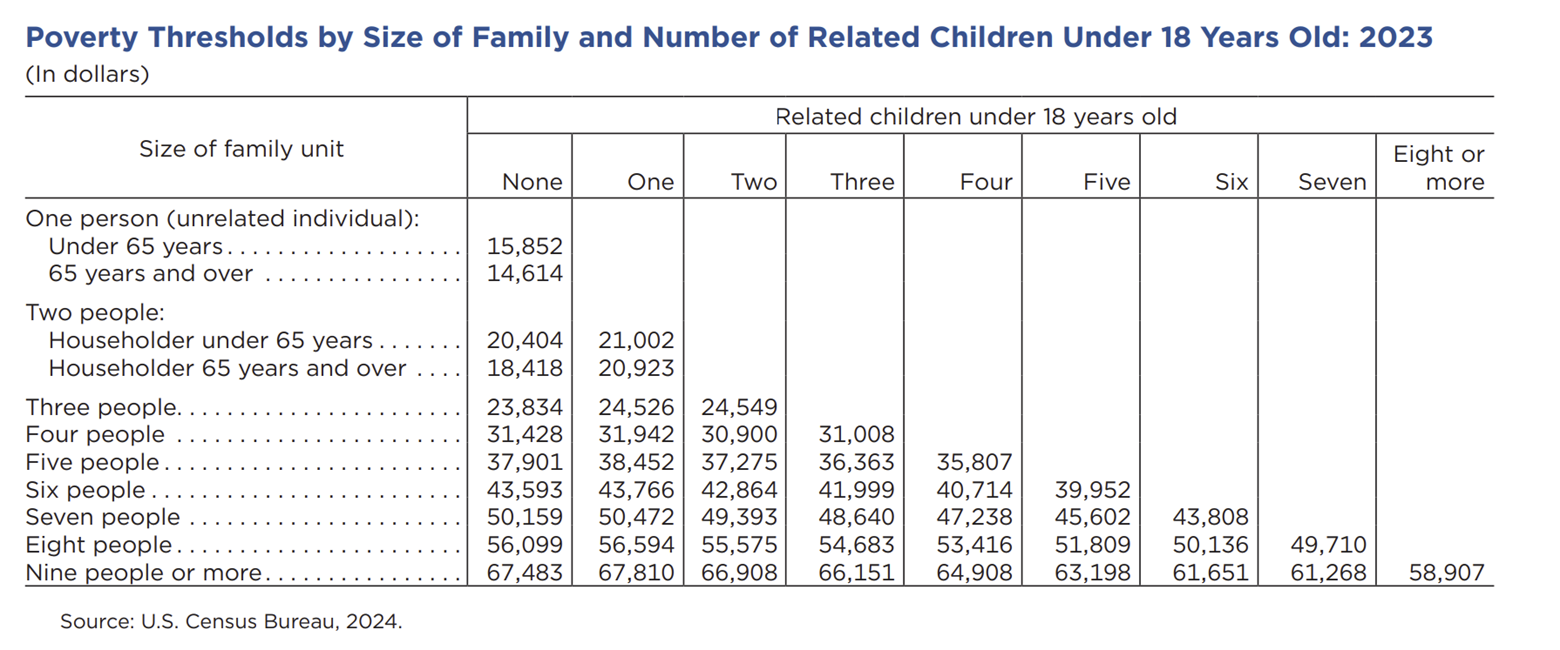
On September 10, the United States Census Bureau released its annual report on Poverty in the United States: 2023, which found that California has the highest poverty level in the nation under the Supplemental Poverty Measure (SPM). The Census Bureau’s annual report provides estimates of two measures of poverty - the official poverty measure and the SPM.
- The official poverty measure, in place since the 1960s, defines poverty by comparing pretax income to a national poverty threshold adjusted by family composition, and is used in part to determine eligibility for government safety net programs. It largely tracks the strength of the labor market.
- The SPM extends the official poverty measure by expanding the definition of resources, such as government benefits, tax credits, and noncash benefits. It also accounts for geographic variation in housing expenses and includes federal and state taxes, work expenses, and medical expenses. The SPM has been released annually since 2011.
Poverty measures in California are particularly important in consideration of the annual state budget process. California lawmakers are especially cognizant of comparisons between California and other populous states and have placed priority on ensuring the availability and access to safety net programs in recent years. In the coming year, budget deliberations will include continued discussions of how to improve uptake of safety net programs that are underutilized and how to improve quality of life for the working poor. According to the Public Policy Institute of California, Orange County’s poverty rate in the first quarter of 2023 was slightly higher than the state’s average at 14.5%.
The U.S. Census Bureau provides numerous spreadsheets reflecting poverty metrics, including a three-year average comparison of each state’s official poverty measure as compared to its SPM. Below is the 2021, 2022, and 2023 average for the official poverty rate compared to the SPM in the United States, California, Texas, and Florida.
|
Jurisdiction
|
U.S.
|
CA
|
TX
|
FL
|
|
Population
|
331.8 million
|
38.55 million
|
30.26 million
|
22.63 million
|
|
Official Poverty Rate
|
11.4%
|
11.7%
|
13.1%
|
12.5%
|
|
Supplemental Poverty Rate
|
11%
|
15.4%
|
12.6%
|
14%
|
In 2023, due to a strong economy, the official poverty rate for the United States fell 0.4 percentage points to 11.1%, the first statistically significant change in the official poverty rate since 2020. There were 36.8 million people in poverty in 2023, which is not statistically different from 2022.
Poverty Rate Snapshot in the U.S.
- Official Poverty Rate
- Median household income increased by 4% between 2022 and 2023. This is the first statistically significant annual increase since 2019.
- Between 2022 and 2023, the official poverty rate decreased for White and non-Hispanic White individuals; women; 18- to 64-year-olds; all workers; and those with some college. The only group to experience a statistically significant increase in their official poverty rate was the two or more races population.
- Rates did not change significantly for people in families, regardless of family type. Of people in families, those in married-couple families had the lowest poverty rate (5.2%), while those in female-householder families had the highest (23.6%).
- While non-Hispanic White individuals made up 58.1% of the total population, they only made up 40.5% of the population classified as poor by the official poverty measure, indicating that non-Hispanic White individuals were underrepresented in the poverty population. Asian individuals were also underrepresented in the poverty population, while Hispanic (any race), Black, two or more races, and American Indian and Alaska Native individuals were overrepresented.
- Between 2022 and 2023, the official poverty rate decreased 0.9 percentage points to 8.5% for those with some college education. Poverty rates were not statistically different for the rest of the educational groups. Those without a high school diploma had the highest poverty rate (25.1%), while those with at least a bachelor’s degree had the lowest rate (4.0%).
- The share of the population with resources below 50% of their poverty threshold was higher using the official poverty measure (5.2%) than when using the SPM (4.4%).
- Supplemental Poverty Rate
- Under the SPM, the Census adjusts annually for changes in the amount typical families with children spend on basic needs averaged over five earlier years. From 2022 to 2023, poverty numbers increased because of an unusual faster-than-inflation spike. In 2023, the thresholds increased by between 6.8% and 8.6%, depending on families’ homeownership status, far exceeding the 4.1% inflation rate measured by the overall consumer price index.
- The SPM child poverty rate increased 1.3 percentage points to 13.7% in 2023.
- The SPM rates for 18- to 64-year-olds and people 65 years and older were not statistically different from 2022.
- SPM rates increased between 2022 and 2023 for Asian and Hispanic (any race) individuals and for those reporting two or more races. SPM rates did not change significantly for White, non-Hispanic White, Black, or American Indian and Alaska Native individuals.
- Social Security moved 27.6 million individuals out of SPM poverty in 2023.
- Between 2022 and 2023, SPM rates increased for renters, but were not statistically different for homeowners, regardless of whether they had a mortgage. The SPM rate for renters increased 1.7 percentage points to 23.9%, the highest SPM rate among the three groups. The SPM rate for owners with a mortgage was 5.7%, while the rate for owners with no mortgage was 11.5%.
Upcoming Hearing
Agendas are typically posted on the committee websites in the Assembly and Senate a few days prior to the hearings. To view hearings after they take place, you may access them in the Assembly or Senate media archives where they are generally available within a few hours of committee adjournment.
Friday, October 18, 2024, 10 a.m. to 1 p.m.
Assembly Select Committee on Regional Transportation Solutions
Holden, Chair
Location: Montclair City Council Chambers, 5111 Benito Street, Montclair
Informational Hearing: Improving and Expanding Regional Transportation Options in California to Ensure Diverse, Reliable, Sustainable, and Affordable Options
Governor’s Press Releases
Below is a list of the governor’s press releases beginning October 2.
October 8: TOMORROW: Governor Newsom to participate in California Economic Summit
October 8: A meaty haul: CHP seizes $1.7 million worth of fentanyl in less than a week — including in raw beef
October 8: All aboard! More clean buses and trains coming to California’s communities most affected by pollution
October 7: California deploys Urban Search and Rescue Task Force teams ahead of Hurricane Milton
October 7: California takes bold step to revolutionize youth sports with 25×25 Coaches Challenge
October 7: Governor Newsom statement marking one year since Hamas attack on Israel
October 4: Governor Newsom issues executive order to support fire response and recovery across the state
October 4: California tiene una nueva “página de inicio”: el renovado CA.gov del Estado facilita el acceso a los servicios y programas gubernamentales
October 4: California gets new ‘homepage’: state’s revamped CA.gov makes it easier to access government services and programs
October 4: Governor Newsom awards $131 million to address homeless encampments with stricter accountability measures
October 4: California awards $167 million in Prop 47 savings to communities for treatment and services
October 3: TOMORROW: Governor Newsom to host virtual press conference to announce new funding and accountability measures to address homeless encampments
October 3: Gracias a California, los estudiantes de colegios comunitarios sin diploma de escuela secundaria ahora son elegibles para recibir ayuda financiera federal
October 3: “California’s $20 Fast-Food Minimum Wage Is a Win-Win-Win, Research Says”
October 3: First Partner Siebel Newsom, Latino Community Foundation, and Prospera highlight growth of Latina entrepreneurship on Latina Equal Pay Day
October 3: Thanks to California, community college students without a high school diploma now eligible for federal financial aid
October 3: Governor Newsom proclaims Disability Employment Awareness Month 2024
October 3: An outdated San Francisco DMV will soon become a site for over 370 new homes
October 3: Governor Newsom takes action against Norwalk for its unlawful shelter ban
October 3: Pajaro River flood protection project breaks ground
|