|
Dear Neighbors,
Several issues of broad community interest are up for discussion this fall which I touch on in this newsletter. Among them: Marin Catholic High School’s proposal to install lighting on its football field, intoxicating hemp products, and MCE Clean Energy’s recent decision regarding its Diablo Canyon nuclear power allocation. Three very different issues being discussed and decided on by different public bodies, but each of high interest to the stakeholders involved.
Before diving in, I’m repeating a common newsletter refrain: be sure you and your loved ones are prepared for wildfire. The recent heat wave was a stark reminder that wildfire season in Marin extends well into the fall and even early winter. September and October are the time to double down on ensuring that you, your family, and your property are prepared for emergencies. Touch up that defensible space around your home by clearing dead vegetation, maintaining trees and shrubs, and cleaning out gutters. Review your evacuation plan and make sure that your go-bag is packed and ready. Most importantly, check and make sure you are signed up for emergency alerts through AlertMarin, and that all the information is up-to-date. And, as always, FireSafe Marin is the go-to resource for information, encouragement, and support in being as wildfire ready as possible.
|
|

Here in Marin and across the state, cannabis is legal for adults over the age of 21. There are strict statewide regulations to ensure cannabis products containing intoxicating levels of THC (the intoxicating compound in cannabis) are properly labelled, contaminant free, and not sold to children. However, due to legal loopholes, similar products derived from hemp that contain high levels of THC have not only been unregulated but legally available to minors. Their availability, potency, and popularity correlate with a sharp increase in 911 calls for Marin youth involving THC. In fact, THC dependence is now implicated as the cause for three-quarters of youth entering County addiction treatment programs.
I am thankful that the Governor has addressed this important health issue, and for the community members and organizations who persistently and persuasively advocated for these commonsense regulations. In addition to the new law in California, the Marin County Public Health division is teaming up with school and community partners on local education efforts to ensure that intoxicating hemp products are accessed only by adults, in safe and informed ways.
The Marin Prevention Network will be hosting a discussion on Oct 9 at 7pm to share the latest information about young people’s use of THC and Nicotine products. Co-facilitated by Dr. Bonnie Halpern-Felsher, a developmental psychologist from Stanford, and Gabrielle Beyer, Tamalpais High School senior and Youth Transforming Justice intern, the event will address what to look out for and how to share information about THC and nicotine with teens.
Click here to view Dr. Matt Willis’ recent presentation to our board on intoxicating hemp. An IJ article from September 13th also provides additional information and context from the local perspective. Go to the California Department of Public Health for details on products affected and how the law applies to dispensaries.
|
|
|
Over the course of my 21 years in county government (eight as aide to Supervisor Hal Brown, and the last 13 as Supervisor) there are few issues that garner as much attention as high school field lighting. If the number of emails coming into the County is any indication, the most recent proposal by Marin Catholic High School to install lighting on their football field is no exception.
The proposed project includes four 80-foot light poles for illuminating the playing field, along with pedestrian walkway lighting. The project’s goal is to increase field availability during the late fall and winter seasons when daylight hours are limited. As proposed and analyzed by the Planning Department, the lights would be used with specific restrictions set by month, sport, and for practices and games.
The Marin County Planning Commission will hold a public hearing on the project on Monday October 7th at 1 pm in the Board of Supervisors Chambers at the Marin County Civic Center. I have no doubt that there will be additional public comment at the hearing, robust discussion, and that the Planning Commission will give the project thorough and fair review before rendering its decision. If that decision is appealed to the Board of Supervisors, I will take into consideration the whole of the record, the proposal as it is presented to us, and opine on the project at that time.
|
|
One the many hats I wear in my role as a Marin County Supervisor, is representing the County of Marin on the MCE Clean Energy Board of Directors (formerly known as Marin Clean Energy). Formed in Marin in 2010, MCE now serves 98,000 customers in Marin and over 1.5 million customers across 38 member communities in Contra Costa, Marin, Napa, and Solano Counties.
For many years, all PG&E and not-for-profit community choice aggregators (such as MCE) customers, have been charged a fee to cover a portion of Diablo Canyon operational costs. The small fee, which is itemized on customers’ energy bills, will be charged until the Diablo Canyon Plant is decommissioned in 2030. The energy generated by Diablo flows onto the statewide power grid whether MCE accepts it into its energy portfolio or not. Up until now, the cost of not accepting the allocation has been negligible and has not impacted customer rates.
So, what’s changed? Over the last decade, California has been extremely successful in greening its energy supply and transitioning off fossil-fuel-based energy generation. But in recent years, energy prices from preferred green sources have risen sharply due to increased demand, grid constraints, and delays launching new carbon-free projects.
MCE will save an estimated $100 million over the next six years by accepting the Diablo Canyon allocation rather than purchasing the energy from an alternative carbon-free source. This is ultimately why the MCE board decided last week to accept the Diablo Canyon energy allocation.
Although the MCE board accepted the allocation of the Diablo Canyon nuclear energy, the Board and agency remain opposed to increased nuclear generation. MCE is committed to providing its customers with carbon-free, sustainable, reliable, and cost-effective energy while accelerating the transition to a clean, green energy future. See the full staff report and slide deck for a more detailed explanation. And please, don’t hesitate to reach out if you have additional questions about this issue or anything related to MCE Clean Energy.
|
|
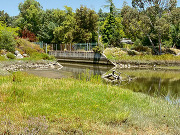
The Project includes work within a one mile stretch of Corte Madera Creek beginning at the Lagunitas Bridge in Ross and moving downstream to the earthen channel in Kentfield behind Kent Middle School. The project will reduce flooding for hundreds of homes in Ross, Kentfield, and in the Granton Park and College Park neighborhoods. It also includes wetland and creek restoration to support fish passage and general habitat health. The CMC creek and its tributaries support populations of steelhead trout, (and historically supported runs of Coho Salmon that went all the way up into Fairfax and Sleepy Hollow). The project has multiple phases, with phase 1 (installation of stormwater pumpstations in Granton Park) completed in 2022, and phases 2 and 3 (fish passage and channel improvements) anticipated to be completed by 2026.
|
|
|
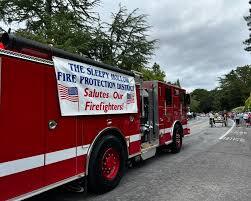
The Sleepy Hollow Fire Protection District (SHFPD) celebrated its 75th Anniversary on September 14th. Though it’s never had its own fire house, SHFPD has ensured that the Sleepy Hollow community has outstanding fire protection and emergency services since its formation in 1949. The district has been a leader in developing community level wildfire prevention and preparedness programs, including defensible space inspections, chipper days, goat grazing, evacuation drills, and more.
Congratulations to SHFPD on this auspicious anniversary celebrating 75 years of safeguarding the Sleepy Hollow community; and a huge thanks to the District’s small but mighty Board of Directors, for their ongoing service to the Ross Valley and greater Marin. See the Board of Supervisors resolution commending SHFPD here.
|
|
|

As part of the County’s Race Equity Action Plan (REAP) implementation, the Office of Equity, Behavioral Health and Recovery Services (BHRS), and College of Marin are co-hosting the 3rd Equity in Mental Health Symposium on October 16-17th. The event will take place at the Indian Valley Campus of College of Marin.
Featuring a diverse group of leaders in mental health, participants will engage in resource sharing and community building as well as roundtable discussions and hands-on activities to learn new ways of healing our communities. To access the schedule of events for each day, speaker bios, and more event details, please visit the website at 3rd Annual Equity in Mental Health Symposium.
The conference is open to the public at no-cost including folks from the fields of education, mental health, mentoring, behavioral health and recovery, psychology, art, integrative medicine, restorative justice, social and youth services, local government, and more.
|
|
|
|
|
|