Welcome to the November Alternative Crisis Response (ACR) Monthly Newsletter!
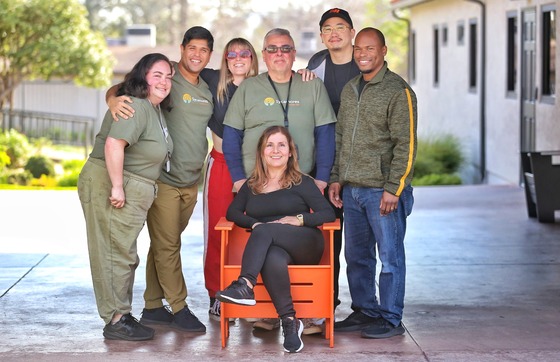
comprised of a clinician and a peer advocate, who travel to a client’s location anywhere in the County to provide crisis intervention, evaluation for hospitalization, and linkages to ongoing mental health treatment. The County contracts with three Mobile Crisis Outreach Team (MCOT) providers to operate crisis intervention teams for the County during evening, overnight, weekend, and holiday shifts. This month, we are highlighting the work from one of our MCOT supervisors, Maria Ortega, LPT from Sycamores. Sycamores serves our clients in Service Areas 1,2,3,4,and 6.
How did you get into this line of work?
I always knew I wanted to help people since I was young. I thought I would be a therapist working with children but after college, I took a break and when I returned to school I met students in the Psych Tech program and fell in love with what they were doing. I was hired with an ACT program working with the chronically mentally ill right before graduating and I loved it. I wanted to further my career and experience by working in crisis response, so here I am years later and loving it!
Can you describe your job?
My job is supervising some of the team members for Sycamores MCOT and running swing/overnight shifts several days out of the week. I ensure that the teams in the field are well-supported, and that I am available for consultation and feedback. I develop and nurture growth for my supervisees, and work alongside a great management team that is supportive of each other. When opportunity allows, I go out into the community and respond to calls, helping people and families at their lowest when they feel lost and might not know what to do. Our team members and I help people safe by hospitalizing if needed but also provide resources and referrals for ongoing support within their communities.
Why is this work important?
This work is important because we go out to places and work with people that might not have anyone else or people that society does not want to deal with or work with anymore because they have dealt with them for a long time. It is important to convey that each individual matters, and we are the ones that can instill hope in their lives.
Do you have a story where you felt like you really helped someone, and if so, could you share that story?
We had a client experiencing delusions and psychosis that resulted in him destroying the restroom, breaking doors, and the client had locked himself in his room and no one was able to get him out. He was extremely paranoid that someone was out to kill him. Based on collateral, this was client’s first break. The MCOT team was able to speak with client through the door and provided a safe space to acknowledge how scared they were feeling and empathize with feeling alone and how real these symptoms were to him. The client was eventually able to come out of the room, engage with the MCOT team and agreed to go to the hospital. When following up, the family shared that the client was taking medication and had started mental health services and all the paranoia and voices had gone. The client described it as the scariest time of his life because he did not know what was happening to him, and he and the family were very thankful that the MCOT team took the time to be supportive in such a caring way.
What is something you wish people knew about your work that they don't know?
I wish they would know that even though we are a crisis program we are not just there to hospitalize people. We want to truly help for the long-term however we can by providing resources and connecting them with the appropriate ongoing support and services.
What positive feedback have you received from families after providing them with resources?
Families are grateful and thankful and sometimes surprised with all the resources that are available, but they were not aware of. Families report feeling heard and grateful because our MCOT teams spend time with the clients and the families explaining the procedures and the resources we provide. they are appreciative that the teams are thorough and kind when assessing.
|
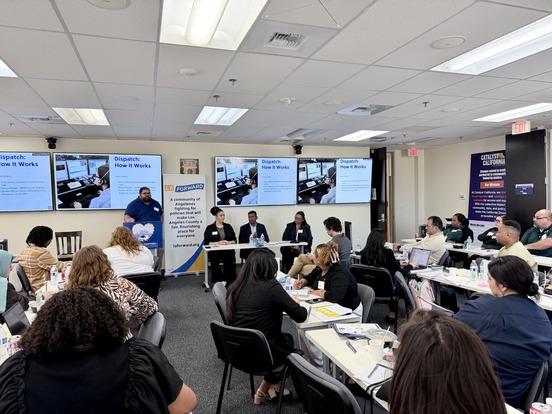
Last month, the ACR Unit participated in the Policy and Strategy Summit on the Unarmed Model of Crisis Response hosted by the LA Forward Institute and Los Angeles City Councilmember Eunisses Hernandez. The event convened leaders from the City, County, and State governments with community activists and service providers to explore opportunities for expanding unarmed crisis response. Representing the ACR Unit, Reuben Wilson served on a panel and described how the County’s ACR services complement, not duplicate, City services when it comes to assisting individuals who are experiencing a behavioral health crisis. Working collaboratively, we can increase the availability of unarmed response to a broader range of community needs.
We’re hiring skilled, caring professionals across various disciplines and diverse career paths. Click on the relevant job title to review the job requirements and submit an application.
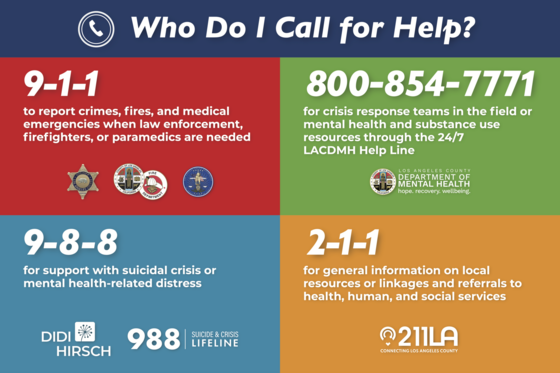 An essential part of having a true alternative crisis response system in LA County is ensuring people know what resources are available when they need help. Los Angeles County Department of Mental Health (LACDMH) partnered with the County of Los Angeles Fire Department, Sheriff’s Department, City of Los Angeles Police Department, 211 LA, and Didi Hirsch Mental Health Services to launch the Who Do I Call for Help? awareness campaign. This resource helps residents know what options are available when they need help. The ACR Team has now distributed over 500,000 cards to the public and are now being distributed through all Los Angeles County and City public libraries!
Need “Who Do I Call for Help” campaign business cards, posters, bookmarks for outreach?
Email: AGuzman@dmh.lacounty.gov to place your order.
Available in English, Spanish, Armenian, Farsi, Korean, and Chinese.
We have cards in English, Spanish, Armenian, Farsi, Korean, and Chinese.
The following languages can be downloaded, link below in the format of Posters, Bookmarks, Magnets, Socials and Business Cards.
https://dmh.lacounty.gov/mental-health-resources/who-to-call-for-help/
Los Angeles 988 Call Center
9,343 calls to Didi Hirsch 988 Crisis hotline within LA County
96% calls safely resolved over the phone
17 seconds to answer the call, on average
12 minutes of emotional support, risk assessment, and safety-planning on the phone, on average
187 crisis calls transferred to DMH ACCESS for potential FIT dispatch
6,065 crisis calls to LACDMH ACCESS 24/7 Help Line
2,190 resulted in FIT dispatch
45% of dispatched calls resulted in hospitalization
73 Field Intervention Teams (PMRT, MCOT, and TT) were regularly available
|