Thank You for Celebrating Women’s History Month with Us
As we close out Women’s History Month, I want to extend a heartfelt thank you to everyone who continues to stand with us in embracing gender equity, justice for survivors, and increasing opportunities for women and girls. This month offers us a moment to pause and honor the extraordinary contributions women have made to our communities, our state, and our world.
But the truth is this: women’s history cannot be contained in a single month. The courage, brilliance, and resilience of women shape our lives every day of the year. We celebrate the highs—the breakthroughs, the victories, the moments of joy and progress. And we acknowledge the lows—the barriers that persist, the inequities that demand our attention, and the painful truths that continue to surface.
We are reminded of the importance of honoring all women’s stories, including those too often forgotten or overlooked. We uplift the brave women who speak out, whose voices continue to challenge us to confront harm, support survivors, and build systems rooted in dignity and accountability. We honor the women who paved the way, the women who are fighting for change today, and the young women and girls who are already imagining a better future.
We embrace the rebels, the changemakers, the leaders, the visionaries, the truth‑tellers, the bridge‑builders, the boundary‑breakers, the disruptors, the healers, the organizers, the advocates, the protectors, the innovators, the risk‑takers, the culture‑shifters, the movement‑makers, the survivors, the storytellers, the torch‑bearers, the women who refuse to be forgotten, the women who speak even when their voices shake, and the women who are determined to change the world.
Women’s History Month is a celebration, but it is also a call to action. A reminder that our work does not begin in March and does not end on March 31. Every month is an opportunity to champion equity, expand opportunity, and ensure that every woman and girl in California can thrive.
Thank you for your partnership, your leadership, and your unwavering commitment to this shared mission. Together, we will continue to build a California where women's and girls’ stories are honored, their voices are heard, and their futures are limitless.
Executive Director Darcy Totten

Our 2026 Legislative Priorities
The Commission has fought and will continue to fight for policies and budget allocations that protect and improve the lives of all California women and girls. At our March meeting, the Commission voted to approve its 2026 legislative priority package, which includes 35 bills aligned with the Commission’s mandated issue areas. These important pieces of legislation continue to address critical issues, such as the mental health needs of women in the military, protections against sexual violence and human trafficking, and instill new safeguards for youth operating in the digital space, to name a few. Many of these bills further align with the recommendations produced by the Commission’s Youth Advisory Council in their recently released 2026 Girls Agenda, tackling educational barriers, both online and offline safety, and ensuring youth across the state receive the healthcare they need.
Help Support the Commission’s Co-sponsored Bills
The Commission is co-sponsoring several bills: AB 1616 (Davies), AB 1914 (Schiavo), AB 1940 (Calderon), and SB 1395 (Valladares), which focus on increasing access to affordable, quality childcare, combat gender discrimination in the workplace related to menopausal conditions, and promote the workforce development of women in the construction industry.
AB 1616 (Davies) would require the Department of Veterans Affairs to establish a program to fund a study for non-narcotic post-traumatic stress disorder treatments.
AB 1914 (Schiavo) would require a city or county, when updating their general plan starting January 1, 2028, to address the childcare needs of the jurisdiction to reflect the goal of ensuring every family has access to quality, convenient, safe, and affordable childcare.
AB 1940, authored by Commissioner Assemblymember Calderon, would require the Civil Rights Department to raise awareness of the employment rights of women experiencing perimenopause, menopause, or post-menopause and explain workplace protections applicable to employees experiencing menopause-related symptoms.
SB 1395, authored by Commissioner Senator Valladares, known as Kayleigh’s Law, would allow judges to issue lifetime protective orders at sentencing for individuals convicted of serious or violent felonies, or felony sex offenses against a minor. The bill is named after survivor and advocate Kayleigh Kozak, who has been forced to face her abuser in court for more than a decade after her case had been closed.
 Leadership California “The Power of Us”

The Leadership California “The Power of Us” 2026 event is scheduled for April 20, 2026, from 5:30-7:30 p.m. at the California Museum Courtyard in Sacramento. This event serves as an evening of connection and celebration, bringing together women leaders and partners. Register to attend.
|

Welcome to the Commission!

Commissioner Assemblymember Gail Pellerin brings deep experience in supporting the safety, well‑being, and mental health of Californians. She authored HR 75 to recognize January as Human Trafficking Awareness Month and champions improvements to California’s mental health system. Her work includes supporting enhancements to the 988 Suicide & Crisis Lifeline and its planned integration with 911, helping ensure that calls involving non‑threatening disturbances can be routed smoothly to trained mental health responders.
We look forward to the leadership, perspective, and commitment Commissioner Assemblymember Pellerin will bring to the Commission.
|
Thank You for Your Service
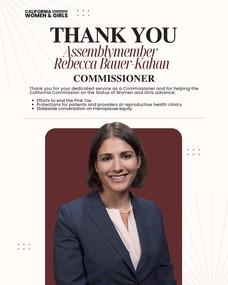
We extend our gratitude to Commissioner Assemblymember Rebecca Bauer-Kahan for her dedicated service on the Commission. Her leadership helped advance critical policies to support women and girls across California. During her tenure, Commissioner Assemblymember Bauer-Kahan championed legislation to eliminate the Pink Tax, protected patients and providers from doxxing and harassment at reproductive health clinics, and elevated menopause equity as a statewide health issue.
Thank you Commissioner Assemblymember Bauer-Kahan for your commitment to equity and lasting contributions to the Commission's work
|
Financial Literacy and Financial Freedom
California is strengthening financial literacy and expanding pathways to wealth. Governor Gavin Newsom and First Partner Jennifer Siebel Newsom announced the adoption of a statewide personal finance curriculum guide to prepare students with real-world money skills and expanded women’s access to capital, savings, and investment opportunities.
Thank You for Joining Us at Our Open House!
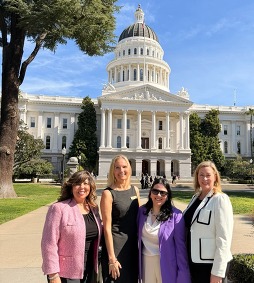
The event was a wonderful opportunity to showcase the Commission’s history, highlight its contributions, achievements, and impact, and recognize the valued partners who help support and advance the work we do for women and girls in California. We appreciate you taking the time to attend and celebrate with us!
|

Mount Saint Mary University’s 2026 Report on the Status of Women
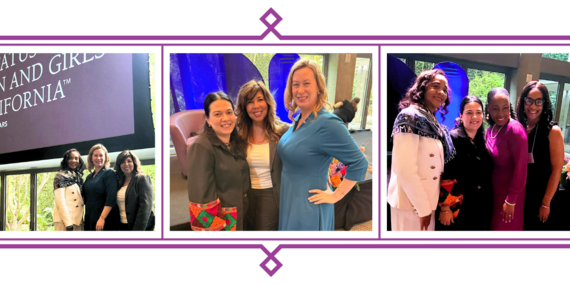
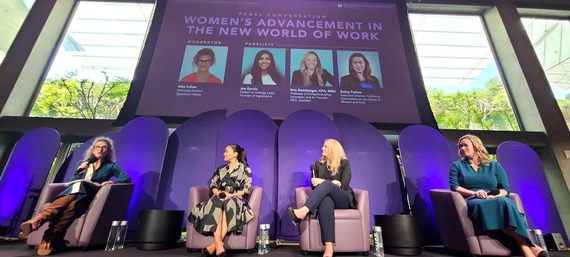
The Commission joined Mount Saint Mary’s University and the Center for the Advancement of Women for the release of the 2026 Report on the Status of Women and Girls in California™ to which we were contributors. Our Executive Director Darcy Totten was also a featured speaker on the panel examining how work has changed for women.
The convening brought together advocates, researchers, and policymakers to explore this year’s theme: Shift: Building a Future That Works for Women. The 2026 report explores how technological, economic and cultural changes are rapidly reshaping work and opportunity.
A majority of California’s working women (and men) are non-White. Latinas make up 39% of employed women in California, the largest share of any racial or ethnic group. As a result, Latinas play a central and growing role in powering California’s economy.
Over half of California’s girls and young women under 25 are Latina, whereas half of women 65 and older are White. This generational contrast highlights ethnic shifts throughout the state that affect workplace representation.
57% of Asian women in California hold a bachelor’s degree or higher, which is the highest college attainment rate among all racial and ethnic groups of women in the state. This positions Asian women strongly for leadership and access to high-wage careers.
Women represent nearly half of entry-level workers in corporate settings but fewer than one in three executives in the C-suite. Moreover, the majority of those women who do reach top management are White, highlighting a “glass ceiling” that is even harder to break for women of color in leadership positions.
Currently, 74% of California’s tech jobs are held by men. In an economy fueled by artificial intelligence and new technologies, this is a stark imbalance. Equitable representation in this field is key to unlocking greater financial stability for more California women and their families.
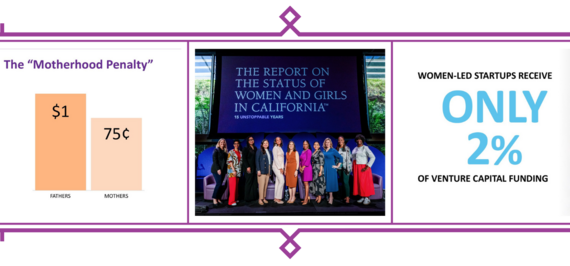 Nationally, women business founders receive only about 2% of all venture capital funding. Despite that, the growth rate of women-owned businesses outpaces men-owned businesses, as does their employment growth rate and annual revenue growth rate. California leads the nation in the number of women-owned firms and the jobs and income they create, underscoring their important contribution to the economy.
More women than men work from home. One recent survey revealed that fully remote workers are promoted 31% less often than their in-office peers. And 90% of CEOs were more likely to prioritize in-office employees for career advancement opportunities, raises, or promotions.
Three-fourths of California’s women 20–64 years of age were in the labor force in 2024, and 30% of those women were mothers with children under 18 years of age. Nationally, the median earnings of full-time working mothers are 74% that of fathers, a larger gap than the overall gender pay difference.
The Report on the Status of Women and Girls is the only comprehensive, data-driven publication of its kind in California, which has served as a vital resource for policymakers and advocates since 2011.
Gender Equity Policy Institute Data Dashboard
Gender Equity Policy Institute released The GEPI Data Dashboard, a free, interactive resource providing visualizations of demographic and economic data. The GEPI Data Dashboard includes interactive dashboards presenting social and demographic data broken down by gender, race, ethnicity, and other characteristics for California and its counties.

Women Build 2026
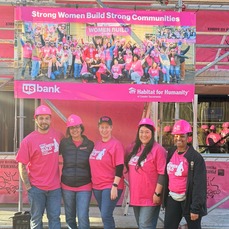
We were proud to participate in Habitat for Humanity of Greater Sacramento 2026 March Women Build. We’re grateful for the work we’ve accomplished together to expand access to affordable homes for families in our region.
Women Build brings together more than 500 women from all backgrounds and professions to support Habitat’s mission of building and preserving critically needed affordable housing in our community. This year’s Women Build will create homes for 26 Habitat families once completed. We’re honored to roll up our sleeves alongside hundreds of dedicated volunteers and help build a more secure, equitable future for all.
|

Learn About Some March Heritage/Awareness Topics

Commission
Single women crossed a line in housing no one saw coming
California State Legislatures Introduce Bills to Protect Children from Dangerous AI Companion Chatbots
Doing right by California’s foster youth costs money. Not doing it will cost more | Opinion
Supreme Court Blocks California Policy Limiting Parental Notification on Gender Identity
Key moments from California LGBTQ+ gubernatorial forum
Attorney General Bonta Sponsors Legislation to Strengthen Access to Reproductive and Gener-Affirming Care in California
Workforce, Education, and Employment
|