|
|
The Office of Agricultural Resilience and Sustainability (OARS) is committed to building a sustainable and thriving future for California’s farmers and ranchers. Ninety percent of the state’s farms are family-owned and collectively they grow over 400 commodities that supply one third of US vegetables and over three quarters of US fruits and nuts. In addition, the California dairy industry contributes 20% of the nation’s milk. Through innovative programs, collaborative partnerships, and science-driven solutions, we provide practical tools to enhance environmental and economic sustainability.
Explore our initiatives and see how we’re contributing to a stronger, more resilient agricultural system for generations to come.
|
|
Kautz Family Farms' Success with SWEEP Grant
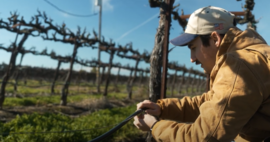
With support from California’s State Water Efficiency and Enhancement Program (SWEEP), Kautz Family Farm in Lodi has made big strides in water conservation and energy efficiency. Thanks to an $84,000 grant, the farm upgraded its irrigation system—reducing groundwater use, cutting energy costs by nearly 20%, and saving an estimated 45% of water. Local technical assistance providers at Atlas Consulting have been instrumental in helping the farm plan, implement, and track these improvements.
|
|
Healthy Soils Block Grant Organizations Innovate to Give Farmers Hands-on Help and Advice
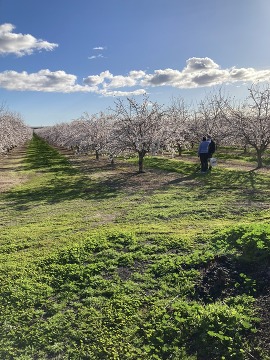
The Healthy Soils Program (HSP) Block Grant Pilot is empowering growers across Solano and Contra Costa counties to adopt soil-friendly practices with hands-on support. Through partnerships and personalized technical assistance, 68 farmers have already launched healthy soils projects — from plantings to compost coordination and everything in between. Learn how this collaborative effort is breaking down barriers and helping farmers build long-term soil health.
|
|
Manure Management Improvements at Triple C Dairy
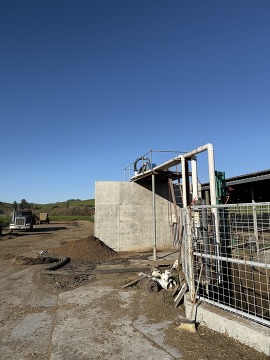
Triple C Dairy in Sonoma County is leading the way in sustainable dairy practices thanks to support from California Climate Investments and the CDFA Alternative Manure Management Program (AMMP). With grant funding, the farm installed a compost bedded pack barn, automated manure collection, and added a solid-liquid separator—reducing methane emissions, cutting diesel use, and improving herd and pasture management. Their project is a powerful example of how climate-smart dairy operations can benefit both the environment and the farm.
|
|
What is the Office of Pesticide Consultation and Analysis?
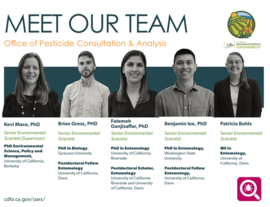
The Office of Pesticide Consultation and Analysis (OPCA) helps evaluate the economic and pest management impacts of proposed pesticide regulations in California. Since 1992, OPCA scientists have worked with DPR and UC experts to analyze how regulation changes affect growers. Their recent work includes reports on chlorpyrifos, neonicotinoids, and 1,3-Dichloropropene rules. OPCA also manages grants supporting sustainable pest management.
|
|
Introducing Adaptive IPM for Invasive Agricultural Pests
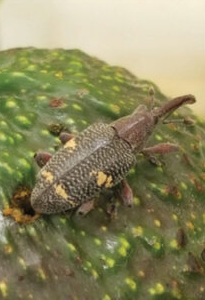
In a world of rapidly changing pest threats, we are adapting too! Our “Proactive IPM Solutions” program is now “Adaptive IPM for Invasive Agricultural Pests”, moving beyond "proactive" to a more responsive, dynamic, and inclusive approach. Our program focuses on developing and implementing adaptable IPM strategies that enable swift action against emerging invasive pests in California, whether they are newly introduced, resurging, or expanding their range. We are dedicated to refining existing methods and exploring new solutions, especially where pesticide resistance poses a challenge.
|
|
Water Efficiency Technical Assistance (WETA) Program Supports Producers with No-Cost Irrigation System Evaluations and Pump Efficiency Tests
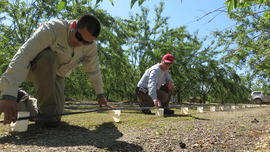
As the 2025 irrigation season kicks off, farmers can tap into free, expert support through the Water Efficiency Technical Assistance (WETA) program. WETA-funded technical assistance providers offer irrigation system evaluations, pump efficiency tests, and hands-on training to help growers save water, lower energy costs, and improve crop yields. These services are available for a limited time—many grants will expire in 2026—so now is the time to take advantage.
|
|
Environmental Farming Act Science Advisory Panel (EFA SAP)
May 15, 2025
The Environmental Farming Act Science Advisory Panel (EFA SAP) provides input on CDFA research, demonstration and incentive grant programs and serves as a public forum for developing evidence-based recommendations for achieving agricultural sustainability in California. Per the Food and Agriculture Code, the CDFA Secretary, CNRA Secretary and CalEPA Secretary appoint panel members, which include state agency representatives, producers, and subject matter experts.
The public is welcome to join in person or virtually.
State of the Science Summit: Reducing Methane from Animal Agriculture
May 19 - 21, 2025
The California Department of Food and Agriculture and the UC Davis College of Agricultural and Environmental Sciences invite you to participate in a two-day conference: State of the Science Summit: Reducing Methane from Animal Agriculture. The Summit will be held May 19-21, 2025 at UC Davis. The Summit will include informational presentations and panel discussions with leading experts in methane mitigation and animal science, connecting the dots between the scientific and regulatory aspects of feed strategies to reduce enteric emissions. The goal of the summit is to identify opportunities for collaboration and research that can help the dairy and beef industries meet climate goals.
|
|
Thank you for staying connected with us!
Your support and input helps us achieve our mission. Stay tuned for more updates, and feel free to reach out with any questions or feedback at cdfa.oars@cdfa.ca.gov. Together, we’re building a brighter, more sustainable future for agriculture.
|
|
|
|
|