 Season's Greetings!
The holiday season is a time filled with joy, gifts, and celebration. Unfortunately, it is also a time when home burglaries
dramatically increase.
According to the FBI, there were nearly 2.2 million
burglaries in the United States in 2010, the last year for which data is
available. About 400,000 of these burglaries- nearly 20%- occurred during
the months of November and December, when many homes are filled with holiday
gifts. The victims of these burglaries suffered an average loss of over $2,100.
National-level statistics on home burglaries are mirrored
here in Alameda County. According to the Sheriff’s Office, residential
burglaries increased by 20% during the month of December in each of the last
two years.
Following my “Top 10 Holiday Home Safety Tips" will
help make sure a burglar does not ruin the holidays for you and your family.
 It is an honor to serve you. Please do not hesitate
to contact me with
any comments, questions or concerns that you may have regarding the district or
Alameda County.
I Wish You a Happy Holiday Season and Prosperous New Year.
 Wilma Chan, Supervisor
Third District
1. LOCK DOORS AND WINDOWS
 Lock all doors at night and every time you leave the house.
Every window and sliding door has a working key lock or is
securely pinned.
Secure windows and sliding doors with secondary blocking
devices (i.e., a stick or wood).
Use anti-lift devices to prevent windows and glass doors
from being lifted out.
|
2. CRIME-PROOF OUTSIDE AREAS
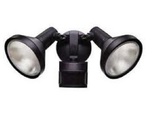 Lighting is one of the most cost-effective deterrents to
burglary.
Keep yard, porch, garage doors, pathways and entrances
well-lit at night.
Consider motion detecting lights which turn on
automatically as someone approaches.
Trim plants and shrubs that could serve as hiding places
for criminals.
Cut back tree limbs that could help thieves climb into
windows.
Consider light timers for exterior lighting to establish a routine and
appearance of occupancy.
|
3. GET TO KNOW YOUR NEIGHBORS
 Get to know your neighbors on each side of your home and across the street.
Invite them into your home, communicate often, and establish trust.
Ask neighbors to pick up mail and park in your driveway to give the appearance of occupancy while on vacation.
Get to know each other’s schedules so you can spot an unusual pattern.
4. CONSIDER AN ALARM
 Display alarm company signs and decals on the windows and
lawn; burglars will usually by-pass a property with visible alarm signs.
Don’t write your alarm passcode on or near the alarm
keypad.
Alarm systems monitor for fire as well as burglary.
Learn how to use your system properly!
|
5. PROTECT YOUR-SELF WITH LOCK & KEY
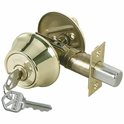 Don’t hide keys. Leave a key with a trusted family
member, friend or neighbor.
Keep a list of everyone you give a copy of your keys to.
Consider keys with protection against unauthorized
duplication (i.e., patent protected).
All entryways should have a sturdy deadbolt lock
installed into the frame of the door.
Use high quality Grade-1 or Grade-2 locks with a bolt
that extends at least one inch to resist prying open or forceful entry.
Hardened steel inserts prevents bolts from being sawed off.
|
6. PROTECT YOUR HOME WHEN TRAVELING
 Activate the alarm system (if you have one).
Inform a trusted neighbor of your travel plans and ask
them to collect mail and watch your home while away.
Consider using automatic timers to switch interior lights
on and off at preset times. Indoor lighting gives the impression of occupancy.
For extended absences, consider hiring a trusted house
sitter.
Don’t advertise your absence. Never leave a message on your answering
machine that tells thieves you are away.
|
7. PROTECT YOUR VALUABLES
 Gate latches, garage doors, and shed doors are all locked
with high-security, laminated padlocks.
Grills, bicycles and other valuables left out in the open
should be hidden from view with a tarp and securely locked to a stationary
point.
Keep a home inventory of valuables including serial numbers, pictures,
and sale receipts. Keep a complete copy somewhere out of the house.
|
8. TEACH HOME SAFETY TO YOUR KIDS
 Show them how to use the door and window locks, and the
alarm system.
Never let them allow anyone into your home without asking
your permission.
Never let a caller at the door or on the phone know that
they’re alone. Teach them to say “Mom can’t come to the phone (or door) right
now.”
Be sure they carry a house key with them in a safe place.
Don’t leave it under a mat or on a ledge outside the house.
Be sure they know how to call 9-1-1, your area’s emergency number, or
the operator.
9. HAVE AN EMERGENCY PLAN
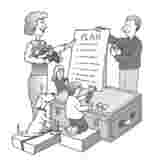 Have important phone numbers, including police and fire
departments, by the phone.
Establish a meeting place for family members; one place
near your home and one outside your neighborhood.
If something looks questionable– a slit screen, a broken
window or an open door– don’t go in. Call the police.
If you think you hear someone breaking in, leave safely if you can, then
call the police. If you can’t leave, lock yourself in a room with a phone
and call the police.
|
10. TAKE A STAND!
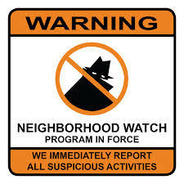 Join a Neighborhood Watch group. If one doesn’t exist,
you can start one with help from local law enforcement.
Work with neighbors and local government to organize
community clean-ups. The cleaner your neighborhood, the less attractive it is
to crime.
Join neighbors, police, school officials, and civic groups in
identifying, discussing and solving (or get help to solve) troubling conditions
in your community.
|
|