|
Since July 2026, HCD has continued making progress across its core areas of work, including housing development, community investment, homelessness response, and housing assistance. The highlights below showcase key updates and milestones from across the department.
 Tucson projects needing more than 62,000 new units of housing by 2045. 34,000 units of housing are needed for low-income households alone. Any shortfall of housing units available for renters and owners alike can compress housing affordability, causing renters and buyers with more purchasing power to rent or buy naturally occurring affordable housing. This means that lower-income renters are unable to find market rate housing that they would normally be able to afford, increasing the number of households that are housing cost burdened and at risk of eviction. The Tucson Housing Choice Voucher Program currently has more than 40,000 individuals on the waitlist and was forced to close in January this year due to demand.
In recognition of this already-ongoing housing crisis, HCD has sought to increase its affordable housing production. An important component of building affordable housing is community and neighborhood engagement; providing an opportunity for community input allows for these new, vital units to be truly integrated into neighborhood character. This outreach is also an important way of allowing residents of neighborhoods with rapidly increasing housing costs to remain in areas where they can maintain community connections, employment, and access to resources.
HCD held three community meetings for three different affordable housing developments in the last quarter.
Stone and Speedway Community Meeting
July 22 Recap
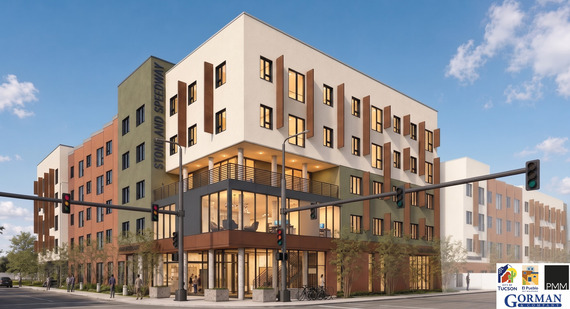 Rendering of Stone and Speedway Phase I Affordable Housing Development.
HCD’s July 22 meeting was held to discuss the project's use of the Infill Incentive District (IID) and an Individual Parking Plan (IPP), both of which require a meeting to allow public comments before approval. The IID is an optional overlay zone that encourages sustainable infill development in and around downtown Tucson. Stone & Speedway is opting to use the IID, which reduces parking requirements to one space per unit, rather than one space per bedroom. This allows HCD to build more housing and deprioritize parking for a development that will encourage residents to use alternate forms of transit, like the bus; Stone & Speedway is along the Norte-Sur Bus Rapid Transit line planned for Stone Avenue.
The IPP allows Stone & Speedway to make an even greater reduction in parking spaces than the IID. With the IPP, the development will have a total of 103 spaces, down from the 119 allowed by the IID. Without the IID and IPP, City code would require 203 parking spaces for a development with 119 units. This would require a reduction in residences at Stone & Speedway, displacing affordable units for parking spaces. Affordable housing developments rarely reach 100% car ownership, which is another factor that makes this reduction in parking spaces a favorable tradeoff for more housing units.
Preliminary traffic study results exploring the potential traffic impacts of the development were also shared at the July 22 meeting. Although the draft study did show an expected increase in car usage in the area, consultants determined that the increased volume would not meaningfully change the level of traffic on Stone, Speedway, or in the Dunbar-Spring neighborhood. The traffic study results were calculated using worst-case scenarios, including the assumption that 100% of Stone & Speedway residents will own vehicles. Again, this is unlikely in an affordable housing development. Even in the worst-case scenario, the preliminary results show that the estimated number of car trips generated by Stone & Speedway would not change the Level of Service at the Stone and Speedway intersection in the next three years.
Community members were encouraged to ask questions specific to the IID, IPP, and traffic study results. Attendees expressed concern about traffic volume and speed within the Dunbar-Spring neighborhood. Traffic study results are preliminary but show that any increases in traffic would not approach or exceed the maximum possible volume of surrounding neighborhood streets. Traffic islands on Stone, traffic slowing in the planned parking lot, and information about speeding on neighborhood streets will be investigated for coming meetings.
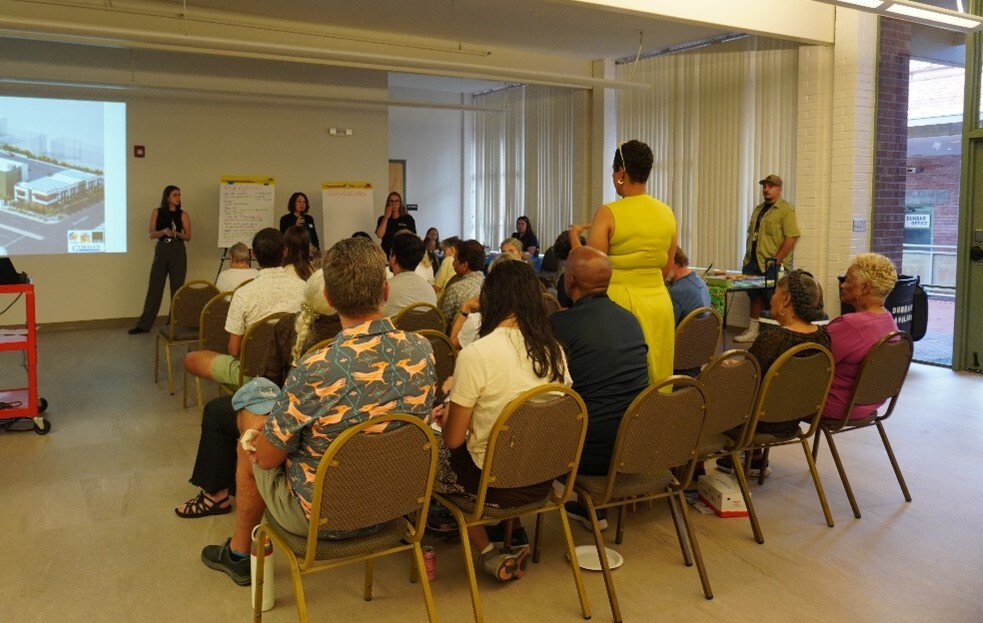 Community members ask questions and provide feedback during the July 22 Stone and Speedway Community Meeting.
Security was another concern for some community members who were present. Architects from Poster Mitro McDonald (PMM) shared information about CPTED, or Crime Prevention Through Environmental Design. CPTED will be used as a standard when designing the active spaces surrounding Stone & Speedway to limit opportunities for unsafe activity. The complex will be limited to fob-access for residents and storage for dumpsters will be gated.
Residents can expect HCD to bring final traffic study results to future Stone & Speedway meetings. Also shortlisted for follow up: information about Safe City measures at Anza Park, conversation about on-site bike storage options, information about the property tax and value implications of the development, and details necessary to understanding LIHTC project costs.
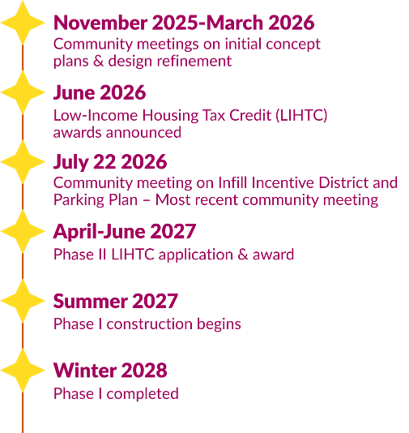 Project timeline for the Stone and Speedway Development.
Another community meeting will be held to provide additional updates and discuss final traffic study results. HCD will apply for Low-Income Housing Tax Credit funding for the second phase of Stone & Speedway in April of next year. Awards will be announced in June of 2027. Phase I construction is expected to begin in Summer of 2027, and will likely be completed in the Winter of 2028.
El Rincón Community Meeting
August 11 Recap
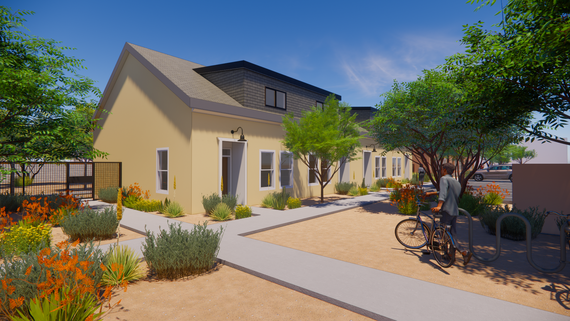 Rendering of El Rincón Affordable Housing Development in Barrio Anita.
El Rincón is an affordable housing development that will consist of 67 rental units at two sites, one in Barrio Anita and one in El Presidio. Both sites will have units split into multiple buildings, including walk-up flats in Barrio Anita and duplexes, triplexes, and fourplexes in El Presidio. 17 of the 67 units will be built in El Presidio and the remainder will be built in Barrio Anita.
The August 11 meeting was held to discuss design changes that were made in response to community comments. Some of the design changes made include alterations in height and roof gradation to reflect the neighborhood character. HCD also shared the results of a survey that was conducted in Barrio Anita in response to concerns that a limited number of neighborhood residents would attend community meetings. To conduct the survey, HCD staff knocked on every door in Barrio Anita, delivered live surveys in both Spanish and English where possible, and left instructions on how to complete an online survey. The survey was open from February 6 to June 1, 2026. It received 18 responses. For survey results, you can visit El Pueblo Housing Development.
Following the presentation, attendees engaged with open house stations to provide feedback and learn about other planned improvements in the area. PMM, the architectural firm that designed El Rincón, hosted a station where residents discussed potential alterations. Tucson Clean and Beautiful and Storm to Shade provided information about their planned improvements in Barrio Anita, including additional green space, trees, and green stormwater infrastructure. HCD asked Barrio Anita residents to share ideas for a small-scale neighborhood action project, such as additional art, historical landmarks, or improvements to community spaces.
During the meeting, community members raised questions regarding a potential Crime-Free property designation, the selected property management company, and archeological review that has been done on-site. HCD conducted a procurement process to select the property management company for El Rincón. Kay-Kay Realty was vetted by the Arizona Department of Housing and will also be vetted by the private investors in the property. El Pueblo Housing Development will oversee Kay-Kay Realty and hold it accountable to preserve affordable housing investments into the future.
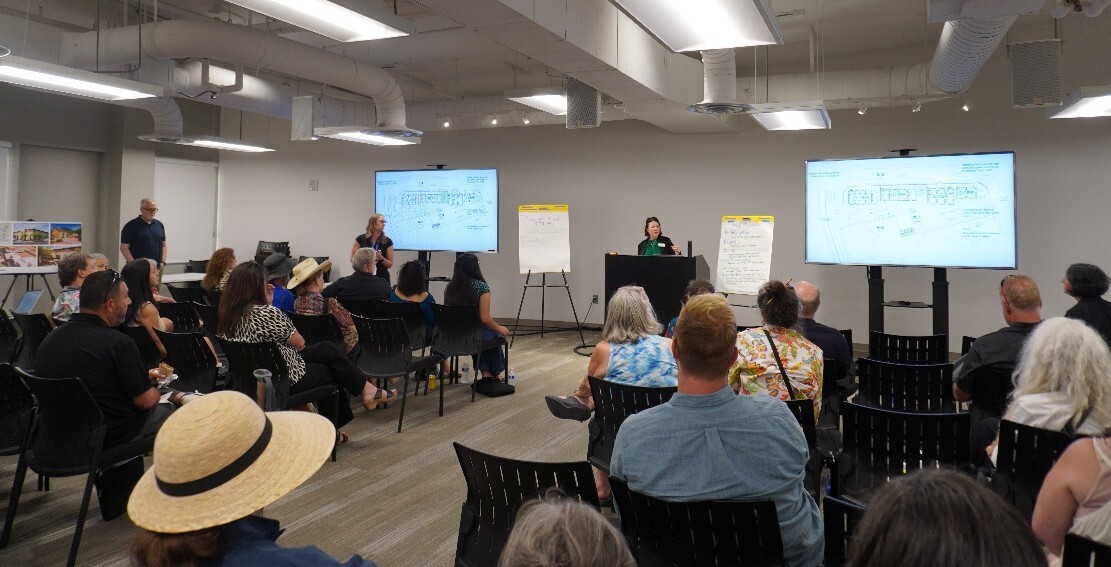 Community members attend the El Rincón Community Meeting on August 11.
El Rincón has federal funding, which requires HCD to perform an environmental review. This will include archeological testing, which if testing indicates, will require HCD to have archaeological monitors throughout construction.
Follow up items that community members can expect at the next meeting for El Rincón include information about the Crime-Free property designation and certification, preliminary traffic study data, potentially separate meetings for Barrio Anita and El Presidio community members, and engagement around public art for El Rincón.
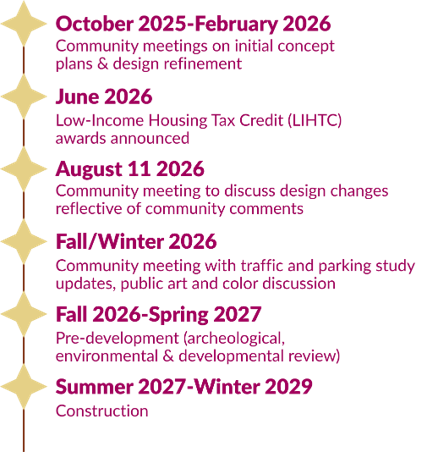 Project timeline for El Rincón.
Another community meeting regarding El Rincón will be planned for Fall or Winter, with pre-development testing and review occurring from Fall of this year through Spring 2027.
Westmoreland and 1st & 11th Design Build Forum
August 19 Recap
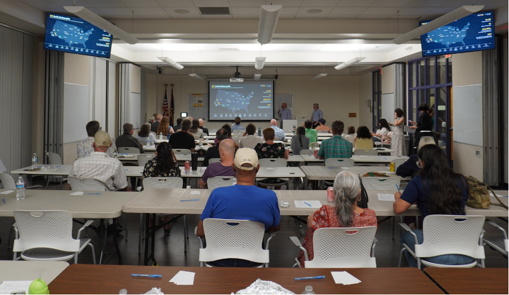 Community members attend the Westmoreland / 1st and 11th Design Build Forum on August 19th.
On August 19, HCD held a forum for community feedback on shortlisted design-build teams for the 1st & 11th and Westmoreland affordable homeownership sites in Dunbar-Spring and Menlo Park, respectively. 24-30 affordable homes will be built at these sites. Affordability will be maintained through a land trust model, where homes will be bought, owned, and sold to income-qualifying families. El Pueblo Housing Development, the City of Tucson's nonprofit development arm, will manage the trust that maintains ownership over the land. Home pricing will be subsidized and sold at below-market rates exclusively to income qualifying buyers at sale and resell.
This forum was held as an addition to the typical design-build selection process, which is done privately between a selection committee and design-build teams who offer development proposals. The process allows teams to build on and incorporate feedback offered by the selection committee before a team is ultimately selected. This additional public step was added to incorporate public feedback into the team scoring and selection process. Teams shared information about their experience and preliminary designs so that community members could ask questions relevant to the selection process.
Three design-build teams presented on August 19. Time was allowed after each presentation for written questions, which were passed to a facilitator who moderated discussion by design-build teams and HCD leadership. A feedback form was shared with attendees following Q&A sessions, which allowed for more detailed feedback on design and engagement with the public. This feedback will be shared with the design-build teams, who will be expected to address questions and concerns in their final submission to the selection committee. The selection committee will consider this feedback as part of their final selection process.
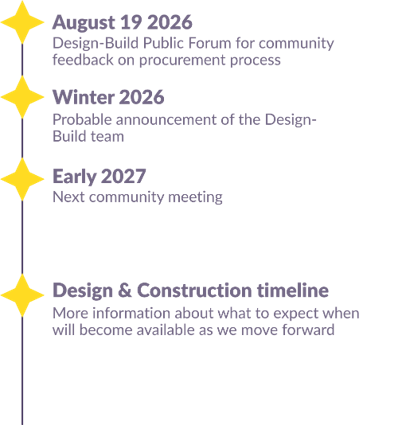 Project timeline for Westmoreland / 1st and 11th.
The final team selection will likely be announced in Fall or Winter, with another community meeting to follow in early 2027. More information about the development timeline will be available as the process moves forward.
Tucson House Construction Update
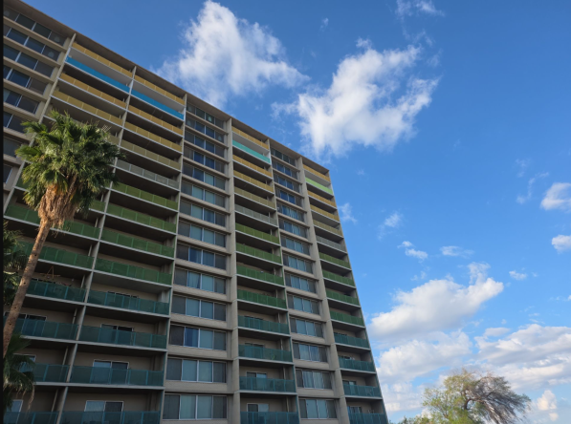 View of Tucson House showing the newly painted railings up on the 14th and 15th floors.
HCD and El Pueblo Housing Development (EPHD) are excited to share continued progress on the renovation of Tucson House. The first residential floor is expected to be complete and ready for residents to move in by the end of October. A preview of the new residential units is shown below.
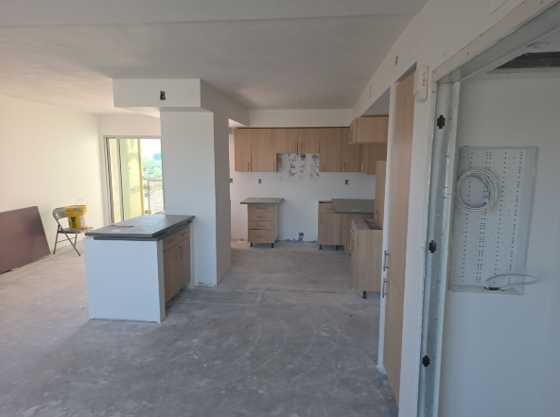 A Tucson House unit on the 14th floor under construction.
Construction is moving forward in the basement and on the first floor, with framing now underway. Residents can also look forward to improved access to the recently renovated Esquer Dog Park, where new doors have been installed for easier access. Inside the building, the project team continues to collaborate with local artists on interior art installations in partnership with the Arts Foundation for Tucson and Southern Arizona.
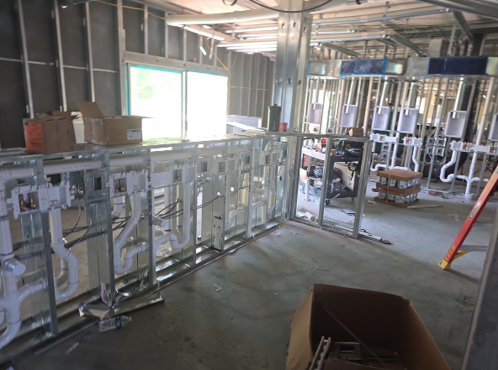 Construction of the one of the laundry rooms that will serve Tucson House residents.
With more than 25 percent of the project now complete, we're thrilled to continue sharing updates as the transformation of Tucson House moves forward. You can also follow along on the construction progress by observing the color of the balconies. Completed units are painted a bright new color and right now you can see the 15th floor is now complete. As construction moves down the building you will see the balconies painted floor-by-floor.
 HCD continues to invest in Tucson communities through neighborhood revitalization, community partnerships, and funding opportunities that support local priorities. This section highlights recent and upcoming work through 29th Street Thrive, Thrive in the 05, and HCD’s P-CHIP grantmaking, including neighborhood events, community-led activities, and investments in organizations and projects serving Tucson residents.
29th Street Thrive Zone Updates
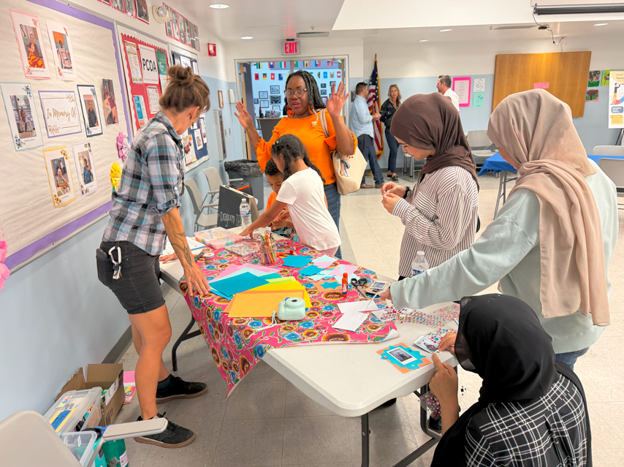 29 Thrive youth create decorations for their new polariod pictures.
The 29th Street Thrive community had a busy summer and early fall, with events focused on connecting residents with resources, gathering community input, and supporting neighborhood improvements. In July, 29th Street Thrive hosted a Back-to-School Resource Fair, providing students and families with free backpacks and school supplies, water bottles, socks, hygiene items, and information about housing and employment resources. The event also included the monthly food distribution led by the International Rescue Committee. Approximately 250 families, totaling 1,400 people attended. Later that month, the team hosted an ice cream social to share information about the 29th Street Thrive Transformation Plan and gather community feedback on proposed improvements and priority visions.
In August, 29th Street Thrive began working with Grow Tucson to plan tree plantings at Myers-Ganoung Elementary and Roberts-Naylor K-8 schools. More information will be shared as plans are finalized. The team also participated in Tucson Electric Power’s in-person Agency Partner Summit to discuss access to electricity services for low-income Tucsonans.
September brought additional opportunities for community connection and engagement. HCD’s Thrive team presented on Thrive in the ’05 and 29th Street Thrive to approximately 40 University of Arizona students participating in Dr. Brian Mayer’s Poverty Workshop. The students will help conduct surveys with individuals in the 29th Street Thrive community. The team also opened applications for community-led event funding. Individuals and organizations connected to the 29th Street Thrive community are eligible to receive up to $5,000 for events taking place between November 2026 and February 2027. The application period closed September 30, and the team hosted an informational session at Freedom Park Center and online to help interested applicants learn more.
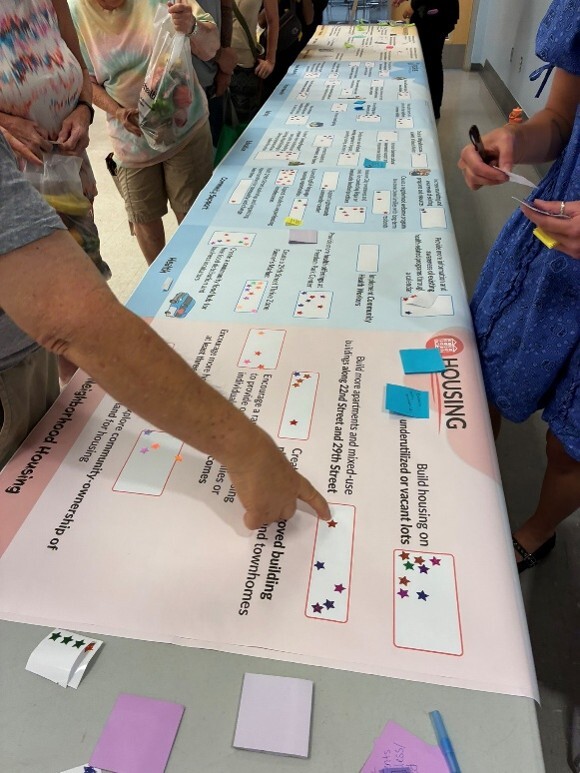 29 Thrive community members provide feedback on the 29 Thrive Draft Transformation Plan.
The 29 Thrive team also participated in the 2026 Health Fair hosted by Glory Tucson Tabernacle, joining other community partners to share health and City resources, including housing and rental assistance, the Lead Hazard Reduction Program, and Community Safety, Health & Wellness Program. In addition, 29th Street Thrive partnered with the Tucson Police Department for a multilingual food and diaper distribution at Freedom Park Center.
Looking ahead, the 29th Street Thrive Transformation Plan is moving into its next phase. The first draft was submitted to HUD on September 25, and the team will continue working with consultants and City colleagues throughout the fall to incorporate HUD feedback, with final submission anticipated in March 2027.
There are also several community events coming up this fall and winter. October will include a multilingual food distribution on October 17 from 1:30–3 p.m. and Trunk or Treat on Deuce Nine on October 31 from 6–9 p.m., both at the Freedom Park Center. In November, the community can look forward to a Plant-Based Feast Under the Stars (details on dates coming soon!) and Hope in the Park on November 13 from 9 a.m.–1 p.m. at Freedom Park. December will bring Winter Wonderland at Freedom Park Center on December 12 from 1:30–3 p.m. Details for some events are still being finalized.
The next round of community-led event funding applications is expected to open in early December for events taking place between March and June 2027. Visit the 29th Street Thrive website for updates and additional information about upcoming opportunities.
Thrive in the 05 Updates
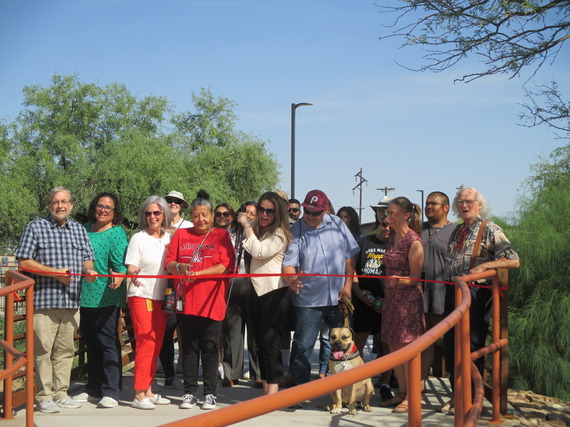 Mayor Romero, Councilmember Dahl, and Thrive in the 05 community members celerbate the reopening of Esquer Park.
Over the past few months, Thrive in the 05 has continued connecting residents with resources, community events, and opportunities to shape neighborhood improvements. Recent activities included Community Food Bank food box distributions at Tucson House, which served more than 150 residents, and ongoing Tucson House Ambassador meetings and interviews. Ambassadors are building leadership, communication, and recruitment skills while helping connect neighbors to resources and gather community feedback.
Thrive in the 05 is supporting neighborhood investment in Barrio Blue Moon neighborhood, including improvements to Francisco Elias Esquer Park. The park recently reopened following $1.49 million in improvements, including a new dog park, pedestrian bridge, lighting, landscaping, and green stormwater infrastructure. These improvements reflect the community-driven investments that help create safer, more vibrant neighborhoods.
Through the HUD-funded Choice Neighborhoods Implementation Grant, the Thrive team is also advancing four Critical Community Improvements designed to strengthen housing stability, economic opportunity, and community resources in the Thrive in the 05 area. The Homeowner Preservation Program (HOPP) will create a single point of access for low-income homeowners to connect with resources for home repairs, water and energy efficiency, climate adaptation, and housing stability. The Storefront Renovation and Façade Improvements program includes $500,000 for exterior improvements, signage, and green infrastructure for local businesses, plus an additional $50,000 for historic preservation improvements.
The grant is also supporting Community Serving Facilities that will provide $3.5 million to redevelop the Tucson House Annex into a space that could serve as a community food hub, health station, or food and retail space. Applications for both the storefront and community facility investments have closed and are moving through the review process.
Alongside this implementation work, Thrive in the 05 continues partnering with City departments, community organizations, and residents to activate spaces like the Marty Birdman Center and Balboa Heights Park. Upcoming activities include neighborhood cleanups in Balboa Heights on October 13, Barrio Blue Moon on November 6, and Miracle Manor on December 15. The community can also look forward to a Marty Birdman Center Open House on October 24, another Thrive in the 05 Fiesta (details coming soon!), a Thrive in the 05 + Barrio Blue Moon Block Party on November 8, a Thanksgiving Feast at the Marty Birdman Center on November 20, and Cookies with Santa at the Marty Birdman Center on December 18.
Visit the Thrive in the 05 website for updates and additional information about upcoming opportunities.
P-CHIP FY2028 Human/Public Services Funding Opportunity Opens October 19th
The City of Tucson’s People, Communities and Homes Investment Plan (P-CHIP) will soon open its Fiscal Year 2028 Human/Public Services funding cycle. The solicitation is anticipated to be released October 19, 2026, with approximately $2.6 million in funding anticipated for eligible community programs and services.
Funding is anticipated from three sources:
- General Fund: Approximately $1.4 million
- Community Development Block Grant (CDBG): Approximately $760,000
- Emergency Solutions Grant (ESG): Approximately $445,000
Federal funding amounts are preliminary and may change based on final HUD awards.
Eligible applicants may include 501(c)(3) and 501(c)(4) nonprofits, City departments, grassroots organizations with an eligible fiscal agent, and neighborhood groups with a sponsoring City department. Previously funded activities have included food security and health-related support, homelessness prevention and emergency shelter, housing navigation and home repair, fair housing and housing equity, workforce development and economic mobility, transportation and mobility services, domestic violence and crisis support, and services supporting older adults and people with disabilities.
Key dates:
- October 19, 2026: Anticipated solicitation release
- December 4, 2026: Deadline to submit application questions
- December 10, 2026: Applications due in Neighborly by 11:59 p.m. Arizona time
- January–February 2027: Threshold review and Community Review Panel evaluation
- March 1, 2027: Preliminary funding recommendations anticipated
- July 1, 2027: Anticipated funding period begins
Complete FY 2028 solicitation information is anticipated to be available October 19 at p-chip.tucsonaz.gov.
Questions about the funding cycle can be directed to HCDGrants@tucsonaz.gov.
Interested In Review P-CHIP Grant Applications?
HCD is seeking community members to serve on the P-CHIP FY28 Community Review Panel.
Panel members will review and provide feedback on applications submitted through the P-CHIP grant process. Panelists will help bring community perspectives and lived experience to the grant review process.
No prior grant review experience is required. Panel members will receive information, training, and guidance to support their participation.
Note: If you are selected for the review panel, you will be required to sign a confidentiality agreement and a conflict-of-interest affidavit.
Submitting this form does not guarantee selection to the review panel. Interest forms are due by November 30, 2026. If you have any questions about the community review panel, please email HCDGrants@tucsonaz.gov
 HCD helps Tucson residents access and maintain safe, stable, and affordable housing through a range of programs and partnerships. This section highlights HCD’s housing assistance efforts, including the Housing Choice Voucher program, appreciation for the local property owners and managers who participate as housing partners, and the Lead Hazard Reduction Program, which helps address health and safety hazards in homes.
Housing Choice Voucher Program: Thank You to Our Housing Partners
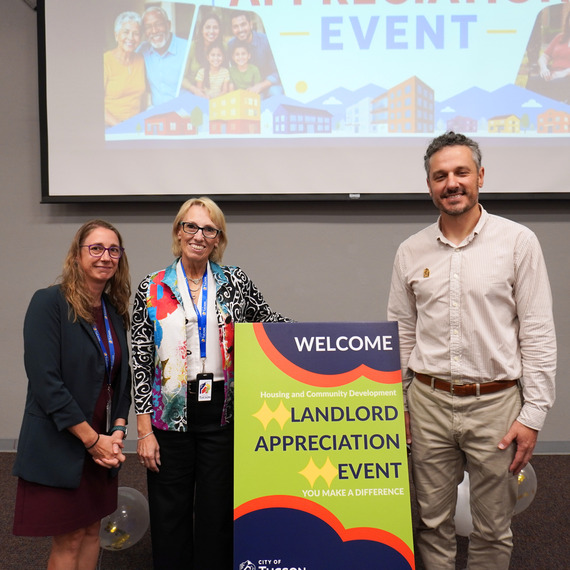 HCD Director Ann Chanecka, Landlord Engagement Manager Rebecca McPherson, and Housing Choice Voucher Administrator Antonio Carranza at the HCV Landlord Appreciation Event.
HCD recently recognized local property owners and managers for their partnership in the HCV Program, which helps provide stable housing for thousands of Pima County residents. The appreciation luncheon at the YWCA of Southern Arizona highlighted the important role housing providers play in expanding affordable housing opportunities.
The HCV program currently supports approximately 5,200 households across Tucson and Pima County through partnerships with roughly 1,250 landlords and property managers. Participants generally contribute about 30% of their income toward rent, while HUD provides rental payments directly to participating landlords for the remaining approved amount.
The program also includes specialized vouchers serving people with disabilities, people experiencing homelessness, and U.S. military veterans through programs such as HUD-VASH.
The HCV waitlist is currently closed due to overwhelming demand, with more than 40,000 households waiting for assistance. Property owners and managers interested in participating in the HCV program can learn more through HCD by emailing sec8_landlords@tucsonaz.gov.
Lead Hazard Reduction Program
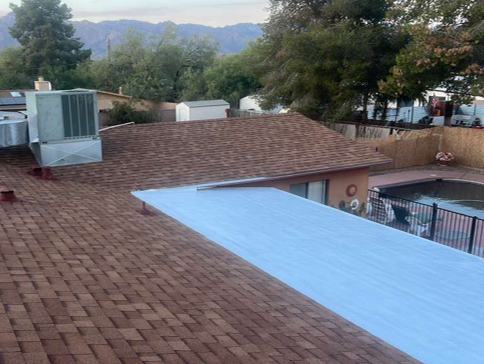 Lead hazard removal at resident's home in Tucson.
Lead-based paint can be hazardous when it peels, flakes, or chips in places children frequently touch, like windows, doors, and stairs. Lead poisoning may affect young children by causing developmental delays, learning problems, hearing loss, seizures, or brain damage. The Lead Hazard Reduction Program (LHRP) begins with a free in-home Lead Inspection Risk Assessment. Once lead hazards have been detected in eligible properties, a lead-based paint mitigation project will take place to remove the identified lead hazards.
LHRP work can protect children from lead poisoning through lead mitigation and home improvements such as new windows, doors, trim, and paint. Through the Lead Hazard Removal Program, a state-certified lead inspector was able to identify multiple areas of a home that tested positive for lead, and our residential rehabilitation project coordinator created a scope of work to remove all the lead hazards with the help of certified contractors. In a typical case, we replaced old, lead painted windows with new energy efficient windows, followed EPA regulations to clean areas containing lead dust, and removed lead-positive fascia around the exterior before giving the home a little facelift with new boards and a fresh coat of paint.
From January to September 2026, our LHRP team completed 10 homes and another 13 are in progress. Eight homes are on the waitlist. Overall, $467,000 has been spent on the Lead Hazard Removal and Healthy Homes programs.
While supplemental funding from the Healthy Homes program and CDBG Matching funds lasts, other major health and safety repairs can be completed, including replacing roofs, water heaters, HVAC systems, and electrical panel upgrades.
Si desea que se le explique en español, por favor llame al teléfono 520-837-5346.
El Portal & Public Housing
El Portal: City Affordable Housing
The City of Tucson, through HCD, owns and operates affordable rental housing through the El Portal program. El Portal includes duplexes, small apartment complexes, multifamily properties and scattered single-family homes located throughout Tucson.
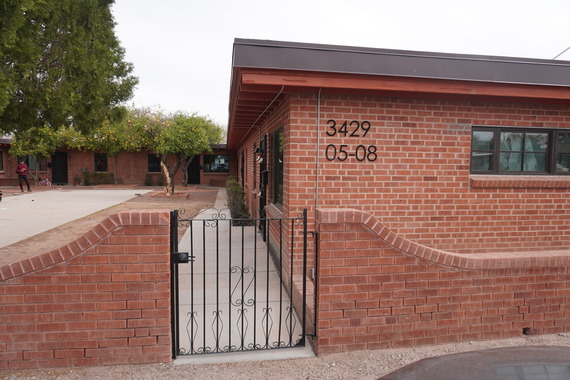 Willard Apartments in midtown. Willard Apartments are part of HCD's El Portal portfolio.
The City currently owns 294 El Portal units. These homes are intended for households with incomes within the applicable Area Median Income (AMI) limits established by each program’s funding requirements. Rents are set according to program guidelines, regional income levels and market conditions, and are generally below the fair market rent for comparable units. Income limits vary based on household size.
El Portal is designed to provide housing for working families and other households who have income but may not be able to afford market-rate rents. Like tenants in the private rental market, El Portal applicants undergo background and credit reviews.
Public Housing
The City also operates a public housing program that provides rental housing for eligible low-income families, older adults and people with disabilities. Public housing is available in a variety of housing types, including high-rise apartments, multifamily properties, duplexes and scattered single-family homes.
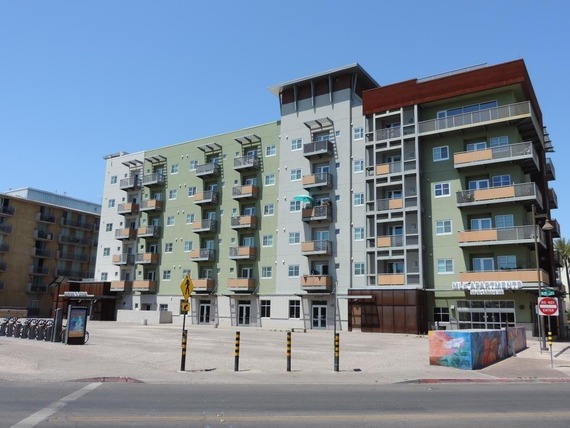 MLK Apartments is part of HCD's public housing portfolio.
The City currently owns 1,098 public housing units located throughout Tucson, including units in three high-rise apartment buildings.
Public housing is generally limited to households with incomes at or below 50% of AMI, subject to program eligibility requirements. Public housing residents also undergo background and credit reviews, consistent with applicable program requirements.
 HCD works directly with people experiencing homelessness to help connect them with housing and resources, while also working with community partners to strengthen Tucson and Pima County’s homelessness response system. Through efforts such as helping people experiencing homelessness move into available affordable housing, collaborating through the Tucson Pima Collaboration to End Homelessness (TPCH), and supporting community events and funding opportunities, HCD is working to expand pathways to housing and strengthen the community’s response to homelessness. This section highlights recent work, upcoming opportunities, and ways community members can get involved.
From Tents to Keys: 41 Tucson Households Find a Place to Call Home
This summer, HCD brought together staff, community partners, and volunteers for an extraordinary housing surge helping 41 households move from homelessness into permanent, affordable homes. HCD’s El Portal Affordable Housing Program provided quality City-owned apartments while the City of Tucson Housing First program connected residents with rental assistance and the supportive services needed to remain stably housed. The result was more than a lease signing: it was an opportunity for people who had experienced chronic homelessness to begin a new chapter with a safe and welcoming place of their own.
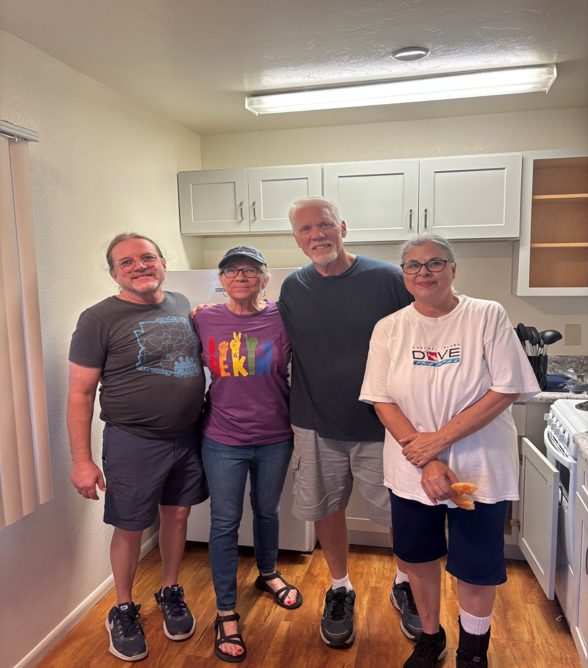 HCD staff, community partners and volunteers helped make sure units were move-in ready.
Getting 41 homes ready at once took a community. In the days before move-in, more than 50 HCD employees, partners, and community volunteers stepped outside their usual roles to assemble furniture, move household goods, make beds, stock refrigerators, and prepare each apartment for its new residents. El Portal and Housing First staff worked alongside maintenance and Public Housing teams, Community Safety, Health, and Wellness, Housing Choice Voucher and Community Development staff, Tucson Pima Collaboration to End Homelessness partners, New Spirit Lutheran Church, and other community volunteers to make this initiative a success.
Then came the most important part: welcoming 41 Tucson households. The surge demonstrates what is possible when affordable housing, rental assistance, supportive services, and a committed community come together around a shared goal. For 41 of our neighbors and their families, homelessness was replaced with something simple but transformative: a key and a place to call home. It is one more step toward our shared vision, Tucson: A Home for Everyone.
Thank You, MDOT Volunteers!
In August, the City of Tucson and HCD hosted the second annual Multi-Disciplinary Outreach Team (MDOT) Volunteer Appreciation Lunch to recognize the Tucsonans who have donated their time and energy to support people experiencing homelessness.
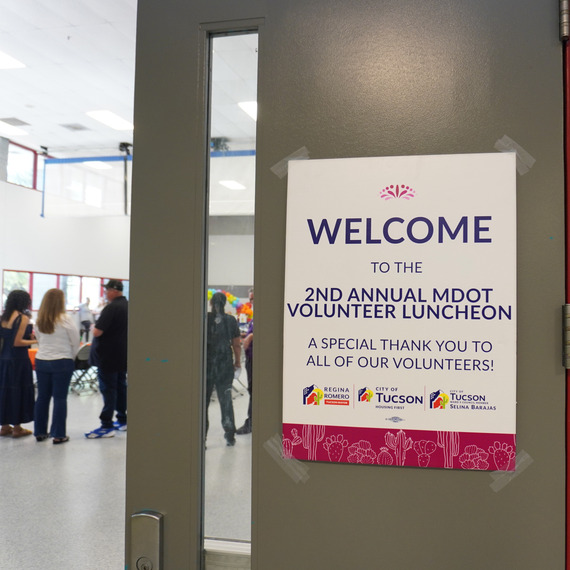 MDOT Volunteer Luncheon.
Held at El Pueblo Recreation Center, the celebration was led by Mayor Regina Romero and HCD Director Ann Chanecka. Mayor Romero thanked volunteers for their continued support of some of Tucson’s most vulnerable neighbors, including during the extreme summer heat.
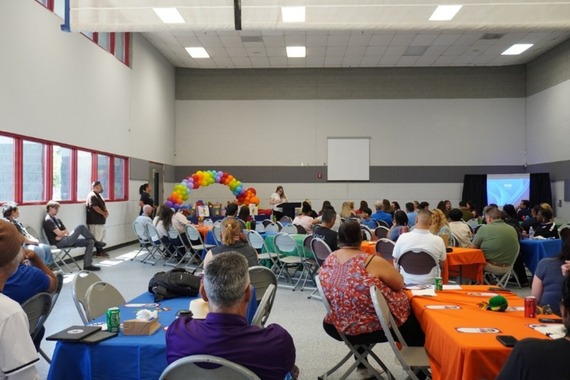 Allison Chappell, Housing First Program Director,, welcomes MDOT Volunteers to the luncheon.
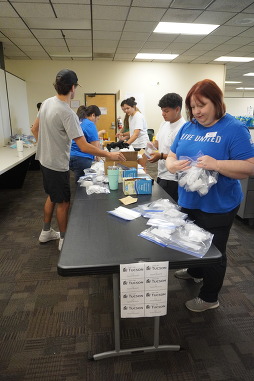
Over the past year, MDOT volunteers have contributed hundreds of hours of service. Volunteers help assemble care packages with non-perishable food, water, hygiene products, and other essentials, which MDOT outreach workers distribute during their daily outreach to people living unsheltered throughout Tucson. MDOT also works alongside community partners, including El Rio Community Health Center and Old Pueblo Community Services, to connect people with coordinated support and resources.
Get involved with MDOT!
All are welcome to participate in upcoming MDOT volunteer opportunities:
Care Package Assembly
 |
|
📅 Saturday, October 17, 9–11am
📅 Wednesday, October 21, 6–8 pm
📍 195 W. Irvington Rd., Building 15
Help assemble essential care packages that MDOT outreach workers distribute to people experiencing homelessness throughout Tucson. These family-friendly, hands-on events are open to individuals and community groups. All ages are welcome; children must be accompanied by a parent, guardian, or adult mentor. Volunteers should wear closed-toe shoes and bring a reusable water bottle.
To RSVP for a Care Package Assembly, contact Lucinda Anderson at Luncinda.Anderson@tucsonaz.gov.
|
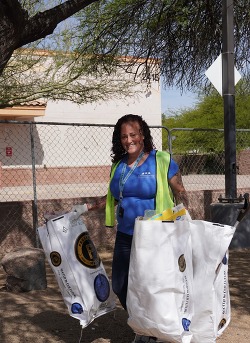
La Doce/South 12th Avenue Corridor Cleanup
 |
|
📅 Thursday, October 22, 8–10 am
📍 South 12th Avenue and Drexel Road
Come out and make a real difference! Join Ward 1, Ward 5, and community volunteers as we team up to beautify the 12th Avenue neighborhood.
Together, we'll roll up our sleeves, clean up the community, and help make 12th Avenue shine!
Sign up for the La Doce/South 12th Avenue Corridor Clean Up
|
Tucson Pima Collaboration to End Homelessness (TPCH) Highlights and Updates
The Tucson-Pima Collaboration to End Homelessness (TPCH) continues bringing together homelessness service providers, community and faith-based organizations, local governments, and people with lived experience to advance solutions to homelessness in our community. TPCH’s governing board and committees are continuing to implement the recently adopted strategic plan, including developing action plans and timelines, while also pursuing funding opportunities to strengthen the local homelessness response system.
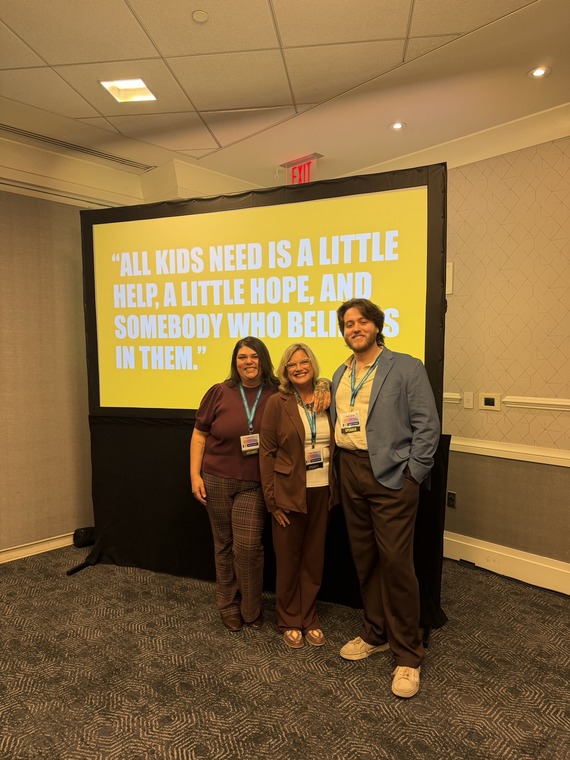 Continuum of Care Supervisor, Kyle Kerns, at the National Conference on Ending Homelessness and Capitol Hill Day in Washington, D.C.
TPCH Takes the Conversation to Washington, D.C.
TPCH staff recently attended the National Conference on Ending Homelessness and Capitol Hill Day in Washington, D.C., joining homelessness leaders, service providers, policymakers, and Continuums of Care from across the country.
Staff led a conference session on Arizona’s statewide Youth Homelessness System Improvement (YHSI) efforts, sharing the work underway in Arizona, lessons learned, and challenges and successes from communities working to strengthen systems and services for youth experiencing homelessness.
During Capitol Hill Day, staff met with elected officials to highlight the work of TPCH and Continuums of Care nationwide and share the needs and gaps facing our local community. The conversations provided an opportunity to bring local priorities to a national audience while learning from communities working on similar challenges across the country.
Continuum of Care Funding Update
The TPCH Board and Lived Experience Council approved the submission of the FY2026 Continuum of Care (CoC) community application to the U.S. Department of Housing and Urban Development (HUD). The application requests $22.6 million to support the community’s homeless response system.
The application was submitted to HUD on September 29th and includes 33 project applications for Permanent Supportive Housing, Rapid Re-Housing, Transitional Housing, and Supportive Services-Only projects. The final project priority ranking and community application are available for public review on the TPCH website.
HCD participates in the CoC alongside community partners to support coordinated efforts to prevent and end homelessness and maintain access to housing and supportive services for Tucson and Pima County residents.
Get Involved with TPCH
TPCH is also seeking community members to serve on its Board and committees through its annual mid-term appointment process. TPCH is especially encouraging applications from people with lived experience of homelessness, as well as community members with expertise in areas including behavioral health, landlord partnerships, domestic violence services, immigration services, data and evaluation, and other areas relevant to the homelessness response system.
Applications must be submitted by noon MST on October 5, 2026.
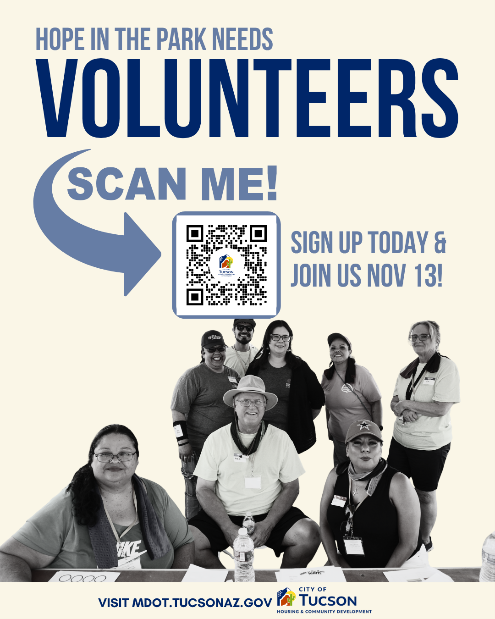
Hope in the Park: Returning November 13th
Hope in the Park is a twice-yearly resource fair dedicated to supporting individuals and families experiencing homelessness or facing significant hardship. Local agencies, service providers, and community partners come together to offer essential resources and services in one place.
The next Hope in the Park will be held on Friday, November 13, from 9 a.m. to 1 p.m. at Freedom Park, 5000 E. 29th St. Everyone is invited to get involved by volunteering, sharing resources, or connecting with neighbors who need support now more than ever.
Want to get involved?
If you have any questions about this event, please contact Lucinda Anderson at Luncinda.Anderson@tucsonaz.gov.
 Here’s a look at recent updates and discussions related to HCD at Mayor and Council and HCD’s Commission on Equitable Housing and Development, along with ways to stay informed and participate in upcoming opportunities.
Exploring a Community Preference Policy
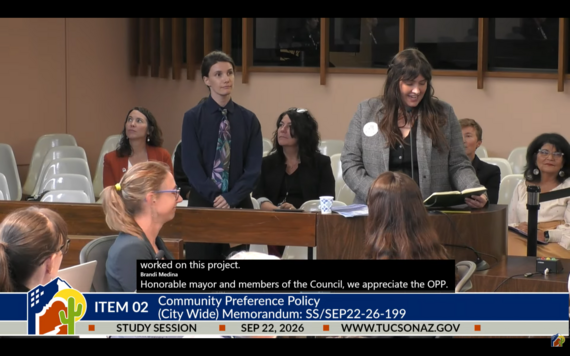 Recent graduates of the UofA Master of Urban Planning Program, Amanda Grant and April Putney, present on their capstone project, Community Preferece Policy, to Mayor and Council on September 22.
At the request of Mayor Romero and Vice Mayor Santa Cruz, HCD has been exploring the possibility of establishing a Community Preference Policy for City-owned affordable housing.
A Community Preference Policy could provide additional preferences to house income-qualified residents who have experienced displacement, or who are at heightened risk of displacement due to rising housing costs, in City-owned affordable housing. The policy is intended to help address past government harm and preserve community ties as neighborhoods change and redevelop.
On September 22, 2026, HCD presented the Community Preference Policy to Mayor and Council during a Study Session. As part of the presentation, recent graduates of the University of Arizona’s Master of Urban Planning program shared their research on community preference policies and recommendations specific to Tucson. State Representative Betty Villegas also spoke on the importance of this work and the long road it took us to get here. This was the first time a Community Preference Policy was presented to Mayor and Council.
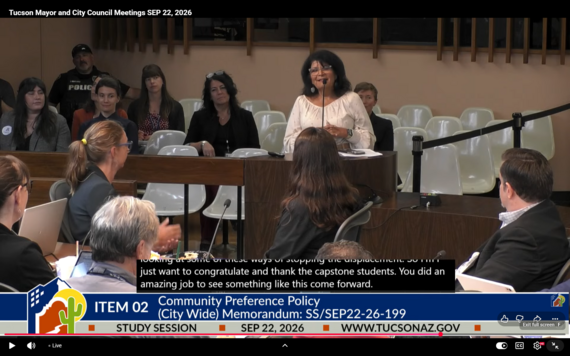 Arizona State Representatives Betty Villegas speaking at Mayor and Council on the Community Preference Policy.
Mayor and Council provided direction for HCD to continue developing the policy and engage with the community. Community engagement opportunities are anticipated later this fall and winter and will provide residents and community members with an opportunity to learn more about the proposed policy and share their feedback. HCD will also conduct a disparate impact analysis as part of the process, which will examine available data and other relevant information to assess whether the proposed policy could disproportionately affect protected groups under fair housing laws.
HCD plans to return to Mayor and Council in spring 2027 with a final policy recommendation informed by community feedback and the analysis. Keep an eye out for updates about upcoming community engagement opportunities later this fall and winter.
View the September 22 Mayor and Council Study Session and jump to 3:38.27 to watch the Community Preference Policy presentation.
City of Tucson Prosperity Initiative Action Plan and Indicator Dashboard
 Cover Page for the City's Prosperity Initiative Action Plan.
On October 6, HCD staff will bring the City’s Prosperity Initiative Action Plan and the Prosperity Initiative Indicator Dashboard to Mayor and Council for discussion, adoption of the Action Plan, and direction on implementation and ongoing reporting.
Since the Prosperity Initiative was adopted by the City of Tucson in 2024, HCD staff have been working with City departments and offices to translate the regional initiative into actions the City can advance through its programs, policies, partnerships, and operations.
The City of Tucson Prosperity Initiative Action Plan provides a three- to five-year framework organized around four goals: inclusive, safe, healthy, and opportunity-rich neighborhoods; preventing the root causes of poverty; expanding economic and community mobility; and ensuring equitable and accessible City systems. The plan distinguishes between work already underway, near-term implementation actions, and longer-term opportunities that may require additional resources or policy decisions.
The City and Pima County have also developed a shared Prosperity Initiative Indicator Dashboard with the Community Coalition for Prosperity. The dashboard brings together baseline regional data on conditions connected to poverty and economic mobility, including housing stability, education, health, workforce, and other key areas. It is designed to complement the Action Plan by helping to track broader community conditions and changes over time.
As implementation moves forward, the Action Plan will serve as a living framework that can evolve as City programs change, new opportunities emerge, and additional data becomes available. Staff will use the dashboard, along with department-level measures, to monitor progress and inform future updates.
Housing and Homeless Emergency Update
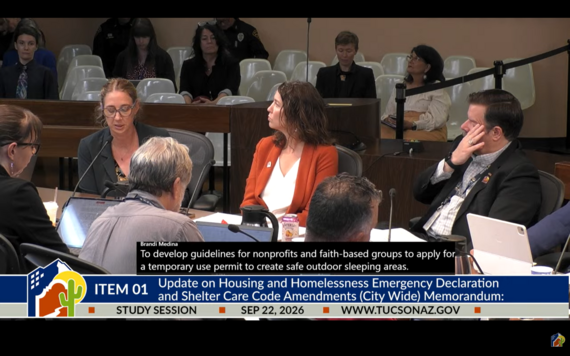 HCD Director Ann Chanecka and PDSD Director Koren Manning presenting their update on the Housing and Homelessness Emergency Declaration at Mayor and Council on September 22.
In February 2026, the City of Tucson declared a Housing and Homelessness Emergency to help remove zoning and permitting barriers and expedite the creation of shelter beds. As part of this work, the City is exploring updates to its zoning regulations for shelter care, including where shelter care facilities can operate and requirements that can make it difficult to add shelter capacity.
On September 22, 2026, City staff presented an update on the Housing and Homelessness Emergency to Mayor and Council during a Study Session. The discussion included the City's ongoing response and proposed changes to shelter care zoning.
Community engagement is underway this fall. Residents and community members can learn more about the proposed changes, ask questions, and share their input at upcoming feedback opportunities, including in-person opportunities at Park Place Mall October 2–4. Feedback will help inform a draft shelter care code amendment. Residents and community members can also provide feedback by taking the Shelter Care Code Amendment Survey.
View the September 22 Mayor and Council Study Session and jump to 3:03.34 to watch the Housing and Homelessness Emergency Declaration presentation.
Commission on Equitable Housing and Development
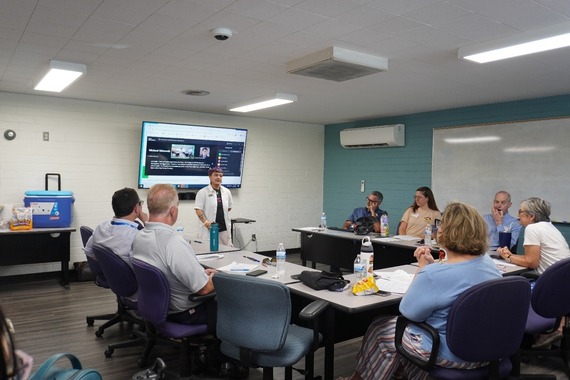 Commissioner Vida Rodriguez giving an introduction to the rest of the Commission.
The Commission on Equitable Housing and Development (CEHD) welcomed four new members in August and September. Created by Mayor and Council in 2020, CEHD serves as an advisory body to Mayor and Council on housing opportunities and challenges. Its 13 members bring a range of community knowledge, experiences, and perspectives.
The new Commissioners are:
- Ben Olsen previously served as Planning Division Administrator for HCD and currently works as a Senior Data Strategist for AmeriCorps.
- Elaine MacPherson previously worked at HCD with the Tucson Pima Collaboration to End Homelessness and currently serves as Director of Grassroots Engagement for the Arizona Neighborhood Project.
- Vida Rodriguez serves as the Youth Representative to the Commission and is a member of the Youth Advisory Council for the Tucson Pima Collaboration to End Homelessness.
- Bill Mackey represents the Pima Community Land Trust on the Commission. He is an Assistant Research Professor with the Drachman Institute at the University of Arizona’s College of Architecture, Planning, and Landscape Architecture and a principal of the art and architecture firm Worker, Inc.
At its September meeting, the Commission:
- Elected Anne Miskey as Vice Chair;
- Received an update from the Planning and Development Services Department on Code Tucson, including proposed changes related to middle housing, accessory dwelling units, flexible lot development, parking and design standards, adaptive reuse, and streamlining development processes to remove barriers to housing;
- Heard HCD research on the Tucson Housing Trust Fund, including how other communities fund and sustain similar programs and potential funding strategies for Tucson;
- Received an overview of the upcoming FY 2028 P-CHIP Human Services Grant Making Cycle, including anticipated funding, eligibility, the application process, and the role of the Community Review Panel;
- Received updates from the City, County, and HCD on current housing initiatives, including the Regional Housing Fund, 10-Year Regional Housing Strategy and Funding Plan, shelter care zoning, the Prosperity Initiative, Community Preference Policy, and Housing and Homelessness Emergency; and
- Established an ad hoc Governance Working Group to review governance matters, including potential bylaw changes, commissioner appointments, onboarding, and Commission procedures.
The Commission also received a presentation from the City Clerk’s Office on Arizona Open Meeting Law, including requirements related to quorum, agendas and public notices, Legal Action Reports, meeting minutes, Call to the Audience, conflicts of interest, and subcommittees.
CEHD meets on the first Thursday of each month. The Commission also has two subcommittees that meet monthly: Housing Innovation & Development, which meets on the second Tuesday, and Community Engagement & Collaboration, which meets on the third Thursday.
For agendas, materials, and more information about the Commission and its subcommittees you can go to the Commission on Equitable Housing & Development webpage and check out previous meetings on HCD’s YouTube Channel.
Upcoming Meeting
The next CEHD meeting will be held Thursday, October 1, from 4-6 p.m. via Zoom. Registration is required. Upcoming topics include an update on the Community Preference Policy and the City’s nonprofit development arm, El Pueblo Housing Development, along with other housing and community development topics. Members of the public may provide comments during Call to the Audience. Written comments may also be submitted to cehd@tucsonaz.gov.
 Each Month, HCD spotlights two employees who exemplify our department’s values in their work. We are proud to recognize employees who go above and beyond in their roles, support their colleagues, and contribute to the work we do for our community.
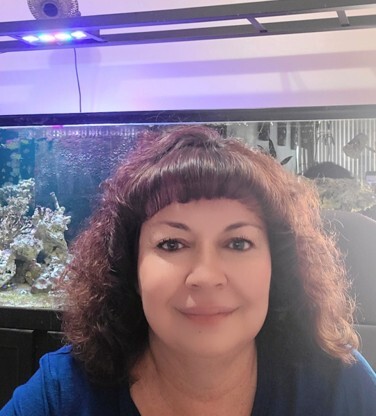 HCD Project Coordinator, Mary Leon
Mary Leon
Mary Leon, in our Community Development division, has served the City of Tucson for 25 years. As a Project Coordinator, Mary brings decades of experience and institutional knowledge to her work, helping the department navigate contracts, prepare for programmatic changes, and keep important projects moving forward.
Mary’s nominator described her as “an incredible wealth of knowledge, a quietly confident can-do attitude, and exactly the person you want in your corner.” Her expertise and willingness to support her colleagues make her a trusted resource across the department. Mary has also played an important role in the department’s Healthy Homes grant work, helping support efforts that improve housing conditions and promote healthier homes for Tucson residents.
Thank you, Mary, for 25 years of service, your steady leadership, and all the ways you support HCD and our community!
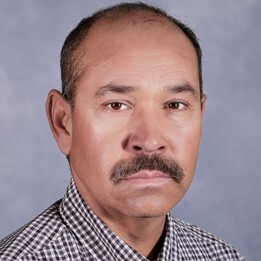 Community Services Project Supervisor Eddie Jimenez
Edward “Eddie” Jimenez
Edward “Eddie” Jimenez has served with the Housing and Community Development department for 25 years, taking on a variety of roles and becoming a familiar and dependable presence across the department. Eddie is known for his willingness to help wherever he is needed and for the care he brings to keeping our facilities and operations running smoothly.
His nominator shared that Eddie “answers calls after hours, ensures that our campus is safe, and is always willing to jump in to lend a hand when called.” They also noted, “I have seen him ask hard questions of our contractors, fix a leaking pipe, and challenge himself to learn new skills.”
Eddie’s hands-on approach, curiosity, and commitment to solving problems make him an invaluable member of the HCD team. We are grateful for his 25 years of service, his stewardship of our department, and his willingness to support teams across HCD whenever help is needed.
Thank you, Eddie, for your dedication, flexibility, and continued commitment to HCD!
 Housing can come with a lot of terms, programs, and processes that aren’t always easy to navigate. In this section, we’ll break down a different housing topic each newsletter to help make the housing landscape easier to understand.
Area Median Income (AMI)
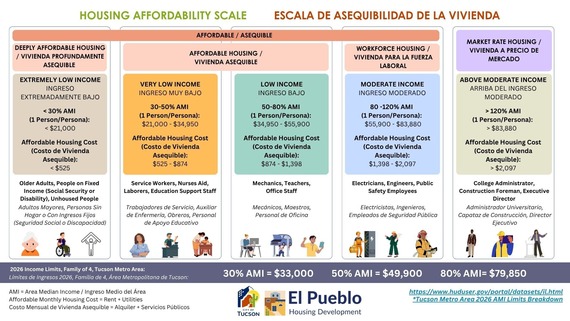 Housing Affordable Scale by AMI
Area Median Income, or AMI, is a measure of household income used by the U.S. Department of Housing and Urban Development (HUD) to determine eligibility for many affordable housing programs. AMI varies depending on household size and location. Median income is based on household size and location, and is used as the 100% AMI benchmark for each household size.
For example, in Tucson, 100% AMI for a family of four is $99,800. A household earning 60% AMI would have an annual income of $59,880, or 60% of the 100% AMI amount. These numbers change annually.
You may see affordable housing programs described as serving households at a specific percentage of AMI. These percentages help determine who may qualify for a particular housing opportunity and how rents or other housing costs are structured. Households at or below 80% AMI are generally considered low-income for HUD purposes, while programs may serve households at lower income levels, such as 30%, 40%, 50%, or 60% AMI.
Affordable housing developments that receive certain types of federal funding are often required to serve households within specific income ranges. For example, Stone & Speedway, an upcoming affordable housing development in Dunbar-Spring, will include units designated for households earning between 40% and 60% AMI.
Why does AMI matter? AMI helps housing programs target resources to households with different income levels and ensures that affordable housing opportunities are available to residents who meet the program's income requirements. Because AMI limits vary by household size and are updated periodically, the income limit for one household may be different from another.
|