|
Since January 2026, HCD has continued making progress across its core areas of work, including housing development, community investment, homelessness response, and housing assistance. The highlights below showcase key updates and milestones from across the department.
 Building and operating housing means developing, preserving, and managing affordable homes, expanding Tucson’s supply of subsidized units while ensuring long-term access to safe, stable housing for low-income residents
Stone and Speedway Phase I Awarded in Low-Income Housing Tax Credits
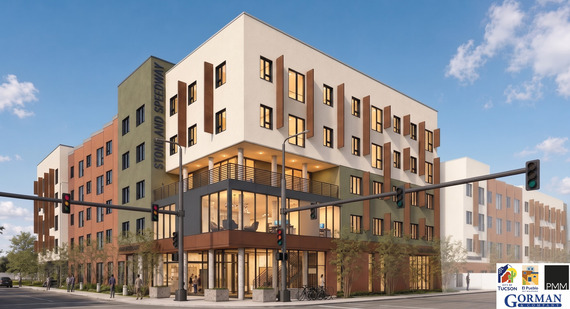 Rendering of Stone and Speedway Phase I Affordable Housing Development
Stone and Speedway Phase I has been awarded highly competitive Low-Income Housing Tax Credit allocations from the Arizona Department of Housing. The application was submitted by Gorman & Company, the City's housing development partner for the project. The award will help fund 44 affordable housing units as part of a larger mixed-income development planned for a City-owned site at Stone Avenue and Speedway Boulevard. The project advances Tucson's Housing Affordability Strategy and the Thrive in the 05 Transformation Plan, bringing new housing opportunities and investment to the community.
An upcoming community meeting for Stone & Speedway!
Join us for project updates and information on the Traffic Impact Study, Infill Incentive District (IID), and Individual Parking Plan (IPP). Burritos, children’s activities, and Spanish interpretation will be provided.
- Wednesday July 22, 2026 | 5:30 – 7:30 PM
- Doors open at 5:15 PM
- Dunbar Pavillion, Dining Hall | 325 W 2nd Street
Stone & Speedway Naming Survey
We want to hear from you to help select a name for this project!
Based on community feedback received to date, we've developed several naming options. Please take a minute to fill out the survey and share your preference.
El Rincón Awarded Low-Income Housing Tax Credits
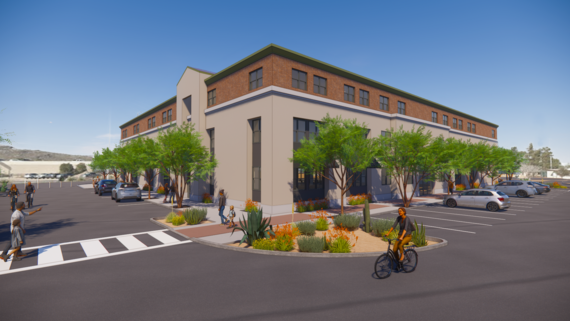 Rendering of El Rincón Affordable Housing Development in Barrio Anita
El Rincón has been awarded highly competitive Low-Income Housing Tax Credit (LIHTC) allocations from the Arizona Department of Housing. The application was submitted by El Pueblo Housing Development, the City of Tucson’s nonprofit housing development entity. The award will support 67 affordable housing units across two City-owned sites in Barrio Anita and El Presidio, advancing Tucson’s Housing Affordability Strategy and continued investment in neighborhood-based affordable housing.
South 10th Avenue Housing Development Advances Community Engagement Process
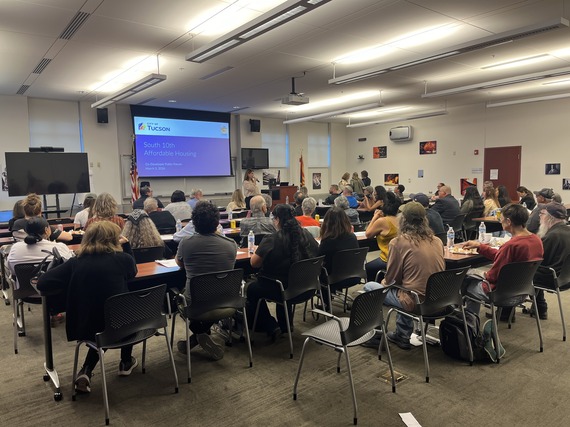 Community members attend the South 10th Housing Development Co-Developer Forum
HCD continues to advance planning for a major mixed-income, mixed-use housing development on South 10th Avenue, just south of West 22nd Street. The 12-acre City-owned site, formerly used by Environmental & General Services and Tucson Water, is being considered for approximately 300–400 housing units.
In March, HCD hosted a community forum in the Barrio Santa Rita Park–West Ochoa area where neighborhood residents and stakeholders heard presentations from two potential co-developers. El Pueblo Housing Development, HCD’s nonprofit housing development arm, is currently seeking a co-developer partner to help bring the project to life.
The City is committed to ongoing collaboration with neighborhood residents, community organizations, and City departments to ensure the development reflects community input and serves as a long-term benefit to Tucson.
Tucson House Rehabilitation Celebrates Groundbreaking Milestone
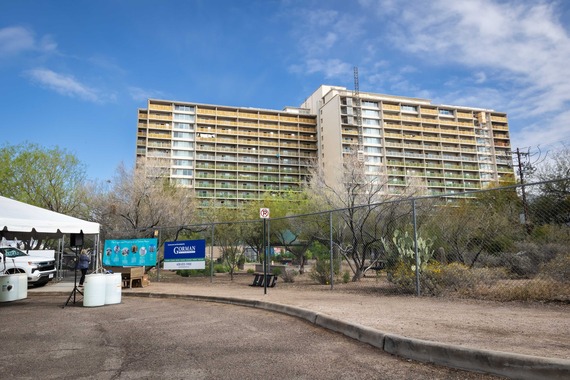 View of Tucson House from groundbreaking ceremony
Arizona Governor Katie Hobbs, City officials, Housing and Community Development (HCD) staff, and residents gathered in March to celebrate the groundbreaking for the Tucson House rehabilitation project, marking a major milestone in the City’s Thrive in the 05 Transformation Plan and ongoing investment in affordable housing preservation.
Originally built in 1963, Tucson House will undergo full rehabilitation to address aging infrastructure, accessibility needs, and system upgrades, transforming the 17-story building into a modern, safe, and dignified housing facility for older adults.
The project is supported by a $50 million Choice Neighborhoods Implementation grant awarded in 2023 and is being delivered in partnership with Gorman & Company as co-developer, general contractor, and future property manager.
Amazon Flats Affordable Housing Project Breaks Ground on West Miracle Mile
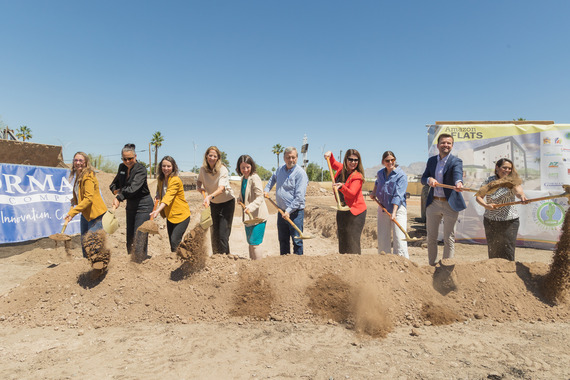 Groundbreaking ceremony for Amazon Flats Affordable Housing Development
In April, Tucson Mayor Regina Romero and Housing and Community Development Director Ann Chanecka joined community members to celebrate the groundbreaking of Amazon Flats, a new affordable housing development bringing 59 apartments to West Miracle Mile near the former Amazon Motel site.
Amazon Flats is the second phase of redevelopment on the historic corridor, following the earlier transformation of the Amazon Motel into a 30-unit permanent supportive housing community that opened in September 2025. The $24.4 million project is expected to be completed in fall 2027 and will provide homes for households earning up to 50% of the Area Median Income (AMI), with affordability guaranteed for 50 years.
Residents will benefit from in-unit washers and dryers, free Wi-Fi, on-site services, community spaces, a public plaza, a basketball half-court, and a pet yard, supporting both housing stability and quality of life.
 Investing in community means partnering with local organizations, strategically directing funding, and financing affordable housing to strengthen neighborhoods, expand opportunities, and improve quality of life in areas that need it most.
HCD Issues Two New RFPs to Advance Thrive in the 05 Investments
Housing and Community Development (HCD) is currently accepting proposals for two funding opportunities aimed at advancing neighborhood investment and community-serving infrastructure within the Thrive in the 05 area.
HCD is seeking applications to support storefront and façade improvements that strengthen neighborhood business corridors and encourage reinvestment in key commercial areas in the Thrive in the 05. Applications for the program are due August 21, 2026, at 4:00 p.m. MST. Historic preservation funding applications (if applicable) are due August 9, 2026, at 4:00 p.m. MST.
HCD is also seeking proposals to design, build, and operate community-serving facilities that expand access to services, resources, and neighborhood-based amenities within Thrive in the 05. Proposals are due July 15, 2026, at 5:00 p.m. MST.
For questions, please contact Denisse.Ortega-Lorona@tucsonaz.gov
Thrive in the 05 Hosts Summer Fiesta
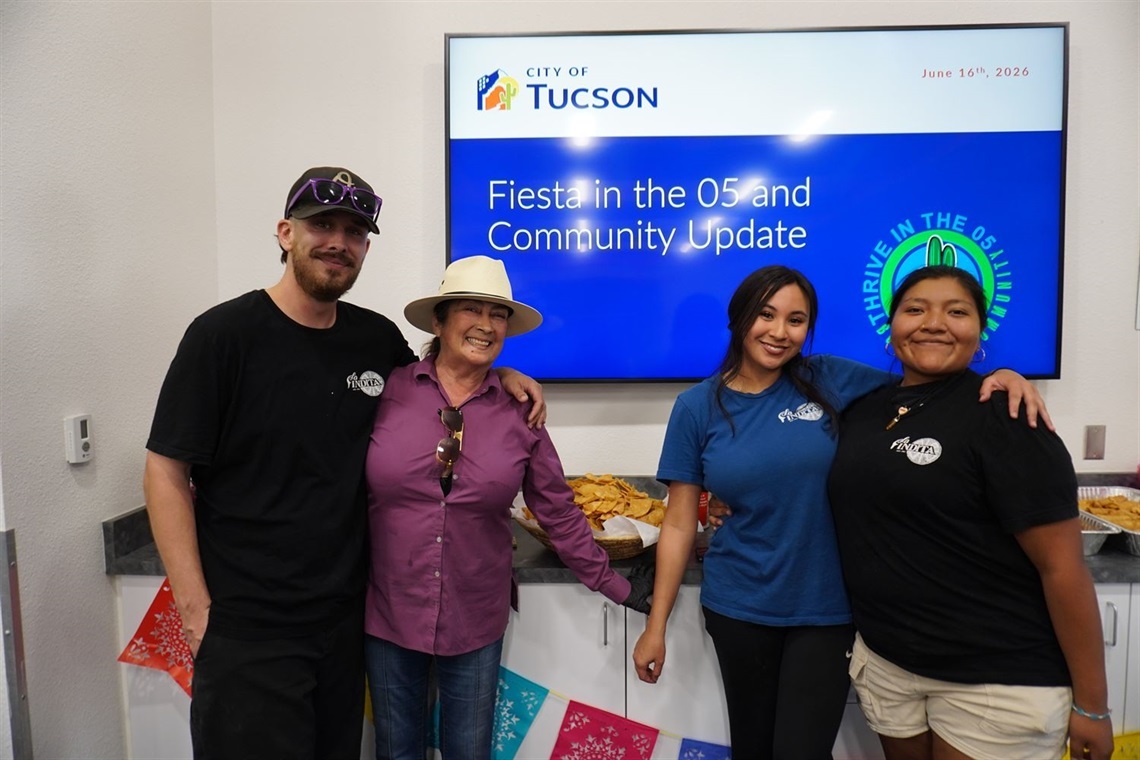 Staff from La Indita Restaurant who provided catering for Fiesta in the 05
On June 16, approximately 150 residents, families, and community partners gathered at Pima Community College Downtown Campus for the Thrive in the 05 Summer Fiesta: Community Updates and Celebration.
The event brought together residents and organizations for an evening of community connection, information sharing, and celebration. Attendees received updates on neighborhood projects, upcoming opportunities, and ongoing initiatives taking place throughout the Thrive in the 05 area, while also connecting directly with organizations serving the community.
Twenty community partners hosted resource tables, providing information on housing, health, education, sustainability, transportation, and other services available to residents. To encourage engagement, attendees participated in a community scavenger hunt that invited them to visit partner booths and learn about available resources. Participants who completed the activity were entered into raffle drawings for tablets and gift cards.
Families also enjoyed free food from Hotdogs 501 and Café La Indita, ice cream from Frozen Delight, and activities for children throughout the evening.
Events like the Summer Fiesta strengthen community connections, celebrate neighborhood progress, and help ensure residents remain informed and engaged in the ongoing transformation of Thrive in the 05.
By the Numbers:
- Approximately 150 attendees
- 20 community partner organizations
- 2 raffle winners
- Free food, ice cream, and children's activities
- Community presentations and resource tables
29 Street Thrive Zone Update
 Residents of the 29th Street Thrive Zone attend the Community BBQ Housing Fair
The 29th Street Thrive Zone has continued to make significant progress this year through resident-led engagement, neighborhood improvements, and community partnerships.
Since January, the team has hired four multilingual Community Connectors and completed 78 one-on-one resident assessments in the Catalunya neighborhood in multiple languages. These conversations are helping shape the future Transformation Plan, which focuses on affordable housing, neighborhood improvements, and community services.
Community engagement has remained at the center of the work. More than 120 residents participated in the Catalunya Early Action Activity Selection Party, and over 35 families helped select and launch neighborhood improvement projects. Working groups, promotore-led meetings, and community events have continued to provide opportunities for residents to guide planning efforts.
The Thrive Zone has also supported a variety of "Doing While Planning" projects and community-led initiatives, including multilingual food distributions, refugee services, tenant rights education, community garden development, job fairs, and cultural celebrations. Recent events have drawn hundreds of participants, including the Community BBQ Housing Fair, which welcomed approximately 400 attendees, and the "Community Time on Deuce Nine" event, which engaged more than 350 residents.
Neighborhood beautification efforts are also underway through the HUD-funded Rosemont Beautification Action Activity. In partnership with Tucson Clean and Beautiful, Grow Tucson, Ward 6, and neighborhood volunteers, the team has supported tree plantings, landscaping projects, and community cleanups throughout the Thrive Zone, helping create greener and more welcoming public spaces.
These efforts continue to build momentum toward a resident-driven transformation for the 29th Street Thrive Zone.
HCD Engages Residents at Cyclovia and Día de la Niñez with Prosperity Initiative Activity
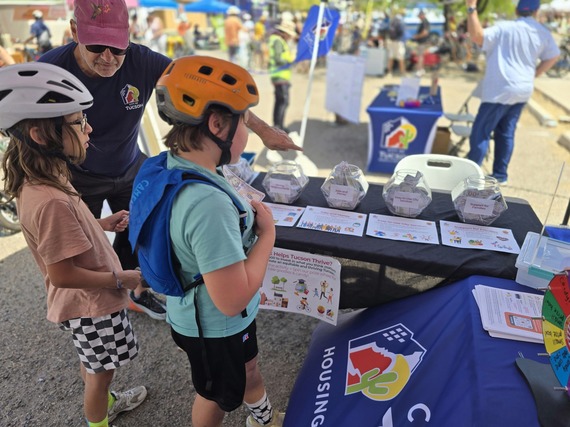 HCD staff explain Prosperity Initiative activity to young Tucson residents at Cyclovia
HCD staff engaged residents at both Cyclovia Tucson (April 12) and Día de la Niñez (April 25) through an interactive Prosperity Initiative activity designed to gather community input on priorities that shape opportunity, wellbeing, and quality of life in Tucson.
At both events, participants were given $500 in “play money” to allocate across six key areas: Housing and Stability, Strong Neighborhoods, Support for Families, Jobs and Money, Education and Opportunities, and Easy-to-Use City Services. Residents “invested” their funds based on what they felt would make the greatest difference for Tucson families and neighborhoods. See the results in the charts below.
Together, these engagements highlight consistent community priorities around education, family support, and housing stability, and will help inform the City’s Prosperity Initiative Action Plan and future investment strategies.
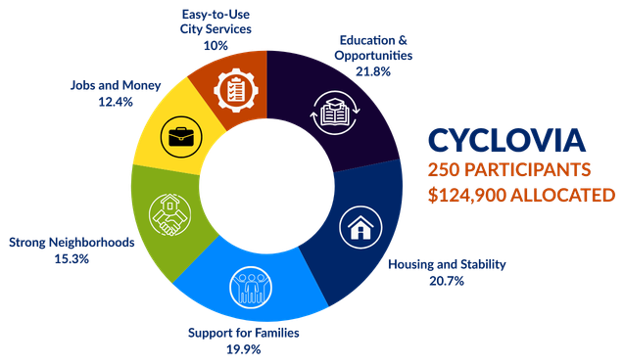 Cyclovia: 250 participant; Education & Opportunities 21.8%, Housing & Stability 20.7%, Support for Families 19.9%, Strong Neighborhoods 15.3%, Jobs and Money 12.4%, and Easy-to-Use City Services 10%
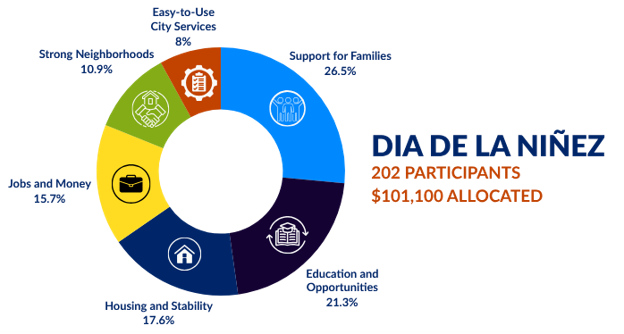 Dia de la Niñez: 202 participants; Support for Families 26.5%, Education & Opportunities 21.3%, Housing and Stability 17.6%, Jobs and Money 15.7%, Strong Neighborhodos 10.9%, and Easy-to-Use City Services 8%
New Partnership Brings Free Food Distribution to Craycroft Tower Residents and Tucson Families
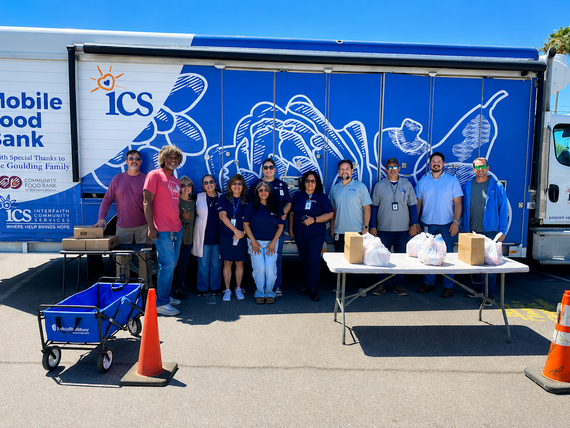 HCD and Community Food Bank of Southern Arizona staff at food distribution event
Public Housing residents recently benefited from a new partnership aimed at expanding food access for low-income Tucsonans. Interfaith Community Services (ICS), in partnership with our Public Housing program, hosted its first free food distribution event at Craycroft Towers, a City of Tucson housing community for low-income older adults. The event served dozens of Craycroft Towers residents, along with families from the surrounding neighborhood, providing fresh and nutritious food items at no cost.
“This partnership is about more than food. It’s about making sure our residents feel supported and connected to resources that improve quality of life,” said Tyler Huggins, Residential Property Manager at Craycroft Towers. “We saw residents come together, connect with neighbors, and leave with meaningful support that can make a real difference.” Food distribution is part of an ongoing effort to bring services directly into Public Housing communities and reduce barriers to access for older adults and families facing economic challenges.
“We are grateful for partnerships like this that help us meet residents where they are,” said Selene Tibbitts, Public and Affordable Housing Administrator for the City of Tucson Housing and Community Development Department. “By working together with organizations like Interfaith Community Services, we can strengthen community support systems and improve access to essential resources for Tucson residents.” Housing and Community Development extends its appreciation to Interfaith Community Services for leading the initiative and to the Community Food Bank of Southern Arizona for helping provide food supplies for the event.
 Providing housing assistance means helping low- and moderate-income Tucsonans access and maintain safe, affordable homes through rental support, homeownership assistance, home repairs, and lead hazard reduction.
Family Self Sufficiency & Resident Opportunity Programs
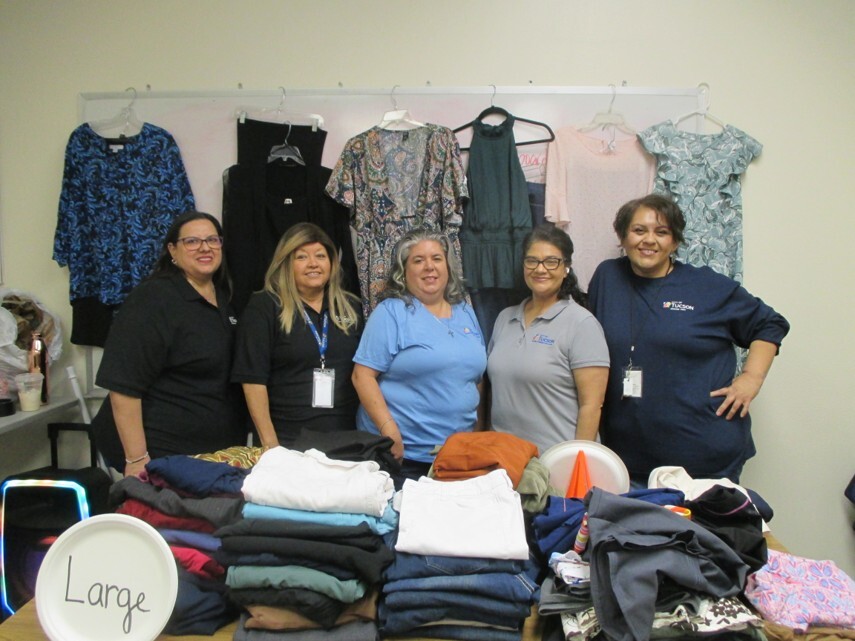 Family Self Sufficeny and Housing First staff
The Department of Housing and Urban Development (HUD) encourages eligible families to participate in the Family Self Sufficiency & Resident Opportunity Programs. Should families choose to opt in, the head of each participating family and an FSS case manager execute a 5-year FSS Contract of Participation that specifies the rights and responsibilities of both parties, including goals and services for the family. The family works with the case manager to be connected to a variety of services to assist with completing their goals.
For questions, please contact:HCD-FSS@tucsonaz.gov
Home Repair Program
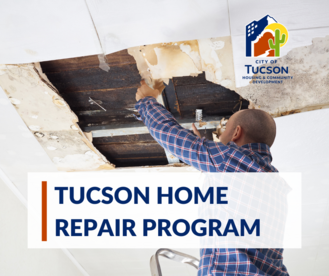 The City of Tucson has programs available for low-income homeowners to provide financial and technical assistance to households faced with an urgent housing repair situation. Eligibility is limited to owner-occupied homes within the City of Tucson, individuals or families with limited income or assets, with homes with hazardous and/or unsanitary conditions which threaten the life or health of their present occupants.
The City of Tucson has revised its owner-occupied residential rehabilitation program policies to be more responsive to critical needs in the community. This new priority placement system will evaluate the severity of repairs needed and create a waitlist based on a weighted score. The Housing and Community Development Department will continue to provide all existing services offered and this new prioritization system only applies to the Tucson Housing Repair Program (THRP).
The program is NOT for emergency repairs, as the waitlist and the rehab process can take long periods of time. Assistance may be available for roof repairs, electrical hazards, sewer and water line issues, gas leaks, heating and cooling systems, water heaters, structural repairs, and certain security improvements. Other emergency conditions may also be considered on a case-by-case basis.
Learn more about eligibility requirements and available assistance on our website.
Si Desea Que Se Le Explique En Español, Por Favor Llame Al Teléfono 520-837-5346.
Lead Hazard Reduction Program
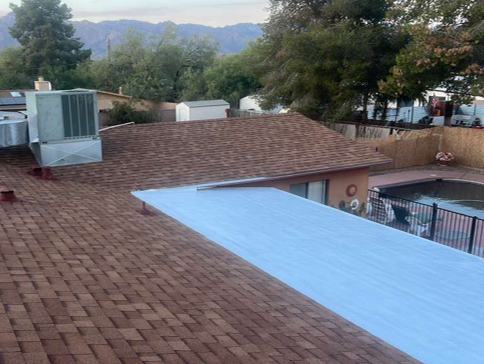 Lead hazard removal at resident's home in Tucson
Lead-based paint can be hazardous when it peels, flakes, or chips in places children frequently touch, like windows, doors, and stairs. Lead poisoning may affect young children by causing developmental delays, learning problems, hearing loss, seizures, or brain damage. The Lead Hazard Reduction Program (LHRP) begins with a free in-home Lead Inspection Risk Assessment. Once lead hazards have been detected in eligible properties, a lead-based paint mitigation project will take place to remove the identified lead hazards.
LHRP work can protect children from lead poisoning through lead mitigation and home improvements such as new windows, doors, trim, and paint. Through the Lead Hazard Removal Program, a state-certified lead inspector was able to identify multiple areas of a home that tested positive for lead, and our residential rehabilitation project coordinator created a scope of work to remove all the lead hazards. For $7,000 we removed lead-positive fascia in the front porch, car port, and fascia of the home, installing boards before giving the home a little facelift with a new coat of paint. While supplemental funding from the Healthy Homes program lasts, other health and safety repairs can be completed, including replacing roofs, water heaters, HVAC systems, and electrical panel upgrades.
Si Desea Que Se Le Explique En Español, Por Favor Llame Al Teléfono 520-837-5346.
 Solving homelessness means coordinating housing, outreach, and supportive services to make homelessness rare, brief, and one-time by prioritizing permanent housing and targeting resources for those who need them most.
2026 Point-in-Time Count
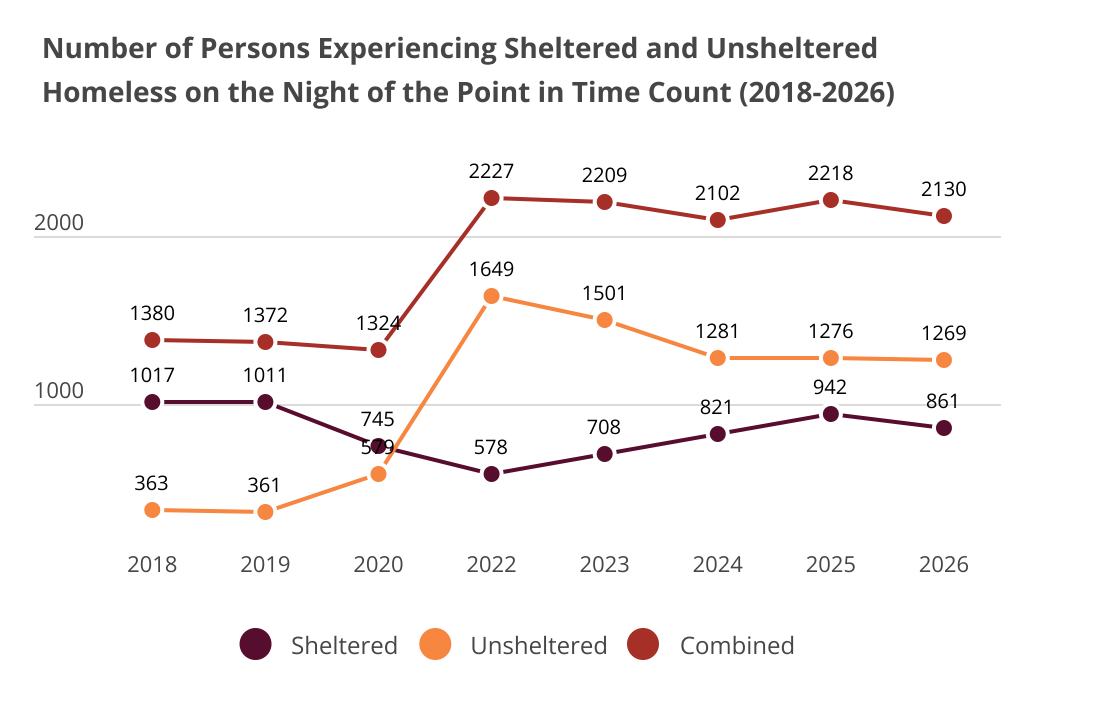 Chart showing the number of persons experience sheltered and unsheltered homelessness on the night of the Point in Time Count (2018-2026)
The Tucson Pima Collaboration to End Homelessness (TPCH) has released the results of the 2026 Point-in-Time (PIT) Count. This is a snapshot of homelessness in our region. Conducted each January, the PIT Count helps us understand how many of our neighbors are experiencing homelessness and the capacity required of the homeless response system to meet community needs. This year’s effort required nearly 400 dedicated community volunteers to help count people across the region.
On the night of January 27, 2026, 2,130 people were identified as experiencing homelessness across Pima County, both sheltered and unsheltered. This reflects roughly a 4% decrease from 2025’s total. This level of year-to-year variation is expected in PIT Count data, as it is an estimate rather than a complete census of people experiencing homelessness. Future data will help determine whether this decrease represents a sustained trend.
PIT data is considered an estimate of the true size of the population of homeless individuals in the region due to some flaws inherent to the nature of the data. Experts understand PIT counts to generally be conservative, low-end estimates of the true number of homeless individuals found regionally. This is often attributed to the time of year and time of day the count takes place; HUD requires PIT counts to occur in the last 10 days of January, a time when most sheltered and unsheltered homeless folks alike will likely be seeking some kind of shelter or refuge from the cold. Safety and privacy are also factors: homeless individuals are not always willing to make themselves known for the purpose of a count or survey.
Housing Trust Fund Supports Rental Assistance for Tucson Households
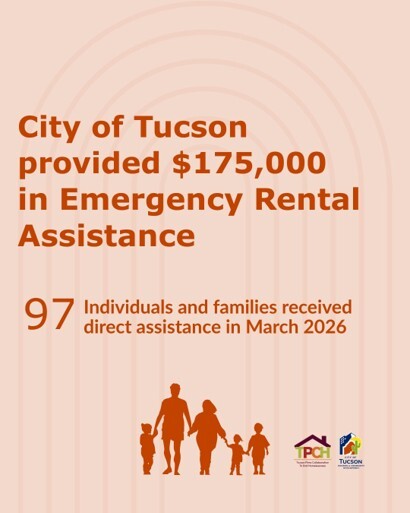 City of Tucson provided $175,000 in Emergency Rental Assistance to 97 individuals and families in March 2026
On March 19, 2026, the Tucson Pima Collaboration to End Homelessness (TPCH) launched a rental assistance program funded through the City of Tucson’s Housing Trust Fund. The funding was made available through a recommendation of the Commission on Equitable Housing and Development, which identified rental assistance as a priority use of Housing Trust Fund resources to help Tucson residents facing housing instability. The Tucson Mayor and Council approved the use of the Housing Trust Funds based on the Commission’s recommendation.
A total of $175,000 was made available to the community and distributed on a first-come, first-served basis to eligible households. In March alone, 97 individuals and families received direct rental assistance, helping residents maintain stable housing, avoid eviction, and remain connected to their communities.
The program demonstrates how Housing Trust Fund resources can be deployed quickly to address urgent housing needs while advancing the City's broader goals of homelessness prevention, housing stability, and equitable access to housing.
New Shelter Dashboard Improves Access to Housing and Support Resources
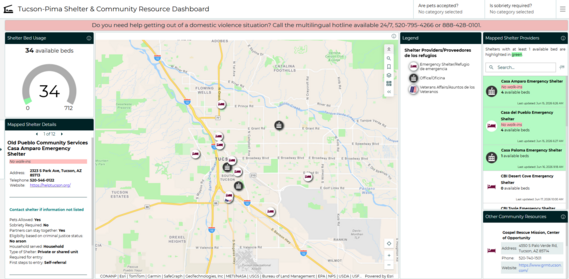 Tucson-Pima Shelter & Community Resource Dashboard
The Tucson-Pima Collaboration to End Homelessness (TPCH) recently launched the Tucson-Pima Shelter & Community Resource Dashboard, a new online tool that provides real-time information on shelter bed availability and community resources throughout the region. The dashboard allows users to search for available shelter beds, view eligibility requirements, and access information on additional services such as cooling centers, transit routes, and transition centers.
By making critical information easier to access, the dashboard helps connect individuals and families experiencing homelessness or housing instability with the resources they need more quickly and efficiently. Residents can access the dashboard through TPCH's website or contact the City of Tucson's Resource Line by dialing 311 for assistance.
Hope in the Park Resource Fairs Connect Tucsonans to Housing and Support Services
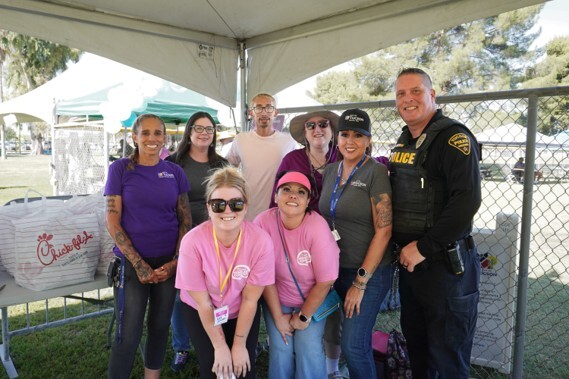 Housing First and City staff at Hope in the Park in June 2026
Housing and Community Development (HCD) staff, in partnership with Tucson Homeless Connect, the Community Food Bank of Southern Arizona, and other City departments, recently hosted the second “Hope in the Park” resource fair of the year. The event brought together 84 community partners and dozens of volunteers to connect Tucsonans, including over 250 unsheltered individuals, low-income residents, and families with children, with critical services and support.
Held in early June at Rudy Garcia Park, the event provided access to health screenings, legal assistance, behavioral health services, shelter and housing resources, clothing, animal care, Veterans Affairs benefits, food, and more. A previous event took place on March 6 at Freedom Park in the 29th Street Thrive Zone. The events reflect the City’s and the Tucson community’s ongoing commitment to outreach, engagement, and housing-focused support for communities in need.
 The Commission on Equitable Housing & Development serves as an advisory body to Mayor and Council, providing research-based recommendations to expand housing affordability, prevent displacement, reduce barriers to quality housing, and promote community engagement on housing issues throughout Tucson.
Commission on Equitable Housing & Development Updates
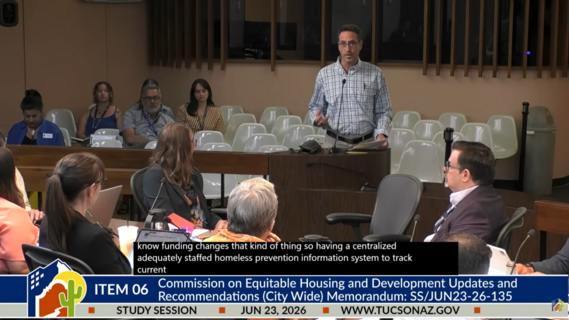 Chair of the Commission on Equitable Housing and Development, Jay Young, provides an update to Tucson Mayor and Council on June 23, 2026
The Commission on Equitable Housing & Development began the year by reorganizing its subcommittees to better align with evolving priorities and areas of focus. Two new subcommittees were established: Housing Development & Innovation, and Community Engagement & Collaboration. The Housing Development & Innovation Subcommittee meets on the second Tuesday of each month from 12:00 to 1:30 p.m., while the Community Engagement & Collaboration Subcommittee meets on the third Thursday of each month from 1:00 to 2:30 p.m. The full Commission meets on the first Thursday of each month from 4:00 to 6:00 p.m.
Please note that all July meetings for the Commission, including subcommittees, are cancelled due to lack of quorum. The Commission and subcommittees will begin meeting again in August.
On June 23, the Commission’s Chair, Jay Young, provided an update to Mayor and Council, including recommendations related to homelessness and ongoing efforts to strengthen the City’s housing and support systems. If you would like to view the presentation, you can watch the Mayor and Council meeting recording here (the Commission item begins around the 2:45:00 mark).
|