|
While November brought us some great rains, temperatures were also higher than normal. In fact, it was the fifth warmest November on record. Conditions will cool this week, but there’s no rain in the 10-day forecast, and it looks like we’ll be back into the mid-70's next week.
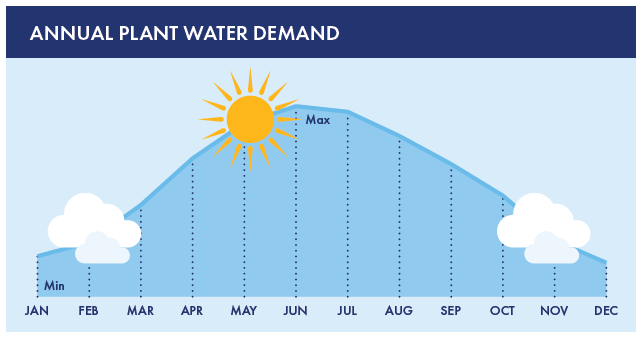
Even though plant water use is at its lowest in December, low humidity and windy conditions can still dry out your landscape quickly.
What's our best advice? Provide deep but infrequent watering for your plants (learn more below). This approach encourages stronger root systems, helps your landscape stay hydrated longer, and will help them fare better during cold snaps and frosts.
Graph above: Seasonal plant water needs vary dramatically due to daylength and temperature. Plants can require 3 to 5 times more water in the hot, dry summer than they do in the winter.
|
Recommendations below are for plants that are established in the landscape (in the ground about two years).
- Desert Adapted - once every 35 days
- High Water Use - once every 18 days
- Desert Adapted - once every 45 days
- High Water Use - once every 21 days
- Desert Adapted - once every 28 days
- High Water Use - once every 14 days
Cacti and succulent watering
Annuals & vegetable watering
- Once every 7-10 days (or more if you are starting seeds)
Wildflower watering
- Once every once every 10-15 days
Note: These recommendations are a general guideline only and may need to be modified for your specific site conditions.
Landscape Watering by the Numbers: Don’t forget our online, interactive watering guide. If you input some simple information about your landscape irrigation system, it will tell you how long to water to give your plants just the right amount with these frequencies.
Frost Protection for Your Plants
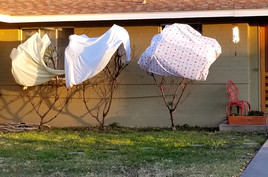
With temps still trending above normal, it may be a while before we get our first cold snap. Our typical first frost is around Dec.12. If you want to be prepared, learn how to protect your plants on this University of Arizona Frost Protection publication.
Note: Photo shows what NOT to do. It's best to use sheets or frost protection fabrics that go all the way to the ground for best results, and to remove them during the day.
|
Plant Square Footage Calculator Simplifies Grass-to-Xeriscape Conversion Process for Incentive Program
The City of Mesa has a great one-of-a-kind tool, the Plant Square Footage Calculator. The calculator simplifies the process for homeowners who are planning a grass conversion and developing a landscape plan to take advantage of the city's Grass-to-Xeriscape Landscape Incentive.
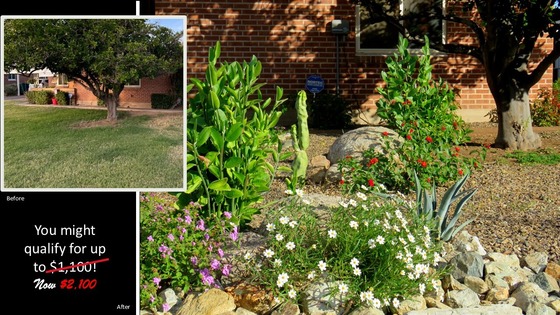
Don't forget! Incentive amounts have recently increased. Now up to $2,100!
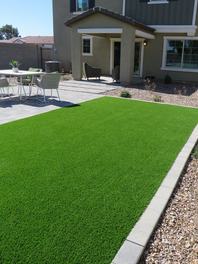
Are You Considering Artificial Turf?
To qualify for Mesa's Grass-to-Xeriscape incentive, you cannot replace the removed grass with artificial turf. The 50 percent plant canopy coverage requirement (learn more in story above) always applies. Artificial turf does not provide shade and other benefits provided by living plants. It also heats up substantially, contributing to the heat island effect. Here are articles to consider:
|
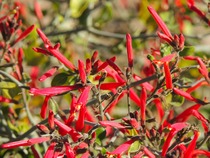
What's Blooming?
Chuparosa – If Arizona’s hummingbirds could vote on a state flower, it would be this plant! A mainstay of most wildlife gardens, this desert beauty asks little and gives much. Find our full listing of beautiful desert plants at our Water – Use It Wisely’s Plant of the Month series.
|
Local Xeriscape Demonstration Gardens
Looking for Holiday Gift Ideas?

Check out our Top Desert Gardening Books on our Water – Use It Wisely blog. Put these on your own wish list or gift to your gardening friends or family. Adding a nursery gift card would be a nice touch, too. This curated list introduces you to many of our local book authors who write about landscaping in our Arizona deserts. There are two new local books on the list. Look for Cool Cacti and Succulents for Hot Gardens and The Water-Smart Garden: Techniques and Strategies for Conserving, Capturing, and Efficiently Using Water in Today’s Climate… and Tomorrow’s.
|
Watering Deeply But Infrequently
Deep and infrequent watering offers big benefits for your landscape. But what exactly does that mean – and why does it matter?
Why Deep Watering Helps: This watering method moves moisture down into the lower soil layers instead of leaving it at the surface. This encourages roots to grow deeper, creating a stronger, more resilient root system. Shallow watering, on the other hand, keeps roots near the soil surface – right where heat, wind, and low humidity can dry the soil quickly and stress your plants.
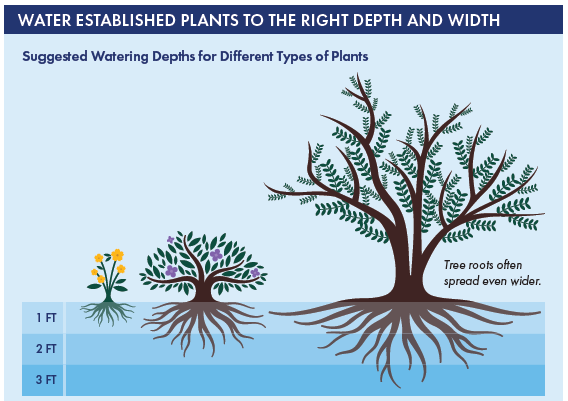
How to Water Deeply: Your goal is to soak the root ball and the surrounding soil, allowing water to penetrate 1 to 3 feet, depending on plant size. As a general guide, 1 inch of water applied at the surface will soak roughly 6–10 inches into the soil, depending on soil type. Need help estimating the right amount? We offer a handy chart that shows how many gallons it takes to reach those depths.
What About the Infrequent Part? Great question. The drying period between waterings is just as important as the soaking. Letting the soil surface dry out keeps roots deeper in the soil – and roots need oxygen during that dry period to stay healthy. Infrequent watering also helps you save water. For example, this time of year, if we don’t receive at least ½ inch of rain, the recommended watering frequencies are:
-
Cactus, desert trees, and dormant Bermuda: once every 30 days
-
Citrus, shrubs, winter rye grass: once every 2 weeks.
Our Landscape Watering by the Numbers booklet includes a helpful seasonal frequency chart. Learn more. Or, of course, we provide it to you in this monthly email.
|
Mesa Library Ask A Master Gardener Programs
Jan. 10, 10 a.m. to Noon. Ask A Master Gardener Attend one session or enjoy both!
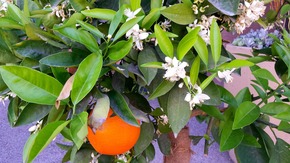
Citrus 101 Workshop: Water and Fertilizer (10-11 a.m.) Learn how to choose the right citrus fertilizers and determine the water and nutrient needs for your specific tree(s) using University of Arizona guidelines.
Ask A Master Gardener (11 a.m. to Noon) Wondering when, what, where, and how to plant your Arizona garden? Bring your questions – and even your problem plants – and get expert advice from a Master Gardener.
Both programs will be held in the Program Room at Red Mountain Library, 635 N. Power Road.
|
Pruning Shrubs the 'Right' Way!
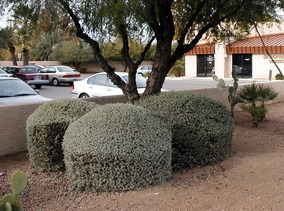
We offer good reasons to avoid shearing:
- It locks you into constant maintenance.
- It creates excessive green waste.
- It reduces water efficiency.
- It makes size control harder over time.
- It weakens overall plant health.
- It destroys natural beauty (and flowers).
Learn more from the AZ Plant Lady, including her new booklet available on shrub pruning in our Water – Use It Wisely blog!
Photo: Sheared Texas Sage... this is NOT the right way to prune them.
|
There are a number of ways to save water and they all start with you...
Thank you for being a subscriber this year – and for all you do to save water! We appreciate your commitment to using water wisely and staying connected with us.
Want even more sustainability tips and inspiration? Be sure to sign up for our Living Green Events eNews! These emails highlight Mesa’s green programs, upcoming events, and sustainability news stories. Last month's newsletter featured composting – check it out!
Not on the list yet? Sign up here by simply entering your email. And for quick updates and ongoing inspiration, follow us on Living Green X.
**Reduce your landscape water use 30 to 50 percent by adjusting your irrigation each season.** Landscape Watering by the Numbers: A Guide for the Arizona Desert will help you determine how much water to apply and how long to run your system. Visit the interactive website or request a free copy of the booklet.
-H2O-
|