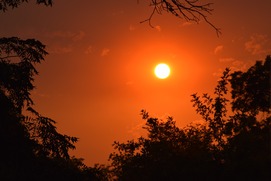
These monthly reminders continue to share alarming statistics. It's not just that more heat records are being broken, they are being shattered. ☹ Including today, we've now experienced 67 days with temperatures over 110°F this year, surpassing the previous record of 55 days in 2023. This is far above the normal average of the mid-20s. Last Saturday, we hit 117°F, marking the latest occurrence of such a high temperature in the year. The monsoon season, which officially ended on September 30, was the 7th driest on record, with only 0.74" measured at Sky Harbor (some areas received as little as 0.25").
If your plants survived, congratulations on the care you provided. It was a tough season to save water in the landscape. As the days become shorter, temperatures should start to cool down. Eventually, water needs for plants will be much less than they were were in June. When it does cool down, remember to adjust your irrigation clock/timer. Check out these step-by-step instructions to reprogram your timer to the suggested watering schedule below. If you have a SMART controller, it should adjust itself based on the seasonal changes.
Fall is a great time to plant. Our bonus tips below include our one-stop fall planting resource site.
Recommendations below are for plants that are established in the landscape (in the ground about two years).
|
-
Warm season grass (Bermuda) - once every 7-10 days
-
Overseeded cool season grass (rye) - 4x per day for the first 7 to 10 days to germinate, then once every 3 days
- Desert Adapted - once every 21 days
- High Water Use - once every 10 days
- Desert Adapted - once every 24 days
- High Water Use - once every 12 days
- Desert Adapted - once every 18 days
- High Water Use - once every 9 days
Cacti and succulent watering
Annuals & vegetable watering
- Once every 4-5 days (or more if you are starting seeds)
Wildflower watering
- Once every 1-2 days to germinate, then once every 5-7 days
Note: These recommendations are a general guideline only and may need to be modified for your specific site conditions. Our current weather conditions may require more frequent watering.
Landscape Watering by the Numbers: Don’t forget our online, interactive watering guide. If you input some simple information about your landscape irrigation system, it will tell you how long to water to give your plants just the right amount with these frequencies.
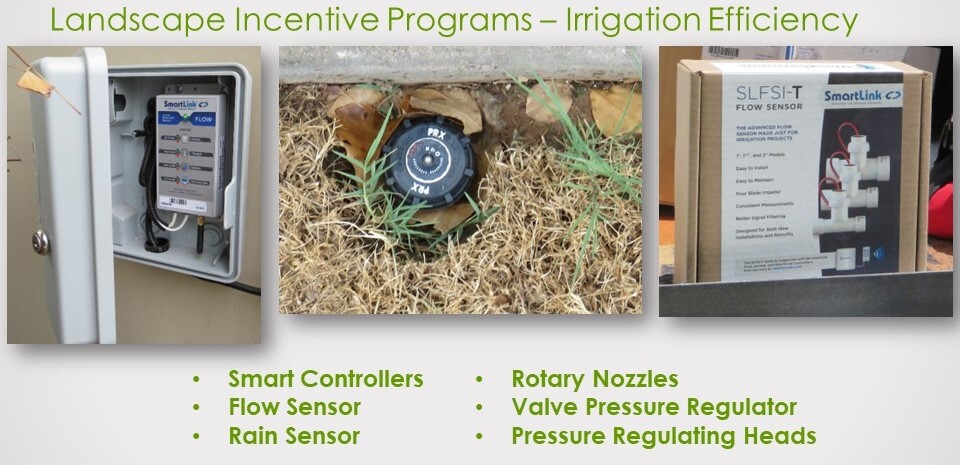 Have you heard the exciting news? We are offering new, higher incentive programs customized to HOAs and other non-residential customers (multifamily properties, businesses, churches and nonprofits). Incentives of up to $50,000 are available for converting grass to Xeriscape. Plus, up to $20,000 for updating irrigation equipment. Incentives are for FUTURE PROJECTS ONLY. Learn more.
Residential customers may also qualify for up to $1,100 for future Grass-to-Xeriscape conversions.
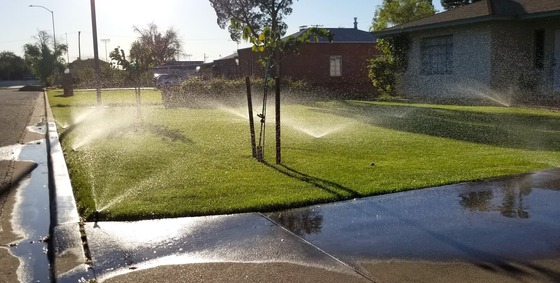 Are you thinking of overseeding your Bermuda grass? Save time, save water, save money and more. Check out our “Top Ten Reasons Not to Plant a Winter Lawn.”
Water – Plant It Wisely Fall Microsite!
Want to create a landscape that is beautiful and sustainable? Water – Use It Wisely has the ultimate Arizona fall landscaping and planting microsite.
At Water – Plant It Wisely find:
- How to plant now for spring wildflower bloom
- Designing for wildlife
- Ideas for plant selection
- Our landscape video series
- Our best fall water-saving landscape tips
- Specialty plant sales
|
FUN Upcoming Programs of Interest
Oct. 5 and 18, 8 to 11 a.m. Mesa Plant Nursery Pop-Up Events. Get tree and planting questions answered in person and meet the City of Mesa’s Urban Forest Program Manager and water conservation staff. Sat, Oct 5 at Treeland Nursery and Fri, Oct 18 at SummerWinds Nursery.
Oct. 12, 10 a.m. to Noon Ask a Master Gardener: University of Arizona Cooperative Extension Master Gardeners are certified volunteers who answer questions about gardening, landscaping, plant identification, and plant problems. Red Mountain Library, free!
Adjusting Watering Frequency for Plant Type
Different plant types (or species) will need different amounts of water to stay healthy. You will notice that our watering guidelines provide a distinction between desert-adapted and high-water-use plants. A desert-adapted plant can go much longer between waterings than a high-water-use plant. Examples of high-water-use plants include citrus, hibiscus, and roses. Desert-adapted plants include palo verdes, Texas sages, and penstemons.
|
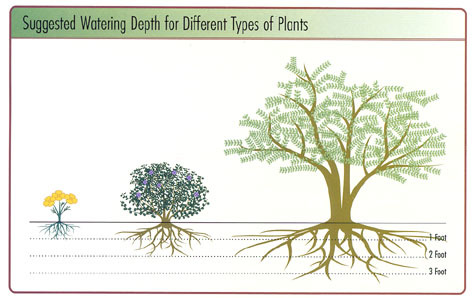
Keep in mind that a Texas sage and hibiscus of the same size will need the same amount of water each time you water to wet the root ball. It's the frequency of watering that is different. If you have both types of plants on the same valve, you will always have to water for the most water-thirsty one. That likely means that your other plants are getting more water than needed.
Find more ideas like these in our online watering guide by clicking on the 'More Tips' link at the bottom.
Plant Pollinator-Friendly Wildflowers Now
Wildflowers need to be seeded in the fall for spring bloom. The seeds are best planted
between mid-September through mid-November. This spring backyard display is thanks to California poppy and purple owl's clover. Learn more in our easy tip sheet, Plant Wildflowers Seeds NOW for Spring Bloom!
**Reduce your landscape water use 30 to 50 percent by adjusting your irrigation each season.** Landscape Watering by the Numbers: A Guide for the Arizona Desert will help you determine how much water to apply and how long to run your system. Visit the interactive website or request a free copy of the booklet.
-H2O-
|