Mid-May through October is considered our summer season, although we already hit our first triple digit temps last weekend. Bermuda grass and many landscape plants may look a little stressed as they transition from our spring to summer temperatures.
May also brings low humidity and windy days like we have recently experienced. What this means for plants is that a lot of moisture gets lost from the soil surface and through the leaves. Make sure you are giving plants a good drink of water, especially during a breezy day (but avoid using sprinklers for grass during windy periods if you can).
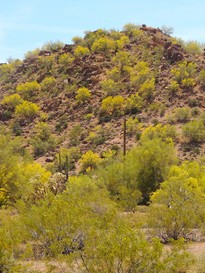
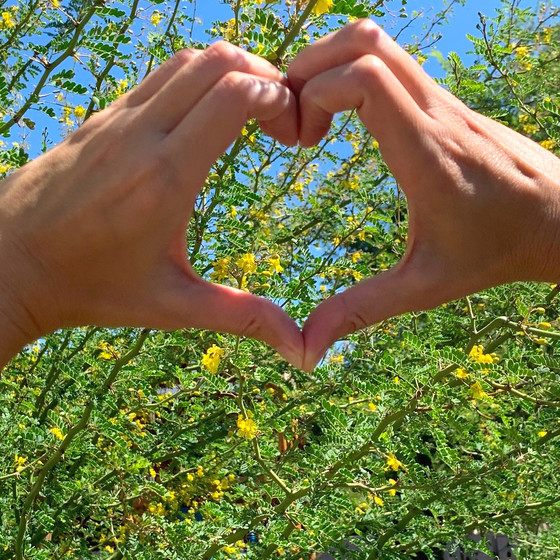
Photo: Foothills Palo Verdes in bloom.
Recommendations below are for plants that are established in the landscape (in the ground about two years).
|
- Desert Adapted - once every 17 days
- High Water Use - once every 8 days
- Desert Adapted - once every 20 days
- High Water Use - once every 10 days
- Desert Adapted - once every 14 days
- High Water Use - once every 6 days
Cacti and succulent watering
Annuals & vegetable watering
Wildflower watering
- Once every 7 days (start going to seed and may be pulled)
Note: These recommendations are a general guideline only and may need to be modified for your specific site conditions.
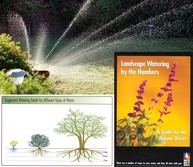
Landscape Watering by the Numbers Don’t forget our online, interactive watering guide. If you input some simple information about your landscape irrigation system, it will tell you how long to water to give your plants just the right amount.
How We Use Water and Our Top Five Ways to Save It!

Sat., May 20, 11 a.m. to Noon. During the month of May, you can stop by Red Mountain Library and see the impressive Water – Use It Wisely Water Tower. It's made up of 120 one-gallon water jugs and it reminds us of the water that each of us typically uses daily. How can we reduce the amount of water we use or at least use it more efficiently? After all, we do live in a desert that is experiencing a long-term drought and dwindling Colorado River supplies. Red Mountain Library, 635 N. Power Rd. Learn more.
Red Mountain Library is also offering Ask a Master Gardener on May 13 from 10 a.m. to Noon. And parents, don't miss their May 24, 9:30 a.m. Preschool Storytime with Wayne Drop (our Water - Use It Wisely mascot).
|
Landscape 'Special Tips' from AZ Plant Lady
Follow along with landscape professional and book author, Noelle Johnson – also known as AZ Plant Lady – as she explains the many ways to keep your landscape water smart. Our video playlist includes:

- Trees Are Cool
- Fuss-Free Plants
- Stop Shearing Shrubs
- How to Water Your Landscape
- Plant Selection and How to Plant
- Low Water Landscapes Are Beautiful
- Landscape Watering in the Real World
- Easy Tips to Save Water in the Landscape
|
The Art & Science of Landscape Watering
Plant of the Month – a Desert Hibiscus
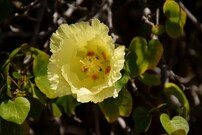
San Marcos Hibiscus, Gossypium harknessii, isn't your grandmother's tropical hibiscus. This is a super cool plant that does great in hot spaces, and it is salt tolerant, too. Native to Baja California, Mexico, it grows near the sea in sandy or rocky arroyos. Dark green heart-shaped leaves resemble English ivy.
|
This Test 'CAN' Help You Save Water
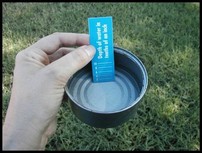
THIS is one of the key ways to be efficient with your lawn watering! Perform the sprinkler can test so that you’ll know just how long you need to water each time you irrigate. Find instructions here or on page 5 of Landscape Watering by the Numbers. If you get runoff when running your sprinklers, consider using 'rotating stream sprinkler heads' which apply water much more efficiently and are particularly good for slopes to reduce runoff.
|
A Little Goes a Long Way When it Comes to Grass

Visit our info page on grass: Grass may be a desired component in a well-designed Xeriscape yard. It is one of the best plants to handle foot traffic and it provides a softer surface for kids’ sports or dogs’ paws. But grass is both maintenance and water-intensive, so when planning your landscape, a little goes a long way. Learn more about caring for grass, watering properly and efficiently, artificial turf, and more.
|
It Pays to Check for Leaks!

Watch this 32-second video to see how easy it is to check your water meter to see if you might have a leak. If you have one but are not sure where, find ways to isolate the leak from our online find and fix leaks guide.
Oh, and first step to look for leaks is to make sure all your water is turned off in the home, landscape, and pool – especially the auto pool refiller – then check the meter.
|
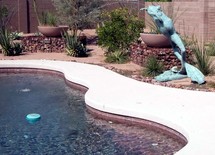
Keep the Splash In Your Pool
Pools & spas. Warmer temperatures mean it’s swimming pool season. We’ve got tips and info for keeping the splash in your pool. Learn about how to check for leaks, draining & backwashing, alternative pool care, and more. If you have an automatic refilling device, check your pool periodically for leaks.
|
Trees Are Cool – Even During a Drought
Every desert dweller has experienced how much cooler it feels on a hot day when standing in the shade of a tree rather than in the full sun. That effect has become increasingly important as cities help people cope with higher summer temperatures. That’s why Mesa, Phoenix, Tucson, and others are focusing on tree plantings in Arizona. Learn more in this Water – Use It Wisely blog.
 **Reduce your landscape water use 30 to 50 percent by adjusting your irrigation each season.** “Landscape Watering by the Numbers: A Guide for the Arizona Desert” will help you determine how much water to apply and how long to run your system. Visit the interactive website or request a free copy of the booklet.
-H2O-
|