|
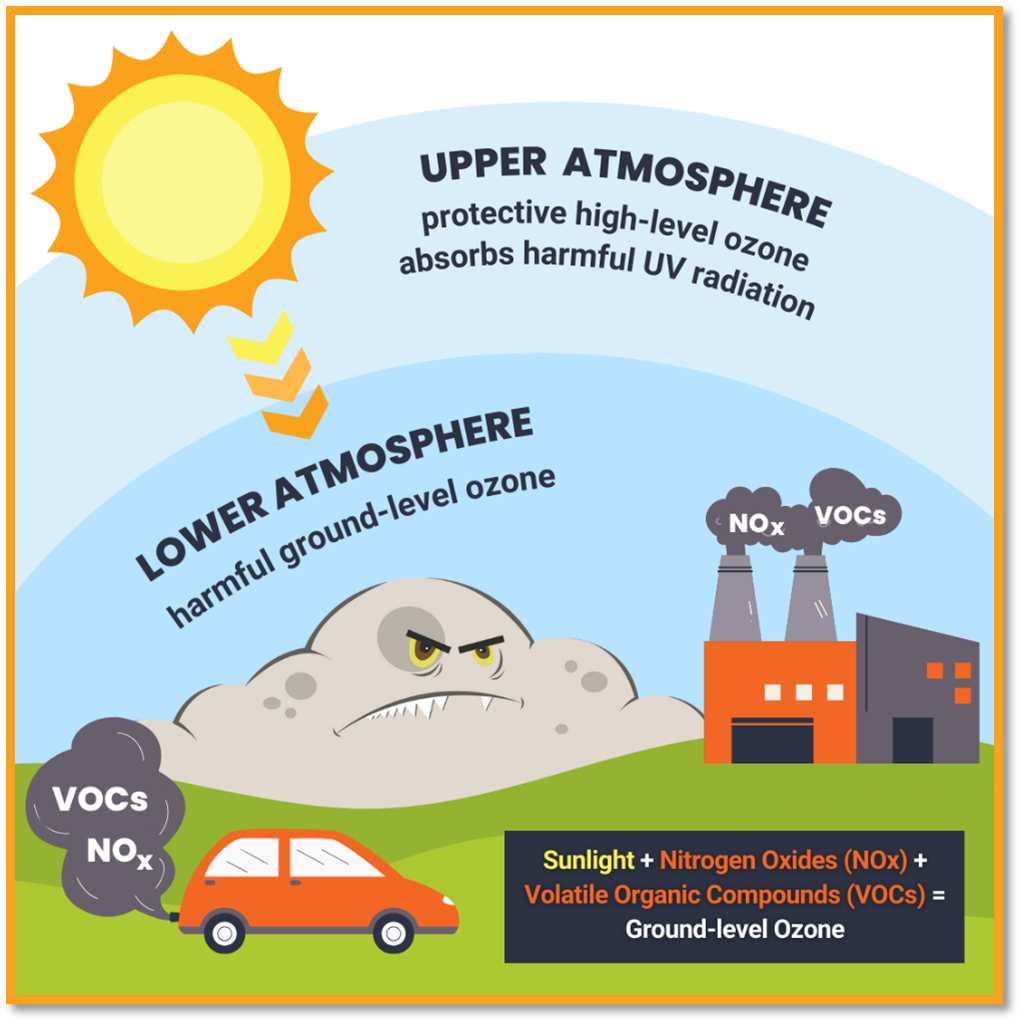
Ozone (O3) is a gas molecule composed of three oxygen atoms. Ozone in the upper atmosphere is formed when solar radiation breaks down existing oxygen molecules, where it shields the earth from harmful ultraviolet radiation. Ozone located at ground level is formed through chemical reactions involving nitrogen oxides (NOx) and volatile organic compounds (VOCs) in the presence of sunlight and heat. Ground level ozone, a primary constituent of smog, is considered an air pollutant. Sources of NOx include motor vehicles, power plants, and other industrial combustion processes. VOCs are found in common household items like paint and solvents and are emitted into the atmosphere every time we fill up our cars with gasoline.
 The Impact of Ground Level Ozone
In 2022, Maricopa County air monitors recorded exceedances of the ozone standard on 48 separate days from April through September, the warmer months of the year. Over the same period the previous year, monitors recorded exceedances on 50 days, and the year before that on 34 days. As spring transitions to summer, and daytime temperatures climb, once again we should prepare for an active ozone season.
Health Effects of Ozone
Ground level ozone negatively impacts our health by damaging living tissue, especially that of the respiratory tract, causing inflammation and narrowing of the airways. Prolonged exposure can lead to shortness of breath and worsening of asthma symptoms and may reduce a body’s ability to fight infection. At locations where ozone concentrations are high, people who spend time outdoors experience an elevated risk of developing these complications.
Ozone Exceedances and the Regulatory Impact
The Maricopa County Air Quality Department (MCAQD) operates a series of air monitors throughout the Valley. These air monitors track ground level ozone, among other pollutants, and provide real-time data which is available to the public through the Maricopa County Air Quality Status Map.
The National Ambient Air Quality Standard (NAAQS) sets the threshold for when ozone concentrations should be considered harmful. Revised most recently in 2015, this threshold is set at 0.070 ppm over an 8-hour period.
Maricopa County has struggled to meet the ozone NAAQS in recent years. The graph below represents ozone data collected from individual air monitoring locations and averaged over calendar years 2020-2022. Even when accounting for exceptional events such as regional wildfires, exceedances of the 2015 ozone standard occurred at multiple locations. What does this mean for Maricopa County?
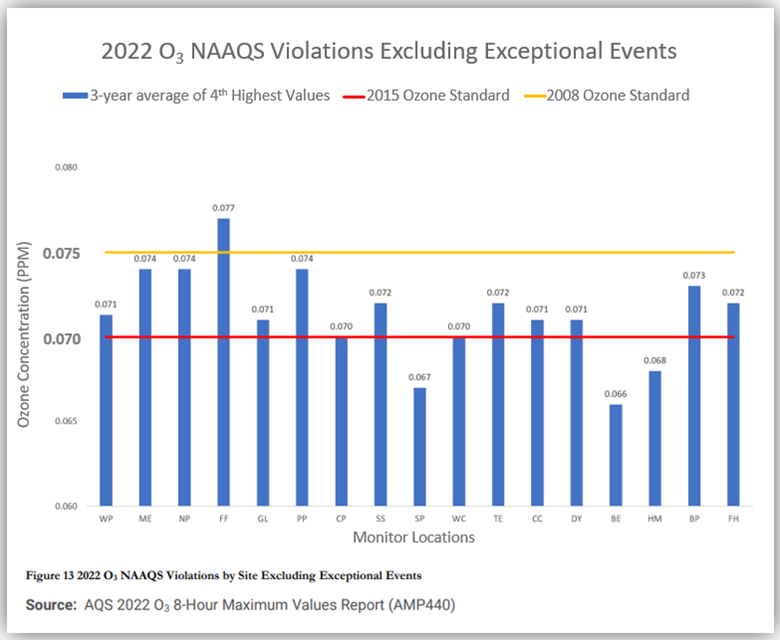 When an area demonstrates a pattern of exceedances, as we have here in Maricopa County, the federal Environmental Protection Agency (EPA) will assign the area a nonattainment classification. If conditions do not improve, the area’s nonattainment classification can change, and subsequent penalties imposed by the EPA can progressively worsen. As Maricopa County anticipates redesignation from moderate to serious nonattainment for ozone, MCAQD is preparing for regulatory impacts which could include requirements strengthening local air quality rules and the way sources of NOx and VOC are permitted.
|