|
Because most people who get COVID-19 have symptoms of a mild illness, it may be tempting to think that only people at highest risk should worry. However, right now, more than half of all of Maricopa County’s COVID-19 cases are age 20-44, making that age group the most likely to spread it to others, including people who are high risk.
That means younger people play a critical role in reducing the impact of COVID-19 on our community so fewer people get the disease and fewer will need to be hospitalized.

-
Total confirmed cases: This is the number of COVID-19 cases reported in Maricopa County since January 22, 2020. It is a running total.
- It does not represent the current number of people in our community who have COVID-19, nor does it address recovered cases.
- No one is counted twice in these numbers, even if they have been tested multiple times.
-
% hospitalized/ICU: This is the percentage of the total confirmed COVID-19 cases who have ever been admitted to a hospital or intensive care unit for COVID-19.
|
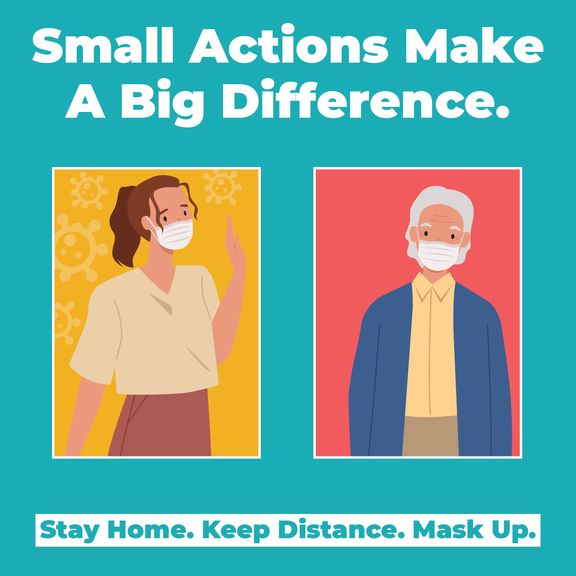
You know it’s important to wear a mask; but where is it necessary?
-
Enclosed public spaces: The countywide mask regulations require masks even when social distancing is possible. This includes businesses, offices, museums, restaurants, coffee shops, and government buildings.
-
Public transportation: If you ride the bus or the light rail, you’ll need to mask up to reduce the risk of getting or spreading the virus.
-
Exemptions: Individuals with a medical, mental health condition or developmental disability, are exempt from the mask mandate. For other exemptions, please refer to the mask regulations here.
-
For the Deaf and Hard of Hearing: The County procured and distributed clear masks to the Arizona Commission for the Deaf and Hard of Hearing to assist those with hearing loss during the pandemic. Traditional masks add communication challenges for people who are deaf and hard of hearing by blocking facial expressions and preventing lip reading, which are both crucial for communication.


Public Health has updated its COVID-19 FAQ page to address questions and rumors we are hearing in the community right now. The page covers topics such as:
- Can COVID-19 affect children?
- Can pets spread the disease?
- Do hot temperatures have any impact on the spread?
Visit the FAQ page >
|

Last week, Governor Ducey announced two new Executive Orders relating to mitigation of COVID-19, as well as new testing initiatives.
Executive Order 2020-48 – Enhanced Surveillance Advisory Slowing the Spread of COVID-19 establishes new reporting and capacity requirements for hospitals and alternative care facilities.
Executive Order 2020-47 – Reducing the Risk, Slowing the Spread, Limiting Indoor Dining. The order requires all restaurants with indoor seating to operate at less than 50% capacity and to ensure at least six feet of separation between tables, booths, or bartops, unless separated by plexiglass or glass.
In additon, the Arizona Department of Health Services (ADHS) and Arizona State University (ASU) announced a new partnership that will increase COVID-19 diagnostic testing in Arizona. ASU will launch several testing sites that will provide free saliva diagnostic testing for COVID-19 in high-need underserved communities around the state. To learn more about this partnership, click here.
|
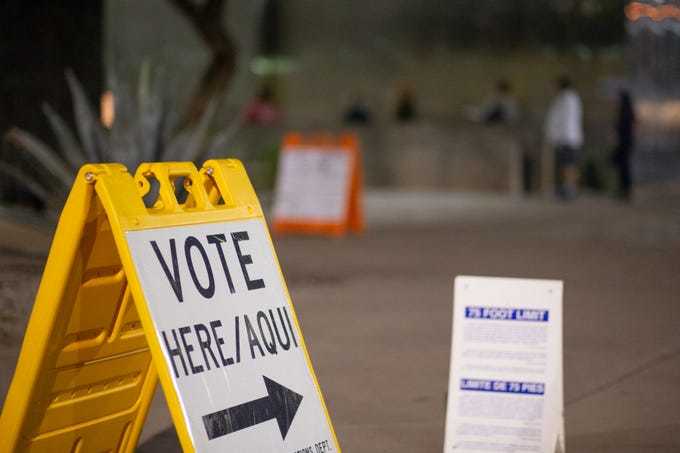 Early Voting for the August Primary Election started on July 8th. More than 1.3 million ballots are on their way to voters, and in-person Vote Centers are now open. With increased access, Maricopa County voters can choose to vote by mail or vote in-person for the primary.
We have 99 locations and the webpage (https:Locations.Maricopa.Vote) has been updated to allow voters to search by wait-time, zip, city, open locations, weekend voting, drop boxes, and the closest proximity to an entered address. Voters can also map and print the location of their preferred polling site.
Voters who requested a ballot by mail or are on the Permanent Early Voting List (PEVL) should expect to see a yellow envelope in their mailbox. Independent voters are eligible to participate in the August Primary Election but must make a ballot choice at BeBallotReady.vote or at one of our Vote Center's listed here. Registered voters still have until July 24 to request a ballot in the mail at BeBallotReady.Vote.
We have received questions regarding if a mistake is made on your early ballot. The instructions included with your early ballot are designed to inform a voter on how they can correct a vote if they make a mistake, change their mind, or accidentally smudge their ballots. In previous elections and prior to including these instructions, voters made these corrections on their own without guidance. The new instructions are designed to provide clear guidance to voters while introducing integrity, consistency, and efficiencies when processing ballots in these situations. The instructions inform the voter how they can correct their vote and still have it be counted by our in-person, bipartisan electronic adjudication teams.
The Board of Supervisors does not approve these instructions as they are specific to early voting ballots. The Secretary of State manual requires that the County Recorder provide the instructions as part of the early voting packet. The instructions describing how a voter should correct their ballot are consistent with overvote, manual duplication, and electronic adjudication procedures detailed in the Elections Procedures manual approved by the Secretary of State, Attorney General, and the Governor.
For voters who chose to vote in-person, we are implementing enhanced safety protocols, including requiring poll workers to wear masks, face shields and gloves, and frequently cleaning high-touch surfaces and sanitizing pens after each use. We will have masks and gloves available for all voters should they not bring their own. See the safety protocols and a demonstration here.
With potentially historic voter turnout, the county is prepared for more than 700,000 voters to cast a ballot for the Primary Election. Prior to the COVID-19 pandemic, election models estimated about 100,000 of those voters would turnout on Election Day, August 4, 2020.

Water Donation Drive
The Human Services Campus is in need of at least 60,000 water bottles a month to keep their clients hydrated and healthy. The next bottled water donation drop-off located at 15th Avenue & Harrison is Saturday, July 18th from 9am to noon, and it couldn’t be easier. You pull up and Human Services staff will remove the donations from your trunk or the back of your vehicle. Contact Ivan at 602-282-0849 or volunteer@hsc-az.org for more information.
If you are unable to make July 18th, the Human Services Campus accepts donations all year long. Click here for items needed.
Maricopa County Secures Additional Nighttime Heat Relief Location for Homeless
The County, working with its partner, the Human Services Campus, will make a county-owned location at Madison Street and Central Avenue available to dozens of people beginning throughout the hot summer months.
The facility will operate between 6 PM and 7 AM now through September 30th. Masks will be required, and physical distancing inside the building will be maintained. The building will be staffed by the Human Services Campus which will also provide security.
The building most recently housed Grand Juries and also included a Justice Court. When the building vacated, the Board of Supervisors jumped at the opportunity to turn it into a location for temporary heat relief.
The City of Phoenix has made the Convention Center available for daytime heat relief and has been a partner in this effort, arranging for the transportation necessary to get people back and forth between 1 W. Madison and daytime locations at the Human Services Campus or the Phoenix Convention Center. Now individuals will be able to access day and night time heat relief.
In addition to Maricopa County securing an air conditioned, downtown location for nighttime heat relief for people experiencing homelessness, the County and its partners are getting national recognition for efforts to house the homeless during the pandemic. Read the CNN story >
 With in-person schooling delayed, the Maricopa County Library District has extended its Summer Reading Program through August 15th in order to encourage young people to stay engaged and reading while out of school. Maricopa County Reads hopes to be a resource for families to keep kids engaged. Find out more >
Sincerely,
Steve Chucri, District 2
Maricopa County Board of Supervisors
www.maricopa.gov/steve
602-506-7431
|