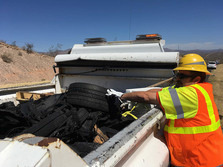
The word likely makes you think of a state like Florida,
but Arizona highway drivers should stay alert for “gators” on the highway, especially
with summer upon us.
Gator is the nickname given to tire treads that wind up
on highways after blowouts, creating a risk for other drivers and their
vehicles.
The Arizona Department of Transportation and state
Department of Public Safety are reminding motorists to stay alert to tire
treads or other debris that can wind up on highways. Drivers also should
regularly check their vehicles’ tire pressure to reduce the risk of blowouts.
Whether DPS troopers toss tire gators to the shoulder or
ADOT maintenance crews respond after getting a call, it’s impossible to catch
everything immediately along more than 6,300 miles of state highways.
“We all need to pay attention and be prepared for debris
at any time, but tire gators increase in number when the weather turns hot,”
said Raul Amavisca, ADOT Central District engineering administrator for maintenance.
“Our maintenance yard bins fill up with more rubber during the summer.”
DPS is often are the first line of defense against
gators, conducting traffic breaks to temporarily stop traffic so troopers can
toss tire debris to the shoulder of a freeway.
“We also get to see the damage a large piece of tire
tread can inflict on another vehicle,” said DPS Captain Tony Mapp. “These can
be dangerous situations, which makes it so important to avoid distractions and
keep an eye on the roadway out in front of you.”
ADOT crews do spot pickups of roadside shoulder debris along
busy Phoenix-area freeways throughout the year. The agency’s freeway shoulder sweeping
contractors also maintain weekly schedules for collecting larger debris items in
advance of street sweepers finishing the cleaning job at night.
Maintaining proper tire pressure to limit the chances of
creating a highway gator.
“You’re improving your odds, since over- or
under-inflated tires are more likely to suffer blowouts,” said Captain Mapp.
“It’s worth it to take the time to check your tire pressure.”
| 

