MEASLES IN ARIZONA

New BIZS Template
ask the experts

Ask the BIZS Experts
Clinical Answers to Vaccine Questions

MEASLES IN ARIZONA

On June 10, 2025, the Arizona Department of Health Services (ADHS) sent out a HAN (Health Alert Network) confirming recent cases of measles in Arizona.  The Navajo County Public Health Services District (NCPHSD), in coordination with ADHS, has confirmed four cases of measles within Navajo County. The individuals were not immunized and have a recent history of international travel. All individuals were exposed through a single source. These mark the first confirmed measles cases in both Navajo County and the state of Arizona in 2025. NCPHSD is working to identify and notify anyone who may have been exposed. 

During the 2024-2025  School Year, 88.7% of Arizona kindergarteners had completed the Measles, Mumps, and Rubella vaccine (MMR) series, which is 2 doses of MMR upon entering kindergarten—lower than the ideal 95% needed to attain herd immunity and to prevent outbreaks. 

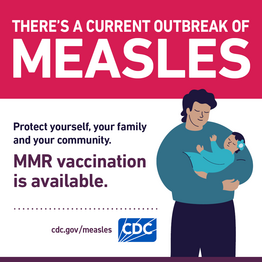
The best way to protect our families is to keep children and adults up-to-date with the MMR vaccine. Now is a great time to review immunization records and speak with families to guide those who may require MMR vaccines. The MMR manufacturer has indicated that there is an ample supply of the vaccine available.

measles

Measles Facts:

  • Measles spreads easily—9 out of 10 unvaccinated people exposed to measles will get it.
  • Symptoms start with fever, cough, runny nose, and pink eye before the rash appears.
  • A person with measles is contagious 4 days before and 4 days after the rash onset (9 days total).
  • The virus can linger in the air and on surfaces for up to 2 hours after an infected person leaves an area.
  • Serious complications include pneumonia, brain inflammation (encephalitis), and even death.
  • Long-term complications can include subacute sclerosing panencephalitis (SSPE): A rare but fatal brain disease that develops years after measles infection. It causes progressive neurological decline, seizures, and eventually death. This is an unpredictable complication. 

ADHS recommends that healthcare providers statewide:

  • Suspect the diagnosis of measles in patients presenting with fever and rash, especially if unvaccinated, history of domestic travel to an area with a known outbreak, or recent international travel.
  • Minimize exposures of patients and staff by implementing appropriate infection prevention measures, including the use of well-fitting masks, immediate airborne isolation when available, or a private room with door closed if unavailable, and using the last appointment of the day.
  • Immediately report and coordinate specimen collection (nasopharyngeal swab and urine) with the local health department.
  • Ensure that patients are adequately vaccinated. Offer the MMR vaccine to those patients who are not immunized.
  • Ensure all clinical staff are adequately vaccinated.
  • Healthcare workers should receive two doses of MMR, regardless of year of birth, unless they have documentation of previous immunity.
  • Review the ADHS Measles - What You Need To Know granicus for details on who needs to be vaccinated and who does not need to be vaccinated with MMR vaccine.  

Additional Resources:


The Bureau of Immunization Services (BIZS) has clinical staff available to assist with your vaccine questions. Contact the following individual (or your county health department) for assistance: