Alabama Department of Conservation & Natural Resources sent this bulletin at 12/29/2020 10:06 AM CST
Wildlife and Conservation News | December 2020
Photo Credit: Ron Ferguson
Baby it’s cold outside!
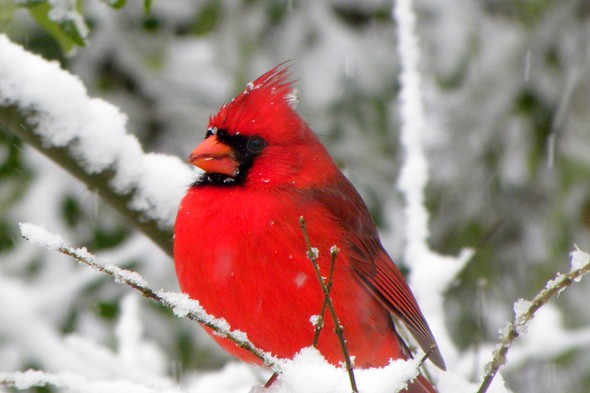
While many birds migrate to warmer climates for the winter, others stay put to maintain a territory and avoid the obstacles of migration. The tradeoff for staying is having to endure the cold. As temperatures drop and winter quickly approaches, many of us reach for warm jackets and gloves. While birds do not have the luxury of wrapping up in a blanket as we do, they do have a number of special adaptations that allow them to stay warm all winter long.
One primary layer of defense is their feathers, which act as their specialized weatherproof jacket. Feathers provide great insulation and help keep birds both warm and dry. You may notice that birds look puffier during the winter, and while humans can blame their extra puff on holiday snacks, birds puff up their feathers to trap warm pockets of air between their body and their feathers. To preserve these layers of air, birds must maintain clean and dry feathers by consistently preening, or cleaning, the feathers. During preening, special oils are produced to weatherproof their feathers making them a strong barrier against environmental conditions.
Another evolutionary process that waterbirds use to stay warm is the counter-current heat exchange system in their legs. The arteries and veins in the legs coming to and from the body are close enough to each other that one warms the other. This results in heat exchange from warm blood leaving the body to cold blood before returning to the body, which helps regulate body temperature. Other tactics birds use to stay warm are shivering, seeking shelter in unoccupied birdhouses or dense vegetation, or huddling together to share warmth.
As you can imagine, birds burn a lot of energy to stay warm during the winter months. A steady food supply is essential for their survival which makes feeder food even more important during this season. Consider putting high energy foods like peanuts, suet, black oil sunflower seeds, or other good seed mixes in your feeders to provide a much-needed snack to local wintering birds.
To learn more about wintering birds in Alabama please visit our Watchable Wildlife site.
Snags for Wildlife
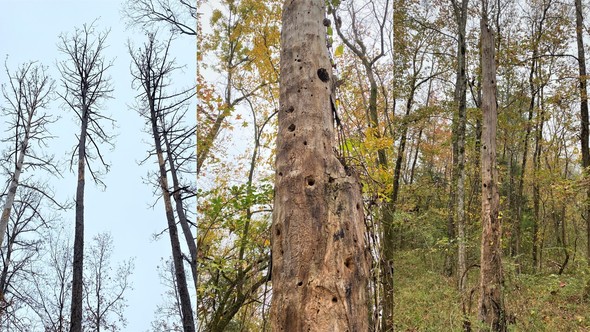
An often overlooked component of wildlife habitats are snags, dead standing trees that are left to naturally decompose. Hundreds of species including birds, squirrels, bats, raccoons, and more use nearly every part of a snag while it decays. Hollowed out cavities used for nesting are the most noticeable way snags are beneficial to wildlife. These cavities and nests provide shelter from predators and harsh weather, while providing a safe place to raise their young. Some species like squirrels and chipmunks use snags to store food for later use. Birds of prey perch on the limbs of a snag searching for their next meals. Insects, mosses, lichens, and fungi are attracted to decaying trees and provide a food sources for woodpeckers, lizards, frogs, and more. Also, there are vital nutrients a decaying tree releases into the soil as it decomposes. If you are managing for wildlife on your property, consider leaving snags on the landscape for the benefit of many wildlife species.
To learn more about the benefits of snags for wildlife on your property, contact your local technical assistance biologist.
U.S. Fish and Wildlife Service Helps Alabama Acquire Critical Salamander Habitat
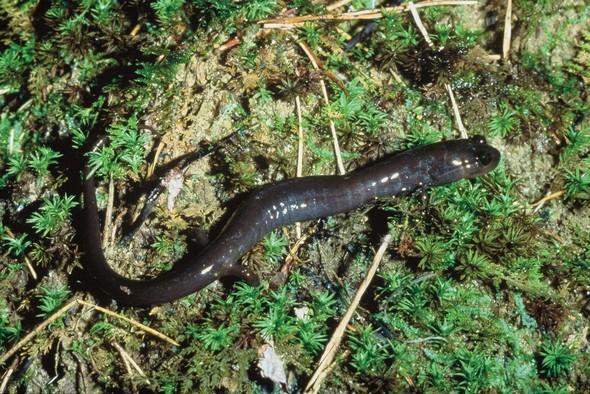
The Red Hills salamander, the state salamander of Alabama, is unique to Alabama, and can only be found in a handful of counties in the Red Hills region of the state.
If all goes as planned, the Red Hills salamander will one day be fully recovered and removed from the threatened and endangered species list. The U.S. Fish and Wildlife Service’s $9 million award, funded via Recovery Land Acquisition grants, will go a long ways toward the salamander’s survival. Alabama’s Forever Wild Land Trust provided the remainder of the matching funds to seal the deal earlier this year.
Measuring Browse Pressure in Food Plots: Food Plot Exclusion Cages
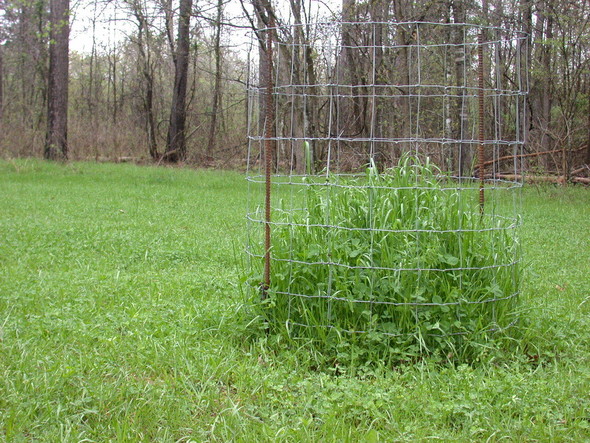
Managing for our native wildlife can be complicated, and often times a game of trial and error. This is especially true when managing food plots. With so many seed blends available on the market, it can sometimes be a bit overwhelming for a land manager to make a selection. After all, most managers want to have the assurance that what they have selected and planted will be the most attractive to the wildlife on their property. So, what can help solve this conundrum? The answer is an exclusion cage. When installed in food plots, exclusion cages can provide insight as to how much browse pressure your food plots are receiving; particularly from deer. In addition, exclusion cages can help reveal what seed blends the deer on your property find the most attractive.
Exclusion cages are easy and cheap to construct. To construct an exclusion, start by cutting a piece of 1 inch x 2 inch wire mesh and form a circle or square 3 feet wide x 4 feet tall. After planting is completed, place the exclusion in the plot and secure with stakes (t-posts, re-bar, etc.) so that it cannot be easily pushed over by wildlife. Avoid placing the exclusion in an area of the field that experiences flooding, prolonged periods of shading, or low fertility to obtain the most accurate representation of browse pressure possible.
To learn more about the benefits of using food plot exclusion cages or other ways to manage for wildlife on your property, contact your local technical assistance biologist.
Fox Squirrels
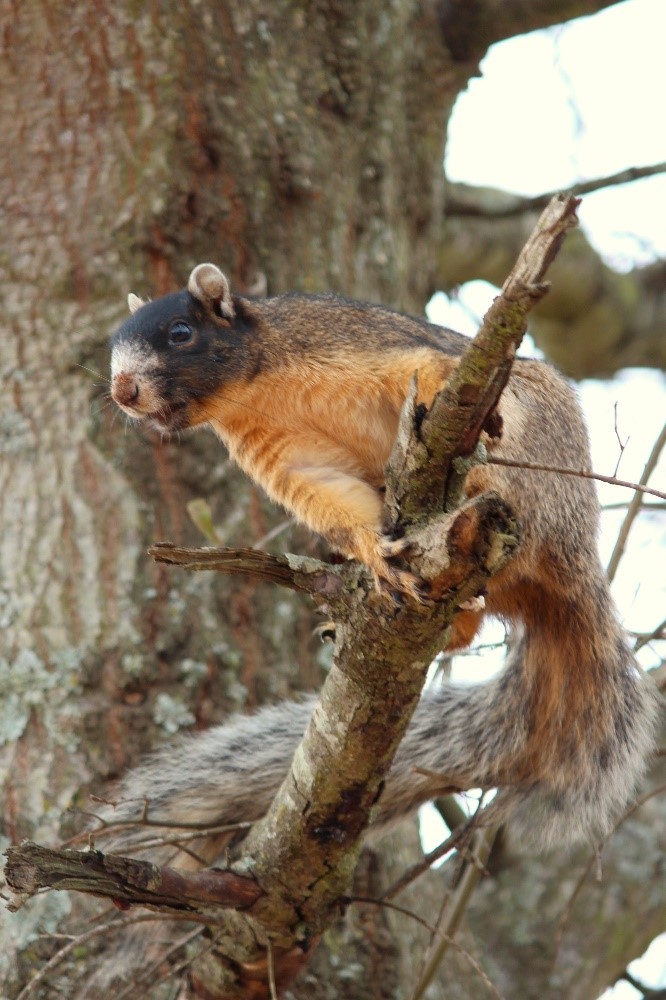
Over the last few decades, the fox squirrel has been declining due to habitat fragmentation and alteration. Fox squirrels are a large squirrel, with a mostly reddish-brown coat, black head and white nose, but black and silver color phases are also seen in Alabama. These squirrels can be found throughout the state but are more commonly observed in the Tennessee Valley region in North Alabama. Fox squirrels tend to have more specific habitat requirements than their more commonly known cousin, the gray squirrel. Fox squirrels prefer more open forest types with well-managed ground cover. They do well in both upland and bottomland forests if mature timber is present with clean and open understory. The Fox squirrel are also quite common in areas along the edges of large forests and open fields. Open fields of cattle farms, where the surrounding woods are relatively open and dominated by oak/hickory also provide good habitat for fox squirrels.
Fox squirrel populations seem to be more sensitive to habitat changes than gray squirrels. Maintaining an open understory in upland mixed pine/hardwood forests through frequent fire intervals is a good management practice to promote fox squirrel habitat. Cavity trees that provide hollow escapes for cover and nesting are also important. Feeding and food gathering generally takes place in areas where understory vegetation and young hardwood encroachment are minimal.
Due to their large size and calm demeanor fox squirrels are easy to locate if present. Keep your eyes open as you travel the state, and maybe you too, can see one of the often-forgotten fox squirrels of Alabama.