Alabama Department of Conservation & Natural Resources sent this bulletin at 08/30/2019 10:00 AM CDT
Wildlife and Conservation News | August 2019
Gopher Tortoise Nesting Season
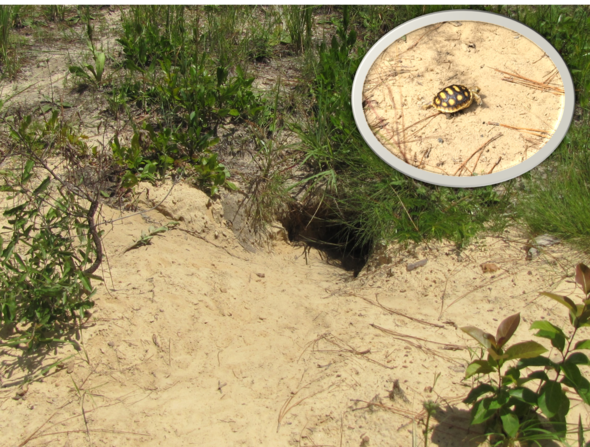
Did you know: Female gopher tortoises usually lay their eggs in the burrow apron, the sandy area in front of the burrows, by digging a nest in the sand and depositing a clutch of eggs. A clutch ranges in size from 3-15 ping pong ball sized eggs and once laid, the eggs are covered to protect them from predators such as dogs, skunks, coyotes, raccoons and many others. However, gopher tortoises cannot protect their eggs from one predator, humans. Be conservation conscious and take care not to disturb bare dirt in front of tortoise burrows, so that potential nests are not destroyed. This is especially important during breeding season from April to June.
Tortoises, along with other ground nesting species, are very susceptible to nest predation. With a little luck, eggs will begin to hatch after 100-110 days and baby tortoises will begin to emerge by the end of the summer. Once hatched, tortoises make their way to cover in the adult’s burrow or under logs and leaf litter. Be on the lookout for baby tortoises this time of year as they begin to emerge from their nests!
To learn more about Alabama’s amazing gopher tortoises visit Outdoor Alabama's Gopher Tortoise Page.
A Variety of Attraction: Planting Food Plots on Your Property
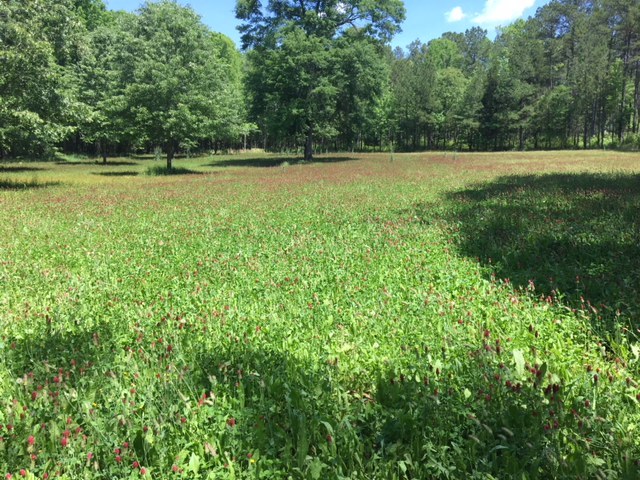
Food plots are great for attracting deer, turkey, and other wildlife, as well as, providing supplemental forage during nutritionally stressful times of the year; namely winter. There are many varieties of seed blends available today which make it difficult to decide which one to choose. Keep in mind, there is no “miracle blend” that can serve as a substitute for proper habitat and population management. Food plots are merely supplemental to all other management efforts being implemented.
If planting for the fall/winter, choosing a blend containing small grains (wheat, oats, rye, triticale), winter peas, and/or Brassicas (rape, turnips, kale) may be sufficient as these establish quickly and can be very attractive to deer. If you want to extend your plots into spring, you may consider including a variety of clover. The most common of these is crimson clover. However, red and white clovers make excellent choices as well, depending on your objectives and current soil conditions. Whatever you decide, you are encouraged to plant a blend. Planting blends can help reduce plot failure, increase attractiveness, and extend forage production; ultimately increasing feeding opportunities for deer and turkey, and many other wildlife species.
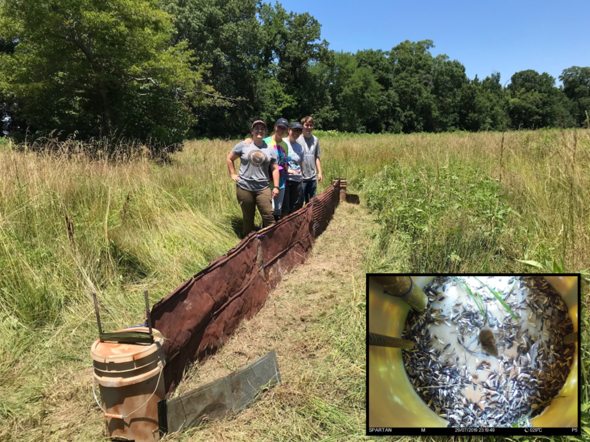
Students from Athens State University Biology Program helping install a fence and camera trap to survey small wildlife such as the eastern harvest mouse in the bottom right picture above.
Nongame Wildlife Surveys
The Alabama Nongame Wildlife Program is charged with managing, protecting, conserving, and enhancing nongame wildlife in Alabama. This includes birds, reptiles, amphibians, and small mammals. Hundreds of these species are considered to be at some level of conservation concern. Often the first step to enact conservation for these species is simply locate where they occur across the state. Annually, Nongame Wildlife Biologists conduct a variety of surveys to inventory and monitor for both imperiled and more common species.
Recently one of our nongame biologists experimented with a commonly used technique to inventory for small mammals, amphibians, and reptiles by adding a new twist on an old technique. Herp arrays employ a long fence, sometimes with multiple arms, to guide reptiles, amphibians, and small mammals into traps placed at each end. Traps must be checked each day to identify and release captured animals. This summer an innovative re-design was deployed that uses cameras with a short focal length to “capture” images of animals as they pass through a bucket at the end of each fence. The buckets are baited with sunflower seeds to attract rodents, and possibly other species. This has the benefit of avoiding stress to the animal, as it is not detained, and alleviates staff workload incurred since traps do not need to be checked daily. Initial testing of this method allowed for detection of multiple species, including several species of mice, snakes, and even a Carolina wren, and indicates that it could be an effective tool for surveying wildlife in a timely manner.
To learn more about the nongame program's current projects check out the Outdoor Alabama website below.
Management of Commercial Loblolly Forest for Wildlife
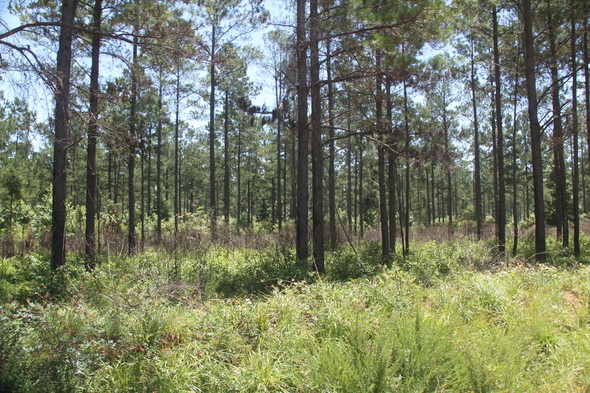
Loblolly pine is an important timber-producing tree species in the South. The goal for many landowners and timber companies managing loblolly pine plantations is to produce quality sawtimber, while balancing the forest’s natural resources. A common misconception is that loblolly pine stands create poor wildlife habitat. When managed properly, loblolly pine stands can provide excellent habitat for many wildlife species. Species such as deer, turkey, songbirds, raccoon, opossum, and more forage on forbs, vines, mast producers, and grasses that grow in the understory. The managed understory of a loblolly pine stand can also provide cover from predators, thermal cover, nesting sites, bedding areas, and other beneficial habitat components. If you are interested in managing your loblolly pine to benefit wildlife, contact your local Wildlife Biologist to find out more.
Photo Credit: John Brock
Hummingbirds in Your Backyard
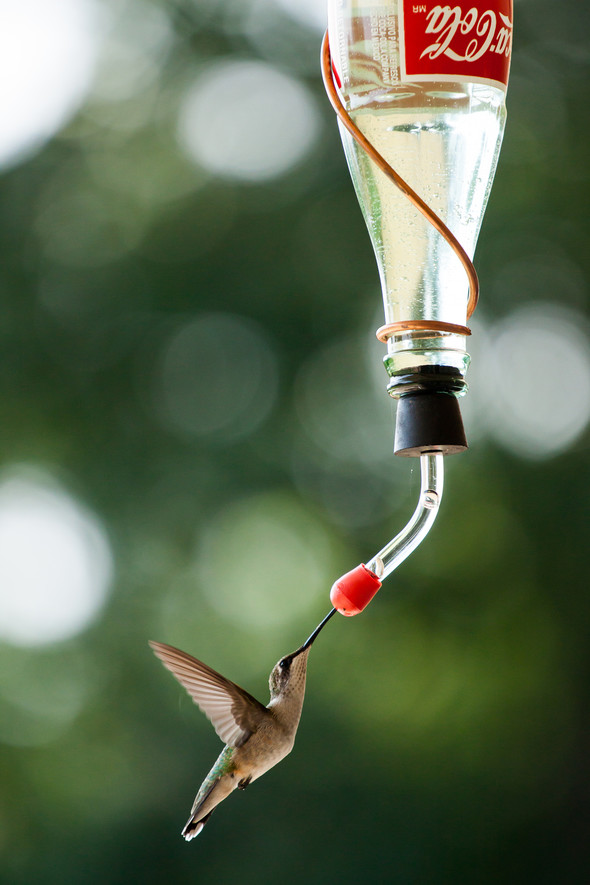
Hummingbirds are a backyard favorite for many people. These small agile birds have hearts that beat 225 times per minute while at rest and more than 1,200 times per minute while flying. To give some reference, the average human adult (18 years and older) has a resting heart rate of only 60 to 100 times per minute! Did you know that hummingbirds are also the only vertebrates that can hover, and fly backwards and upside-down, with their wings beating 70 times per second in normal flight and up to 200 times per second while diving. This high energy lifestyle causes hummingbirds to constantly seek out reliable food resources, and as more areas become urbanized, the flowers that hummingbirds typically search for are harder to find.
The good news is that by filling your yard with native flowering plants, vines, shrubs, and trees, you can create a healthy yard that will attract these hungry hummingbirds. As nectar specialists, evident by their long bills and grooved tongues, 90% of their diet is made up of sugary nectar. To a hummingbird, there is nothing better than finding a native nectar supplying plant! A few native plants that you can introduce into your yard include trumpet creeper (Campsis radicans), pink azalea (Rhododendron periclymenoides), red buckeye (Aesculus pavia), and coral honeysuckle (Lonicera sempervirens). Nectar can also be supplied through sugar water made by mixing four parts hot water and one-part sugar – no red food coloring needed! Hummingbirds do not need the sugar solution to be red, however the feeder itself should have some red on it. In addition, feeders need to be monitored throughout the summer. As the Alabama heat beats down on feeders the solution can spoil, and bacteria can grow. It is best to clean them at least once a week using a diluted bleach solution (one-part bleach to ten parts water). As the summer comes to an end, remember keep your feeders up! Your feeders will be a vital food source for straggling migrants and you might even encounter a western species. For more information on hummingbirds, visit the Watchable Wildlife page on our website.