
This Week's Updates
Alaska Department of Health sent this bulletin at 12/05/2025 10:44 AM AKST
Board Meeting Recording, Guidehouse Study & Upcoming Advocate Mastery Workshop
ACoA Board Meeting Zoom Recording
Thank you to everyone who attended our quarterly board meeting this week including all our great presenters, partners and advocates. You can view a recording of the meeting at these Zoom Cloud links: Part 1 and Part 2. Passcode: aLFi$4KZ.
Next week's e-blast will include a summary draft of the meeting.
Our next board meeting is in Juneau on February 10th and will be able via Zoom as well. Stay tuned for details.
Save the Date: ACoA Advocacy Mastery Training with Teri Tibbett January 7 via Zoom
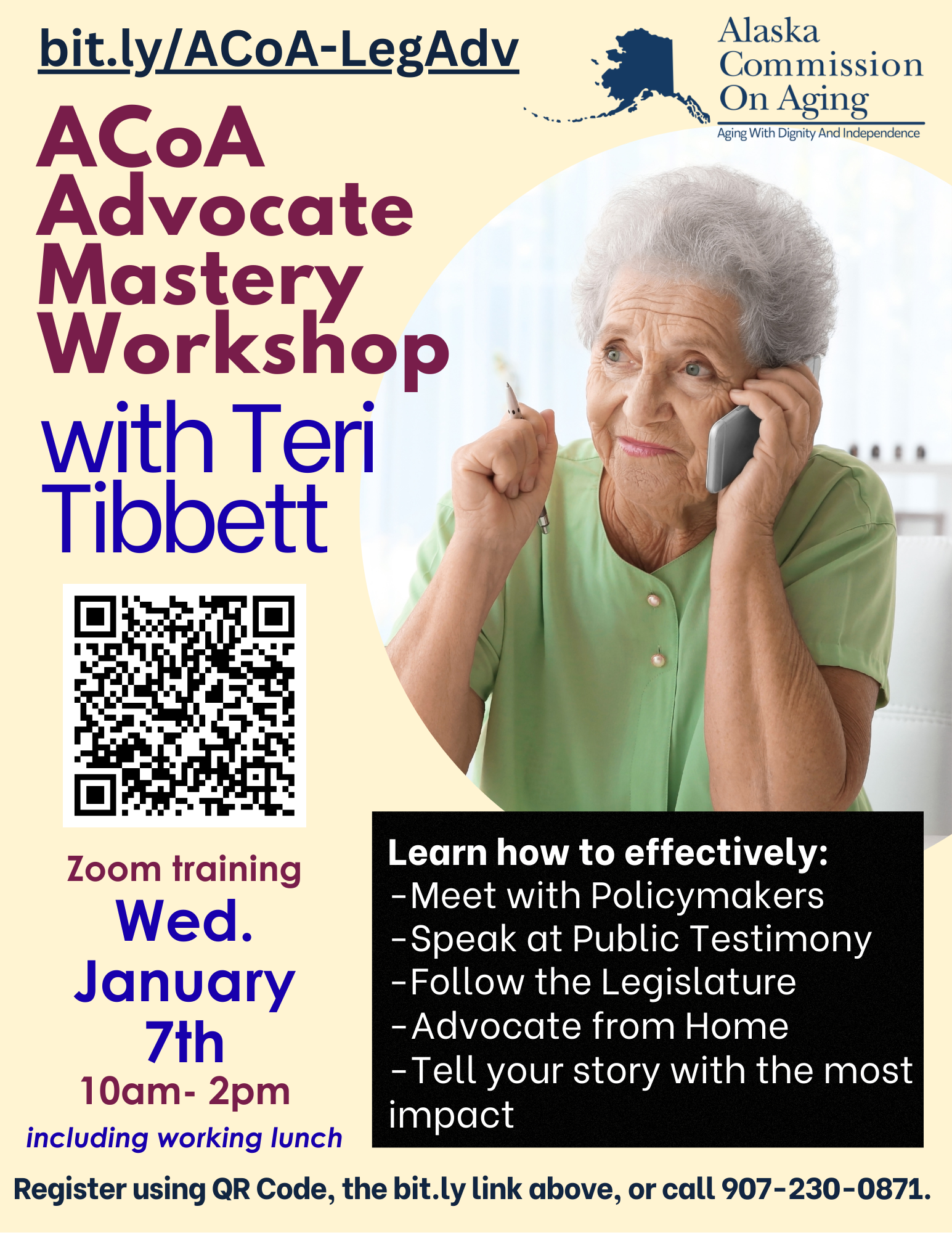
All are welcome! Learn how to be a champion advocate for FREE! This training will cover tips for meeting with policymakers and speaking at public testimony, how to follow the legislature, effective advocacy from home & more! There will be time designated for a working lunch. Join us 10am - 2pm via Zoom. Thank you to Teri Tibbett for making this possible.
Register: https://us02web.zoom.us/webinar/register/WN_eh3tGoDvT6GHpwVCFfEHWw#/registration
Download PDF flyer and share here.
ACoA Free Community Webinar: Kinship Family Support with Haa Yatx’u Saani, Volunteers of America Alaska and Generations United Dec 11
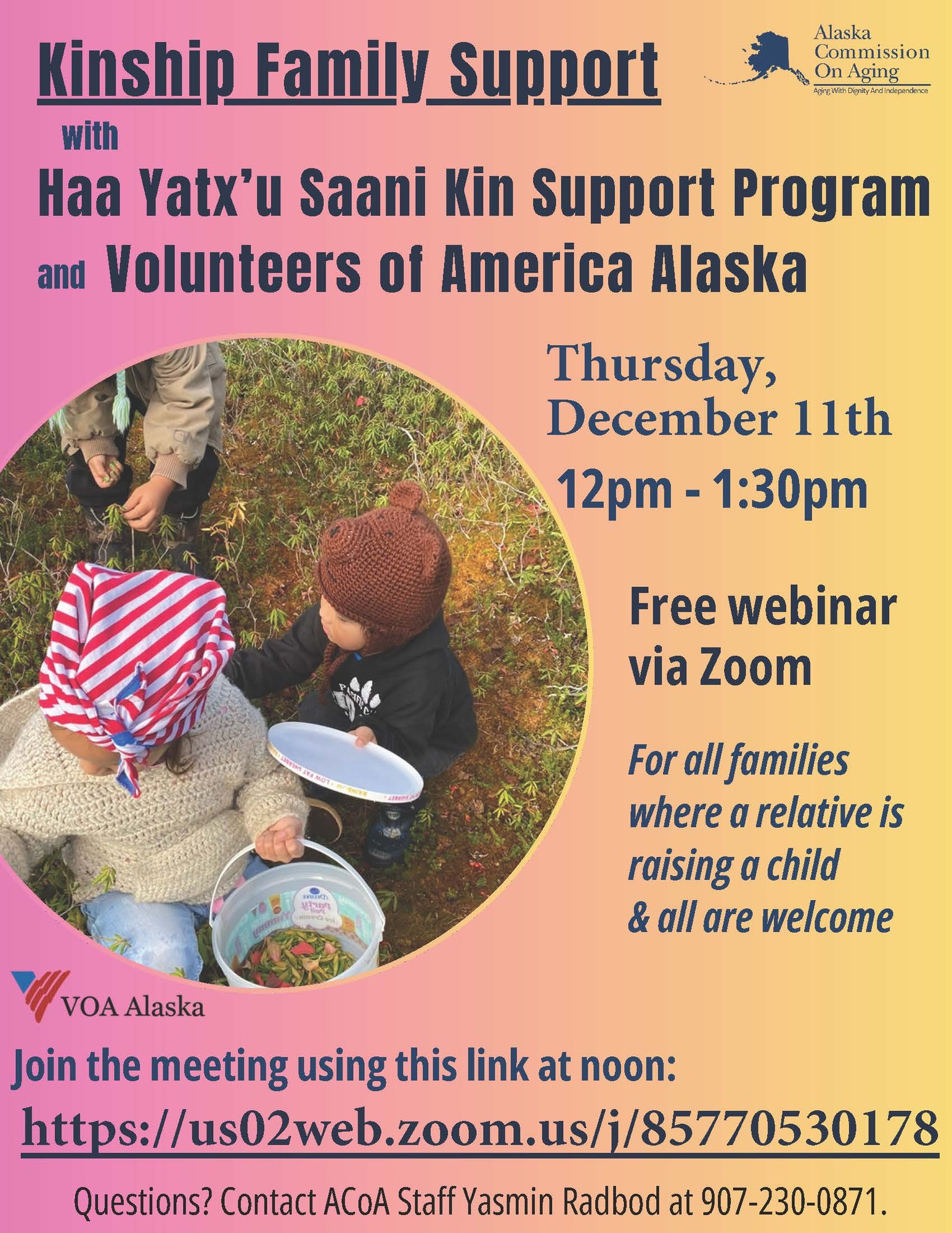
Our Grandparents Day Kinship Family Support Webinar is now happening December 11th, and we hope you will join us for this wealth of information! All are welcome to learn about supports in Alaska for relatives raising children, featuring Southeast Alaska's Kinship Navigator Program Haa Yatx’u Saani, Volunteers of America Alaska , and Generations United on Thursday, December 11th at 12pm. Are you a grandparent or relative raising children in your family? Do you want to learn what supports exist for kinship families in Alaska? Join us!
Zoom link to join at noon on December 11th: https://us02web.zoom.us/j/85770530178For questions or help accessing Zoom, call our Program Coordinator at 907-230-0871 or email us at doh.acoa.info@alaska.gov.
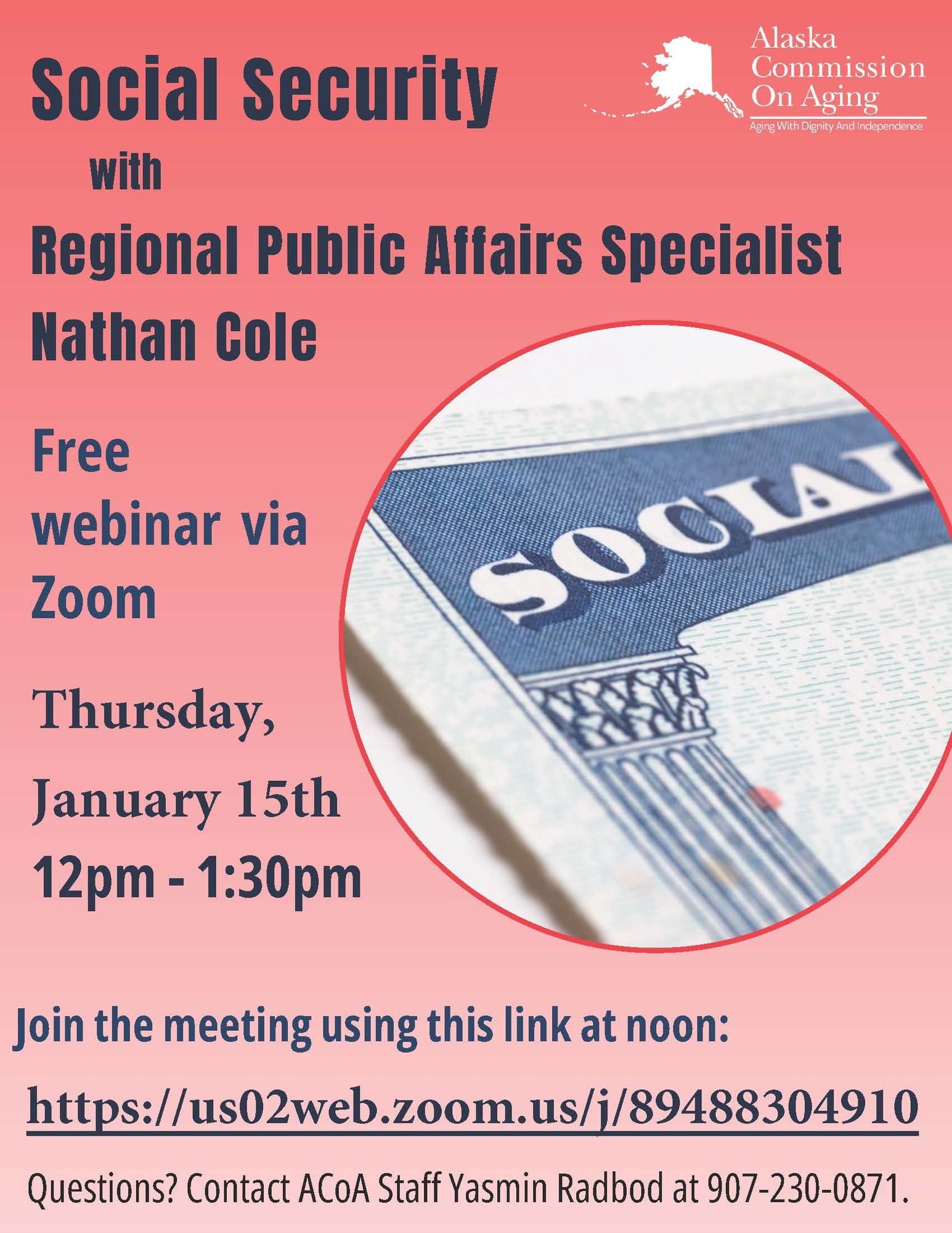
ACoA Webinar: Social Security Administration 101 on January 15
Alaska Medicaid Long Term Services and Supports Rate Study Recommendations and Final Report Review Session Registration Link
Over the past year, the Department of Health (DOH) and Guidehouse have been conducting a rate study on Alaska Medicaid Long Term Services and Supports (LTSS). The rate study included engagement from stakeholders through provider surveys, listening sessions, and meetings to gather feedback on these services. As a result of this collaborative effort, the 2025 LTSS Rate Evaluation Report and Rate Model are now available on the DOH webpage. More information about the rate study is available on the Office of Rate Review webpage under “Initiatives” and “Medicaid Rate Review.”
The reports include the following details:
- Executive Summary
- Background
- Findings & Recommendations
- Fiscal Impact Estimates
- Stakeholder Engagement
- Data Sources & Methodology
- Peer State Comparisons
- Service-Specific Rate Analyses
On Friday, December 12th, DOH and Guidehouse will be hosting a review session on the outcomes of the Alaska Medicaid Long-Term Services and Support (LTSS) Rate Study. This session will provide an opportunity to learn more about the findings from the rate evaluation and the recommendations included in the final report.
Friday, December 12th from 2pm - 3pm AKST
Registration Link: https://us02web.zoom.us/meeting/register/fhGM_4JjToeGpYkycPgq5g
Meeting ID: 822 9462 0677; Passcode: SDS2025
Please register using the link above. Registration is required to attend the meeting.
Questions? Email doh.sds.info@alaska.gov
AK Behavioral Risk Factor Surveillance System New GCDSE Report
AK Department of Health Chronic Disease Facts 2025 Brief Report
The Alaska Department of Health published its new annual Chronic Disease Brief Report. The report shares the percentage of Alaskans living with chronic diseases and the number of Alaskans who died from these diseases in 2024. The report also shares the habits, screenings and programs that can prevent, diagnose and manage these diseases to feel better.
Alaskans can take steps to prevent and manage chronic diseases.
- Take an active role in your health and your family’s health by being physically active, eating a healthy diet, avoiding tobacco use, and cutting out sugary drinks.
- Ask your health care provider about recommended screenings and services.
- Sign up for Alaska’s Fresh Start programs. Fresh Start connects Alaska adults to programs that can help them make a fresh start at any time in their lives. Many of these programs are free or low-cost. They help adults move more, lose weight or maintain a healthy weight, lower blood sugar to prevent or manage diabetes, lower blood pressure, or quit smoking or vaping. Visit freshstart.alaska.gov to find a program for better health.
The Alaska Native Vietnam-era Veterans Land Allotment Program Deadline Dec 29
The Alaska Native Vietnam-era Veterans Land Allotment Program (ANVLAP) is open to all eligible Alaska Natives who served in the military between August 5, 1964, and December 31, 1971. Congress is currently considering an extension to the application deadline. Unless the deadline is extended, ANVLAP applications will only be accepted and processed if they are postmarked on or before December 29, 2025.This is a once-in-a-generation opportunity to reclaim land that was never offered due to military service during the Vietnam War. If you're an Alaska Native who served during the Vietnam War, or are an heir to one, check your eligibility now, and apply before it's too late.
CarFit: A free program to help Alaskans ages 50+ adjust their vehicle for safety and comfort
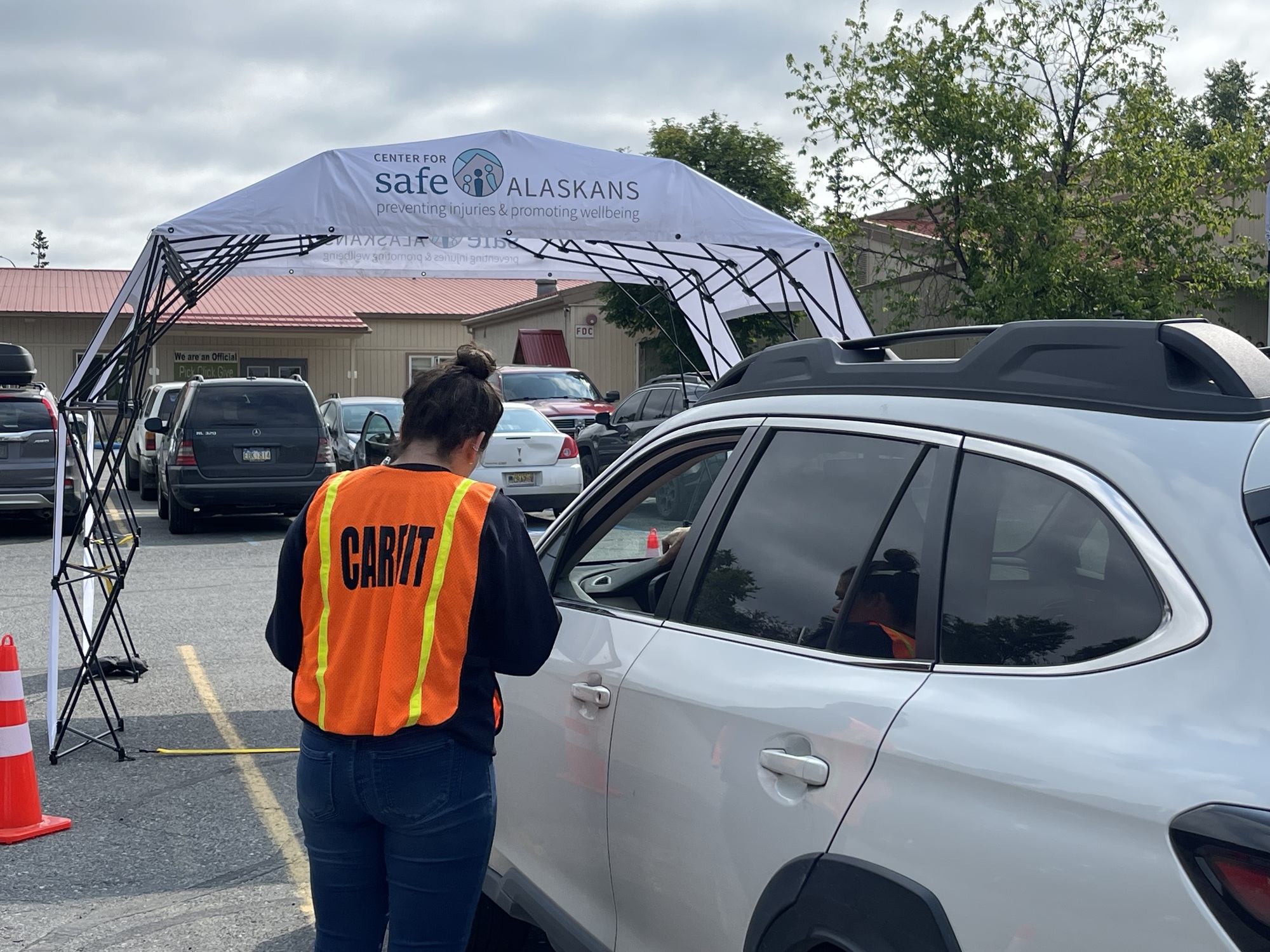
Small adjustments to vehicle setup can make a big difference in driving safety and comfort. CarFit offers free, personalized checks that help Alaska drivers adjust their seat position, mirrors, headrests, and more. It’s designed to keep you safe and comfortable behind the wheel.
A 20-minute CarFit check can help you drive more safely for years to come. Schedule yours: Contact Safe Alaskans at info@safealaskans.org or (907) 929-3939. Find out more about CarFit by clicking this link.
Help Safe Alaskans connect aging Alaskans with CarFit: Safe Alaskans is also looking for partners to help them reach Alaskans. Contact them if your organization wants to host an event or would like to learn more about offering the program directly.
ACL Awards to Address Elder Abuse in Tribal Communities, KANA Selected
- The Kodiak Area Native Association plans to expand and improve protective services for elders who experience abuse, neglect, and exploitation. It will develop Kodiak-specific resources that empower service providers and community members in the prevention, intervention, and response to issues through a Kodiak-based elder abuse case review multidisciplinary team, prevention training, and building local capacity to sustain prevention and response activities.
Homer Seniors: Assisted Living Units Available
Homer Senior Citizens, Inc. currently has assisted living apartments available for seniors who may benefit from extra support while maintaining independence. Our community offers a warm, safe, and caring environment with services designed to meet your needs.
• Comfortable, Private Apartments
• 24/7 Staff Support
• Daily Meals
• Activities, Outings, and Social Opportunities
• A Beautiful, Quiet Campus
Interested? Call (907) 235-7655 or Email: kristina@homerseniors.com
AARP Community Challenge Grant Coming Soon
The AARP Community Challenge Grant 2026 will open in January and close in March! Since its debut in 2017, the grant program has invested $24.3 million in 2,100 livability projects, with a focus on meeting the needs of adults age 50 or older, in all 50 states, Puerto Rico, the U.S. Virgin Islands and Washington, D.C.
Bejamin Rose Institute on Aging Updates
Federal Funding
On October 1, Fiscal Year 2026 started without a federal funding bill in place, starting a federal government shutdown that lasted 43 days, the longest in history. The President signed a Continuing Resolution (CR) on November 12, ending the shutdown and funding most programs at FY25 levels through January 30. It extends multiple Medicare programs through January 30th like hospital at home and telehealth. It also passes three regular appropriations bills for FY26 including Agriculture, which fully funds SNAP and reauthorizes farm bill programs for another year. Congress still needs to address the expiring ACA premium tax credits. Funding reaches programs at difference speeds, with Older Americans Act funding expected to take 6-8 weeks for funds to reach the State Units on Aging.
November was National Family Caregiving Month. On November 18, the Administration for Community Living hosted "The Power of Caregivers for a Healthy America," an event honoring the nation's 63 million+ family caregivers and 5 million+ direct care workers. The event highlighted the essential role caregivers play in helping people live independently and the ongoing need for investment in caregiver supports and training. Representative Dwight Evans (D-PA) introduced a resolution, recognizing November 2025 as National Family Caregivers Month (H.Res.898).
Senator Edward Markey, Ranking Member of the Health, Education, Labor, and Pensions (HELP) Subcommittee on Primary Health and Retirement Security announced his “Caring for Caregivers” legislative agenda, and reintroduced six bills to support the needs of family caregivers nationwide.
Health
Representatives Robin Kelly (D-IL) and Jen Kiggans (R-VA) introduced the bipartisan Medical Nutrition Therapy Act of 2025 (H.R.2495), which would expand Medicare coverage for nutrition services provided by Registered Dietitian Nutritionists. Currently, Medicare only covers these services for patients with diabetes or kidney disease. This bill would expand coverage to include conditions like malnutrition, cancer, heart disease, obesity, and more.
CMS finalized the 2026 final rule for the hospital outpatient prospective payment system, increasing the number of inpatient procedures that can be done at an outpatient or ambulatory facility (for a lower price) and expanding site neutral payments, which provides equivalent reimbursement at different outpatient facilities. For example, chemotherapy provided at a hospital outpatient department would be reimbursed at the same rate as a freestanding physician’s office, leading to lower copayments/coinsurance for older adults and reducing federal spending.
Senator Richard Blumenthal (D-CT) and Representative Nikki Budzinski (D-IL) introduced companion bills called the Boosting Benefits and COLAs for Seniors Act (S.3059, H.R.5841). The bill would calculate Social Security cost-of-living adjustments using a formula that better reflects what older adults actually spend money on, like healthcare and housing, potentially resulting in higher benefits.
Elder Justice
Representatives Lori Trahan (D-MA), Jim McGovern (D-MA), and Debbie Dingell (D-MI) introduced the Protect Patients from Healthcare Abuse Act (H.R. 5895) to protect Medicare beneficiaries, including older adults, from abuse in healthcare settings. The bill requires Medicare providers to inform patients of their right to have a chaperone present during sensitive medical exams and their right to give informed consent before receiving care, and mandates staff training on supporting patients' rights and reporting abuse.
Representatives Rob Menendez (D-NJ) and Erin Houchin (R-IN) introduced the Strategic Task Force on Scam Prevention Act (H.R. 5967) to create an interagency task force that will develop a national strategy to combat scams targeting consumers, particularly older adults. The bill directs the Federal Trade Commission and Department of Justice to coordinate with federal agencies, industry partners, and state law enforcement to improve public education, strengthen enforcement actions, enhance victim recovery resources, and report to Congress within one year.
Behavioral Health Services and Older Adults: Coordinating Care Across Systems and the Lifespan
This SAMHSA report examines how state mental health agencies can better coordinate behavioral health services for older adults with serious mental illness through partnerships with aging services, with case studies from five states demonstrating innovative approaches to care coordination, crisis services, and supporting older adults aging in place.
Wisconsin Institute for Healthy Aging: Prescriptions, Supplements, and Everything in Between Webinar Dec 9
Join WIHA at 10am via Zoom Dec. 9th: Understanding the link between medications and preventing falls as we age. Discover how we can manage our medications safely to stay safe and independent. Register here.
Centers for Medicare & Medicaid Services: ACCESS Model Expands Access to Technology-Supported Care in Original Medicare
The ACCESS (Advancing Chronic Care with Effective, Scalable Solutions) Model tests an outcome-aligned payment approach designed to give people with Original Medicare new options to improve their health and prevent and manage chronic disease with technology-supported care. The voluntary model focuses on common conditions, such as high blood pressure, diabetes, chronic musculosketal pain, depression, and other conditions affecting millions of Americans.
Today, people with Original Medicare have limited access to modern, technology-supported care for managing their chronic conditions.
CMS will begin accepting applications for the 10-year voluntary model on January 12, 2026, with an initial deadline of April 1, 2026. ACCESS will begin July 1, 2026. The Request for Applications will be available soon; the ACCESS Model Interest Form can be completed to be notified when the application becomes available.
ACCESS supports disease prevention and clinical innovation by empowering people who have Medicare with more choices.
Through ACCESS, CMS will implement outcome-aligned payments for clinicians offering technology-supported care, giving people with Original Medicare additional options for managing their health as an extension of their care team. CMS will pay participants a fixed amount in installments to manage a patient’s condition, with participants only receiving the full amount if required clinical outcomes are met. By emphasizing outcomes rather than activities, ACCESS gives clinicians greater flexibility to deliver modern technology-supported care that improves patient health.
ACCESS will focus on four clinical tracks addressing many of the most common chronic conditions:
- Early cardiometabolic conditions: hypertension (high blood pressure), dyslipidemia (abnormal or elevated lipids including cholesterol), obesity or overweight with marker of central obesity, and prediabetes
- Cardio-kidney-metabolic conditions: diabetes, chronic kidney disease, and atherosclerotic cardiovascular disease, including heart disease
- Musculoskeletal conditions: chronic musculoskeletal pain
- Behavioral health conditions: depression and anxiety
Find out more:
Voices of Alzheimer's: The Alzheimer’s Year-End Roundup Dec 11
Join Voices of Alzheimer’s on Thursday, December 11th, at 8am AKT for their final webinar of the year, The Alzheimer’s Year-End Roundup: 2025 Highlights & 2026 Preview.
This special session will bring together Holly Simms, Dr. Peter Van Dell, and Dr. Jeff Burns to reflect on an extraordinary year of progress in Alzheimer’s research and care. Unpack key developments from CTAD—including new modes of administration for current treatments, updates on emerging therapies, and the continued advancement of diagnostic tools like blood tests.
Most importantly, speakers will explore what these scientific milestones mean for patients and families today, and what work still lies ahead in 2026 to expand access, improve outcomes, and accelerate innovation.
National Native American Boarding School Healing Coalition Remote Job Openings
The Healing Programs Coordinator is responsible for supporting and implementing programming centered on healing for boarding school survivors and staff. This position reports directly to the Director of Indigenous Mindfulness and works closely with them to fulfill various grant-related activities and assist with the completion and management of grant deliverables. This position will also work closely with other departments (Digital Archives, Research and Education, Policy, Development and Oral History Project) to collaborate and provide support with healing-related program needs.
Oral Historian
Oral Historians will interview and document the oral histories of survivors of Indian boarding schools in the United States. Interviews are currently scheduled through June 2026 with potential, but no guaranteed, follow-up work to continue through December 2026. This unprecedented collection of recorded experiences of boarding school survivors is part of a large project of the National Native American Board School Healing Coalition (NABS). Oral Historians will be supervised by and provided guidance by the Oral History Project Co-Directors.
MedPAC and MACPAC: Dual Eligible Beneficiaries
The Medicare Payment Advisory Commission (MedPAC) and the Medicaid and CHIP Payment and Access Commission (MACPAC) have released: Beneficiaries Dually Eligible for Medicare and Medicaid. The national report highlights that 20% of dually eligible beneficiaries reside in rural areas; helps show how big and costly the dual-eligible population is, how health and long-term-care needs tend to concentrate in this group, and how managed-care enrollment looks among duals.
Aging News
Shingles Vaccine Tied to Dramatic Drop in Dementia Deaths
Cognitive Intervention Does More Than Defend Against Dementia
HHS Officially Rescinds Nursing Home Minimum Staffing Rule
Novel Alzheimer's Pill May Slow Decline in Some High-Risk Patients
Doctors Have a Front-Row Seat to the Caregiver Crisis
First-ever drug to repair DNA and regenerate damaged tissue is here
Prime Free Webinar: Recognizing and Managing Post-COVID Conditions in Older Adults
Disclaimer: The information and announcements included in this email are being redistributed for informational purposes only. Our agency does not necessarily endorse or support the views, opinions, or activities of these organizations, and inclusion in this email does not imply any affiliation or recommendation.