
This Week's Updates
Alaska Department of Health sent this bulletin at 11/28/2025 11:51 AM AKST
ACoA Holiday Greetings, SNAP Update
During this time of gratitude, we want to thank our senior community, providers, advocates and volunteers for all you do. Thank you for supporting our mission to ensure the dignity and independence of all Older Alaskans.
You're Invited: Alaska Commission on Aging Board Meeting December 2
Join us all day on Tuesday, December 2nd for our quarterly board meeting featuring legislative priority discussions pertinent to senior issues, special guest speakers on senior resources and programs, and much more.
The Zoom Webinar link to join is: https://us02web.zoom.us/j/84908301142
Public Comment is at 12:30pm. Public Notice (and meeting agenda) here.
Don't miss a special Lunch and Learn presentation from 12:10 - 12:30pm by Center for Safe Alaskans on their Car Fit Program for Older Alaskans!

ACoA Free Community Webinar: Kinship Family Support with Haa Yatx’u Saani, Volunteers of America Alaska and Generations United Dec 11
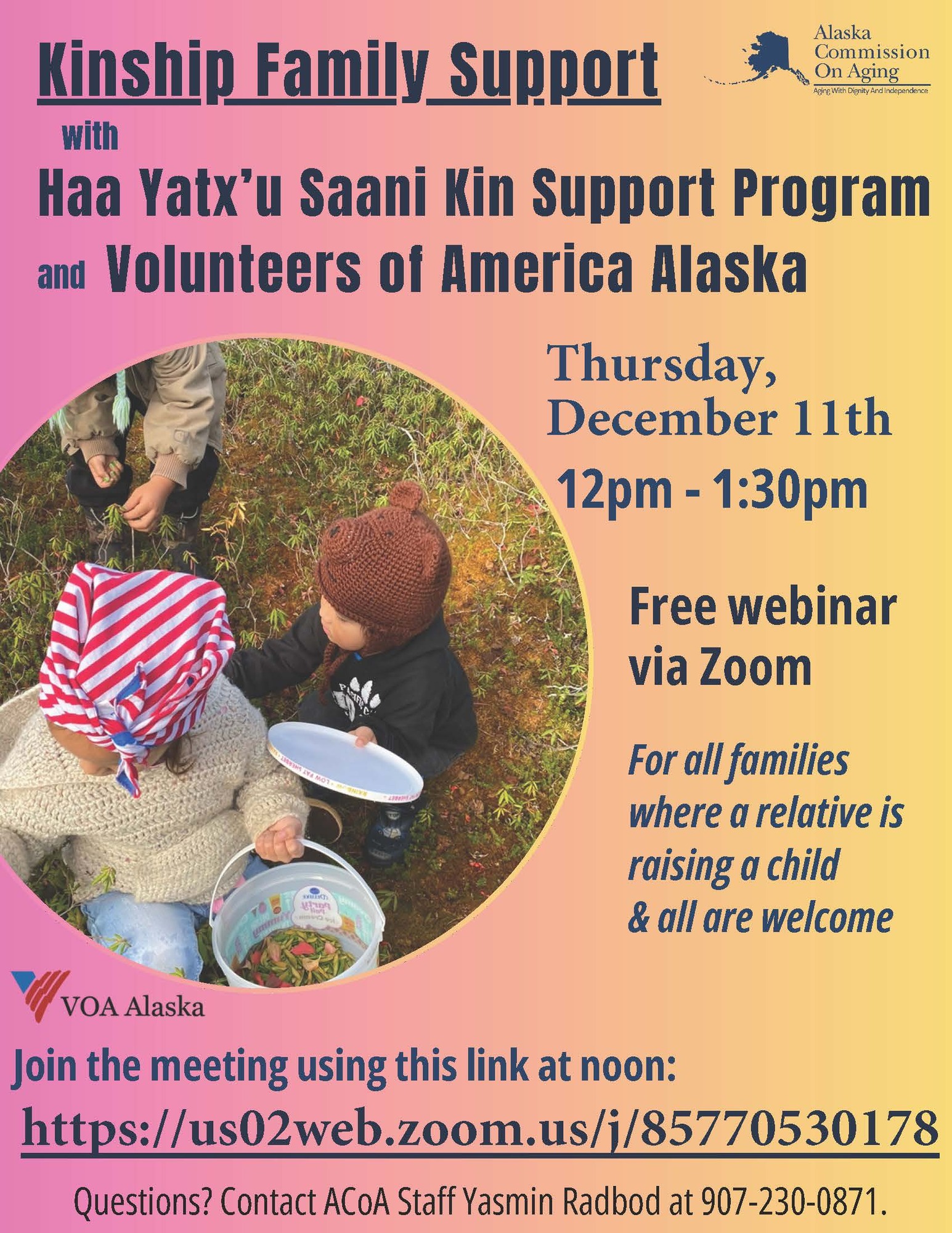
Our Grandparents Day Kinship Family Support Webinar is now happening Thursday, December 11th, and we hope you will join us for this wealth of information! All are welcome to learn about supports in Alaska for relatives raising children, featuring Southeast Alaska's Kinship Navigator Program Haa Yatx’u Saani and Volunteers of America Alaska on Dec. 11th at 12pm. Are you a grandparent or relative raising children in your family? Do you want to learn what supports exist for kinship families in Alaska? Join us!
Zoom link to join at noon on December 11th: https://us02web.zoom.us/j/85770530178For questions or help accessing Zoom, call our Program Coordinator at 907-230-0871 or email us at doh.acoa.info@alaska.gov.
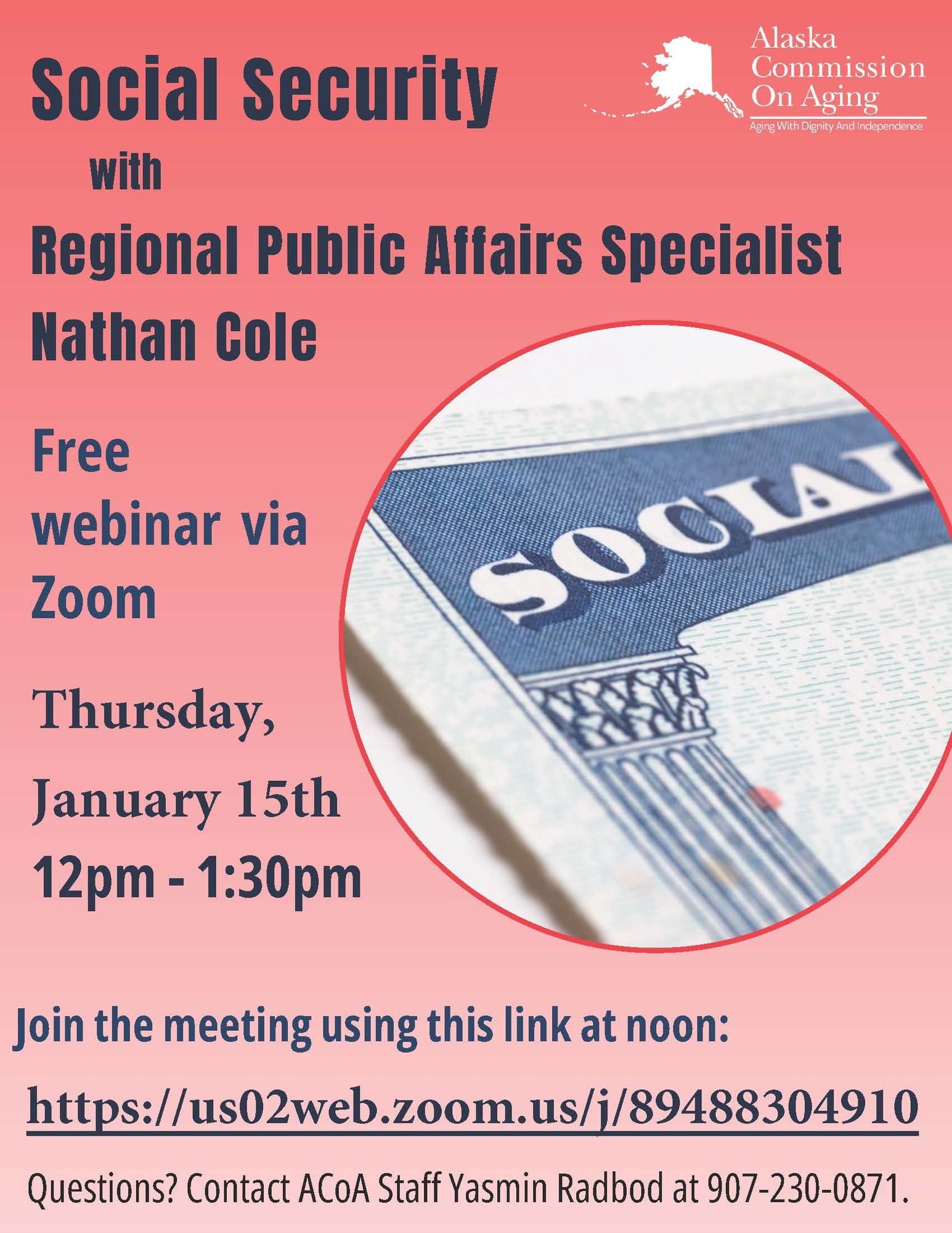
ACoA Webinar: Social Security Administration 101 on January 15
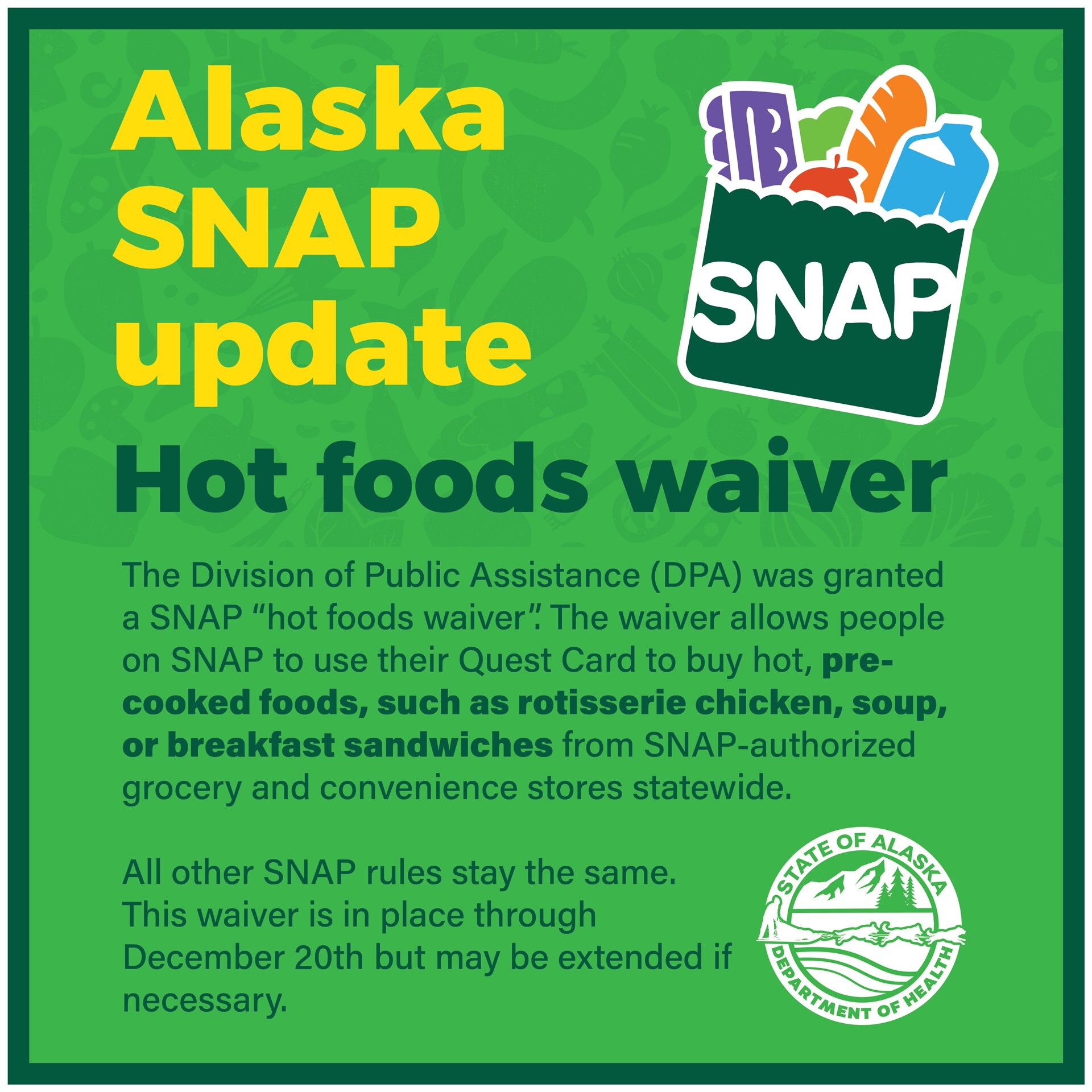
Alaska Dept of Health: SNAP Hot Foods Waiver Now in Effect
Food Bank of Alaska: AnchorRIDES Partnership for Thanksgiving Deliveries
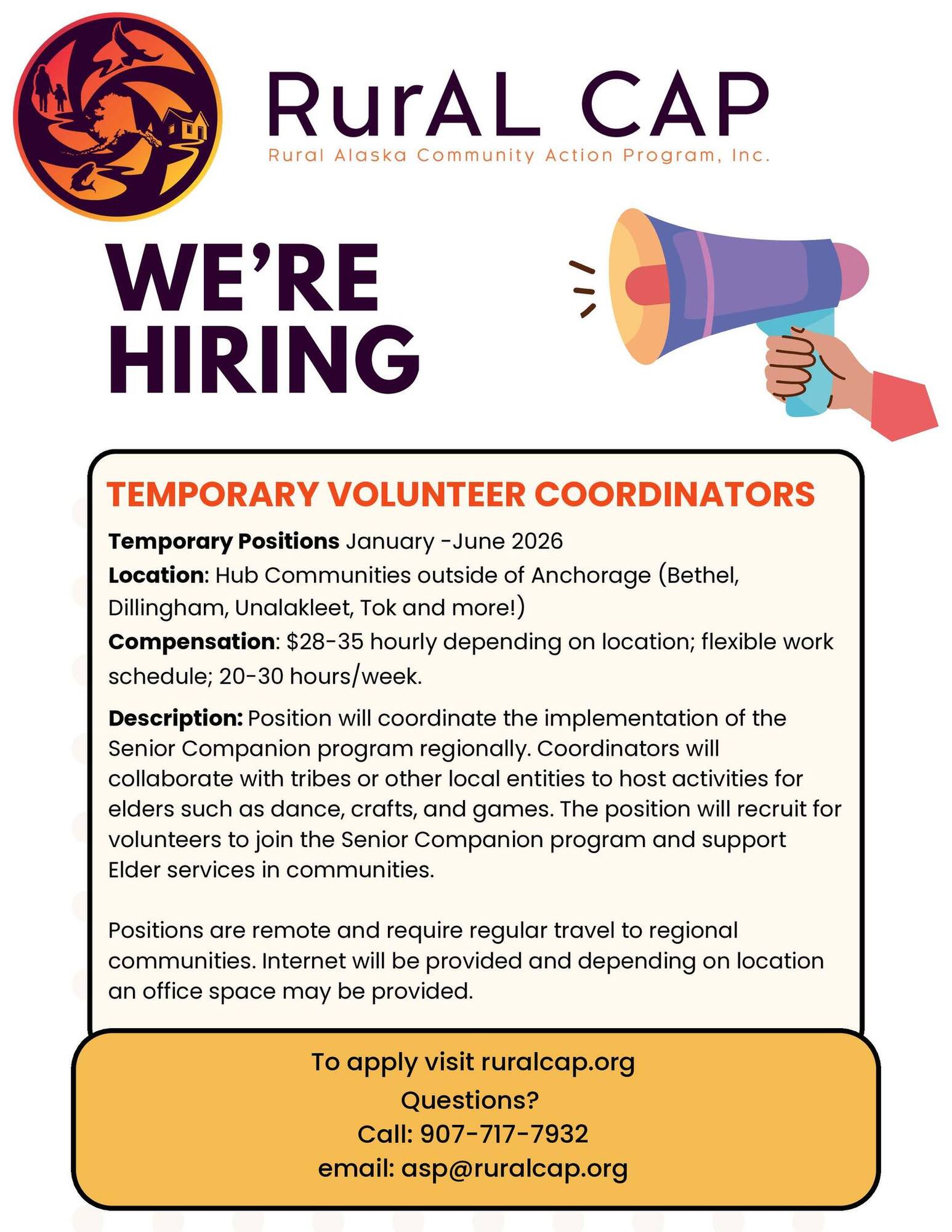
RurAL CAP is Hiring Temporary Volunteer Coordinators for Senior Companion Program
Older Driver Safety Awareness Week December 1 - 5
National Highway Traffic Safety Administration (NHTSA)
- In 2023 there were 7,891 people 65 and older killed in traffic crashes in the United States, accounting for 19% of all traffic fatalities.
- In the last 10 years (2014-2023), the number of older drivers involved in fatal crashes increased 41%, while the number of older licensed driver increased 38%.
Older drivers face unique safety concerns including vision, reflexes, and physical fitness. Review NHTSA materials to help guide the discussion with older drivers, and children and caregivers of aging adults. Older Driver Safety Awareness Week is December 1-5, 2025, a good opportunity to increase messaging.
For more information, click here.
Shining Abilities Holiday Craft Fair Anchorage December 6

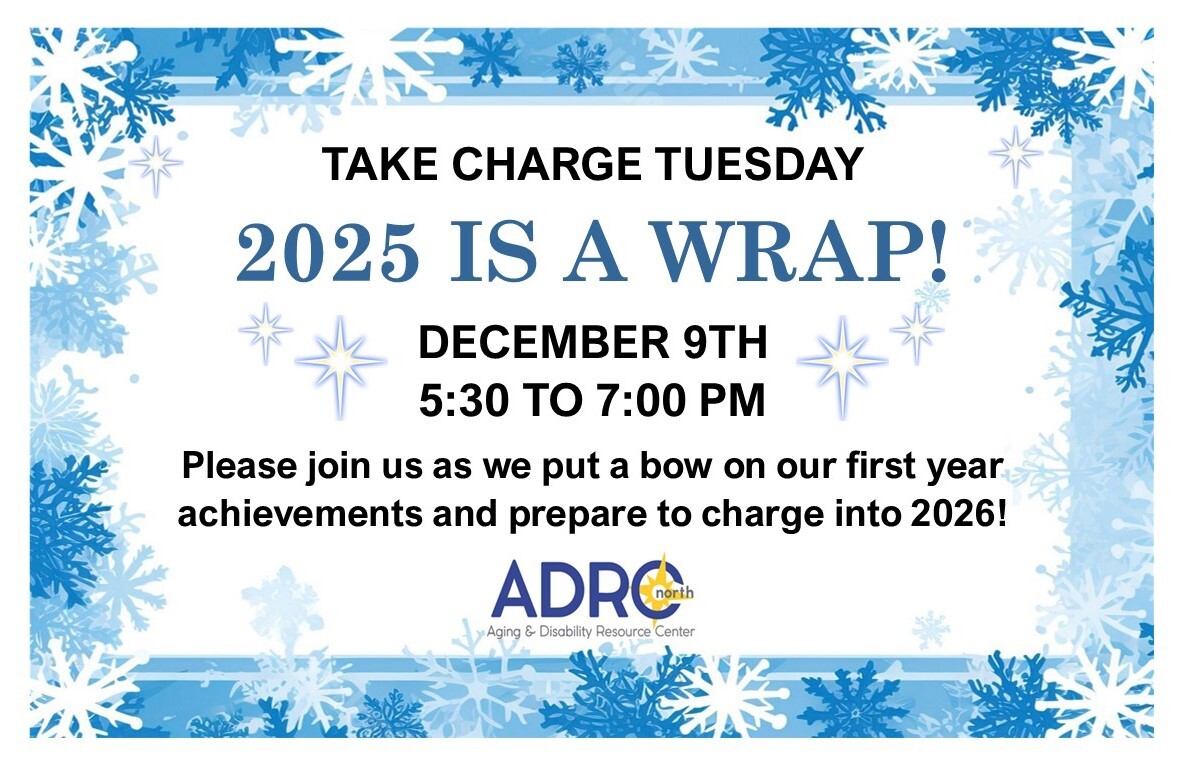
Fairbanks Senior Center Take Charge Tuesday December 9
Light the World Giving Machine in Fairbanks Until December 10, Returns to Anchorage December 12
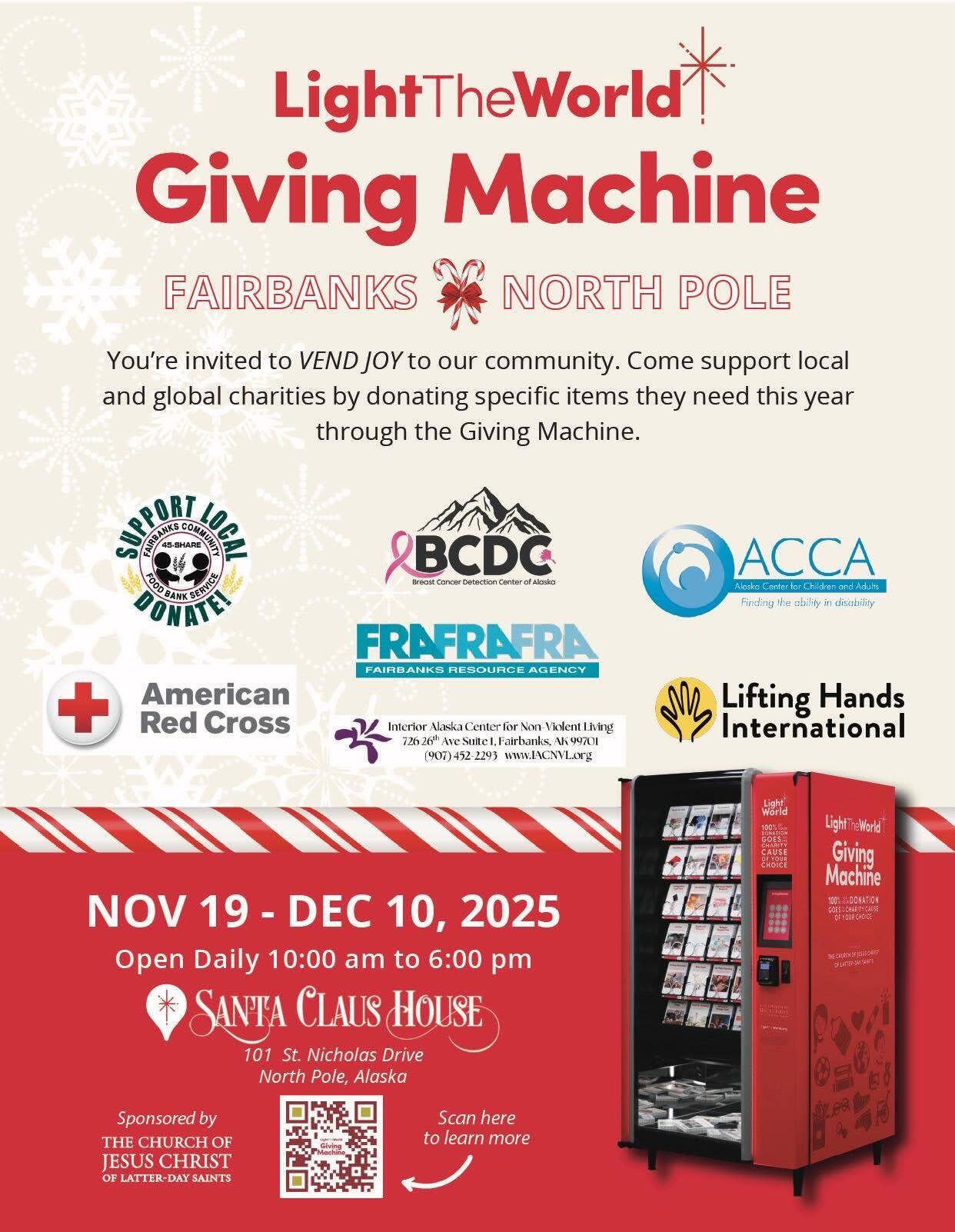
Visit the Light the World Giving Machine, sponsored by the Church of Jesus Christ of Latter-day Saints, now through December 10th at the Santa Claus House in North Pole! Support a variety of local and international organizations in the Fairbanks area. Learn more here.
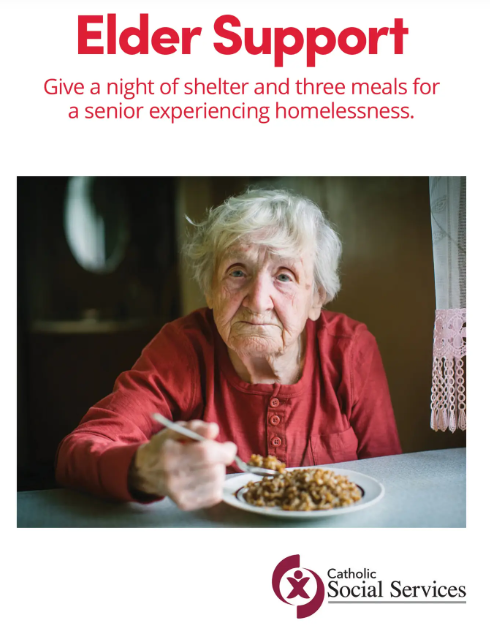
The Light the World Giving Machine is back at Midtown Mall December 12th through the 31st. One of the featured local organizations you can support through the Giving Machine is Catholic Social Services who is raising funds for Elders experiencing homelessness in Anchorage. Learn more: https://givingmachineanchorage.org/
Affordable Care Act Marketplace Alaska News
"A 61-year-old retiree, Robert Bixon, faces 2026 premiums of $4,500 a month to cover himself, his wife, and one of his sons. That's $54,000 a year, plus potentially spending up to $15,000 for their out-of-pocket maximum..." Read here.
"Thousands of Alaskans who rely on the federal marketplace for health insurance are experiencing sticker shock as they apply for coverage for the coming year. That’s because key health care subsidies that have helped millions of Americans afford their insurance are set to expire...The state estimates that 27,000 Alaskans buy insurance through the Affordable Care Act. KFF Health News reports that nationwide, enrollees who benefit from federal subsidies will see monthly payments increase on average by 114% if federal subsidies disappear. But Alaskans could see much higher jumps." Read here.
Denakkanaaga: Caps for Cops Program Update in Fairbanks
National Native American Boarding School Healing Coalition Curriculum Release
In honor of Native American Heritage Month, the National Native American Boarding School Healing Coalition (NABS) is proud to announce the release of The Truth and Healing Curriculum – Volume II, a continuation of NABS 2020 curriculum, Volume I.
This new edition aligns with state education standards in Michigan, Minnesota, New Mexico, Oregon, and Washington, offering educators culturally grounded and historically accurate materials for classroom use. The project was supported in part by the Council on Library and Information Resources (CLIR).
Following this high school edition, middle school and elementary versions will be released, creating a complete grade level pathway for teaching this history. NABS emphasizes the critical need for these resources, noting that the experiences and harms of Indian boarding schools have long been minimized or excluded from U.S. curricula. Their effort aims to ensure that Native voices, perspectives, and truths are fully represented and taught in schools across the country.
NCOA: Analysis Finds Low-Income Older Adults Die Nine Years Earlier than Wealthier Peers
A new analysis of 2018 - 2022 US data from the National Council on Aging (NCOA) and the LeadingAge LTSS Center at UMass Boston highlights a stark connection between financial security and longevity for older Americans. The report finds that:
- Older adults in the bottom 60% of wealth experience nearly double the mortality rates of those in the highest wealth group.
- More than 19 million older‐adult households—about 45%—do not have enough income to meet basic expenses.
- Older adults in the lowest 20% of wealth die an average of nine years earlier than those in the top 20%.
The data underscores that economic stability is a major determinant of healthy aging, and strengthening financial supports for seniors is essential for improving long-term outcomes.
US Department of Justice: Developing an Elder Abuse MDT in Your Community
The U.S. Department of Justice has released a comprehensive guide to support communities in creating and strengthening elder abuse multidisciplinary teams (MDTs). The guide outlines core MDT structures, functions, and common challenges teams may encounter when forming or sustaining a case review MDT. Recognizing that no single model fits every community, the DOJ provides a range of ideas, templates, resources, and tools that can be adapted to local needs.
The guide emphasizes that any community can establish an MDT, and its design should reflect local circumstances. While empirical research on elder abuse MDTs is still emerging, the document draws on strong evidence and best practices from related fields such as child abuse, education, business, and medicine. It is intended as a living resource and will be updated as new research and tools become available. Updates will be shared through email announcements, and organizations can join the MDT TAC distribution list by contacting the DOJ’s MDT Technical Advisor, Talitha Guinn-Shaver: talitha.j.guinn-shaver@usdoj.gov
Center for Health Care Strategies: PACE in Rural Communities, Emerging Evidence on Integrated Care for Older Adults
"The Program of All-Inclusive Care for the Elderly (PACE) is a fully integrated, provider-led model serving adults 55 and older who qualify for nursing home-level care but prefer to receive that care in their homes and communities. PACE primarily serves individuals who are dually eligible for Medicare and Medicaid, allowing for the integration of services and funding across both programs. As of September 2025, PACE operates in 33 states and the District of Columbia, serving over 89,000 enrollees. Evaluations show that PACE may reduce costly hospitalizations and emergency department visits, while improving mental health outcomes, including reduced depression and social isolation. As states pursue initiatives like the Rural Health Transformation Program, PACE contributes valuable lessons in delivering integrated, community-based care."
Moving Forward Coalition & KSU: Recruiting Nursing Homes for Pilot Project in January
Phase Two of the Moving Forward Coalition and Kansas State University’s Resident Goals, Preferences, and Priorities (GPP) Pilot Project begins mid-January, and is actively recruiting nursing homes to participate.
Your voice matters and sharing this opportunity helps ensure care plans reflect what residents value most. Your connections can spark change and amplify impact, reaching nursing homes ready to lead in person-centered care.
Why This Matters:
- Over 1.2 million people live in U.S. nursing homes, yet care planning often overlooks residents’ goals and preferences.
- Person-centered care improves health outcomes, satisfaction, and relationships. Yet, care planning remains one of the most cited deficiencies nationwide.
- Strengthening care planning supports quality, dignity, and CMS compliance.
Benefits for Nursing Homes That Join the Pilot:
- Regulatory Alignment: Evidence-based tools to meet CMS standards.
- Empowered Workforce: Training and resources that build confidence and skills.
- Enhanced Resident Experience: Framework that fosters dignity and choice.
- National Recognition: Join a leading quality initiative.
How You Can Help:
Please share this opportunity with nursing homes you know and trust. Encourage them to join the pilot and lead the way in advancing resident-centered care.
To learn more or to join the pilot message Addie Van Zupten: afvanzut@ksu.edu.
Generations United Webinar: Tribal Opportunities for Providing Kinship Support Services December 11
Generations United has an upcoming webinar focused on the Supporting America’s Children and Families Act and its new opportunities for Tribes providing kinship support services. The session will take place on Thursday, December 11th at 10am - 11am, followed by a 30-minute Q&A. Network Subject Matter Expert Angelique Day, PhD, MSW, will present.
The webinar will outline new resources authorized under the law, which reauthorizes and updates Title IV-B of the Social Security Act: a key funding source for coordinated child and family services operated by Tribes, states, and territories. Although administered through child welfare agencies, Title IV-B funds may be used to strengthen and support families both within and outside the child welfare system, including kinship families. The updated law explicitly recognizes kinship families, allows the use of Title IV-B funds for peer-to-peer support, creates competitive grant opportunities for Tribal and non-Tribal kinship navigator programs, and expands funding for evaluation of kinship navigation and prevention services.
Generations United encourages Tribal programs and kinship support providers to attend and learn how to access these new opportunities.
Disclaimer: The information and announcements included in this email are being redistributed for informational purposes only. Our agency does not necessarily endorse or support the views, opinions, or activities of these organizations, and inclusion in this email does not imply any affiliation or recommendation.