COVID-19 Alaska Clinical Update
Thursday, December 9, 2021
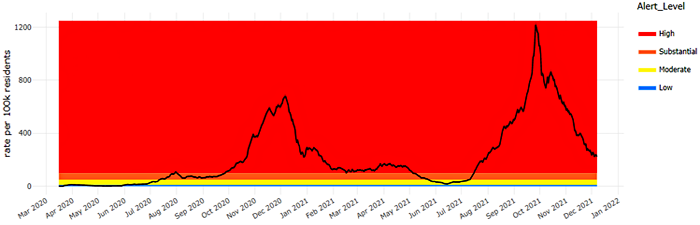
7-Day COVID-19 Case Rate – Statewide
Anchorage Concert Association offering free tickets to Alaska’s healthcare heroes
The Anchorage Concert Association is presenting Lúnasa, "the hottest Irish acoustic band on the planet" on Saturday, December 11, at 7:30pm at the Atwood Concert Hall. Experience the thrilling musicianship and foot-stomping rhythms of this musical dream team. Join this Irish solstice celebration!
The first 100 people to redeem the code HEALTHCAREHERO will receive a pair of complementary tickets to Lúnasa as a thank you for all you’ve done for our community. Enter the code HEALTHCAREHERO online in your CenterTix.com cart at final checkout or use the code over the phone at 263-ARTS. See anchorageconcerts.org/covid for the theatre’s Covid-19 protocols.
FDA expands eligibility for Pfizer-BioNTech COVID-19 booster to 16 and 17-year-olds
On December 9, the FDA amended the emergency use authorization (EUA) for the Pfizer-BioNTech COVID-19 Vaccine, authorizing the use of a single booster dose for administration to individuals 16 and 17 years of age at least six months after completion of primary vaccination with the Pfizer-BioNTech COVID-19 Vaccine. The Pfizer-BioNTech COVID-19 vaccine is the the only vaccine currently available for the 16- and 17- year-old age group.
Omicron appears to have higher rate of reinfection than previous variants
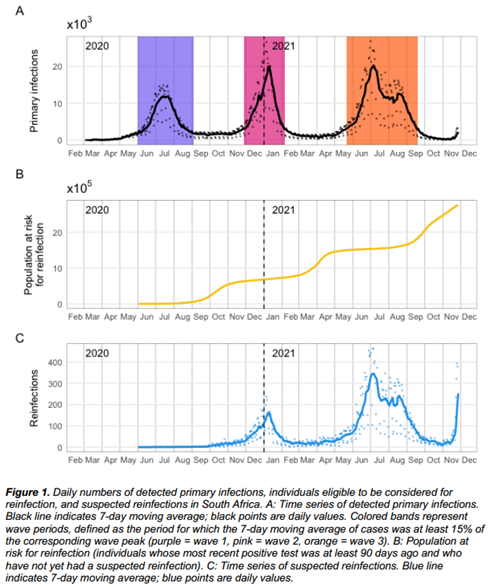
In a preprint article that has not yet been peer reviewed, researchers from South Africa performed a retrospective analysis of COVID surveillance testing to examine how SARS-CoV-2 reinfection risk has changed through time in South Africa, in the context of the emergence of the Beta, Delta, and Omicron variants (2nd, 3rd, and 4th waves). Using line list data on SARS-CoV-2 specimens collected through South Africa’s National Notifiable Medical Conditions Surveillance System, 2,796,982 individuals with laboratory-confirmed SARS-CoV-2 who had a positive test result at least 90 days prior to 27 November 2021 were included and then individuals having sequential positive tests at least 90 days apart were considered to have suspected reinfections. 35,670 suspected reinfections were identified among 2,796,982 individuals with laboratory-confirmed SARS-CoV-2 who had a positive test result at least 90 days prior to 27 November 2021. Although increases in the hazard ratio of primary infection were observed following the introduction of both the Beta and Delta variants, no corresponding increase was observed in the reinfection hazard ratio. In contrast, the recent spread of the Omicron variant has been associated with a decrease in the hazard coefficient for primary infection and an increase in reinfection hazard coefficient. The estimated hazard ratio for reinfection versus primary infection for the period from 1 November 2021 to 27 November 2021 versus wave 1 was 2.39 (CI95: 1.88–3.11). Prior to Omicron, data suggest that the relative hazard of reinfection versus primary infection has decreased with each subsequent wave of infections from June 2020 through September 2021, as would be expected if the risk of primary infection increased without a corresponding increase in reinfection risk. Pre-Omicron reinfection appeared to be relatively uncommon. The number of daily new reinfections has recently spiked and exceeds the projections if Omicron were expected to behave like previous waves, accompanied by a dramatic increase in the hazard ratio for reinfection versus primary infection. The timing of these changes strongly suggests that they are driven by the emergence of the Omicron variant. This study does not comment on the severity of illness associated with the Omicron variant or any outcome data, however it highlights a new risk associated with Omicron that wasn’t seen with previous variants.
*This article has not gone through peer review and is in pre-print status. It may have not been finalized by authors, might contain errors, and report information has not yet been accepted or endorsed in any way by the scientific or medical community.
Pfizer-BioNTech claim preliminary lab studies show three doses of COVID-19 vaccine neutralize Omicron variant
On December 8, Pfizer-BioNTech issued a press release announcing preliminary results from a laboratory study claiming that antibody levels following receipt of their COVID-19 vaccine neutralize the Omicron variant after receiving the 3rd booster dose, whereas the original wild-type COVID variant was neutralized after the primary two vaccine series. The company says sera from individuals who received two doses of the current COVID-19 vaccine did have reduced antibody response against the Omicron variant compared to wild-type, indicating that two doses of the vaccine may not be sufficient to protect against infection with the Omicron variant. They claim that more robust protection may be achieved by a third dose as data indicate that a booster vaccine increases the antibody titers by 25-fold. According to the companies’ preliminary data, a third dose provides a similar level of neutralizing antibodies to Omicron as is observed after two doses against wild-type and other variants that emerged before Omicron. These antibody levels are associated with high efficacy against both the wild-type virus and these variants. On November 25, the companies started to develop an Omicron-specific COVID-19 vaccine. First batches of the Omicron-based vaccine can be produced and are planned to be ready for deliveries within 100 days, pending regulatory approval.
*These results have not gone through peer review and were announced in a press release by the sponsoring pharmaceutical companies. The results might contain errors and report information that has not yet been accepted or endorsed in any way by the scientific or medical community.
Monoclonal antibody therapy authorization expanded to now include treatment for newborns and children
On December 3, the FDA revised the emergency use authorization (EUA) of bamlanivimab and etesevimab (previously authorized for pediatric patients 12 years of age and older weighing at least 40 kilograms), to authorize these therapies for the treatment of mild to moderate COVID-19 in all younger pediatric patients, including newborns, who have a positive COVID-19 test and are at high risk for progression to severe COVID-19, including hospitalization or death. This revision also authorizes MAB to be administered for post-exposure prophylaxis for prevention of COVID-19 in all pediatric patients, including newborns, at high risk of progression to severe COVID-19, including hospitalization or death.
AstraZeneca’s long-acting monoclonal antibody, EVUSHELD (tixagevimab and cilgavimab), authorized by FDA for pre-exposure prophylaxis for immunocompromised
On December 8, the FDA granted emergency use authorization (EUA) to AstraZeneca’s long-acting monoclonal antibody, EVUSHELD (tixagevimab, cilgavimab) for pre-exposure prophylaxis in adults and pediatric patients 12 years and older who are immuncompromised and may not mount an immune response to the COVID-19 vaccine or who are unable to receive a COVID-19 vaccine due to a contraindication. Administered as two intramuscular injections, this therapy appears to provide pre-exposure protection against symptomatic COVID-19 infection. In the PROVENT phase 3 trial of 5,172 subjects who were SARS-CoV-2 RT-PCR-negative at baseline, of which 3,441 received EVUSHELD and 1,731 received placebo, EVUSHELD receipt resulted in a statistically significant 77% reduction in incidence of symptomatic COVID-19 illness when compared to placebo.
The product is only authorized for adults and children age 12 years and older who are not currently infected with the SARS-CoV-2 virus and who have not recently been exposed to an individual infected with SARS-CoV-2. The authorization also requires that individuals either have:
- moderate to severely compromised immune systems due to a medical condition or due to taking immunosuppressive medications or treatments and may not mount an adequate immune response to COVID-19 vaccination (examples of such medical conditions or treatments can be found in the fact sheet for health care providers) or;
- a history of severe adverse reactions to a COVID-19 vaccine and/or component(s) of those vaccines, therefore vaccination with an available COVID-19 vaccine, according to the approved or authorized schedule, is not recommended.
One dose of EVUSHELD, administered as two separate consecutive intramuscular injections (one injection per monoclonal antibody, given in immediate succession), may be effective for pre-exposure prevention for six months. EVUSHELD is not authorized for individuals for the treatment of COVID-19 or for post-exposure prevention of COVID-19. Pre-exposure prevention with EVUSHELD is not a substitute for vaccination in individuals for whom COVID-19 vaccination is recommended.
Updated CDC Science Brief on efficacy of community mask use to control the spread of SARS-CoV-2
On December 6 the CDC updated its Science Brief on “Community Use of Masks to Control the Spread of SARS-CoV-2.” This update added data from studies addressing “the association of mask wearing with new infections, including infections related to SARS-CoV-2 variants of concern. All of these studies demonstrated a benefit,” and a section was added on mask wearing among children.
Patients hospitalized with COVID-19 have increased risk of 12-month mortality after recovery
In this retrospective observational cohort study, authors attempted to quantify the risk of mortality in the 12 months following a severe COVID-19 infection. They examined health records for all adult patients aged 18 and older who were tested for COVID-19 between 01/01/2020 and 06/30/2020 within the University of Florida Health system, in any encounter type, and had at least 12 months of follow-up time. Patients seen only in an outpatient setting were classified as having mild/moderate COVID-19, while those who were hospitalized for any reason during their first 30 days of follow-up were classified as severe. The final cohort included 13,638 patients, of whom 178 (1.31%) were classified as severe COVID-19, 246 (1.80%) as moderate/mild COVID-19, and 13,214 (96.9%) as no COVID-19 patients. In the cohort, 2,686 died in the 12-month period. The 12-month adjusted all-cause mortality risk was significantly higher for patients with severe COVID-19 compared to both COVID-19 negative patients (HR 2.50) and mild COVID-19 patients (HR 1.87). The vast majority of deaths (79.5%) were for causes other than respiratory or cardiovascular conditions. Among patients aged <65 years, the pattern was similar but the mortality risk for patients with severe COVID-19 was increased compared to both COVID-19 negative patients (HR 3.33) and mild COVID-19 patients (HR 2.83). Patients aged 65 and older with severe COVID-19 were also at increased 12-month mortality risk compared to COVID-19 negative patients (HR 2.17) but not mild COVID-19 patients (HR 1.41; 95% CI 0.84, 2.34). The authors claim they examined a variety of causes of death that may have been expected to follow from COVID-19 but most categories had few deaths because mortality was dispersed across many causes.
Age-related COVID-19 vaccine mix-ups – National Alert from the Institute for Safe Medication Practices
On December 6, the Institute for Safe Medication Practices published a National Alert regarding COVID-19 vaccine mix-ups with the the Pfizer-BioNTech COVID-19 vaccine formulation intended for individuals 12 years and older (30 mcg/0.3 mL) being given to children 11 years and younger and children 12 years and older receiving the smaller pediatric dose. Based on reports sent to the ISMP National Vaccine Errors Reporting Program (ISMP VERP) involving hundreds of children, and the fact that adverse event reporting programs do not receive all the actual cases, it is likely that thousands have been impacted. Some children ages 12 and older received the formulation intended for children 5 to 11 years, resulting in underdoses. Other children ages 5 to 11 years received the formulation intended for individuals 12 years and older, resulting in overdoses. Some errors are happening due to vial or syringe mix-ups. In other errors, healthcare providers incorrectly thought it was acceptable to give a smaller or diluted dose of the formulation intended for individuals 12 or older to children ages 5 through 11. Vaccine vials formulated for individuals 12 and up (purple cap) should never be used to prepare doses for the younger age group.
State of Alaska Epidemiology Bulletin describing COVID-19 deaths from January 2020 – September 2021
On December 1, the State of Alaska Section of Epidemiology published a bulletin characterizing COVID-19 related deaths among Alaska residents from January 1, 2020 through September 30, 2021 by selected demographic characteristics and underlying medical conditions known to be associated with more severe COVID-19 related outcomes. During this time, 109,749 cases of SARS-CoV-2 infection among Alaska residents were reported to the Section of Epidemiology, and 658 deaths were determined to be caused by or associated with COVID-19 (90.3 per 100,000 population). Death rates have increased substantially in Alaska following introduction of the Delta variant in June 2021. Death rates were highest among persons aged ≥80 years.
International Travel - Updated Requirements
On December 2, the US government released updated requirements for international travelers coming into the U S. If you plan to travel internationally, you will need to get a COVID-19 viral test (regardless of vaccination status or citizenship) no more than 1 day before you travel by air into the United States. You must show your negative result to the airline before you board your flight. You must be tested with a viral test that could be either an antigen test or a nucleic acid amplification test (NAAT). Examples of available NAATs for SARS-CoV-2 include but are not restricted to reverse transcription polymerase chain reaction (RT-PCR), reverse transcription loop-mediated isothermal amplification (RT-LAMP), transcription-mediated amplification (TMA), nicking enzyme amplification reaction (NEAR), and helicase-dependent amplification (HDA). The test used must be authorized for use by the relevant national authority for the detection of SARS-CoV-2 in the country where the test is administered. If you recently recovered from COVID-19, you may instead travel with documentation of recovery from COVID-19 (i.e., your positive COVID-19 viral test result on a sample taken no more than 90 days before the flight’s departure from a foreign country and a letter from a licensed healthcare provider or a public health official stating that you were cleared to travel). After arriving in the US it is recommended that travelers get tested with a COVID-19 viral test 3-5 days after travel. Please follow this link for the full CDC recommendations and requirements regarding international travel.
Morbidity and Mortality Weekly Reports (MMWR)
Influenza outbreak at Michigan campus at same time as state surge in COVID-19
In this MMWR, authors describe a rapid increase in influenza A(H3N2) cases reported at the University of Michigan in Ann Arbor from October 6-November 19, 2021. During this time, among 3,121 persons tested, 745 (23.9%) received a virus test result that was positive for influenza A, 137 (4.4%) for SARS-CoV-2, and 84 (2.7%) for respiratory syncytial virus. Overall, >95% of influenza cases were detected during November 1–19, suggesting rapid spread. Given the substantial impact of COVID-19 on health care systems, with a weekly rate of approximately 500 or more COVID-19 cases per 100,000 population in Michigan during the week ending November 19, 2021, additional strategies to reduce influenza illness are important. Improving influenza vaccination coverage in persons aged ≥6 months, particularly those who are at higher risk for serious influenza complications, is critical to reducing influenza-associated illnesses, hospitalizations, and deaths. Compared with influenza vaccination coverage in 2020, coverage is lower so far this season in certain groups at higher risk for severe influenza illness, such as pregnant persons and children. Second, clinicians should consider diagnostic testing for influenza and SARS-CoV-2 infection for patients with acute respiratory illness, especially among hospitalized patients and those at higher risk for complications. In the context of ongoing COVID-19 surges, influenza antiviral treatment and prophylaxis could also be considered for persons living in other communal settings (e.g., shelters, university residence halls, or prisons) to reduce strain on health care services in these institutions during influenza outbreaks. Nonpharmaceutical interventions that are used for prevention of COVID-19, such as physical distancing, masking, routine surface cleaning, hand hygiene, and proper cough etiquette, might also provide protection against influenza
Vaccine coverage for persons experiencing homelessness substantially lower than general population
In this MMWR, authors compared COVID-19 vaccine coverage for persons experiencing homelessness to coverage for the general population. Authors used data from six urban jurisdictions that reported data on COVID-19 vaccinations administered to persons experiencing intermittent homelessness during December 2020–August 2021. Total populations of persons experiencing homelessness were estimated using either the total number of persons accessing homeless services during the study period or an annual census of persons experiencing homelessness. Vaccination coverage and size of the general population in each jurisdiction were obtained from CDC’s COVID Data Tracker or from local health departments. Full COVID-19 vaccination coverage among persons experiencing homelessness ranged from 18.6% to 44.5% in the six jurisdictions compared with 43.6% to 59.8% in the general population in each jurisdiction or corresponding area (Table). In each jurisdiction, full vaccination coverage among persons experiencing homelessness was substantially lower (11.2–37.2 percentage points) than that among the general population of the respective jurisdiction. Coverage with at least 1 COVID-19 vaccine dose across the six jurisdictions ranged from 22.0% to 52.0% among persons experiencing homelessness, and from 46.5% to 65.7% in the respective general populations. The authors suggest that vaccine access for persons experiencing homelessness can be enhanced by using multiple strategies, including pop-up vaccination clinics in convenient locations, mobile clinics in partnership with trusted providers, and street outreach teams. COVID-19 vaccination coverage can be improved by strengthening partnerships across health departments, health care clinics, and homeless service providers. Furthermore, including persons who have experienced homelessness in vaccination planning is critical to helping ensure approaches are tailored to the needs of persons experiencing homelessness.
RECURRENT TOPICS
Providing COVID-19 vaccinations
All Alaskans and people who work or live in Alaska who are aged 5 years and older are eligible for vaccination against COVID-19.
If you are interested in providing the COVID-19 vaccine in your office or clinic, please visit the COVID-19 Vaccination Program Provider Enrollment page. If you have additional questions, please email Matthew Bobo.
Pregnancy
The CDC strongly recommends COVID-19 vaccination either before or during pregnancy because the benefits of vaccination outweigh known or potential risks.
For the latest recommendations, check out the CDC webpage on COVID in Pregnant and Recently Pregnant People and recommendations from the American College of Obstetrics and Gynecology.
Monoclonal Antibodies
Monoclonal antibody treatment for COVID-19, REGEN-COV (casirivimab and imdevimab) and Eli Lilly’s bamlanivimab and etesevimab, have been approved to treat mild-moderate COVID-19 and for post-exposure prophylaxis of COVID-19 in all individuals who are at high risk for progression to severe COVID-19.
Monoclonal antibody therapy authorization expanded to now include treatment for newborns and children
See above
AstraZeneca’s long-acting monoclonal antibody, EVUSHELD (tixagevimab and cilgavimab), authorized by FDA for pre-exposure prophylaxis
See above
If you are interested in providing monoclonal antibody therapy for COVID-19 in your office or clinic, please refer to this guide from the U.S. DHSS, and then send an email to Coleman Cutchins (coleman.cutchins@alaska.gov) and CJ Kim (cj.kim@alaska.gov) for local assistance.
For the latest recommendations, check out the CDC webpage on Monoclonal Antibodies for High-Risk COVID-19 patients and COVID-19 Monoclonal Antibody Resources for Healthcare Providers.
Ivermectin
Current evidence does not support the use of ivermectin for the treatment or prevention of COVID-19.
CDC - Health advisory about ivermectin
Cochrane Review - COVID-19 and ivermectin
FDA - Why you should not use ivermectin to treat or prevent COVID-19
Infectious Disease Society of America (IDSA) guidelines do not recommend ivermectin
Post-acute Sequelae of COVID-19 (PASC)
State of Alaska Healthcare Provider ECHO on Long COVID
On December 7, The Alaska Medical Provider ECHO focused on the prevalence, diagnosis, and management of PASC. Dr. Greg Vanichkachorn, MD, from the Mayo Clinic presented a clinician’s perspective on PASC identification, treatment, rehabilitation, and outcomes.
For the latest recommendations, check out the CDC webpage on Post-COVID-19 Syndrome and Evaluating and Caring for Patients with Post-COVID conditions
Myocarditis
For the latest recommendations, check out the CDC webpage on myocarditis and COVID-19 vaccines
COVID-19 Speakers’ Bureau
Anyone can request a free presentation for a group interested in learning more about the COVID-19 vaccines available in Alaska.
Aside from COVID-19
Opioids in Alaska
DHSS OSMAP Project HOPE are conducting public naloxone trainings as a community outreach and to increase awareness and access. Email projecthope@alaska.gov.
The Alaska Native Tribal Health Consortium (ANTHC) HIV/STD Prevention and Substance Misuse Prevention programs host free virtual gatherings to discuss harm reduction strategies and resources in Alaska. Guest speakers are Alaska-based experts in the field of harm reduction. On December 1st, there will be a harm reduction training focused on polysubstance use. Other recordings of past harm reduction trainings can be found here.
Several useful materials specific to Alaska opioid safety are at the following webpage. Check it out and print out information to hang up in your community.
Upcoming Events/Conferences/Presentations
Drug Addiction Treatment Act (DATA) Waivers ECHO
|
Date
|
Time
|
Session
|
| Dec 8 |
12:00 p.m. |
Buprenorphine pharmacology |
| Jan 12 |
12:00 p.m. |
Preparing for your first OUD MAT visit |
| Feb 9 |
12:00 p.m. |
Successful strategies for buprenorphine home inductions |
| Feb 23 |
12:00 p.m. |
Using extended-release monthly buprenorphine |
| Mar 9 |
12:00 p.m. |
Microdosing/macrodosing buprenorphine |
| Apr 13 |
12:00 p.m. |
All things UDS/oral fluid tests for monitoring |
| May 11 |
12:00 p.m. |
Behavioral Health - Psychosocial adjuncts to MAT |
| Jun 8 |
12:00 p.m. |
Polysubstance use |
| Jul 13 |
12:00 p.m. |
Tapering or stopping buprenorphine treatment |
| Aug 10 |
12:00 p.m. |
Prenatal/OB MAT |
| Sep 14 |
12:00 p.m. |
Understanding and reducing buprenorphine diversion |
Registration link for DATA Waivers ECHO
Hosted and facilitated by UAA’S Center for Human Development Alaska ECHO Project in partnership with the State of Alaska Division of Behavioral Health. For questions, please contact echo@alaskachd.org
2022 Alaska Public Health Summit – January 18-20, 2022
Registration is now open for the 2022 Alaska Health Summit VIRTUAL conference taking place from Tuesday, January 18, 2022 to Thursday, January 20, 2022. The Summit theme will be The Intersection of Public Health and Public Safety, reflecting a wide range of issues and events facing us today. This is the first time ALPHA has created a Summit around a public safety theme that will feature keynote speakers and panels addressing policing across Alaska, corrections and reentry, drug overdose response, inequities in transportation, and other public safety issues, all from a public health perspective.
ANTHC Tribal Health Webinar Series
The ANTHC Tribal Health Webinar series occurs on Friday from 12-1pm on Zoom and is open to the public. Here is the upcoming schedule for the fall and the Zoom link.
|
Date
|
Session
|
| 12/10 |
Leslie Kerzner, MD: Care of the NICU Grad for Primary Care Providers |
| 01/14 |
Hope Finkelstein, Alaska FASD Program Manager: DHSS FASD Program |
| 01/21 |
Victoria Miller, MFA, LPC: Trauma Informed Care Mini-Series. Part 1: Early Life Adversity, Later Life Disease & Implications for Health Care |
| 01/28 |
Amber Frasure, MS: Trauma Informed Care Mini-Series. Part 2: A Deeper Dive into the Signs and Symptoms of Psychological Trauma and Specific Strategies to "Trauma Inform" your Medical Practice |
| 02/04 |
Amber Frassure, MS: Trauma Informed Care Mini-Series. Part 3: Effectively Communicating with Patients Using Motivational Interviewing |
| 02/11 |
Mary Schneider, BS, REHS: State of Alaska Lead Surveillance Program |
| 02/18 |
Vasisht Srinivasan, MD: Updates in Stroke Management |
Join Zoom Meeting
https://anthc.zoom.us/j/98667611681
Meeting ID: 986 6761 1681
One tap mobile
+16699006833,,98667611681#
CDC COCA Call
Molecular Approaches for Clinical and Public Health Applications to Detect Influenza and SARS-CoV-2 Viruses - Thursday, December 9, 2021 at 2:00 PM – 3:00 PM ET
During this COCA Call, clinicians will learn critical information about molecular approaches for clinical and public health applications to detect the influenza virus and SARS-CoV-2, the virus that causes COVID-19. Presenters from the Centers for Disease and Prevention (CDC) will review the most up to date guidance on clinical testing for influenza, including situations when influenza and SARS-CoV-2 are co-circulating in a community or other setting. In addition, presenters will provide in-depth discussion on cycle threshold (Ct) values from SARS-CoV-2 diagnostic assays and their correlation with viral load and infectiousness.
CDC Clinical Support: There is a Clinician On-Call Center, a 24-hour hotline with trained CDC clinicians standing by to answer COVID-19 questions. Call 1-800-CDC-INFO (800-232-4636) and ask for the Clinician On-Call Center.
Alaska Responders Relief Line (844) 985-8275
Your well-being matters. Your behavioral health colleagues are standing by to talk 24/7: 844-985-8275
Recognizing the unique stressors that providers face, the Division of Behavioral Health has established a 24/7 support line, (844) 985-8275, for healthcare and behavioral professionals impacted by COVID personally and professionally. Staff supporting the call line recognize callers are often first responders and will allow callers to openly express their experiences and feelings serving Alaskans impacted by COVID.
This service is also available to immediate family members of first responders who may be experiencing stress, anxiety and other hard to label emotions as a result of their loved one engaging on the front lines.
AK Clinical Reminders — UPDATED December 9, 2021

These ECHO sessions are produced and facilitated by
UAA’s Center for Human Development Alaska ECHO project
in partnership with the State of Alaska, Department of Health & Social Services
Session information and recordings of previous ECHO sessions
subscribe to ECHO calendar updates | email: echo@alaskachd.org | website: akecho.org
Important Note: Most Division of Public Health ECHO series will be taking a break from December 20-December 31 for the winter holidays. Please check individual ECHO registration pages for additional information on holiday scheduling.
Our Alaska Medical Providers ECHO is returning to a once-monthly schedule, on the 1st Tuesday of the month. The next session will take place Tuesday, December 7. Visit the series registration page for additional information.
Regular Series
Alaska Medical Provider ECHO (formerly COVID-19 for AK Healthcare Providers)
Monthly on the 1st Tuesday of the month from 7-8 pm
This ECHO aims to increase knowledge and share best practices among medical providers across Alaska as well as to increase access to information for those living in rural areas of the state.
School Health ECHO
Every Monday from 3:00-4:00 p.m Register
The School Health ECHO is a virtual learning network intended for professionals in the education setting (administrators, school-based nurses, etc.) to interface with a team of medical and education experts in Alaska.
Vaccine ECHO for Providers
Weekly on Tuesday from 2-3 p.m. Register
The Vaccine ECHO for providers provides planning and operation updates to vaccine providers across Alaska, while answering any questions you may have.
Palliative Care ECHO
Monthly on the first Tuesday from 12-1 p.m.
This monthly ECHO is for all Alaskan healthcare disciplines supporting patients with serious illness, and aims to provide support and up-to-date information regarding Palliative Care during this period of COVID-19.
Public Science ECHO
Weekly on Wednesday from 12-1 p.m. register via Zoom
The Alaska Public Health Science ECHO is a virtual learning network intended for the general public to interface with our Public Health Leadership Team to explore the science of the COVID-19 virus, other public health topics, and current best practices. Or view via concurrent livestream to Facebook: https://www.facebook.com/akechoprograms
Local Government Public Health ECHO
Monthly on the third Wednesday from 3-4 p.m. Register
The Local Government Public Health Analysis ECHO is a virtual learning environment intended for local Alaska government leaders to interact with the State Public Health Leadership team and focuses on pandemic mitigation tools available, and how to use them.
Long Term Care Facilities ECHO
Second Wednesday of the month from 4-5 p.m. Register
Please join other staff and administrators of Alaska’s assisted living homes and residential care facilities to gather, learn, share, and grow. COVID has disrupted the fabric of our daily life and we can always learn from each other as we adjust to the new normal.
Healthcare Specific Situational Awareness ECHO
Weekly on Thursday from 12-1 p.m. Register
The Healthcare Specific Situational ECHO is a virtual learning network intended for healthcare professionals to interface with our Public Health Leadership Team to explore current best practices and the most recent information related to Public Health.
Perinatal ECHO
Monthly on 3rd Thursday from 6-7 p.m. Register
The Alaska Perinatal ECHO is a virtual learning network intended for medical providers caring for pregnant patients and their newborns.
EMS ECHO
Monthly on the 1st and 3rd Wednesday 1-2 p.m Register
The EMS ECHO is a virtual learning network intended for Emergency Medical Services and related personnel in Alaska to amplify best practices. Sessions are topic-driven and typically include a guest presenter or a brief lecture with an interactive case or process discussion.
Co-Occurring Behavioral Health, Opioid and Stimulant Use Disorders ECHO
1st & 3rd Wednesdays from 12:00pm-1:00pm, November 3, 2021 - April 20, 2022
The Co-Occurring Behavioral Health (COBH), Opioid and Stimulant Use Disorders ECHO facilitates a virtual network for behavioral health providers to learn best practice care through real-time access to experienced subject matter experts and their peers. Each session includes a brief lecture, de-identified case presentation for participants to receive feedback on complex cases, and open discussion facilitated by an interdisciplinary team.
Data Waivers ECHO New ECHO!
2nd Wednesdays from 12:00pm-1:00pm, November 10, 2021 - September 14, 2022
The Data Waivers ECHO facilitates a virtual network for clinical providers to learn and implement best practices for offering buprenorphine and other medically assisted treatment (MAT) services under a data waiver. Each session includes a brief lecture, de-identified case presentation for participants to receive feedback on complex cases, and open discussion facilitated by an interdisciplinary team.
|
COVID-19 testing guidelines and test site locator
AK COVID-19 clinical hotline for physicians: 833-751-4212. Staffed 24/7.
8PM-8AM is for urgent/emergent questions only.
AK Responders Relief Line: 24/7 behavioral health for everyone working in healthcare
during the COVID-19 pandemic: 1-844-985-8275
|




