
COVID-19 Alaska Daily Clinical Update, May 1
Alaska Department of Health sent this bulletin at 05/01/2020 05:13 AM AKDT
|
Friday, May 1, 2020 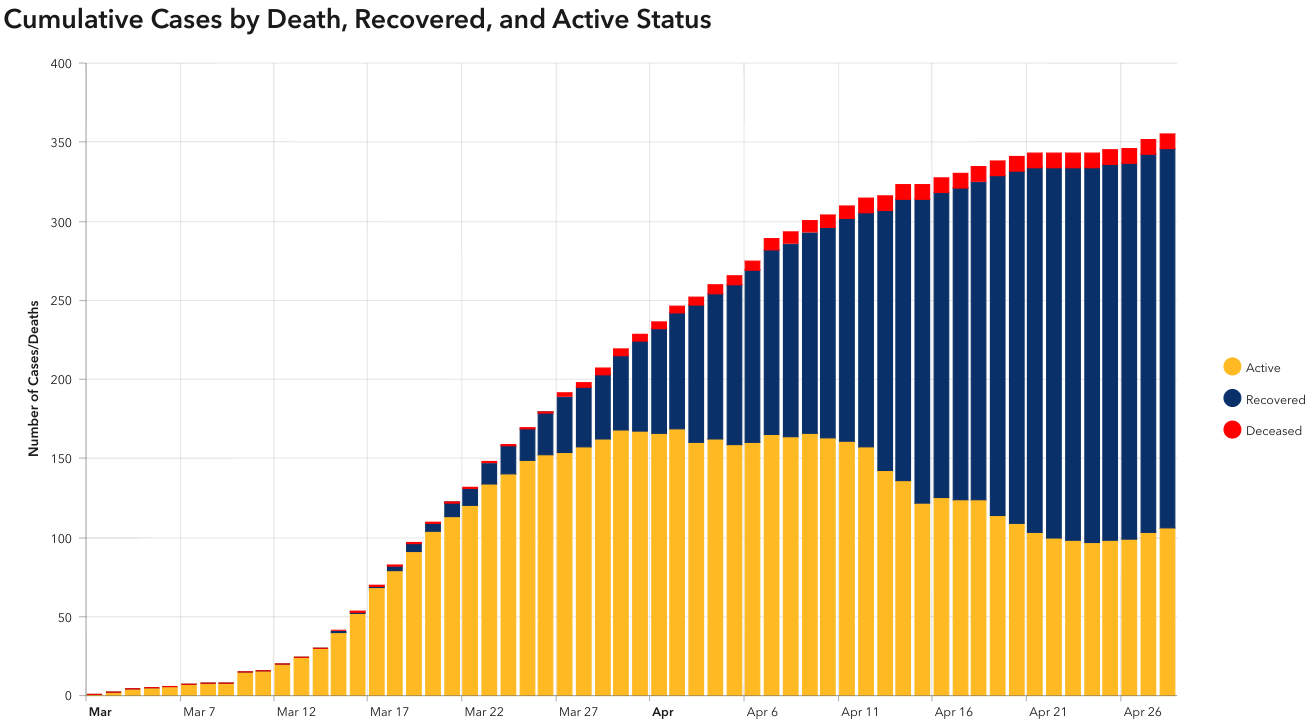 Nearly 70% of Alaskans diagnosed with COVID-19 have recovered. Alaska has had around a 2.5% mortality rate (9 Alaskans have died of 355 known cases), compared to around 5% nationwide and 7% globally. New cases have slowed, while the state's rate of testing continues to increase.
Neurologic effects of COVID-19 have been reported in various forms, from impaired consciousness to stroke. Two new case reports in the New England Journal of Medicine describe neurologic findings in COVID-19.
The first, from New York City, reports five cases of COVID-19 presenting as large vessel stroke in patients under age 50 over a period of two weeks. Authors describe a partial right ICA occlusion in a 33 year old woman with no risk factors which resolved after antiplatelet and anticoagulation therapy, a left MCA occlusion treated with clot retrieval and apixaban in a 37 year old male with no risk factors (patient later discharged home), a right PCA occlusion in a 39 year old man with hyperlipidemia and hypertension, treated with clot retrieval and aspirin but who remained intubated in the ICU at time of publication, a 44 year old man with undiagnosed diabetes who had a left MCA occlusion requiring t-PA, clot retrieval, hemicraniectomy who remained hospitalized, and a 49 year old man with a history of diabetes and prior stroke who had a right MCA stroke, had clot retrieval and a stent, and was discharged to rehabilitation on dual antiplatelet therapy. The average NIHSS score on presentation was 17. Authors note that in this two week period, their institution saw more than six times the number of strokes they usually see in that time in patients under age 50. The second letter reports neurologic features in a cohort of 58 patients admitted to one of two French ICUs with ARDS due to COVID-19. Features included encephalopathy, agitation, confusion, and corticospinal tract signs. Two were also found to have acute ischemic stroke. Findings of encephalopathy may have been confounded by critical illness-related encephalopathy or sedating medications. New testing guidance from the State of Alaska for symptomatic and asymptomatic patients:
For anyone wanting a refresher on performing a nasopharyngeal swab, the New England Journal of Medicine has a technique video.
|
STAY CONNECTED:


SUBSCRIBER SERVICES:
Manage Preferences | Unsubscribe | Help
Update your subscriptions, modify your password or email address, or stop subscriptions at any time on your Subscriber Preferences Page. You will need to use your email address to log in. If you have questions or problems with the subscription service, please contact subscriberhelp.govdelivery.com.
This service is provided to you at no charge by the Alaska Department of Health and Social Services.
For general COVID-19 questions, email covidquestions@alaska.gov.