|
On behalf of the Federal Coordinating Committee, the Sentinel Landscapes Partnership announces the 2026 Sentinel Landscape Designations—Pikes Peak and East Mississippi—and the release of the 2025 Accomplishments Report. These actions reaffirm the Partnership’s commitment to strengthening national defense, improving installation resilience, and advancing coordinated efforts across Federal, state, local, Tribal, and private partners.
Authorized by 10 U.S.C. § 2693 and established in 2013 by the Department of War (DoW), the U.S. Department of Agriculture, and the U.S. Department of the Interior, the Partnership aligns conservation and working‑lands stewardship with national security priorities and the operational needs of defense installations. With the addition of Pikes Peak and East Mississippi, the network grows to 21 designated landscapes, expanding a decade of collaboration that protects critical training space, preserves compatible land uses, and reinforces the resilience of defense communities.
The 2025 Accomplishments Report highlights significant progress across FY 2024, including more than $1.75 billion in combined Federal, state, local, and private investment to date—$368 million of which was leveraged in FY 2024 alone. These investments directly support military readiness by safeguarding key training corridors, reducing encroachment pressures, and strengthening landscape resilience around high‑priority installations.
The report also demonstrates how coordinated partnerships reduce long‑term costs to DoW while supporting local communities, working lands, and landowners. Today, the Sentinel Landscapes Partnership supports military readiness at more than sixty installations across the nation and in one U.S. territory, ensuring essential training, testing, and operational missions remain viable well into the future.
Please note: For the best viewing experience, download the interactive Accomplishments Report and open it in Adobe Acrobat.
About the 2026 Sentinel Landscapes
East Mississippi Sentinel Landscape
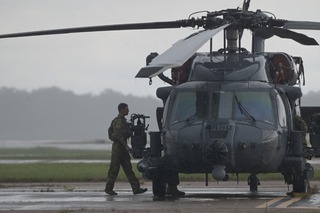
Anchored by Naval Air Station Meridian and home to Columbus Air Force Base, the East Mississippi Sentinel Landscape encompasses a region essential to the nation’s pilot training enterprise. These installations produce naval aviators and Air Force pilots who support global operations, and they rely on extensive low-level training routes, special-use airspace, and rural landscapes that enable safe, realistic, and uninterrupted flight training. As development pressures and shifting land‑use patterns intensify, the need to protect flight corridors, preserve compatible uses, and reduce wildfire risk has never been more urgent. Safeguarding these landscapes is essential to preserving the mission readiness and long‑term viability of this national defense asset.
|
Pikes Peak Sentinel Landscape, Colorado

Anchored by the U.S. Air Force Academy and home to Schriever Space Force Base, Peterson Space Force Base, Cheyenne Mountain Space Force Station, and Fort Carson, the Pikes Peak Sentinel Landscape encompasses one of the nation’s most critical defense clusters. These installations power mission sets at the heart of national security—space operations, missile warning, electromagnetic spectrum activities, high‑altitude aviation, and Army maneuver and live‑fire training. As development along the Front Range accelerates, the need to preserve compatible land uses, maintain open training space, and reduce wildfire risk has become essential to sustaining these mission‑critical capabilities.
|
|