INTRO:
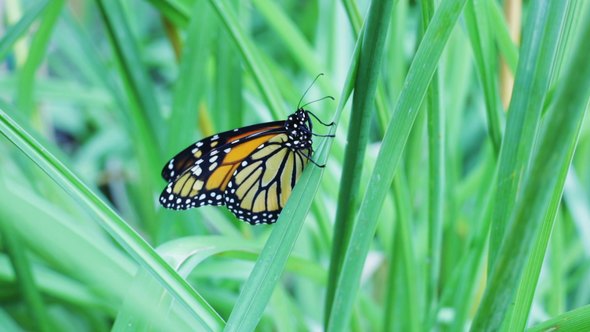
U-S-D-A launches a new conservation effort to attract monarch butterflies. The
U-S-D-A’s Bob Ellison has more. (1:25)
NARRATOR:U-S-D-A will help farmers and ranchers
provide food and habitat for monarch butterflies in the Midwest and southern
Great Plains. The Natural Resources Conservation Service will invest four
million dollars next year to help producers attract monarch butterflies back to
their natural habitat.
Leonard
Jordan, USDA NRCS Associate Chief: So those are the ten states again that are in the
heart of the migration route and recognizing again that these are travelling
species, so we want to make sure that they have the right food species that
they can feed on that they can get that energy that they need to continue their
path.
NARRATOR:N-R-C-S will help Midwest and southern Great
Plains farmers and ranchers plant milkweed and nectar rich plants to attract
these pollinators.
Leonard
Jordan, USDA NRCS Associate Chief: They are a key component to that contribution to
crop production. And so we feel that we need to induce the right plants and the
right species to enhance the return or the increase of the Monarch and stop the
decline.
NARRATOR:In addition to attracting monarch butterflies,
Jordan says it’s hoped other pollinators will be attracted by the planting
efforts.
Leonard
Jordan, USDA NRCS Associate Chief: Along with the benefits to the monarch, they also
provide benefits to honeybees and other native bees that contribute significantly
to the pollination process.
NARRATOR:Monarch populations have decreased
significantly over the past two decades, in part because of the decrease in
native plants like milkweed, which is the sole source of food for monarch
caterpillars. Landowners interested in participating in the program should contact
their local N-R-C-S office. In Washington for the U-S Department of Agriculture,
I’m Bob Ellison.