|
Having trouble viewing this email? View it as a Web page.
Lea en español
 April 1, 2025
In this issue...

Reflections from Chelsea Holcomb, Oregon Health Authority (OHA) Child and Family Behavioral Health (CFBH) Director
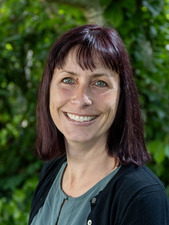
We have the privilege here in Oregon of witnessing nature in all its diversity — towering mountains, lush wetlands, deep forests, and the vast, ever-changing ocean. The earth is alive with color, and as the days get longer, we find ourselves drawn outdoors.
April, from the Latin aperire, meaning "to open," mirrors the essence of this season — an opening, a time to embrace the beauty of nature and the responsibility to protect it.
For my family, Rockaway Beach holds a special place in our hearts. The North Coast is where memories are made, where the ocean breeze carries laughter, and where the rhythm of the waves reminds us to slow down. Whether it's feeling the cool grass beneath our feet, being grounded in the sand, or watching the tide roll in, these moments connect us to something larger than ourselves.
As parents, we share a unique joy in watching our children explore the world. Their wonder and curiosity sparks a renewed sense of appreciation for nature. When my son runs through the grass or watches a bird take flight, I am reminded of how important it is to nurture this bond with the environment from an early age. Nature profoundly shapes our children's emotional and mental well-being — it is a classroom where they grow, learn, and find balance. To do the work of behavioral health effectively, we must see the whole child — their environment, family and experiences. By nurturing a connection to nature, we not only support their growth but also teach them the importance of caring for the world around them.
|
Senate Bill (SB) 1557 (2024) required an investigation into the 1915(k) Community First Choice State Plan Option (K Plan) services and supports. The final report, issued February 28, includes background information, data, and initial recommendations. The Child and Family Behavioral Health Unit and Medicaid Division extend our gratitude to the youth, families, caregivers, and individuals with lived experience who contributed to the development of this report.
The full report, along with an Executive Summary and additional information, is available on the SB 1557 implementation page. A Spanish version of the report will be available shortly.
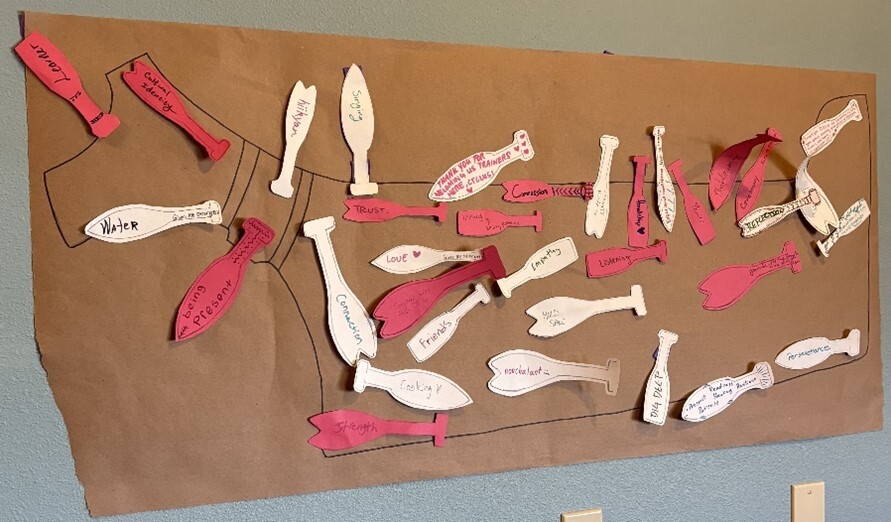
Mural at the Confederated Tribes of Coos, Lower Umpqua, and Siuslaw Indians
Nicole Romine, a Sources of Strength trainer from the Confederated Tribes of Coos, Lower Umpqua and Siuslaw Indians (CTCLUSI), recently adapted a common Sources of Strength activity, "What Helps You," to incorporate imagery and symbolism significant to the Tribe. The activity was part of a mural created by the prevention team at CTCLUSI during a recent Sources of Strength training.
The mural centers around a canoe, which symbolizes the strength of the community and the ability to carry one another. Each paddle in the canoe represents individual strengths, and participants added their own strengths to the paddles, illustrating how these personal strengths contribute to the strength and progress of the community as a whole. As Nicole Romine explains, the canoe is a powerful representation of the community:
"Our people are the Canoe. Our Elders and Children are the body of the Canoe, our Ancestors and Ceremony are the Eyes, and Our Adults and Youth are the Pullers (Paddles). The Paddles represent our individual strengths as Pullers, and as each individual adds their strengths, it builds community strength, moving the Canoe forward. All parts of our Canoe are important, and everyone contributes in various ways at different stages of life. Water is Life. The ocean, rivers, bays, lakes, and streams are essential to our people for travel, hunting, gathering, and trade. Our Canoes are the best representation of Our Community. Individual strength brings community strength."

The SAGE program, one of Oregon's unique residential treatment options, celebrated its 10th anniversary with a small gathering of employees and supporters. SAGE exclusively supports youth between the ages of 11 to 17 who identify as female and have been or are at risk of being commercially sexually exploited.
The event featured Chief Executive Officer Nick Gallo and Chief Program Officer Margaret Scott of Morrison Child & Family Services, who reflected on the program’s history and acknowledged the leaders who helped establish and continue its mission. The program's mission is embodied in its name: SAGE is "a secure and trauma-informed residential program where youth victims of sex trafficking experience Support, Achieve their goals, Grow, and become Empowered."
Commercially Sexually Exploited Children (CSEC) survivors have very complex histories and have experienced multiple traumas. Referrals are usually made through the juvenile justice or Child Welfare systems. Referrals may also come from schools, hospitals, or a youth’s parent. SAGE offers treatment to CSEC survivors. Services are designed to teach participants prosocial alternatives that will help create long-term wellness.
The CFBH Children's Intensive Treatment Services Coordinator, Sage Neilson, attended the event and remarked, "The room was lined with people who have supported the SAGE program over the years. So many faces were beaming with pride and hope.”
To learn more about the SAGE program, click here. For further information or any questions, please contact Sage Neilson.
|
Please help us spread the word that Reach Out Oregon, funded by OHA, is here to support parents who need assistance. Reach Out Oregon is a warmline operated by the Oregon Family Support Network (OFSN). (These real-life stories are examples of ways the warmline supports Oregon families and are not the family members’ actual names.)
Liz is a single mother of two children. Although she has always faced challenges in managing bills, she now feels more anxious than ever about meeting the essential needs of her family.
Camila is raising two grandchildren with autism spectrum disorder and Attention-Deficit/Hyperactivity Disorder (ADHD). She believes she has accessed all available youth services, but she wonders if there are additional supports for her. Sometimes, she says, she just needs someone to talk to about how isolating and difficult her life has become.
Robert and Jocelyn are parents of a teenager whose behavior is becoming increasingly concerning. Recently, their son Cooper damaged the windshield of the family car with a baseball bat. He has also expressed thoughts of not wanting to be alive. The parents feel overwhelmed and frustrated, especially since they believe their concerns are not being taken seriously. “We’ve taken Cooper to the emergency department when he says he’s going to hurt himself or someone else. They send us home once he calms down, even though we tell them the behavior will continue as soon as we leave. What are we supposed to do if no one will listen to us?”
Liz, Camila, Robert, and Jocelyn all have something in common: They reached out to OFSN’s Warmline, Reach Out Oregon, unsure if it was the right place to turn for support in their situations.
It was.
“At Reach Out Oregon, we provide support in both English and Spanish from parents who have lived through similar experiences and are trained as family support specialists. We believe every family has the right to be heard and respected. We’re here to listen, help connect you to resources, or simply walk alongside you through your parenting journey. We understand because we’ve been there,” says Wendy Warren, Warmline Specialist. “Whether you prefer to call, email, live chat, or text, let’s talk, parent-to-parent.”
To connect with Reach Out Oregon:
The Happiness Formula: Using Your Body to Transform Your Mind on “The One You Feed”
In this podcast, Janice Kaplan discusses how physical activity and body awareness can improve mental health. She explains how simple movements can boost mood, reduce stress, and promote happiness, backed by scientific research and real-life examples.
Find events, opportunities, trainings and resources in last month’s posting on our newsletter page. Many of these trainings are also on our training opportunities page. We will send updates mid-month — Look for the next one in your inbox on April 15.
For feedback and suggestions for our newsletter and information: kids.team@oha.oregon.gov.
Subscribe to OHA Behavioral Health Updates
Did someone forward or share this with you? You can subscribe here to get future issues of Holding Hope and other updates for Oregon behavioral health providers and partners.
|