|
The State Department of Education’s Vision 2020
Conference promises FREE professional development opportunities for every
Oklahoma educator, from the classroom teacher to the school librarian to the
district superintendent and everyone in between.
This year’s conference is July 9 to 11 at the
Cox Convention Center in Downtown Oklahoma City.
Lana Ingram, a special education teacher,
recently told SDE staff that she’s been looking forward to this year’s
conference because she gained valuable information at the event last year that helped her improve her
instructional methods in the classroom.
“It was
one of the best teaching conferences I have ever attended,” she said. “The
speakers were motivating, and the sessions had so much information that I could
take back to my classroom. I loved the variety of sessions that were available
to attenders, as well as the vendor booths with additional resources.”
A GED pre-conference will be held from 8:30 a.m.
to 4 p.m. July 8, followed by early bird registration from 4 to 7 p.m. The next
day, Vision 2020’s power-power packed conference kicks into high gear. Early
bird sessions start at 8 a.m. each day followed by general sessions at 9 a.m.
“You will not want to miss our world-renowned
list of keynote speakers,” Event Coordinator Ashley Hahn said.
On Tuesday morning, Dr. Ryan Quinn, the author
of Lift: Becoming a Positive Force in Any
Situation and an Assistant Professor at the University of Louisville’s College of Business beginning in August, will speak
about change management and how to use positive motivational techniques to
bring about successful change.
“America’s Educator” Ron Clark takes the stage
Wednesday to bring entertaining and true-life stories about his award-winning
work as a teacher and the founder of the Ron Clark Academy.
Dr. Tony Wagner, who recently accepted a
position as the first Innovation Education Fellow at the Technology &
Entrepreneurship Center at Harvard, will speak on Thursday, giving insight into
how to create innovators in today’s classrooms.
Each speaker will sign copies of their books
following their general session presentation.
To learn more about the keynote speakers,
click here.
Breakout sessions will follow general sessions
each day with a focus on educators Tuesday and Wednesday and on administrators Thursday. Sessions include topics on how to teach
the new Oklahoma Academic Standards, early childhood literacy, STEM learning,
Ag in the Classroom, legislative updates and so much more.
Educators are urged to let parents know about
Parent Power Night that will offer sessions on dealing with trauma in the wake
of recent storms, graduation requirements, Career Technology, literacy, mental
health resources and more. The night starts with a meet and greet with State
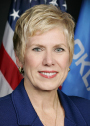
Superintendent Janet Barresi from 5:15 to 6 p.m., including coffee and snacks,
followed by sessions from 6 to 7:45 p.m.
Melodie Fulmer, Director of Parent and
Community Engagement for the State Department of Education, said the No. 1
thing educators from across the state say would help them in their classrooms
is for parents to become more involved in their child’s education.
“Students of involved parents have higher grade
point averages, score higher on tests and have higher graduation rates,” Fulmer
said. “The higher the parent involvement, the better the student engagement in
the classroom. These students are more prepared for college, career and
citizenship upon graduation, and they are just more well-rounded than their
peers.”
For a list of conference breakout sessions by
track, click here. To register, click here.
Some of Tulsa’s top chefs
and about 35 area restaurants will hold a fundraiser for young tornado victims
on June 22 at the Tulsa Convention Center.
Chef Aid, conducted in
cooperation with Tulsa Community Foundation, will benefit children affected by
the recent Oklahoma tornadoes.
The dinner, beginning at
6:30 p.m., will include food, wine, beer and live music for the all-inclusive
cost of $75 per person. The event also will include a silent auction.
Chef Aid is being
organized by chefs Eli Huff, Salt Food Group/Union Schools; Michael Fusco,
Fusco's Catering; Devin Levine, SMG; and Kenny Wagoner, Cancer Treatment
Centers of America.
Major sponsors include
Staples, Salt Food Group, BOK Center, Cancer Treatment Centers of America, SMG
and Tulsa Convention Center. Other sponsors include Ben E. Keith Co., US Foods,
Sysco Foods and Fincher Media.
Corporate tables of 10 are
available for $2,000. Call 918-808-8074 to reserve a corporate table.
In Oklahoma City, chef
Rick Bayless will lead a trio of events for the OK Chefs Relief effort on June
24.
Bayless will lead local
chefs at a pop-up restaurant at a yet-to-be-determined location from 11 a.m. to
2 p.m. A minimum $10 donation is required for tacos and agua fresca.
At 5:30 p.m., The Tasting
Room, 4322 N. Western Ave., will be converted into Bayless' upscale
Topolobampo. This evening includes a demonstration and the chance to interact
with the star of public television's "Mexico: One Plate at a Time."
Admission is $1,000 per couple and is limited to 40 people.
The final pop-up will be
inside the Will Rogers Theatre, adjacent to The Tasting Room. It will feature a
menu from Frontera Grill. Cost is $60, and the event is limited to 240 people.
UMB Bank is handling ticket sales for the OKC events at 405-239-5936.
The National Math and Science
Initiative recently released a report for Arkansas that demonstrates the
difference participation in Advanced Placement (AP) classes and exams makes for
students who attend college.
The first line of the report shows members
of the Class of 2009 that did not take an AP class and did not earn a
qualifying score on an AP exam during high school. The students may have
taken concurrent enrollment. In four semesters, the students earned an
average of 27.66 college credit hours with an average GPA of 2.07; 2,376
of them were not remediated during their four semesters, but 5,339 were
remediated, resulting in a 69.20 percent remediation rate for that group.
The second line of the report shows the
members of the Class of 2009 that did take at least one AP class but did not
receive a qualifying score on an AP exam. In four semesters, these
students earned 43.27 college credit hours with an average GPA of
2.60. Only 34.48 percent of that group received remediation.
The final line for the Class of 2009
shows students who took an AP class and received a qualifying score on the
exam. These students earned 48.41 college credit hours with an average GPA
of 3.11 and only had a 5.13 percent college remediation rate.
The next three lines show the same
breakdown for the Class of 2010 who had only attended college for two
semesters.
Cathy Seward, Director of Advanced
Placement and AVID for the State Department of Education, said research like
this is why she believes AP better prepares students for college.
“Concurrent enrollment is wonderful for
some students and some classes, but if we want our students prepared to be
successful in college, AP is the way,” Seward said.
It’s important for parents to know that
if a child requires college remediation these are courses that cost money but
earn no credit towards a degree, Seward said. Students who take remediation
also are more likely to drop out of college.
Oklahoma educators can attend Advanced
Placement sessions at Vision 2020. For a list of session titles, click here.
To read the report, click here.
|