|
|
November 2013
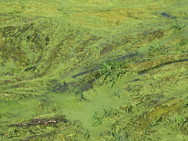 Several agencies have stepped up Minnesota’s efforts to reduce nutrient levels in water resources with a statewide strategy that is open for public comment through Dec. 18. The statewide plan aims to get various agencies and groups working together to increase current efforts to reduce nutrients in Minnesota waters and those downstream.
Open houses and presentations on the draft strategy include the following:
- Nov. 26 – 3-5 p.m., Kandiyohi County Government Center, Willmar.
-
Dec. 2 - Minnesota Association of Soil and Water Conservation Districts, DoubleTree Hotel, Bloomington.
- Dec. 3 – 4-6 p.m., St. James Hotel, Red Wing.
- Dec. 4 – 3-5 p.m., Otter Tail County Services Building, Fergus Falls.
- Dec. 10 – 11 a.m.-12:15 p.m., MPCA office, Duluth.
-
Dec. 12 – Crop Production Retailers, Minneapolis Convention Center.
-
Dec. 18 – Basin Alliance for the Lower Mississippi in Minnesota, Rochester MPCA office.
Phosphorus and nitrogen are the primary nutrients that in excessive amounts can pollute lakes, streams, wetlands and groundwater. Excess nutrients make up 18 percent of Minnesota’s water impairments, and the number is expected to grow in the coming decade.
Surface water leaving Minnesota flows north to Lake Winnipeg, east to Lake Superior, and south to the Gulf of Mexico. The initial targets are a 35-percent reduction in phosphorus and 20-percent reduction in nitrogen by 2025 in the Mississippi River basin, as well as reductions for the Red River/Lake Winnipeg and Lake Superior basins. The ultimate goal is a 45-percent reduction for the Mississippi River.
Agencies and organizations can use the strategy to focus and adjust state-level and regional programs. Watershed managers and local water planners can also translate strategy ideas and priorities into the best practices on the ground to meet the goals.
Agencies involved in developing the strategy include:
- Minnesota Board of Water and Soil Resources;
- Minnesota Department of Agriculture;
- Minnesota Department of Natural Resources;
- Metropolitan Council;
- Minnesota Pollution Control Agency;
- Public Facilities Authority;
- Minnesota Department of Health;
- University of Minnesota-Extension;
- Natural Resources Conservation Service; and
- U.S. Geological Survey.
Minnesota's state-level strategy will be completed by the end of 2013. Involvement of interested citizens and organizations is vital. Success depends on actions from many people around the state. For more information on the strategy development process and opportunities to provide feedback, visit the website: www.pca.state.mn.us/nutrientreduction, or email nutrientreduction.pca@state.mn.us.
|
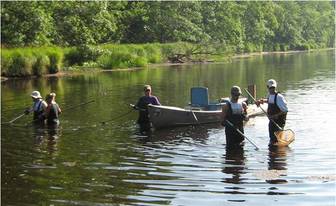 The MPCA recently announced the draft 2014 Impaired Waters List, which will be open for public comment in January 2014.
Ten lakes and 20 stream reaches across Minnesota have been removed from this year’s list, an accomplishment which represents monumental work on the part of watershed organizations around the state.
“In recent years, thanks in part to the Clean Water, Land, and Legacy Amendment, MPCA has greatly accelerated its schedule for assessing surface waters. Because of that, we are finding many more water bodies that don't meet water quality standards and are impaired,” said Assistant Commissioner Rebecca Flood. “At the same time, our local partners are making impressive progress on addressing water quality problems through their actions, so in every biennial cycle, we are able to remove a few more lakes and streams from the list.”
One highlight of this year’s list was removing sections of the Mississippi where levels of a certain chemical have dropped. Thirty-two miles of the Mississippi River have been impaired since 2008 because of the presence of certain perfluorochemicals (PFCs) in fish tissue. PFC concentrations have decreased markedly in the impaired sections of the Mississippi, and three out of four sections of the river can now be removed from the Impaired Waters List for this particular problem.
In the Minnesota River basin, Best Management Practices for pesticides have resulted in lower levels of Acetochlor, a corn herbicide, in a section of the Le Sueur River, from the Maple River to the Blue Earth River, as well as Little Beauford Ditch, a tributary to the Cobb River. The MPCA is thus proposing to remove these sections from the impaired waters list.
Most of the changes to the list are a result of intensive monitoring conducted in 18 watersheds around the state in 2012 and 2013, as well as statewide assessments for bacteria in large rivers and for pesticides and nitrates in drinking water. The MPCA conducts intensive monitoring in eight to nine of the state’s 81 major watersheds each year, a process which will enable every watershed in the state to be monitored by 2018.
This intensive monitoring has led to these proposed de-listings due to more data indicating these waters are meeting standards:
- Lower Mississippi basin – Sections of the Cannon River, Hay Creek (tributary to the Mississippi), and sections of the Straight River, all listed for turbidity levels.
- Minnesota River basin – Section of Bevens Creek, in Carver County, listed for chloride levels.
In the Lower Mississippi basin, several new listings concern stream sections with lower fish and/or macroinvertebrate numbers than expected:
- Bear Creek, a tributary to Rollingstone Creek in southeast Minnesota;
- Big Trout Creek, a tributary to Mississippi River;
- Little Cannon River, Cannon River and several tributaries to these rivers and Cannon Lake;
- Straight River and several tributaries;
- Waterville Creek, a tributary to Upper Sakatah Lake; and
- Whitewater River and several tributaries.
Some of the above stream sections are also impaired by bacteria, turbidity and/or low dissolved oxygen.
In addition, the MPCA is proposing to list Crow Spring, a tributary to the Whitewater River, for nitrate levels that violate the state water quality standard.
The MPCA is also proposing to add the following lakes for nutrient levels:
- Silver Lake, northwest of Elysian, in the Cannon River watershed;
- Toner’s Lake, near Elysian, in the Cannon River watershed; and
- Winona Lake, in the city of the same name, southeast and northwest bays.
In the Minnesota River Basin, several new listings concern bacteria levels, including sections of the following:
- Several direct tributaries to the Minnesota River;
- Tributaries to the Chippewa River;
- Tributaries to Hawk Creek; and
- Yellow Medicine River and several tributaries.
Several of the above stream sections are also listed due to lower fish and/or macroinvertebrate numbers than expected.
In addition, Sand Creek, from Porter Creek to the Minnesota River, is listed for chloride levels.
Also in the Minnesota River Basin, the MPCA is proposing to list the following lakes due to high nutrient levels:
- Carlson, in Dakota County;
- Jonathan, in Carver County;
- Lady Slipper, in Lyon County;
- Le May, in Dakota County;
- McKnight, in Carver County;
- Olson, in Kandiyohi County;
- Perch; in Lincoln County;
- Quigley, in Dakota County;
- St. John’s, in Dakota County;
- Stay, in Lincoln County;
- Steep Bank, in Lincoln County;
- Swan, in Kandiyohi County;
- Two unnamed lakes in Dakota County; and
- West Solomon, in Kandiyohi County.
A series of public meetings will take place throughout the state in December to present the content of the Impaired Waters List. Individuals who are unable to attend in person can phone in to the meetings in real time. (Email miranda.nichols@state.mn.us prior to the meeting for more information). Meetings will be held:
- Thursday, Dec. 5, 10-11 a.m., at the MPCA Office, 525 Lake Ave., Duluth
- Tuesday, Dec. 10, 9-10 a.m., at the MPCA Office, 520 Lafayette Road N., St. Paul
- Wednesday, Dec. 11, 1-2 p.m., at the MPCA Office, 714 Lake Ave., Detroit Lakes
-
Wednesday, Dec.18, 11 a.m. - noon, at the MPCA Office,18 Wood Lake Dr. SE, Rochester (in conjunction with BALMM meeting)
Formal written comments on the list will be accepted from Jan. 2- 31, 2014. For more information, visit the Impaired Waters List webpage or contact Miranda Nichols (651-757-2614, miranda.nichols@state.mn.us).
|
 To make it easier for citizens and water professionals to find information about Minnesota waters online, six agencies have worked together to set up the Key Water Information (KWI) Catalogue. The KWI Catalogue lists links to key water information on the websites of six state and regional agencies: Minnesota Board of Water and Soil Resources (BWSR), Metropolitan Council, Minnesota Department of Agriculture (MDA), Minnesota Department of Health (MDH), Minnesota Department of Natural Resources (MDNR), and Minnesota Pollution Control Agency (MPCA). The project was made possible by the Clean Water Fund.
Before this online catalog, it was difficult for web browsers to understand the type and extent of information available online from the six agencies. The goal in developing the KWI Catalogue was to keep the list of agency water links small, understandable, and useful. Consequently the KWI Catalogue is not a comprehensive listing of all Minnesota agency water information links, but a listing of links to key water information and tools. After selecting a link in the KWI Catalogue to an agency webpage, users may access additional links for greater detail.
The catalog developers have organized the links into four water subjects:
-
“Surface Water” lists agency links to information about streams, rivers, lakes, wetlands, and the watersheds that contain them. The type of water information includes water body locations, water quality and quantity, planning, fishing advisories, wastewater treatment, restoration efforts, and other information.
-
“Groundwater and Drinking Water” contains information about drinking water quality, wells, and potential agricultural contamination.
-
“Geographic Information” has links to agency information about spatial and locational mapping data related to wetlands, streams, lakes, aquifers, wells, and watersheds.
-
”Water Implementation Programs and Information” lists agency links for the Best Management Practice (BMP) programs that prevent pollution from entering lakes, rivers, and streams; enhance fish and wildlife habitat; and protect wetlands. In addition, there is a link to a source for articles about water research related to Minnesota.
Browsers will find is an “Expand for more information…” option below each information source web link in the KWI Catalogue. When clicked, this option provides more detail about the information, such as type of information, intended user, and how often the information is updated.
Most of the main water related webpages at MPCA now have a link to the KWI Catalogue. The other agencies involved have added or are adding links to the KWI Catalogue on their main water related webpages. You can also access the link directly: http://es.metc.state.mn.us/KeyWaterList/ .
|
|
|
|




