 by Randy Riley
The last 11 weeks have flown by since being named State Librarian. The emails, cards and words of support have been greatly appreciated. I had no idea how large the calendar explosion would actually be… I feel confident that my 24+ years of experience at the LM combined with having the opportunity to work with a talented and motivated staff have prepared me for all of the challenges that lay ahead. In the upcoming months I plan to visit as many libraries as I can to talk with staff and listen to their concerns and suggestions. I am firmly in a “listening mode.” Gathering feedback from the Michigan library community is essential in coordinating any plans to strengthen the LM’s services or better assist Michigan libraries of all types.
So far, librarians have been very open and candid about sharing what they think the LM needs to do to “get better.” On several occasions I have been surprised when librarians have bluntly expressed the sentiment that “we don’t need the State Library.” Many have directly stated that the LM is insignificant to their library’s daily operations.
Statements like these cause concern. The LM is committed to exploring new ways to open a dialogue with Michigan libraries. Helping to promote and update the image of libraries and librarians in the state and finding improved ways to make our services more relevant continues to be an LM priority. LM staff will be identifying even more reasons to spend time “in the field” actively listening to the concerns of libraries in the coming months. Frankly, we need to hear what you think.
My approach to work is blue collar and fairly simple. The bulk of my library experience has been in the area of public services, so customer service is extremely important to me. The work advice my dad gave me when I was 16 years old still rings true. Five principles:
- Surround yourself with people smarter than yourself
- Always “do what you say”
- Bend over backwards to find reasons to work as a team (collaborate and empower others)
- Freely share information
- Stick to your timelines
I am committed to make these “work values” a standard part of how the LM does business. Contact me if your library would like to host a visit from the State Librarian. When visiting libraries across the state, I get to experience all of the great programs and services first hand and to observe the impact they have on the various communities. What could be better than that?
|
Most students are on summer vacation but the need goes on to support the Michigan Department of Education's (MDE) Culture of Reading project for children.
“There are too many people, including children and adults, who cannot read,” said State Superintendent Mike Flanagan, who launched the project in December 2013. “We need to change that. To help build a culture of reading in Michigan, we need to get books in their hands and in their homes.
"Unfortunately, many families don’t have the means by which to buy books,” Flanagan said. “I do know that there are generous and thoughtful people out there who would like to make that happen.”
As part of the Culture of Reading project, the MDE is coordinating donations to provide copies of the Michigan Reads! books to children in elementary classrooms/early childhood education settings in Michigan, based on their teachers’ commitment to use the books to promote scientifically-based reading instruction and/or family engagement activities focused on literacy.
There will be a grant program established for elementary schools and early childhood centers. The number of grants awarded, and children receiving free books, each year will be determined by the amount of donations raised. Schools and early childhood centers will be notified on the grant application process.
The central goal of the Culture of Reading project is to promote early childhood learning and development by getting all Michigan children reading proficiently by the end of third grade.
Research shows that children typically learn to read by the third grade – then read to learn after that. Research also shows that children who cannot read by the third grade often experience developmental and academic challenges throughout their education and beyond.
Culture of Reading will become a comprehensive strategy to benefit children and their families; schools; teachers, and communities throughout the state.
Flanagan started the project as a way to get more books into the hands of needy children in Michigan. Too many children from low-income families have little or no access to books at home.
To make a donation or for more information, visit www.michigan.gov/cultureofreading.
|
 by Edwina Murphy
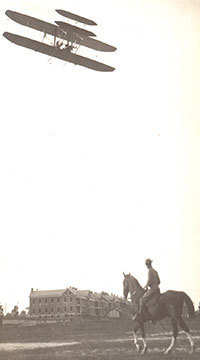
On August 1, 1914, Germany formally declared war on Russia at the onset of the First World War. That war changed the face of the world, including life in Michigan. On the 100th Anniversary of the outbreak of the war, August 1, 2014, the Library of Michigan hosted a symposium to examine the elements of the war mostly on the home front and how living in Michigan changed as a result of this often overlooked world conflict.
Sessions were designed to reach beyond Michigan’s role in armaments and included such topics as: food culture, the arts, transportation, immigration, and Post Traumatic Stress Disorder. Speakers included: published authors, university professors and museum specialists. One session was dedicated to research methods and opportunities at the LM.
Michigan was uniquely situated to contribute to World War I. With the lumber industry, three companies in the state that sold “kit homes” and the budding auto industry supplying equipment, Michigan had what it took.
There is vast potential for greater research pertaining to Michigan’s role during World War I. Local historians may find real gems in their community.
|
 by Sonya Schryer Norris
On July 23rd the FCC released its long-awaited E-rate modernization order. Highlights include:
- Technology plans are no longer required for any type of funding.
- $1 billion dollars will be available annually in funding years 2015 and 2016 for wi-fi with additional funds identified for the following three years.
- Discounts for broadband will be protected.
- Support will be phased-out for non-broadband services such as pagers and phones.
You can find regularly updated information about E-rate at the LM's E-rate site. Information includes the Order, video clips from Chairman Tom Wheeler, and links to the American Library Association's ALA Dispatch blog that has been carefully following E-rate developments.
On Thursday, November 20, EdTech Strategies President Linda Schatz will be at the LM. She will conduct a full-day seminar on the more advanced areas of E-rate as well as the changes to the program. Stay tuned to Michlib-l for registration info or check back at LM's continuing education website. This opportunity is only available to Michigan library staff.
Do you have questions about what this means for your library? Did you know you have a designated E-rate contact person through your library co-op?
|
 by Karren Reish
Michigan Reads! materials are being printed now. Look for kits to arrive at your library beginning in mid-August. Every library building will receive a kit. As we announced earlier, the book for this year is Kwame Alexander’s Acoustic Rooster and His Barnyard Band, which features a musically inclined rooster who gathers a band together for a music contest and learns how to make great music with his new friends.
The program launches on Monday, September 8th at the Pleasant View Magnet School with Kwame Alexander in celebration of International Literacy Day. The author tour runs throughout September and October and more information is available at www.michigan.gov/michiganreads. To promote your local events, look for web-ready graphics and a sample press release in the Promotions Toolkit at the same site.
Thank you for your support and participation in this program!
|
by Bernadette Bartlett
Have you given any thought to copyright and state government information? Many people believe that ALL government information is free of copyright restrictions, but only federal documents are specifically exempted under 17 U.S.C. § 105. Like all other creative works, state (and local) government documents are protected by federal copyright law, in particular since 1989 when requirements for "formal" copyright registration and notice ceased.
To be clear, when we talk about state government information or "documents" we are not talking about records, formal instruments or decrees, but compiled information that is generally released or published for the benefit of the public at large. Used in many capacities including academic research, development of public law and policy and to inform all citizens, clear guidance as to the users ability to use and reuse this vast collection of authoritative information is vitally important.
There is little to no consistency from state to state in statute, rule or policy to address the copyright status of state government information. The state of Michigan specifically asserts its copyright in a "Terms of Use" policy that limits potential users of Michigan government information to "personal, non-commercial use" without prior written permission. Other states, such as Florida and North Carolina, have statutes that are interpreted as limiting the state’s ability to exert copyright over public information or implying that state government information and records are in the public domain. But these laws are not specific or well-defined enough to satisfy the needs of users such as researchers who plan to publish their work, academic institutions and large-scale digital information providers such as the HathiTrust. These users must be sensitive to copyright restrictions and diligent in pursuing permissions when re-using state government information. Many users find determining a state’s copyright policy or tracking down the appropriate creator (authority) to secure copyright clearance a daunting and frustrating process, with a potentially ambiguous outcome.
The Library of Michigan is participating in a multistate project with the HathiTrust and Stanford University to raise public awareness, open discourse with policy makers and provide possible solutions for addressing copyright and state government information. More information on the project, Free State Government Information (FSGI), and how you can contribute is available at http://stategov.freegovinfo.info/.
 by Shannon White
The following public libraries have either achieved initial Quality Services Audit Checklist levels or have renewed their status in the first half of 2014. Congratulations to the staff and trustees of these libraries on their continued work to provide quality public library service to our Michigan communities. If your library would like to participate in the QSAC program we encourage you to visit the QSAC site to find applications for each of the three levels as well as instructions for applying and help resources. QSAC is a voluntary management standards program that assists public libraries by setting benchmarks for Governance & Administration, Human Resources, Services, Collection Development, Technology, Facilities & Equipment and Public Relations. The Library of Michigan recognizes public libraries as they achieve each level. Libraries can be certified at the Essential, Enhanced and Excellent levels. Contact Shannon White at the LM for more information, whites29@michigan.gov or (517) 373-1580.
Enhanced
Canton Public Library
Kent District Library
Rawson Memorial Library
Essential
Bay County Library System
Kent District Library
Benzie Shores District Library
Buchanan District Library
Canton Public Library
Rawson Memorial Library
|
 by Karren Reish
The Library of Michigan (LM), as Michigan’s state library agency, receives an annual allotment from the Institute of Museum and Library Services (IMLS). The allotment is based on Michigan’s population, the state’s financial support for libraries and IMLS’s budget. As with many other agencies, IMLS receives less funding now than in the past, which has led to a decrease of nearly 20% in Michigan’s allotment in the last few years. The LM funds the Michigan eLibrary, including databases and MeLCat, and other statewide services, using nearly 90% of the federal funds.
However, in the last few budget years, the Governor’s Office, seeing the value of MeL to Michigan’s residents, has included some funds for purchasing business and early literacy databases. In the last few budget years, the state aid to public libraries has increased after a long period of decline when funding was almost slashed in half.
|
 by Kim Koscielniak
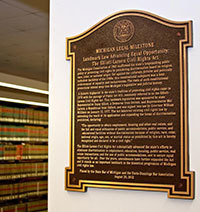
The Michigan Legal Milestones program recognizes significant legal cases and personalities in Michigan's history and uses bronze plaques, placed at featured sites statewide, to relate the historical significance. A new milestone is dedicated each year. The Law Related Education and Public Outreach Committee of the Michigan State Bar oversees the program, see http://www.michbar.org/programs/milestones.cfm
The Milestones Plaque installed in the State Law Library commemorates the passage of the Elliott-Larsen Civil Rights Act. “Elliott-Larsen,” as it is commonly known, bolstered existing civil rights law by extending the reach of its application and expanding the forms of prohibited discrimination. For more information on Elliott-Larsen, see Aaron K. Bowron’s Michigan Bar Journal (August, 2012) article at http://www.michbar.org/journal/pdf/pdf4article2068.pdf.
A rededication event held on April 25 in the Law Library included members of the Bar Committee, State Bar officers, former and current State Librarians, Nancy Robertson and Randy Riley and staff from the Library of Michigan and State Law Library. The granddaughter of former Michigan State Representative Daisy Elliott, Badriyyah Sabree, a Michigan Department of Education Consultant, and her husband, also were in attendance.
The original dedication ceremony was held on August 28, 2012 at the Michigan Capitol. A Michigan Supreme Court staffer and frequent user of the Library of Michigan had suggested that the plaque be housed in the Law Library prior to its initial dedication. Eventually the Bar Committee realized that the Law Library was an excellent fit as a permanent location. Clearly on view when entering the Library, the plaque is surrounded by the legal, legislative and constitutional materials that gave rise to the law and more fully explain its story and impact.
|
 by Karren Reish
The Michigan Reads! program features a great deal of information on developing literacy skills in infants, toddlers, preschoolers and K-2 children. This includes digital resources and we have robust lists at www.michigan.gov/michiganreads for librarians, teachers, parents and care-givers. We also have app recommendations that meet the digital media usage guidelines from the American Academy of Pediatrics. Some highlights from the programming guide include:
Cell Phone and Tablet Apps:
- Aesop’s Quest (iPhone, iPod touch, and iPad) - This app is based on the famous Aesop’s fables, but encourages children to recall parts of the story. With each successful recall, a puzzle piece is earned with a goal of solving the entire puzzle to begin a new story.
-
Mad Libs (iPad) - This classic game asks for the same nouns, verbs, and adjectives but with interactive fill-in-the blank sections and hints if children need help.
- Hideout (iPhone, iPad) - An app that encourages children to learn letter-sound association, but also to find meaning in the words through the use of illustrations and context.
- Storypatch (iPad) - This writing app allows young writers to create a story using the templates provided or on their own, including pictures to illustrate their creations.
Websites about Literacy
-
Colorin Colorado - www.colorincolorado.org/ - This website is a great resource for parents and educators of children who are learning both English and Spanish, with additional resources for speakers of other languages such as Arabic, Chinese, Korean, Navajo and Russian. Providing a host of research-based information and evidence-based practices, the site includes suggestions of book titles, tip sheets for supporting dual languages learners in classrooms and at home, as well as webcasts and multimedia.
-
Early Learning from Fred Rogers Center - www.fredrogerscenter.org/resources/early-learning-environment/ - The Fred Rogers Center provides a searchable database for early childhood educators and families of children ages birth to 5 to find resources and other tools related to digital media. Focusing on the use of social networking, the website aims to provide a web-based support system to help those working with young children understand uses for and navigate digital media for young children.
-
Reading is Fundamental - www.rif.org - This website is a valuable tool for finding books, activity ideas, games, and handouts for young children to use at home or in early childhood education settings.
-
Reading Rockets - www.readingrockets.org - Using recent research, parents and educators can access information and resources to support literacy development. This helpful website includes podcasts and videos for educators.
-
Wonderopolis - wonderopolis.org/ - The perfect website for curious kids (or educators!), this website highlights a "wonder of the day" and archives previous wonders by category. Educators can link a wonder to Common Core State Standards, while families can post to the blog, tweet and link to the site, or participate in the virtual camp what-a-wonder.
|
by Edwina Murphy
Housed at the Library of Michigan (LM), the Michigan Collection is a collection of all things Michigan. The Library itself dates to 1828 with items in the collection being much older. Everything of interest to residents and researchers of the state are collected, from historic travel brochures to state documents.
Traditionally, the Michigan Collection is heavily used to research local history. We hold the largest collection of Michigan Newspapers in the state with several being searchable online. The Library also holds a comprehensive collection of Michigan city directories, plat maps, Sanborn Fire maps and business gazetteers starting from 1856.
Along with this solid foundation, we are expanding our core emphasis to include more transportation and business history material in our holdings. Railroads, freighters and vehicles all played a pivotal role in the economic development of the state and materials from such businesses are highly sought for the collection. Small business items are also desired including those from the agricultural sector. From boat propeller manufacturing to family dairies, no business was too small not to be of interest.
Few things bind a community together more than cooking and food, which is keenly reflected in the publication and use of recipes and cookbooks. Cookbooks were published by large and small businesses alike as advertisements -- be the company an auto dealer, stove company, or a sugar beet grower. Religious and ethnics groups often share food ways and have documented their heritage by publishing cookbooks highlighting their history in the state.
Michigan has a rich heritage of business, agricultural and ethnic diversity which the LM plans to help document in their holdings for both current researches and those to come. Our full catalog may be searched at: answercat.org
Material Donations to the Library of Michigan
The Library of Michigan seeks donations of printed and published material relevant to the state of Michigan. Given the vast diversity of the state we need the help of residents to help build our collections to their greatest research potential. Please take a moment to view our presentation to get just a small sample of the material and genres we seek for the Library.
The Library accepts gifts of material donations at the following address:
Library of Michigan
Attn: Gift Coordinator
702 W. Kalamazoo St.
Lansing, MI 48909
 by Carolyn Sparks, Library of Michigan Foundation Executive Director
It has long been a goal of the Library of Michigan Foundation to take the successful "Night for Notables" format to additional locations across the state. On the last Saturday of April, the Library of Michigan Foundation and the Library of Michigan (LM) host the annual "Night for Notables" event that includes a reception and program honoring the current year’s Michigan Notable Books and Authors at the LM in Lansing. It was often noted that it would be great exposure for the Michigan Notable Books Program if we could replicate this event in other locations around the state, highlighting regional books and authors recognized over the ten years of the Program.
As a result, the following Michigan Notable Books Regional Events have been scheduled:
- Grand Rapids Public Library on Saturday, September 20, 2014
- Detroit Public Library on Saturday, November 8, 2014
Additional details will be available soon. However, we have established that these will be evening events featuring a keynote presentation by a speaker of local interest followed by a reception and book signing by several regional Michigan Notable Authors. The events will be underwritten by sponsors, so there will be no charge for admission.
The Foundation hopes to establish a statewide model for these regional events to highlight the great cooperation between libraries and the author community and celebrate Michigan’s exceptional literary talent.
|
by Deb Biggs Thomas
On June 16, 2014, after a nearly 20-month process, the Library of Michigan debuted the new and improved Michigan eLibrary (MeL). Not only did MeL receive an extensive new look, but the focal point of the new homepage, http://mel.org, is a discovery service search box.
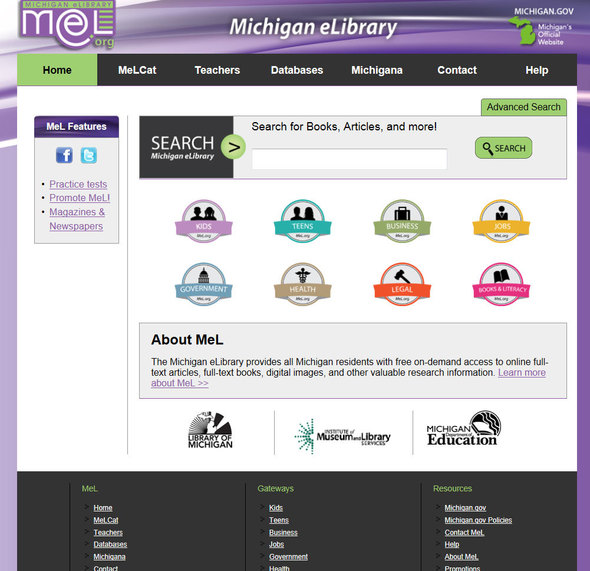 Using the discovery service search box is easy. Simply type in your search term and click the “Search” button. On the next screen, you will find the results. On the left navigation, you can refine your search in many different ways—MeLCat results, full-text articles—news, reports, different languages, formats, locations, specific databases and more.
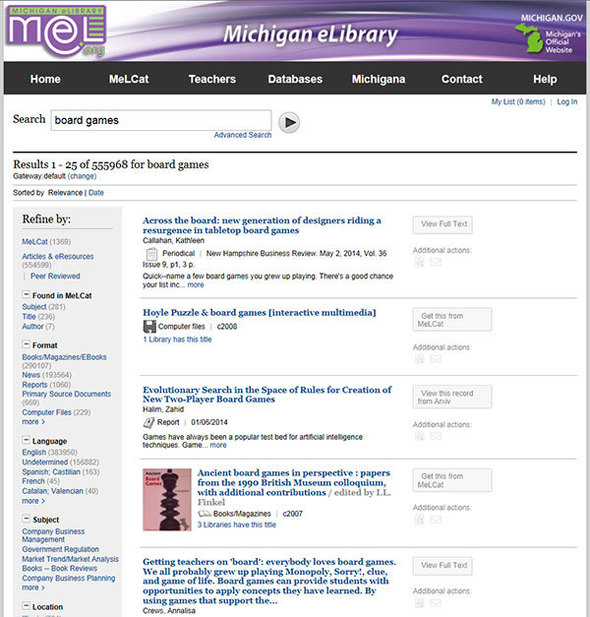 Why a search box for MeL? As 21st century information seekers, we expect fast access to all types of digital information—catalog records, eBooks, full-text articles, digital images, websites and more. MeL’s new discovery service search now can do much of that. Not all of MeL’s eResources (AKA databases), however, may be searched via the homepage searchbox. These subscription eResources are not made up specifically of articles and as such do not lend themselves to this type of search. We suggest that MeL users check the subject gateways in the middle of the homepage for access to these databases or use the alpha-list found at http://mel.org/databases. Look for the red *.
In future issues of LM4X look for articles on the various components of MeL and how they add to this incredibly useful resource available at no cost to all Michigan residents.
by Shannon White, CE Coordinator
New and Advanced Director Workshops
Public library directors who are new to their position will want to be aware of the New Director’s Workshop scheduled for Thursday, September 18 at the Library of Michigan (LM). This full-day workshop is part of the guidelines to receive State Aid payments. This year we will feature sessions on Organizational Health and our new Financial Management Manual as well as other topics pertinent to new library directors. Registration for the workshop is available on the LM workshop registration site.
For those directors at Class IV through Class VI libraries you will want to add Friday, September 19 to your calendars. The Advanced Director’s Workshop will be held at the LM. This daylong workshop builds on the information provided in the New Director’s Workshop. We invite library directors of any class size to attend the training to obtain additional information as well as network with colleagues from around the state. Register at the LM workshop registration site.
For more information about attendance at both of these events, please visit page 3 of the State Aid to Public Libraries Application Process.
Collaborative Programs
The Library of Michigan is continuing its collaborative programming with the Cooperative Director’s Association and the Midwest Collaborative for Library Services (MCLS) on November 6 in Jackson with a full-day program on handling the media. Full details and registration are forthcoming.
Take a short survey to help us bring more relevant and timely materials to you through this newsletter.
 by Diane Donham
Not even a broken foot could deter this Library of Michigan quartet from participating in the Michigan Department of Education (MDE) Wellness Team's 27th Annual Fitness Fun Day. The May 20 event celebrated spring and promoted walking as a healthy form of exercise. Since the Library’s incorporation into MDE, Library staff has taken a spirited approach to walking in cleverly-themed attire. The foursome pictured above represents 124 years of service to the Library of Michigan. They are, back row, left to right, Bernadette Bartlett, Susan Smith, Julie King, and Leelyn Johnson, seated.
|
|