The Field Report - May 2014

Having trouble viewing this email? View it as a Web page.
Michigan

The Field Report is a monthly newsletter highlighting current trends in arts and culture, MCACA staff and board features, and other info of interest to our statewide clients.


May 2014


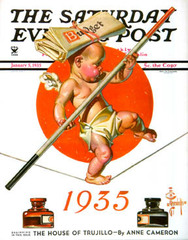
Budget

STAFF SPOTLIGHT: SUE SPEAKS OUT ON GRANT BUDGET BASICS

When Chad asked me to write a feature for May’s newsletter, I admit I balked.  How do I follow-up on Alison’s “Reconnect to Your Passion” article (April 2014) and Chad’s "And Then it Hit Me" article (March 2014) and keep it interesting?  Oh, and did I mention that it was suggested that the May newsletter focus on “budget basics?”  What can possibly be interesting about budget basics?  How about cash, currency, money? 

In the past three years our budget and number of grants have almost tripled.  That is great news for Arts and Cultural organizations across the state.  With that comes the challenge of administering grants in the most efficient manner so your organization gets the grant money quicker, enabling your audiences to experience those “Aha Moments” and empower them to “Reconnect with their Passions.”

Here are a few items to keep in mind before you hit that submit button for your 2014 final report to help us increase turn-around time when reviewing your final report (and get your final payment to you quicker):

•    Review your particular grant’s guidelines prior to compiling the information for your final report.  Guidelines change from year to year.  For example:  2014 Operational Support grants will no longer require the organization’s complete budget information for the grant period.  Operational Support grants will submit a financial report that ONLY reflects the revenues and allowable expenses directly related the grant award.

•    Is your revenue/budget itemization in MCACA’s preferred format?  I can’t stress this one enough.  The revenue/budget itemization sample we have in the grant application and final report guidelines corresponds to the final report format in eGrant.  If you submit a Profit/Loss statement to us, more often than not, we will contact you to request corrections.

•    Are your revenue and expense numbers categorized correctly?  Review MCACA budget definitions prior to creating your itemizations.

•    Are your expenses appropriate to the grant award?  Please review your grant guidelines to make sure your expenses are allowed (per State and Federal guidelines).  All grant guidelines contain a list of allowed and disallowed expenses.

•    Does your project budget reflect your required match amount?  Check your grant’s guidelines for your match requirements.

•    Is your budget balanced?  Revenues should equal expenses.

•    Do your financials reflect the appropriate grant period?  For Operational Support that is usually January 1 through September 30.  Most other grant’s periods vary, check your grant agreement to verify your grant period.


Ritch Branstrom

BOARD BANTER - RITCH BRANSTROM

Name: Ritch Branstrom
Position: Artist

What first sparked your interest in the arts?

My interest in the arts started early in life- the product of my upbringing and environment.I was born in Dearborn, Michigan, the youngest of four sons, my father a diesel mechanic that had an extraordinary ability to fix or create things with nearly nothing. Because of all the civil unrest happening in the Detroit area during the late 60s and early 70s, I spent all of the summers of my youth in the Upper Peninsula living with relatives.

I spent these formative years in two very different worlds. Over the years I made the journey to the U.P. and back many, many times. I mapped out time and distance by the various roadside oddities and attractions along the way. The Mackinac bridge being the grandest, of course, but there were many other markers along the journey: the Zilwaukee bridge, the compressor on the pole, Santa Claus, the brick flag...

But the one that made the largest impression was the 40' tall metal Paul Bunyan statue in Grayling. My parents stopped so I could take a picture one day and that was the day something clicked in my head. It happened right there as I was standing looking up. At that moment I realized that Paul Bunyan wasn't just metal- Paul Bunyan was made primarily out of car hoods. Car hoods! I thought. Hmph. It changed my life. I've been looking at things differently ever since...

What are you looking forward to in the upcoming year related to the arts?

The arts are very important in our lives for many different reasons. I'm looking toward a future where, as a whole, we value the arts and acknowledge the importance art has in our everyday lives.  Art can be a powerful language, a means of expression, a bridge, a tool...it is pure potential.

Four fun facts about yourself:

1.   I've been been creating found object sculpture for over the past 20 years.

2.  In 2012 I purchased an old grocery store and am converting it into a gallery/ workshop/ studio/ warehouse in downtown Rapid River.

3.  I have a 13 year old son, Ellery, and an 11 year old daughter, Anna Bella, who made fire on their first attempt with a string and stick two years ago. They too, are a product of their environment and I have no doubt they can do whatever they set their mind to.

4. Amongst other things- lots of other things- I have probably 150 car hoods I've collected over the years. (They have 100s of uses).


MNA Logo

SERVING NONPROFITS TO ADVANCE THEIR MISSION

Since 1990, the Michigan Nonprofit Association (MNA) has served as a statewide membership organization dedicated to serving the diverse nonprofit sector through civic engagement, capacity-building, data and technology, training, and advocacy.  MNA manages multiple programs and affiliates including Data Driven Detroit, Highway T, The LEAGUE Michigan, Michigan Campus Compact, and Volunteers Centers of Michigan. 

With help and guidance from Michigan’s Management Support Organization (MSO) Network in addition to many leaders of the nonprofit, government and private sectors, the Michigan Nonprofit Association has developed “Principles for Nonprofit Excellence in Michigan" to assist Michigan’s charitable organizations in building capacity while enabling them to demonstrate accountability and transparency.  Some practices reflect legal requirements and/or steps that all nonprofits should take, while others are aspirations.  These types of practices are vital for the health and success of the many arts and culture organizations throughout the state. 

Michigan Nonprofit Association recognizes good organizational practices are primarily implemented through education and self-regulation. Thus, Principles & Practices for Nonprofit Excellence in Michigan is intended to serve as an educational resource to improve the efficiency, transparency and accountability of Michigan’s charitable organizations. Click here to find a wealth of resources to help make your nonprofit arts and culture organization the very best it can be:http://www.mnaonline.org/. 


MAEIA2

MAEIA PROJECT SEEKING FIELD EXPERTISE

The Michigan Arts Education Instruction & Assessment (MAEIA) is an innovate program, developed by MI Arts Educators under the direction of the MAC. MAEIA offers

•    a Blueprint articulating what quality arts education programming looks like,

•    a Compendium of Research and Recommendations,

•    a Program Review Tool

•    and a suite of model performance assessments (under development). 

Arts educators are needed to lend their expertise to…

•    Provide Content Review for the High School Assessment Items (June 30-July 2, 2014) – Apply NOW

•    Develop the Model K-8 Arts Assessment items beginning (July 22-24, 2014) Apply NOW

•    Try-out/Field Test the High School Assessments – Register NOW – for 2014-15 Academic Year

Register today to contribute to this project – or recommend a colleague…

Kathy Dewsbury-White, MAEIA Project Director 517.927.7640 kdwhite@michiganassessmentconsortium.org

Jason O'Donnell, MAEIA Administrative Assistant jodonnell@michiganascd.org


Bookmark and Share

FacebookTwitterPinterest