FOR IMMEDIATE RELEASE: June 21, 2017
GTM Research Reserve Conducts Integrated Coastal Scrub to Benefit Wildlife and Reduce Fuel Loads
~Land management techniques used in coastal scrub habitat to reduce wildfire risk~
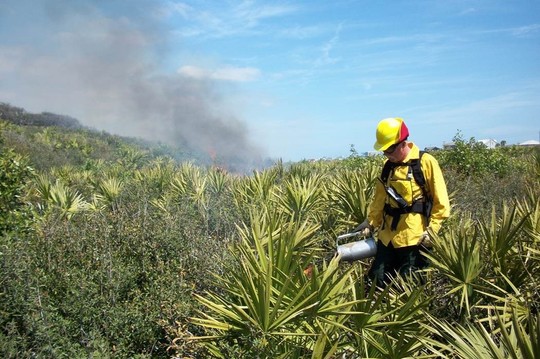 Roller chopping reduces the height of vegetation, which facilitates the safe and effective use of prescribed fires.
PONTE VEDRA BEACH, Fla. - The Guana Tolomato Matanzas (GTM) Research Reserve is currently
conducting a variety of land management projects to reduce fuel loads for wildfires and restore coastal scrub habitat for the benefit of wildlife as part of an integrated management program.
"The reserve is working hard to maintain the natural integrity of coastal ecosystems," said Dr. Michael Shirley, director of the GTM Research Reserve. "Each of these land management methods is intended to reduce shrub density in the scrub, reducing fuel loads for wildfires and increasing usable habitat for wildlife."
Mechanical land management techniques implemented in coastal scrub habitat include roller chopping
and mowing. Roller chopping knocks down
brush and small diameter trees, while chopping shallow roots as mowing shears
brush small diameter trees to reduce the height of the vegetation to ground
level. This method will help with the overall vegetation restoration process and will
facilitate the safe and effective use of prescribed fire. It will also significantly reduce the radiant heat and
flame heights produced by vegetation, minimizing the potential for property
damage.
Fire is an ecological component of many natural
communities in Florida. GTM Research Reserve conducts prescribed burns of coastal scrub at regular intervals to maintain the condition of the natural
community and reduce the hazards of wildfire. Prescribed burns are also conducted under specific weather conditions to maintain control of the fire, and provide a healthier, more vibrant community for the specialized and threatened species living in the reserve, such as gopher tortoises and indigo snakes.
|